
REVIEW · APARTHEID HISTORY TOURS
Skip the Line: District Six Museum Admission Ticket
A whole neighborhood, forced off the map. District Six Museum admission in Cape Town helps you understand what apartheid did to real people, and the ticket gives you flexible timing with optional guided tours plus the choice to roam on your own. One heads-up, the subject matter is heavy, so plan for an emotional visit.
I like that the museum is built for both adults and kids, with photographs, recordings, and testimonials that explain a 20-year stretch of demolition and forced removals. The ground floor has a huge street map of District Six, and you can spot handwritten street-map notes from former residents showing where their homes once stood.
Staff members are friendly, and many are displaced residents themselves, which makes the stories feel personal instead of like a textbook. The experience typically runs 30 minutes to 1.5 hours, and when you choose a guided option, you are kept in a small setting, with a mobile ticket that makes entry straightforward.
In This Review
- Key things to know before you go
- District Six Museum Admission: why this low-cost ticket matters
- On the Ground Floor: the street map and handwritten home locations
- Inside the Exhibits: photos, recordings, and testimony of forced removals
- Guided or Self-guided, your choice of pace
- Self-guided: go where your attention pulls you
- Guided tour: when you want the human layer
- Timing that works in Cape Town: how long you should plan
- Price and logistics: mobile ticket, small groups, and a quick entry plan
- Who should come to District Six Museum (and who might want to pace it)
- Should you book this District Six Museum ticket?
- FAQ
- How much does the District Six Museum admission ticket cost?
- How long does the visit usually take?
- Is admission included in the ticket price?
- Can I explore the museum on my own?
- Are guided tours included?
- Is there a limit on group size?
- Is this ticket mobile?
- Is the museum near public transportation?
- Are service animals allowed?
- What is the cancellation policy?
Key things to know before you go
- Flexible entry timing, so you can choose a moment that fits your day in Cape Town
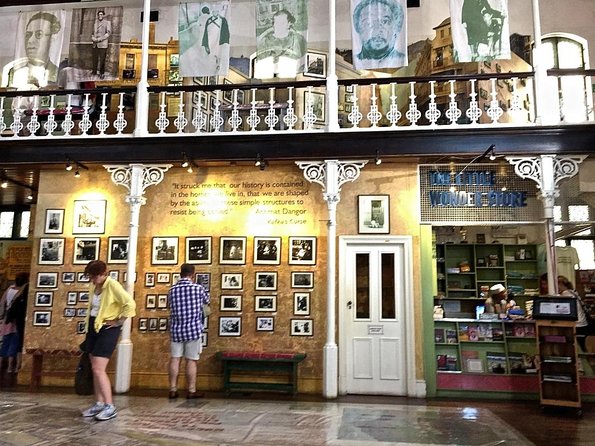
- A ground-floor street map covered with handwritten notes marking former homes
- Real testimony formats like photos, recordings, and personal accounts
- Optional guided tours led by people connected to District Six
- Small group size, capped at 15 for the guided option
- Self-guided access when you want your own pace
More sites and museums that record the apartheid years
- Township – Langa – Apartheid Museum Plus Arts and Culture Tour★ 5.0 · 19 reviews
- Robben Island Nelson Mandela’s Prison Museum and Table Mountain Plus All Tickets★ 4.5 · 13 reviews
- Robben Island, Bokaap, Mandela Glasses. tickets conf 8am next day★ 5.0 · 11 reviews
- Robben Island Nelson Mandela’s Prison Museum + Township Tour incl Ferry Tickets★ 5.0 · 9 reviews
District Six Museum Admission: why this low-cost ticket matters
District Six is one of Cape Town’s most talked-about neighborhood stories for one simple reason, people were removed from their homes and the area was demolished for years under apartheid. This museum turns that reality into something you can actually see, not just read about on a screen.
For $3.71 per person, the value is hard to beat. You are not paying a premium for a long package or a fancy add-on. You are paying for entry to a museum where the focus is understanding, and where you can stay as long as you want once you are inside. If you care about how laws shape everyday life, this is the kind of stop that hits.
You also get real choice in how you experience it. You can go self-guided and take your time with the displays. Or you can opt into a guided tour where the person leading you has lived experience connected to District Six. That mix is important. Some days you want facts and reading time. Other days you want someone to explain how it felt, not just what happened.
The one drawback to keep in mind: expect an emotional topic. Even if you know the history, the museum is designed to bring you closer to the human impact. Go in with enough time that you do not feel rushed, and do not schedule it back-to-back with something that needs your brain to be light and cheerful.
On the Ground Floor: the street map and handwritten home locations
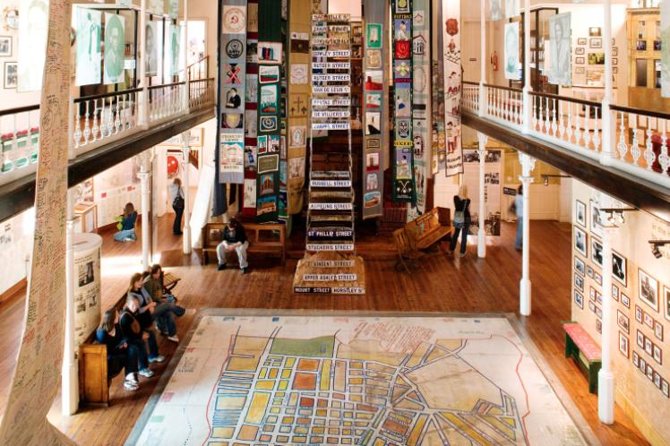
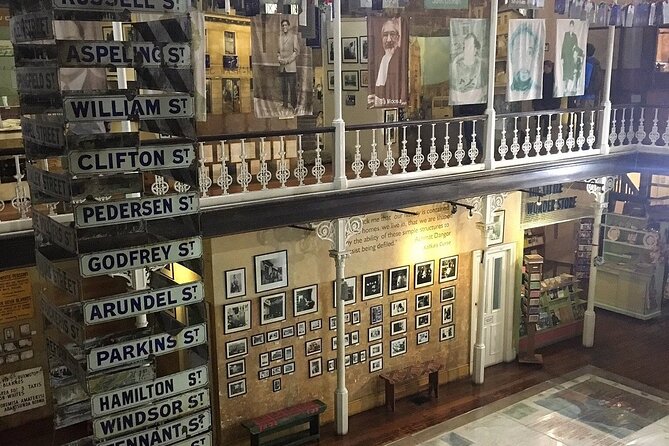
The museum has a standout feature right away. On the ground floor, you will find a large street map of District Six. This is not a clean, polished “here is the diagram” map. It is covered with handwritten notes by former residents that point to where their demolished homes once stood.
That matters because it changes how you read the neighborhood. Instead of thinking of District Six as a vague idea, you start seeing it as a patchwork of streets and specific locations tied to real lives. You can stand in one place and realize the museum is asking you to do something simple but powerful: connect names, addresses, and memory.
This is also a good area to visit if you are traveling with kids or if you want a calmer entry point. The map is visual and immediate, so you are not stuck only with text. Staff are around and friendly, so if you want a quick orientation, you are not doing it alone.
If you are the type who likes to take notes while you look, this is your moment. Bring a pen if you can. Even a few lines about streets or themes you notice will help you remember what you saw when you move on.
And if you hate feeling rushed, this part works in your favor. You can slow down here, then decide whether you want to skim later halls or spend longer with the recordings and testimony displays.
Inside the Exhibits: photos, recordings, and testimony of forced removals
Once you move beyond the map, the museum shifts into the core of what it is trying to teach you. You will see photographs, recordings, and testimonials that explain how District Six was once a multi-racial, creative hub, home to musicians, artists, and a mix of characters you might hear described in colorful terms. Then, over time, the neighborhood faced demolition and forced removals for about 20 years under apartheid.
What I appreciate here is the variety of formats. People often expect museums about painful history to be mostly text panels. This one spreads the message across different media, so you get multiple ways into the same reality. Photos give you the face-to-face detail. Recordings add voice and pacing. Testimonials ground it in personal accounts instead of abstract policy.
You also learn how turbulence played out in daily life, not only in government decisions. The displays point to a community that was not one-note. It included different cultures and different social dynamics, including stories tied to crime and survival as well as creativity and work. That matters because it makes the later violence and displacement feel even more wrong. It is not taking place in a blank space.
One practical note: this is not a museum you should treat like a 20-minute stop. Even if your pace is quick, you will likely want time to read the testimonials at least once. If you are sensitive to heavy topics, keep your visit time flexible, so you can stop, step back, and regroup.
Staff members are also a big part of why this section lands. Many are displaced residents themselves, and they share stories in a way that feels intimate, not rehearsed. If you have questions, ask. Short questions are fine. You do not need a long interview to get something meaningful.
Guided or Self-guided, your choice of pace
This is one of those rare museum setups where you can pick your style without losing the point. With your ticket, you can do it independently, then add a guided option if you want the extra context.
Other cabinets and collections worth an afternoon


Self-guided: go where your attention pulls you
If you choose to go on your own, you set the pace. That is useful because people process history differently. Some will focus on the street map first, others on the media stations, and others on the accounts that feel most personal.
Self-guided also helps if you want to move around quietly. You can spend a minute or 20 on a single photo or recording without worrying about the timing of a group. It is also a good option if you are traveling with kids who need breaks or who might not hold focus for a long sequence.
Guided tour: when you want the human layer
Guided tours are an optional extra, so you would pay separately if you add it. Still, it is worth considering because the tours are led by people connected to District Six, including former residents. That means you are not only hearing facts. You are getting interpretation, context, and lived perspective.
Guided tours are also where the museum’s small-group feel really helps. With a maximum of 15 travelers, it is not a crowd where you sit like a spectator. You can ask questions, and you are more likely to get a real back-and-forth answer.
If you are debating between the two, here is a simple rule. If you know the basics and want to process them, self-guided works. If you want help connecting the displays to personal meaning, do the guided option.
Timing that works in Cape Town: how long you should plan
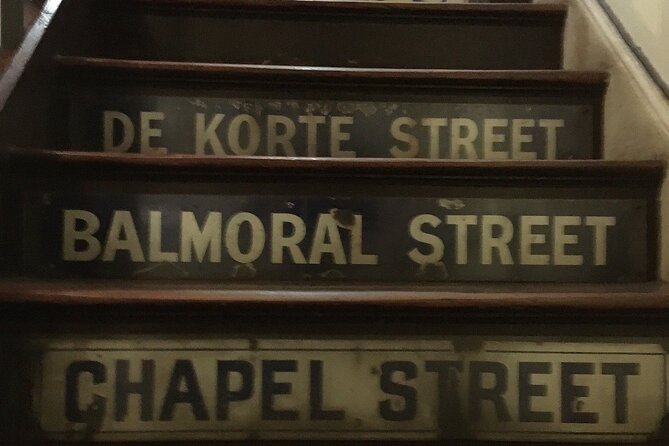
The visit range is roughly 30 minutes to 1.5 hours, depending on how deeply you look and whether you add a guided tour. In practice, I think it is smart to plan for about 1 hour if you want a strong overview without feeling frantic.
The museum includes enough to fill time, but it also lets you choose your depth. You can move quickly through some areas, then stop longer at the map and the testimony displays. The key is to avoid scheduling it right at the end of a packed day where you feel pressured to “finish.”
Also, remember that this is not just information. It is an emotional encounter. Even if you read quickly, you may want time afterward to shake it off and reset before you head to restaurants or nightlife.
For planning your day, place District Six Museum when your energy is stable. Mid-morning or early afternoon can work well because you can walk in, settle, and focus. If you go late afternoon, fine, just be realistic about fatigue.
And if you are pairing this with other Cape Town neighborhood history stops, try not to stack too many heavy sites in one row. A little spacing makes your brain hold onto the meaning, not just the sadness.
Price and logistics: mobile ticket, small groups, and a quick entry plan

Let’s talk value and practicalities, because nobody wants museum chaos on vacation.
First, you are buying an entrance ticket for the District Six Museum. That means you are not paying extra for entry. Guided tours are optional, which gives you flexibility if you decide you want a human guide once you are there.
Second, your ticket is a mobile ticket. That helps because it reduces paper hassles. You get confirmation at the time of booking, so you have a record ready when you arrive.
Third, the experience is capped at a maximum of 15 travelers. That small limit matters, especially if you choose a guided tour. Small groups usually make the tour feel more like a conversation than a lecture.
One more thing to watch for. There can be occasional ticket-acceptance hiccups when a venue does not recognize a specific ticket channel. I have seen cases where someone was asked to pay again because the museum did not accept the ticket format from their seller. If that ever happens to you, the practical move is to request a refund through the provider where you purchased the ticket. You will at least protect yourself on the money side while you sort out what the museum can accept.
Finally, the museum is near public transportation, so you do not have to rely entirely on taxis. Even if you are staying central, it can be a relief to have easy transit options.
Overall, for the cost, this is one of the best “buy once, learn a lot, and go at your own pace” museum experiences in Cape Town.
Who should come to District Six Museum (and who might want to pace it)
This works well for a wide range of visitors, but it hits strongest for people who want more than surface tourism. If you like museums that connect history to real lived experiences, you will likely appreciate the museum’s mix of visuals and personal testimony.
It is also built with a family mindset. The museum is educational for adults and children, so if your kids are curious and old enough to handle serious topics, you can make this a meaningful stop. If you have very young kids or anyone who is easily overwhelmed by heavy themes, consider whether you want a shorter visit and less time in the most intense sections.
Language can also shape your experience. The museum uses multiple formats, and staff are there to help, but your comfort with reading and listening will affect how much you take in. Going self-guided can help, because you can pause whenever you need.
If you are traveling solo, you will likely enjoy how personal the stories feel, especially with staff members who may be displaced residents themselves. If you are in a group, the small group cap on guided tours makes it easier to feel included.
And if you are a photographer or videographer, treat it like a museum with boundaries. Look first, ask questions if needed, and focus on seeing. The subject is about people and memory, not about capturing content.
Should you book this District Six Museum ticket?

Yes, you should book it if you want a low-cost, high-impact Cape Town museum visit where you can choose your pace. This ticket gives you flexible timing, admission included, and the option to add a guided tour for extra context. At $3.71, you are spending less than most coffee-and-snack combos for an experience that connects directly to apartheid-era forced removals and community life.
Skip booking only if you know you are not emotionally ready for painful history right now. There is no way to make this topic light. But you can still make it manageable by giving yourself enough time and by choosing self-guided if you prefer control over your pace.
My quick decision tip: if you can spare about an hour and you are okay with serious subject matter, this ticket is a strong buy.
FAQ
How much does the District Six Museum admission ticket cost?
The price is $3.71 per person.
How long does the visit usually take?
The experience duration is approximately 30 minutes to 1.5 hours.
Is admission included in the ticket price?
Yes. The entrance ticket is included.
Can I explore the museum on my own?
Yes. You can take in the exhibitions independently with a self-guided visit.
Are guided tours included?
Guided tours are an optional extra, so they are not included in the ticket by default.
Is there a limit on group size?
Yes. The maximum group size is 15 travelers.
Is this ticket mobile?
Yes. It is a mobile ticket.
Is the museum near public transportation?
Yes. It is near public transportation.
Are service animals allowed?
Yes. Service animals are allowed.
What is the cancellation policy?
You can cancel for a full refund up to 24 hours before the experience’s start time. If you cancel less than 24 hours before, the amount paid is not refunded.
Under Glass and Behind Ropes in Cape Town
Apartheid History: Other Sites We Have Documented
- Township – Langa – Apartheid Museum Plus Arts and Culture Tour
- Robben Island Nelson Mandela’s Prison Museum and Table Mountain Plus All Tickets
- Robben Island, Bokaap, Mandela Glasses. tickets conf 8am next day
- Robben Island Nelson Mandela’s Prison Museum + Township Tour incl Ferry Tickets
- Nelson Mandela’s Robben Island Prison Museum Cape Town City Tour + Ferry Tickets
Keep going: the rest of our Cape Town write-ups
- Cape Town to Cape Point Helicopter Flight – 48Min
★ 4.2 · 3 reviews - Full Day Private Hiking Table Mountain & City
★ 5.0 · 3 reviews - Sandboarding with jeep – drive uphill
★ 5.0 · 3 reviews - Full Day Tour for Cape of Good Hope & Boat to Seals Island
★ 5.0 · 3 reviews - 10 Day South Africa Tour Joburg to Cape Town
★ 5.0 · 3 reviews - 5 Day Garden Route Small Group Tour Fr CapeTown – Departs Mondays
★ 5.0 · 3 reviews
Apartheid History Tours, compared.
 ★ 4.8Jo’berg in 1 Day: Soweto, Apartheid Museum & City TourFrom $142524 reviews
 ★ 4.8Johannesburg: Full-Day Tour with Soweto and Apartheid MuseumFrom $104478 reviews
 ★ 5.0Full-Day Soweto, Apartheid Museum and Lunch TourFrom $108410 reviews
 ★ 5.0Half Guided Day Tour of Soweto And Apartheid MuseumFrom $69356 reviews
 ★ 5.0Ultimate Johannesburg Soweto Experience with Apartheid MuseumFrom $108313 reviews
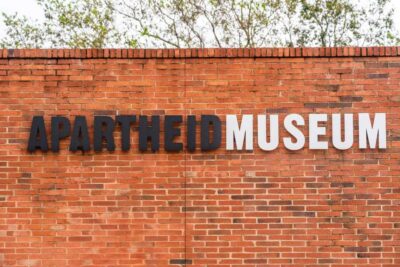 ★ 4.5Soweto: Hop-On Hop-Off Bus, City Tour and Apartheid MuseumFrom $50250 reviews
 ★ 4.9Johannesburg and Soweto Apartheid Full Day Tour w/LunchFrom $93219 reviews
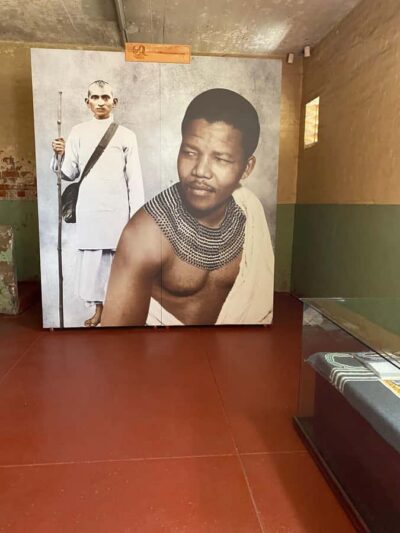 ★ 4.9Johannesburg: Soweto & Apartheid Museum Half-Day TourFrom $8499 reviews
Browse the lists this tour appears in