
REVIEW · ROBBEN ISLAND TOURS
Nelson Mandela’s Robben Island Prison Museum Cape Town City Tour + Ferry Tickets
Robben Island hits you in the chest, then the city tells the next chapter. This full day combines round-trip ferry access to Nelson Mandela’s prison site with Cape Town landmark stops in air-conditioned comfort. I like that it helps you skip the worst hassles, from ticket lines to hunting for the meeting point.
My favorite part is the mix of places that connect directly to South Africa’s political story, especially the time inside the prison museum. The other win for me is the smart pacing, with enough time at each stop to actually look around, not just shuffle past. One thing to consider, though, is that this is an emotional day. You should also expect good walking between sights, plus heat and sun when you’re off the vehicle.
In This Review
- Key highlights you’ll feel from day one
- Why Robben Island plus Cape Town makes sense as one full day
- Getting to the Robben Island ferry: V&A Waterfront, Clock Tower access
- Robben Island Prison Museum: what to expect when you step inside
- The day’s pacing around Robben Island (and why lunch later helps)
- Bo-Kaap and the Cape Malay Quarter: color, cobbles, and community
- Company Gardens: a Dutch East India Company refreshment stop from the 1650s
- Castle of Good Hope: 17th-century Dutch power in full view
- District Six Museum: a guided look at forced removals
- Where the Diamond Museum fits in your ticket bundle
- Price and value: what you’re really paying for at $171.49
- Small group, air-conditioned transport, and why that matters in Cape Town
- Guides and service you should look for (Remmy and Kuda)
- Who this tour is best for, and who might want something else
- Should you book this Mandela day tour?
- FAQ
- What time does the tour start?
- How long is the tour?
- Where does the tour begin?
- Is hotel pickup included?
- What’s included for Robben Island?
- Is lunch included?
- Is there a cancellation refund if weather affects the tour?
Key highlights you’ll feel from day one
- Hotel pickup to V&A Waterfront means you start calmly, not stressed.
- Ferry tickets to Robben Island keep the day moving with less waiting.
- Mandela’s prison cell experience is the emotional core of the trip.
- Bo-Kaap and its Cape Malay Quarter streets add color and culture to the schedule.
- District Six Museum gives context to forced removals through an on-the-ground guided visit.
- Small group size (max 8) makes it easier to ask questions and stay together.
Other guided visits to Robben Island we have reviewed
- Cape Town: Robben Island Ferry Ticket and Guided Prison Tour★ 4.1 · 1,792 reviews
- Cape Town: Robben Island Ferry Tour with 1-Way Hotel Pickup★ 4.2 · 1,380 reviews
- Cape Town: Robben Island Ferry Ticket and Townships Tour★ 4.5 · 400 reviews
- Cape Town: Robben Island Ferry with Prison Ticket and Tour★ 4.0 · 324 reviews
Why Robben Island plus Cape Town makes sense as one full day
This tour works because it stitches together geography and history. You start with the place where Mandela was imprisoned for 18 of his 27 years, then you move through Cape Town neighborhoods and civic landmarks that shaped the city he fought to change.
I also appreciate the structure: each stop is spaced out enough that you get your bearings, but not so long that the day drags. Even the transport is planned so you are not guessing routes or timing trains and taxis for yourself.
Finally, the emotional weight is real, but so is the practical value. You get the ferry ride, the museum access, and several major sights packed into an 8-hour day that still feels organized.
Getting to the Robben Island ferry: V&A Waterfront, Clock Tower access
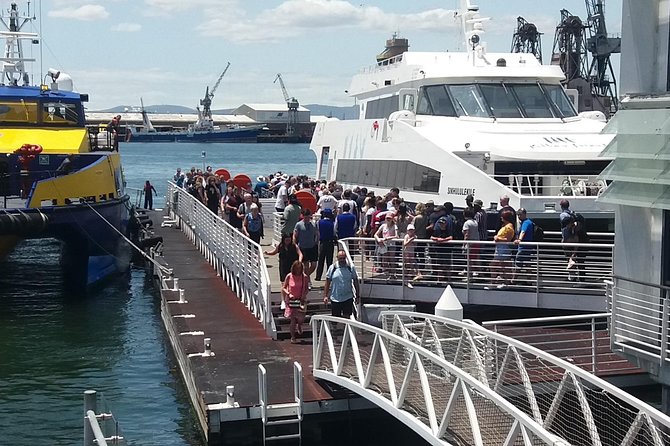
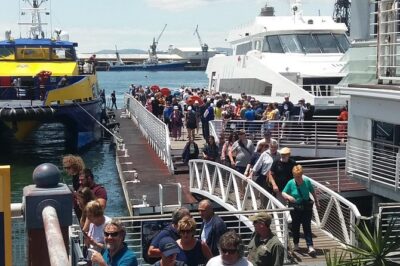
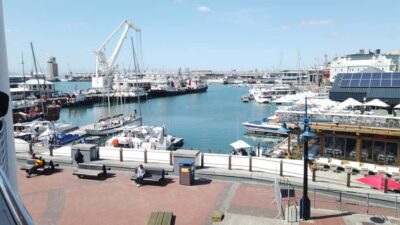
Your morning starts with pickup from your hotel in Cape Town, then a drive to the V&A Waterfront. From there, you board the Robben Island ferry departing from the Nelson Mandela Gateway at the Clock Tower area.
That detail matters more than you might think. When you show up with the right ticket, at the right dock, you avoid the kind of scramble that can throw off your whole day. The tour also includes bottled water, which is a small comfort that adds up when you’re spending hours in sun and sea air.
The day is built around this transfer. You are not left to figure out the ferry schedule, and you are not stuck waiting while everyone else slowly finds the paperwork.
Robben Island Prison Museum: what to expect when you step inside
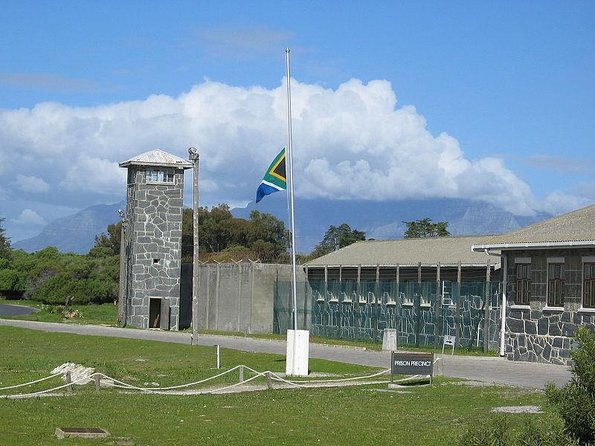
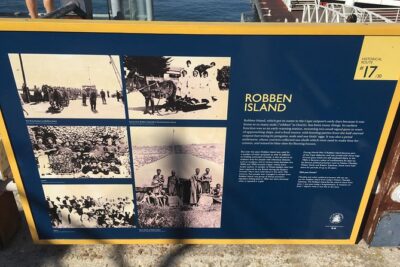
Robben Island is the centerpiece for a reason. The prison museum explains the place as a state reminder of the harsh conditions endured under apartheid rule. It also connects to Mandela’s long imprisonment, the isolation of the island, and the broader story of segregation-era violence and control.
One reason this stop lands hard is that it is not just a photo museum. You go through the prison experience with guided interpretation, and the guides are either ex-prison warders or ex-prisoners of Robben Island. That lived perspective changes how the information lands in your mind, even if you already know Mandela’s biography.
You also get time to physically move through the space, and that is key. When you can actually see where he lived during those 18 years, the scale of the confinement stops being abstract.
The day’s pacing around Robben Island (and why lunch later helps)
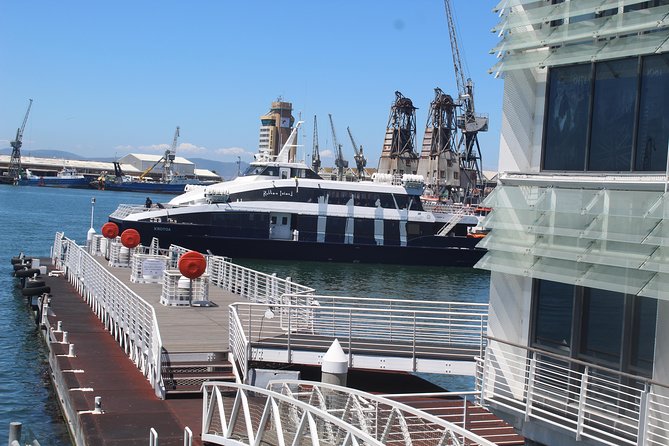
Stop 1 is listed at about 4 hours with admission included, which typically covers the ferry journey and the museum time before you head back. After you return to the Waterfront, lunch comes next, and pickup follows right away after that.
I like the order. Robben Island is mentally taxing, and having the day naturally flow into food and then city sights keeps you from feeling stranded in between activities. It also means you can recharge before the neighborhoods and museums that follow.
If you are the type who gets anxious about timing, this structure helps. You are not trying to coordinate your own next move while still processing a heavy experience.
More sites and museums that record the apartheid years
Bo-Kaap and the Cape Malay Quarter: color, cobbles, and community
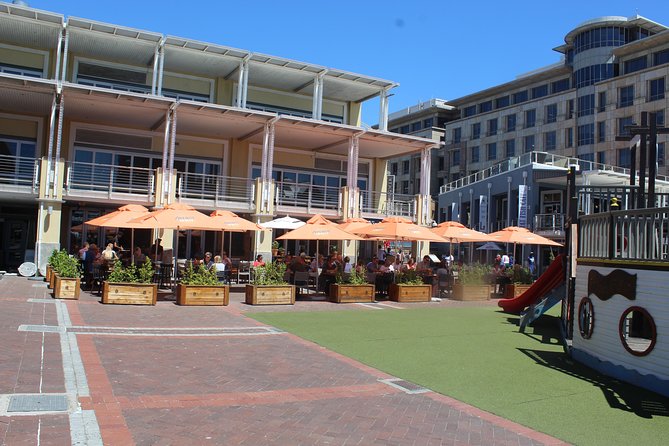
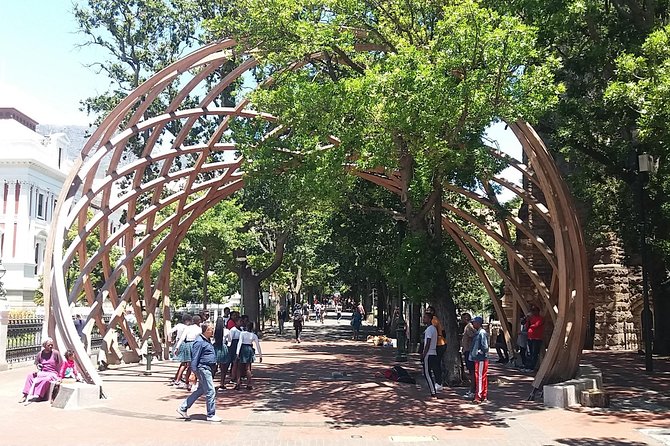
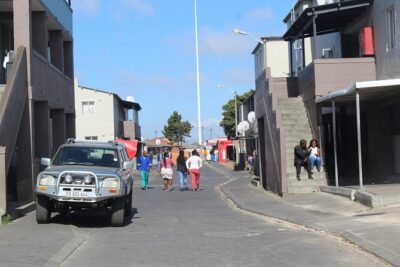
After Robben Island, you head to Bo-Kaap, a historic area famous for colorful houses and cobblestoned streets. The name Bo-Kaap literally points to an upper area, and the neighborhood is widely known as the Cape Malay Quarter.
What makes this stop more than a pretty street walk is the cultural context. Bo-Kaap is traditionally multicultural, with a predominantly Muslim community. The neighborhood’s connections trace back to enslaved people who were imported from Malaysia, Indonesia, and other parts of Africa, which is part of why the area carries the term Malay.
This is also a good moment to reset emotionally. It is not the same kind of heavy as the prison museum, but it keeps you grounded in the reality that Cape Town is not only about one chapter of history. It is about how communities survived, adapted, and built identity in a city under pressure.
Company Gardens: a Dutch East India Company refreshment stop from the 1650s
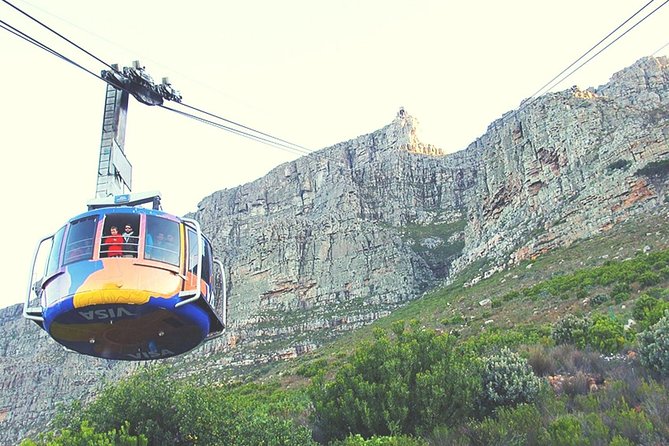
Then you move into Company Gardens, a central Cape Town heritage park with a story that reaches back to the 1650s. The gardens were created by the Dutch East India Company to help supply sailors, including fresh produce and freshwater.
What I like here is how the name itself makes the point. The garden functioned like a refreshment station for ships passing around the tip of Africa on routes to the East, after months at sea. If you pay attention to the park’s landmarks and memorials, you start seeing how a working supply garden became a place where public memory could also live.
This stop is listed at about 1 hour, and because entry is free, it is a low-stress add-on. You can linger a bit, take shade when you need it, and still keep the day moving.
Castle of Good Hope: 17th-century Dutch power in full view
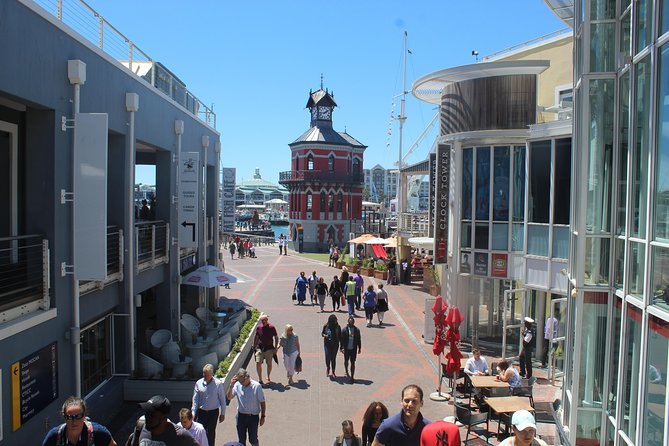
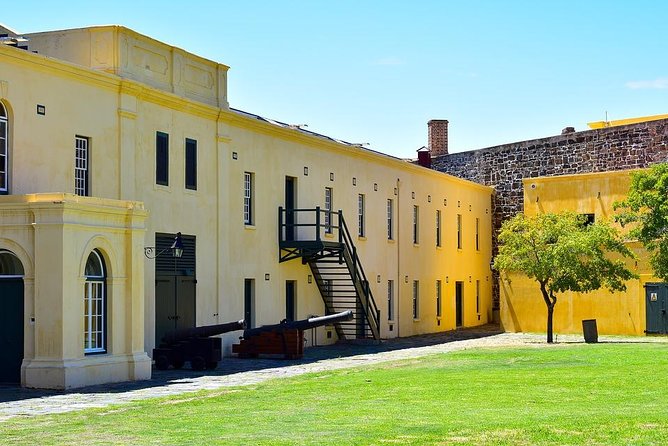
Next comes the Castle of Good Hope, one of Cape Town’s most imposing colonial structures. Built by the Dutch between 1666 and 1679, it is considered the oldest standing colonial building in South Africa.
The castle is tied to civilian, political, religious, and military life in the Cape from around 1679. In your time inside, you’ll also see how it preserved a strong example of 17th-century Dutch East India Company architecture.
This stop also matters because it is anchored with museum content. It houses the William Fehr Collection, a permanent ceramic exhibition called FIRED, and a Castle military museum. So yes, it is architecture and views, but you also get a chance to learn what collections and exhibitions interpret the site today.
District Six Museum: a guided look at forced removals
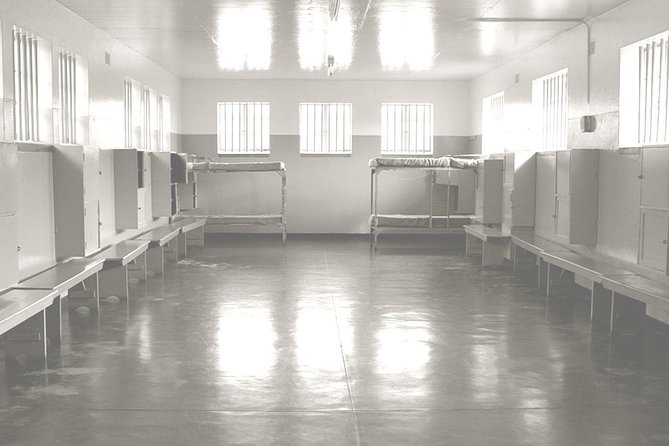
District Six Museum is where the day’s history gets especially personal. The museum was established in 1994 as a memorial to the forced removals of about 60,000 multicultural inhabitants from District Six.
The tour focuses on the forced removals after an apartheid government declaration in 1966, which led to removals in 1968. This is not only facts on a wall. You go with a registered guide for about 1 hour, and the visit is intentionally emotional and structured.
I recommend going in with a little extra patience for your own feelings. You may want to take breaks, step back, or read slower than you normally would. This kind of history does not want you to rush.
Where the Diamond Museum fits in your ticket bundle
Your package includes entry fees to the Diamond Museum as part of the included items. The exact timing of that admission is not spelled out in the schedule details you have here, but it is worth noting because it is a value add.
If you like hands-on interpretation, this can be a helpful palate cleanser between the bigger history moments. If you prefer to focus only on political history, you can treat it as an extra stop that still comes at no extra charge.
Price and value: what you’re really paying for at $171.49
At about $171.49 per person, this tour is not a “cheap day out.” But it also is not just a sightseeing bus loop. You are paying for real logistics and real access.
Here’s what your ticket bundle covers:
- Door-to-door hotel pickup and drop-off
- Return ferry tickets to Robben Island from the Nelson Mandela Gateway at the Clock Tower
- Admission to the District Six Museum and the Castle of Good Hope
- An air-conditioned vehicle plus bottled water
- Bottled water and included entry fees, plus Diamond Museum admission fees
Lunch and drinks are not included, so you will want to plan for that meal on your own. Still, compared with buying Robben Island access, then separately paying for city museum entries and arranging your own transport between stops, this package is often what makes the day feel manageable.
Also, the small group size, maximum 8 travelers, adds value in a practical way. It generally makes it easier to stay on schedule and ask questions at stops without feeling lost in a large crowd.
Small group, air-conditioned transport, and why that matters in Cape Town
Cape Town can be surprisingly comfortable, but it can also get hot and bright fast. The tour includes air-conditioned transport between dispersed locations, which means you can recover between stops instead of baking in transit.
It also helps that you do not have to coordinate multiple meeting spots on your own. The pickup and drop-off structure helps you keep your day coherent, especially with Robben Island as the main event.
If you care about comfort and clarity, that is a big part of the value. The day feels planned, not improvised.
Guides and service you should look for (Remmy and Kuda)
The tour experience strongly depends on how well the team runs the day, and your data includes examples of that kind of care. Remmy is named as an organizer who communicated with guests in advance, answered lots of questions, and helped keep you calm if anything goes off-script.
There is also a mention of a driver named Kuda, which can be a comfort factor. When you have a familiar face handling transport on your side, it reduces the stress of moving between Waterfront, city stops, and museum entrances.
On one occasion, there was a pickup mix-up where nobody met the booking at the rendezvous point. Remmy handled the situation and got the day back on track. That tells you one practical thing to do: if you arrive and cannot find your driver, contact the tour provider right away rather than waiting in frustration.
Who this tour is best for, and who might want something else
This is a strong choice for you if:
- You want Mandela’s Robben Island as the centerpiece
- You want Cape Town’s key landmarks in one packed day
- You prefer organized transfers over figuring out ferry timing and museum logistics
It may be less ideal if:
- You want a relaxed, slow-paced day with long free time
- You get overwhelmed by emotionally heavy historical content
In terms of participation, the tour says most travelers can participate, and it allows service animals. That’s helpful if you have specific needs, though the day includes multiple stops and time outside the vehicle when you are walking between attractions.
Should you book this Mandela day tour?
I think you should book this tour if you want the best of both worlds: an unforgettable encounter with Mandela’s prison history plus a well-paced overview of Cape Town’s civic and cultural sites. The ferry access and included admissions make it easier to plan, and the small group setup is a practical bonus.
If you tend to travel best when everything feels scheduled, this fits your style. If you prefer to build your own day, this may feel structured, and you might prefer a more independent plan.
My final take: this is one of those days where you leave with more than photos. You leave with a clearer understanding of why Cape Town matters, and how Mandela’s story connects to the city around him.
FAQ
What time does the tour start?
The start time is listed as 8:30 am.
How long is the tour?
The duration is approximately 8 hours.
Where does the tour begin?
The meeting point is the Silo Hotel, Silo Square, Victoria and Alfred Waterfront, Cape Town.
Is hotel pickup included?
Yes, hotel pickup and drop-off after the tour are included, and pickup is offered.
What’s included for Robben Island?
Return ferry tickets to Robben Island are included, departing from the Nelson Mandela Gateway at the Clock Tower, and admission to the Robben Island Museum is included.
Is lunch included?
No, lunch and drinks are not included.
Is there a cancellation refund if weather affects the tour?
The experience requires good weather. If it is canceled due to poor weather, you will be offered a different date or a full refund. You can cancel up to 24 hours in advance for a full refund.
Under Glass and Behind Ropes in Cape Town
Apartheid History: Other Sites We Have Documented
- Township – Langa – Apartheid Museum Plus Arts and Culture Tour
- Robben Island Nelson Mandela’s Prison Museum and Table Mountain Plus All Tickets
- Robben Island, Bokaap, Mandela Glasses. tickets conf 8am next day
- Robben Island Nelson Mandela’s Prison Museum + Township Tour incl Ferry Tickets
- Skip the Line: District Six Museum Admission Ticket
Robben Island: Further Guided Visits
Keep going: the rest of our Cape Town write-ups
- Cape Town to Cape Point Helicopter Flight – 48Min
★ 4.2 · 3 reviews - Full Day Private Hiking Table Mountain & City
★ 5.0 · 3 reviews - Sandboarding with jeep – drive uphill
★ 5.0 · 3 reviews - Full Day Tour for Cape of Good Hope & Boat to Seals Island
★ 5.0 · 3 reviews - 10 Day South Africa Tour Joburg to Cape Town
★ 5.0 · 3 reviews - 5 Day Garden Route Small Group Tour Fr CapeTown – Departs Mondays
★ 5.0 · 3 reviews
Robben Island Tours, compared.
 ★ 4.1Cape Town: Robben Island Ferry Ticket and Guided Prison TourFrom $791,792 reviews
 ★ 4.2Cape Town: Robben Island Ferry Tour with 1-Way Hotel PickupFrom $711,380 reviews
 ★ 4.5Cape Town: Robben Island Ferry Ticket and Townships TourFrom $89400 reviews
 ★ 4.0Cape Town: Robben Island Ferry with Prison Ticket and TourFrom $90324 reviews
 ★ 4.3Cape Town: Table Mountain and Robben Island TourFrom $111260 reviews
 ★ 4.5Robben Island Tour including Pick Up & Drop Off from Cape TownFrom $63248 reviews
 ★ 3.0Robben Island Ferry Ticket and Guided Prison TourFrom $69160 reviews
 ★ 4.0Robben Island Experience: Pre-Booked Ticket & Return TransfersFrom $60126 reviews
Browse the lists this tour appears in