
REVIEW · WALKING TOURS
Innercity Walking Tour
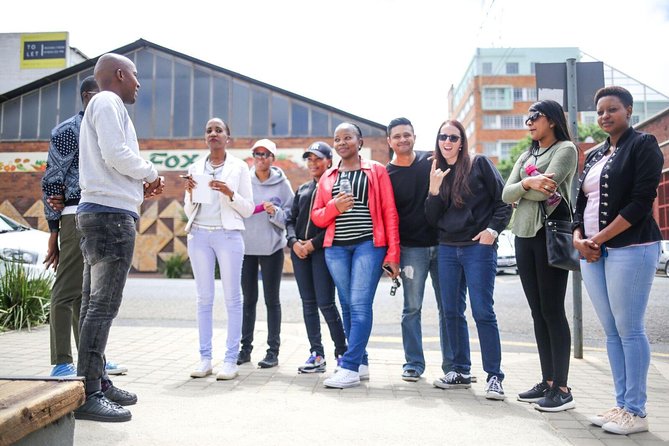
One street at a time, you start to read Johannesburg. This inner-city walking tour gets you out from behind windows and into the neighborhoods, markets, and landmarks that shaped the city. I especially liked the way you learn how to navigate public transport as part of the day, not as a separate chore.
My second favorite part is the mix of places with very different vibes, all within one smooth 4-hour route. You get the creative energy of Maboneng Precinct, then you shift to traditional shopping at Kwa Mai Mai Traditional Market, and you even slow down for books and LPs at Collectors Treasury.
One thing to consider: the route is designed for a moderate fitness level, and it is still a walking day with several neighborhood transfers. If you need long stretches of sitting, you may find the pace a bit brisk.
In This Review
- Key things to know before you go
- Why walking Johannesburg beats the usual fast tour
- Price and logistics that actually matter for your day
- Stop 1: Maboneng Precinct, the Place of Light turnaround
- Stop 2: Kwa Mai Mai Traditional Market for real shopping
- Stop 3: Collectors Treasury, second-hand books plus LPs
- Stop 4: Carlton Centre skyline and the city’s gold-to-today story
- Stop 5: Gandhi Square, law, identity, and downtown memory
- Stop 6: Chancellor House and the Mandela and Tambo legal roots
- The guide quality is a big part of the experience
- How the day feels in practice, and how to plan for it
- Who should book this Johannesburg walking tour
- Should you book this tour?
- FAQ
- What is the duration of the Innercity Walking Tour in Johannesburg?
- How much does the tour cost?
- Where do I meet for the tour?
- What time does the tour start?
- Is the tour fully accessible for everyone, or does it require physical fitness?
- What is included in the price?
- Are lunch or refreshments included?
- Can I get a refund if I cancel?
Key things to know before you go
- Maboneng Precinct, Place of Light energy: a downtown revival story you can see with your own eyes.
- Kwa Mai Mai Traditional Market: trade in medicines, attire, beadwork, crafts, and practical souvenirs.
- Collectors Treasury, a book-lover stop: an 8-storey second-hand bookstore plus LPs, maps, postcards.
- Carlton Centre, big-city skyline views: panoramic look at Johannesburg, tied to the city’s gold rush to today.
- Gandhi Square and Chancellor House history: downtown law, activism, and the mining district story in one arc.
- Small group size, up to 20 people: easier questions and better flow through crowded stops.
More routes best done on foot
- Soweto: Walking Tour with a Local Guide and Lunch★ 4.9 · 648 reviews
- Soweto Walking Tour with Lunch★ 5.0 · 288 reviews
- Johannesburg: Local Food Tasting Guided Walking Tour★ 4.7 · 192 reviews
- Johannesburg: City Centre Walking Tour★ 4.8 · 152 reviews
Why walking Johannesburg beats the usual fast tour
Johannesburg has a way of feeling different depending on where you stand. From inside a vehicle, the city can look like a blur of stops. On foot, you notice the texture, the storefronts, the street life, and the way people move between areas.
This tour is built around that idea. You are guided through several real districts, not just points of interest from a map. The walk also helps you learn the rhythm of the city, including how public transport fits into day-to-day travel, which is a huge win if you plan to explore more on your own later.
And there is another practical upside: you spend less time waiting in the wrong place. The day includes skip-the-line access to landmarks, so you are not stuck killing time while other groups wrangle tickets and queues.
Price and logistics that actually matter for your day
At $50.04 per person for a tour that runs about 4 hours, the value comes from the built-in momentum. The itinerary is tightly packed, and many stops include an admission ticket, so you are not constantly paying extra for entry.
You also get a mobile ticket, which is one less thing to manage in a city where plans can change quickly. The group max is 20 travelers, which usually keeps the experience from turning into a long line shuffle.
One more real-world detail: start time is 10:00 am, and you meet at 302 Fox St, Jeppestown. The tour ends back at the same meeting point, so you are not left figuring out a late return.
Stop 1: Maboneng Precinct, the Place of Light turnaround
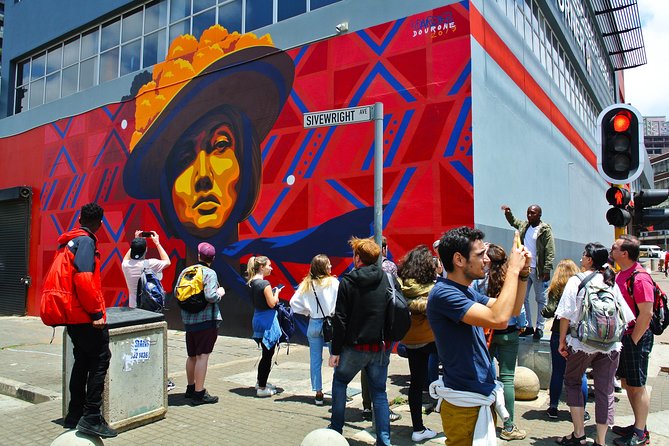
Maboneng means Place of Light, and that name fits what you see here. The story is not theoretical. This area was once viewed as a no-go zone due to urban decay, and today it is a center for creative work by artists, designers, and entrepreneurs.
On this stop, you spend about 45 minutes, which is long enough to actually wander rather than just snap photos and rush out. Look for the street-level details. It is the kind of place where you can learn a lot just by watching how people use the public spaces, and how art shows up in ways that feel part of everyday life.
The benefit for you is clarity. Instead of hearing that downtown has changed, you can connect the dots yourself. You also get a calmer pace at the start of the walk, which helps if you are still adjusting to the city.
If you dislike art-focused neighborhoods, you might want to treat this stop as a short orientation into how Johannesburg is reinventing itself. It is not just murals here, it is a whole scene.
Stop 2: Kwa Mai Mai Traditional Market for real shopping
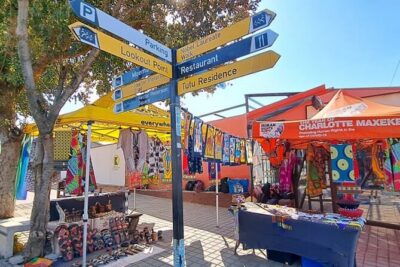
After creative streets, Kwa Mai Mai Traditional Market brings you back to practical, local life. This is one of the older markets in Johannesburg. It used to be a horse stable, and now it holds over 176 stalls.
You spend about 30 minutes, and the focus is traditional items you can bring home. Expect things like traditional medicines, African attire, beaded pieces, artefacts, walking sticks, and craft works. Even if you are not shopping heavily, this stop is valuable for understanding what people consider worth buying and carrying.
What I like about markets like this is that they work on multiple levels. You get souvenirs, yes, but you also learn vocabulary and categories of goods you might not see elsewhere. That makes future shopping trips easier, because you know what to ask for and what to look for.
One consideration: markets can be crowded and visually intense. Go in with a relaxed pace. If you are sensitive to the hustle, decide early whether you want to browse slowly or keep moving to avoid getting overwhelmed.

Stop 3: Collectors Treasury, second-hand books plus LPs
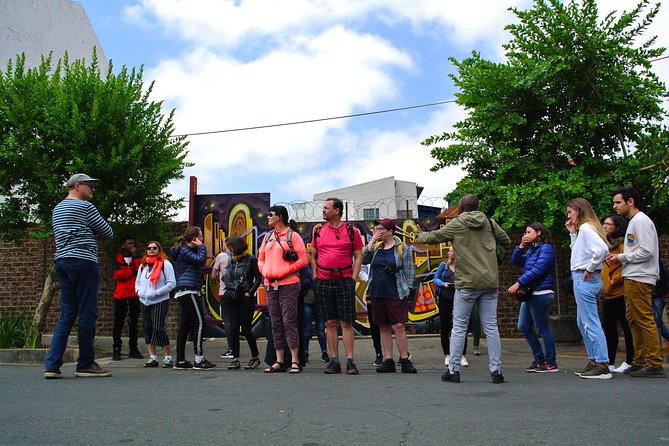
Then you hit a totally different mood at Collectors Treasury, described as the largest second-hand bookstore in the Southern hemisphere. You get about 15 minutes here, which is short, but it works because the place is visually packed.
It is an 8-storey building with books stacked everywhere. And it is not only books. You might also find LPs, maps, porcelain, and postcards. For book lovers and music nerds, this is one of those stops that makes you slow down without realizing it.
The value of this stop on a guided walking itinerary is that you are not just wandering blindly. The guide keeps you oriented, so you spend your time looking at interesting sections rather than trying to figure out where everything is.
The only drawback is time pressure. With just 15 minutes, you will likely not see it all. If you want a deeper browse, I suggest making a mental wish list of what you want first, then let the browsing be quick and decisive.
Stop 4: Carlton Centre skyline and the city’s gold-to-today story
Next comes Carlton Centre, and this is where the tour expands from neighborhood life to the big picture. The building was constructed from 1969 to 1976 by the American architectural firm Skidmore, Owings and Merrill.
You spend about 1 hour here, and the main payoff is the view. At 223 meters above Johannesburg, it is the kind of panorama that helps you understand how districts relate to each other. You also get narration that ties the landscape to events, covering the gold rush in 1886, the urban decline in the late 1980s and 1990s, and the city centre’s re-birth.
That story connection is what turns the stop from scenic to meaningful. A view is nice, but history plus skyline makes the city make sense. It also helps when you are walking later, because you start recognizing patterns rather than just absorbing random scenes.
A practical consideration: it is still a landmark with space and foot traffic. If you prefer quieter viewpoints, arrive with patience and keep your eyes on the guide, so you do not get separated in the flow of people.
Stop 5: Gandhi Square, law, identity, and downtown memory
Gandhi Square Precinct is named after Mahatma Gandhi, the Indian leader and human rights activist who spent 21 years in South Africa and had his law firm in downtown Johannesburg.
You only have about 20 minutes, but it is enough to connect the name on a sign to a larger story about legal history and activism. This stop also gives you a change of pace from markets and buildings. It is more about placing names and memory into the geography.
If you like political history, this is the kind of stop where one detail can reframe the whole day. You start noticing how Johannesburg’s downtown is full of references to people who shaped systems, not only streets that hosted daily life.
Stop 6: Chancellor House and the Mandela and Tambo legal roots
The final stop is a walk through the Main Street mining district toward Chancellor House. You spend about 30 minutes, which is a good length for a history-focused segment.
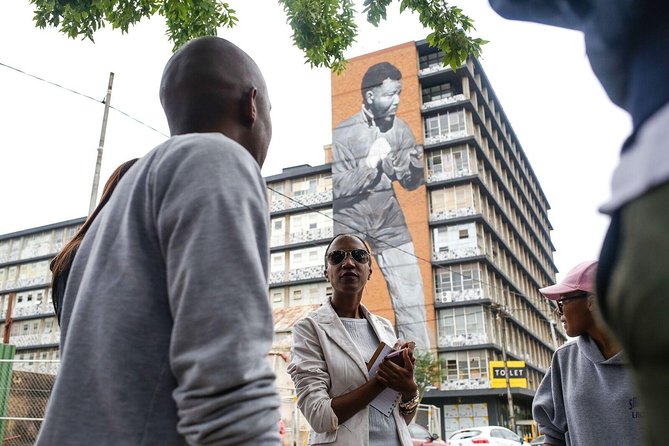
Chancellor House, a humble three-storey building, was home in the 1950s to Mandela and Tambo Attorneys, where they set up South Africa’s first black-owned law firm. Opposite the old law firm is The Shadow Boxing Sculpture, designed by artist Marcos Cianfanelli, based on a famous Bob Gosani image of young Mandela boxing.
I like the way this stop uses two tools: a real address tied to a legal milestone, plus a sculpture that turns that memory into something you can see in your peripheral vision. It helps you remember the story, because it is not only read, it is encountered.
If you are tired by the end of the day, this is still worth it. Even with less energy, you can catch the central connection between legal power and identity, and you will likely feel a stronger sense of place as you finish the walk back near where you started.
The guide quality is a big part of the experience
The tour lives or dies on guidance. The standout pattern from the ratings is how strong the commentary is, and how friendly and accommodating the guides can be.
One review credits a guide named Brite with being super sympa and helping people find places they would not have known. The repeated theme is that the guide does more than point. They explain, add context, and help you make sense of why each stop exists in the city’s story.
That matters because Johannesburg can be complex if you only see it through headlines. On this tour, you get a narrative thread that connects art spaces, traditional markets, a book world, a major skyline landmark, and legal history into one walkable arc.
How the day feels in practice, and how to plan for it
This is a 4-hour inner-city experience with multiple stops that each take time. The schedule is built to alternate scenes. You go from an art district to a traditional market, then to a quiet indoor browsing-style stop, then to skyline views, then back to names and legal history.
Because lunch and refreshments are not included, you should plan your food timing. If you start at 10:00 am, you will likely be near a snack window by the time the day ends, so eat before you go or make a plan right after.
Wear shoes that can handle a day of walking. Even with short transfers, you are moving enough that comfort matters. Also, keep your phone ready if you are using the mobile ticket, and be ready to show it at the right moment.
Who should book this Johannesburg walking tour
This tour is a strong fit if you:
- want an inner-city Johannesburg day that goes beyond the usual quick highlights
- like guided context as you walk, not just a checklist of stops
- enjoy markets, book and music culture, and city history mixed together
- want a small group experience that stays manageable, up to 20 people
It may not be the best fit if you:
- need a very slow pace
- prefer a purely scenic route with minimal historical narration
- do not want to shop, even lightly, at a market stop
Should you book this tour?
Yes, if you want a Johannesburg day that feels grounded and organized. The value is strongest when you care about connections, like seeing how Maboneng’s revival story fits into what you later learn at Carlton Centre, or how legal history at Chancellor House changes the way you read Gandhi Square’s name.
Book it if you can. It is typically reserved about 37 days in advance, so don’t wait too long if your dates are fixed. The best part is that you leave with more than photos. You leave with a sense of how to orient yourself in the city, what matters downtown, and where to look for culture when you keep exploring on your own.
FAQ
What is the duration of the Innercity Walking Tour in Johannesburg?
The tour lasts about 4 hours.
How much does the tour cost?
The price is $50.04 per person.
Where do I meet for the tour?
You meet at 302 Fox St, Jeppestown, Johannesburg, 2043, South Africa.
What time does the tour start?
The start time is 10:00 am, and it ends back at the meeting point.
Is the tour fully accessible for everyone, or does it require physical fitness?
The tour is listed for travelers with a moderate physical fitness level.
What is included in the price?
It includes an air-conditioned vehicle and all fees and taxes. Admission ticket(s) are included for the tour stops listed in the itinerary.
Are lunch or refreshments included?
No, lunch and refreshments are not included.
Can I get a refund if I cancel?
Yes, you can cancel for a full refund if you cancel up to 24 hours in advance of the experience’s start time.
Walk It: More of Johannesburg
Keep going: the rest of our Johannesburg write-ups
- Soweto Private half day tour
★ 4.5 · 3 reviews - Johannesburg’s Migration History with a local lunch
★ 5.0 · 3 reviews - Johannesburg: Soweto, Apartheid Museum, and Cradle tours
★ 4.7 · 3 reviews - Soweto Apartheid Museum and Lunch
★ 5.0 · 3 reviews - Bathongo Rhino & lion park nature reserve tour
★ 5.0 · 3 reviews - Johannesburg: Elephant and Monkey Sanctuary Half Day Tour
★ 5.0 · 3 reviews
Walking Tours, compared.
 ★ 4.9Soweto: Walking Tour with a Local Guide and LunchFrom $43648 reviews
 ★ 5.0Plettenberg Bay: Bungee Jumping with Zipline and Sky WalkFrom $97506 reviews
 ★ 4.9Cape Town: Nathi Langa Township Walking TourFrom $31493 reviews
 ★ 4.9Cape Town: Art, Culture & History Walking TourFrom $37392 reviews
 ★ 4.8Cape Town: Street Art Walking Tour in WoodstockFrom $37293 reviews
 ★ 5.0Soweto Walking Tour with LunchFrom $40288 reviews
 ★ 4.7Stellenbosch: Guided Historical Walking TourFrom $18283 reviews
 ★ 4.8Cape Town: Langa Township Walking TourFrom $37272 reviews
Browse the lists this tour appears in