
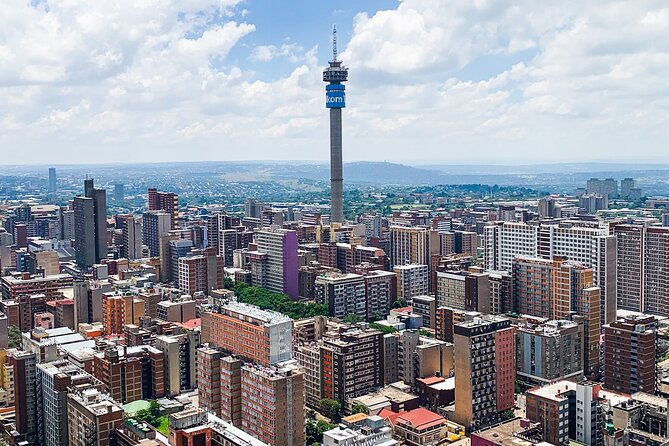
REVIEW · JOHANNESBURG CITY TOURS
Johannesburg: City Centre Walking Tour
Johannesburg CBD feels like a history lesson you can walk through. On this 3 hour walking tour you go from Gandhi Square into the architecture, politics, and culture that shaped modern Jozi, with Mandela Bridge as the big payoff.
What I love most is the way it connects places you might otherwise pass with meaning you can actually use. I especially like the Mandela and Oliver Tambo connection at Chancellor House, plus the trip into the Workers Museum area to understand migrant labor history, not just names on plaques.
One consideration: this is a city-center walk with several photo stops and steady walking, so it can feel like a lot if you have limited stamina. It also notes it is not suitable for pregnant women, and wheelchair users should be cautious given the mixed accessibility notes.
In This Review
- Key things you’ll notice on this Jozi walk
- Price and value: is $40 worth a 3 hour CBD walk?
- Meeting point: starting outside Nando’s Gandhi Square
- Carlton Centre and the High Court: how the skyline frames the story
- Marshalltown and Johannestown: street-level Johannesburg, not postcards
- Beyers Naude Square and corporate Johannesburg: two faces of the same city
- Nelson Mandela law firm connection at Chancellor House area
- Newtown and the Workers Museum: migrant labor history with real context
- Mary Fitzgerald Square and Market Theatre: culture, street art, and places to pause
- Mandela Bridge: the best views and the final photo payoff
- Braamfontein ending: youthful energy after the heavy history
- Safety, route guidance, and why the guide really matters
- Who this tour is best for
- Practical tips so your experience feels smooth
- Bottom line: should you book this Johannesburg city center walking tour?
- FAQ
- How long is the Johannesburg City Centre Walking Tour?
- Where do I meet the guide?
- What is included in the ticket price?
- Is lunch included?
- What language is the tour guide?
- Are all ages welcome?
- Is the tour suitable for wheelchair users?
- What is the cancellation policy?
Key things you’ll notice on this Jozi walk

- Gandhi Square start, CBD architecture throughout: you get your bearings fast, with landmarks placed in context.
- Mandela era stops you can picture: Chancellor House is tied to Nelson Mandela and Oliver Tambo’s first black-owned law firm.
- Newtown and Workers Museum focus: migrant labor history turns the spotlight on how Johannesburg was built.
- Market Theatre area for culture and street art energy: culture, galleries, and public art show up in the details.
- Mandela Bridge photo moments plus views: the walk finishes with a strong scenic reward.
- Braamfontein as the closing vibe: youthful creative energy is the final shift in mood.
More of Joburg, neighbourhood by neighbourhood
- From Johannesburg: Pilanesberg Nature Reserve Game Safari★ 4.8 · 1,327 reviews
- Johannesburg: Hop-On Hop-Off Bus with Optional Soweto Tour★ 4.6 · 985 reviews
- Soweto /Johannesburg and Apartheid Museum Guided Full Day Tour★ 5.0 · 932 reviews
- Johannesburg Hop-On Hop-Off City Tour with Soweto Option★ 4.5 · 768 reviews
Price and value: is $40 worth a 3 hour CBD walk?
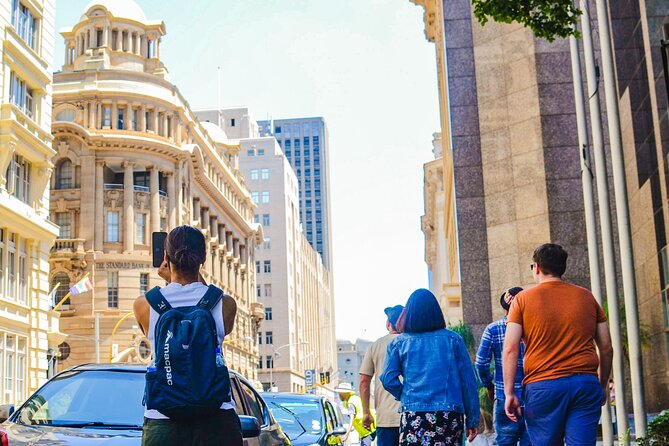
At $40 per person for about 3 hours, this tour is priced like a serious guided experience, not a quick sightseeing stroll. You also get bottled water, entrance fees, and a live English speaking guide, which matters in a city where self-guided walking can feel overwhelming fast.
The value is in the pacing. The route includes a mix of guided stops and photo breaks, which lets you learn while you’re still moving, instead of sitting through a lecture. Many walkers also end up with extra time when the guide slows down for questions, like I’ve seen happen with guides such as Refiloe and Thabo.
If you are the type who likes history with street-level context, this is a good buy. If you only want wide-open, low-effort sightseeing, you might find the stops a bit dense.
Meeting point: starting outside Nando’s Gandhi Square
You meet your guide outside Nando’s Restaurant at Gandhi Square, in the Metropolitan Building area. It’s an easy anchor point for your first photos, and it helps you start with confidence in the Johannesburg CBD.
One small practical tip: arrive a few minutes early. Starting on time matters on a walking tour, especially when you want the group to stay together through busy sidewalks and photo moments.
Also, the tour ends near Sha’p Braai – Shisanyama, which is handy if you want a food stop right after walking finishes.
Carlton Centre and the High Court: how the skyline frames the story
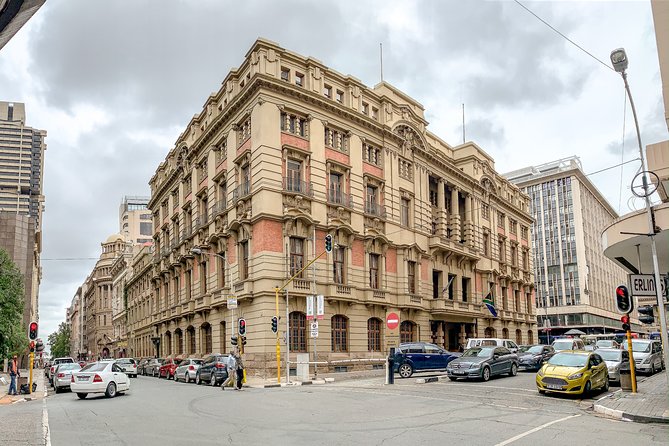
The first stretch sets the tone. You begin at Gandhi Square and then you head toward the Carlton Centre, with a guided visit that lasts around 20 minutes. Even if you only get a short look around, it helps you understand why CBD Johannesburg looks the way it does, and how “center city” power shows up in big buildings.
Next comes the High Court of South Africa, Gauteng Local Division, where you have a photo stop and guided time again for about 20 minutes. This is one of those moments where architecture stops being background. You start to see how law, authority, and public life connect to the political story the guide is building.
What to watch for here: pay attention to how the guide ties the past to present street life. That linkage is what turns a walk into a real understanding of Johannesburg.
Marshalltown and Johannestown: street-level Johannesburg, not postcards
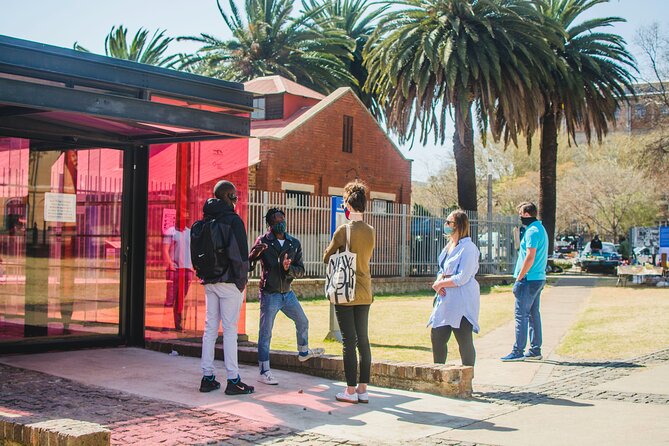
From there, the route moves through Marshalltown and Johannesburg Central style corridors. You’ll stop at the Marshalltown Post Office for about 10 minutes, then continue with photo and guided time in the Marshalltown Johannestown area for about 30 minutes.
These stops matter because the CBD is not one uniform story. You can see layers: older civic buildings, everyday movement, and the “still used today” reality of the city. The guide’s job is to help you read that mix quickly.
A drawback to consider is that you will be walking and stopping frequently. The itinerary is built for information, not for long stretches of quiet wandering.
Other city days, orientation to deep dive
Beyers Naude Square and corporate Johannesburg: two faces of the same city
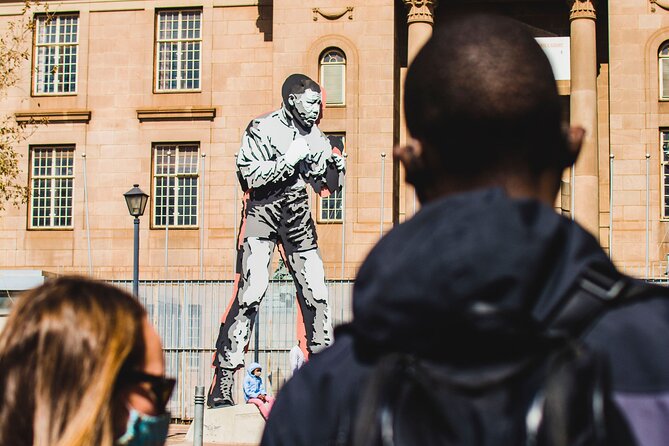
You’ll then hit Beyers Naude Square for a photo stop and guided sightseeing time around 20 minutes. After that, there’s a photo-focused stop at the Anglo American Corporate Office area for about 10 minutes.
This is where you get contrast. The tour doesn’t pretend Johannesburg’s downtown is only hardship or only progress. Instead, you see how corporate power sits next to civic and historical narratives.
If you like thinking about how money, governance, and public spaces interact, this middle section is a strong part of the tour.
Nelson Mandela law firm connection at Chancellor House area
Then the tour shifts into one of the most meaningful parts of the walk. You head toward Ferreirasdorp, often described as the cradle of Johannesburg, tied to the earliest gold digging and early settlement patterns.
You also visit Chancellor House, the place connected to Nelson Mandela and Oliver Tambo establishing their first black-owned law firm. This stop is important because it puts apartheid-era struggle into a specific street setting, rather than leaving it in distant textbooks.
If you want to understand why Johannesburg’s history feels so present in the CBD, this is one of the points that makes it click.
Newtown and the Workers Museum: migrant labor history with real context
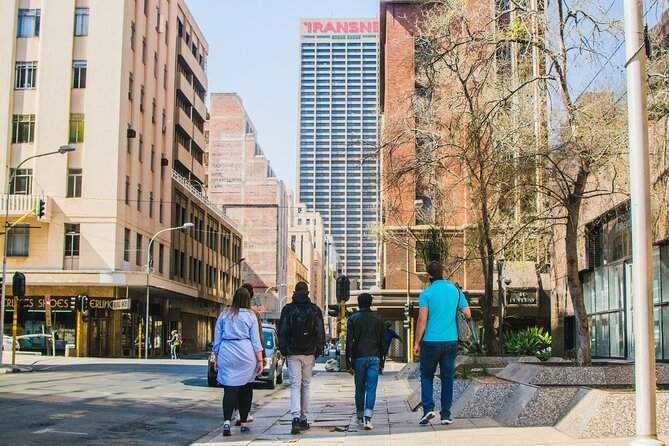
Next you move toward Newtown, one of the city’s creative neighborhoods, and the tour includes the Workers Museum. The time here is short, but it is designed to give you context around migrant labor history, which is a major thread in Johannesburg’s growth.
Here’s the practical reality: museum hours can affect your experience. I’ve heard that the Workers Museum can be closed on Mondays, so your guide may adjust what you can see that day. Even if the doors are shut, the guide’s explanation is part of the value you’re buying.
This section works best if you like hearing how people lived, worked, and moved through the city. It turns “Johannesburg is the mining city” into a fuller story.
Mary Fitzgerald Square and Market Theatre: culture, street art, and places to pause
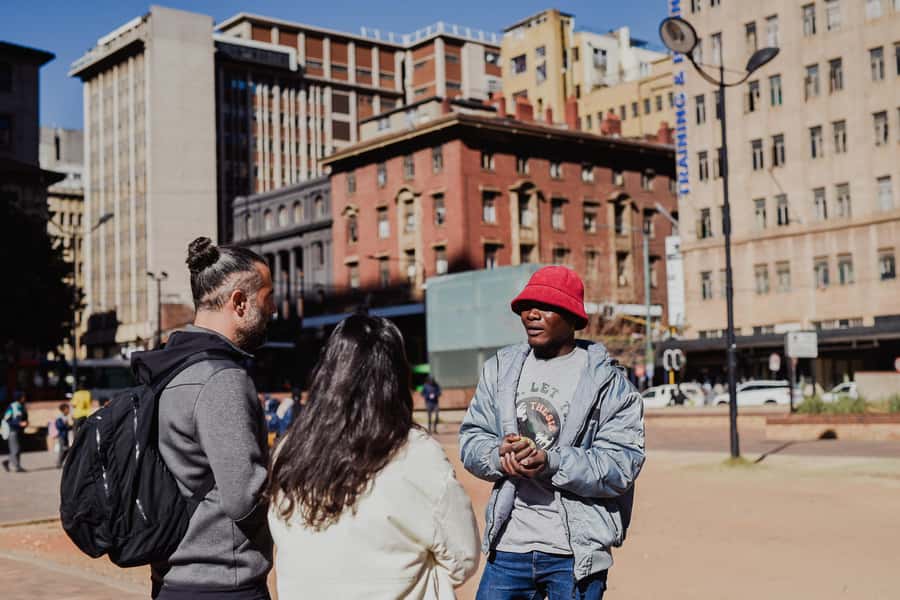
After the museum stop, you visit Mary Fitzgerald Square, then move to the Market Theatre area. Expect photo and guided time around 15 minutes at Mary Fitzgerald Square, then about 5 minutes at Market Theatre as you pass by while learning what makes it significant.
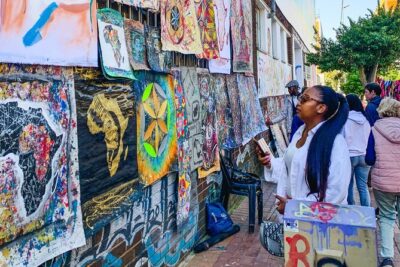
This part of the tour is designed for atmosphere. You get a feel for Johannesburg’s cultural spaces, with street art and gallery culture mentioned as part of what you’ll see nearby. It also helps that the group is moving toward the scenic finish. You’re not stuck in one place for too long, but you are also not racing past the cultural center.
If you enjoy photography, this is a good stretch to slow down. Even quick photo stops can be worth it when the guide is pointing you toward details most people miss.
Mandela Bridge: the best views and the final photo payoff
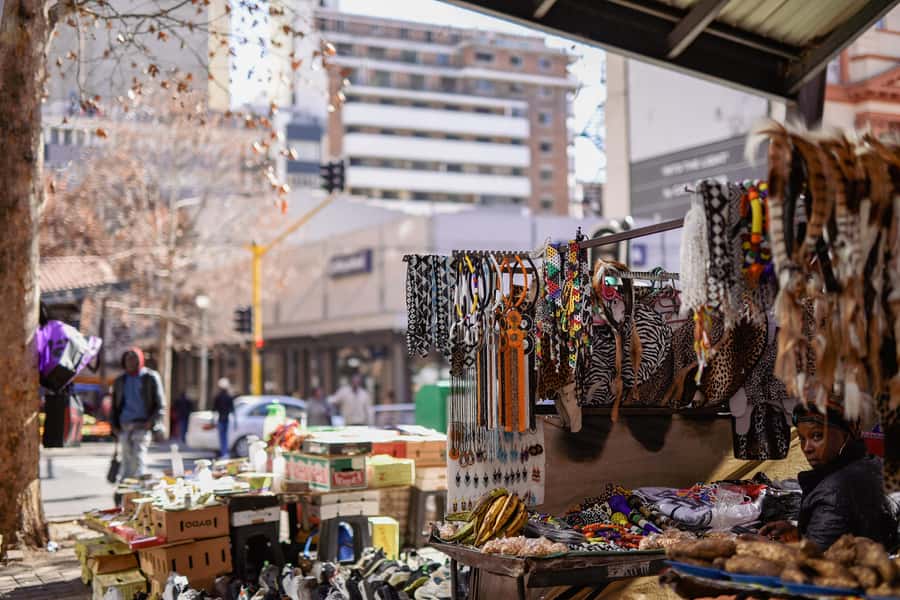
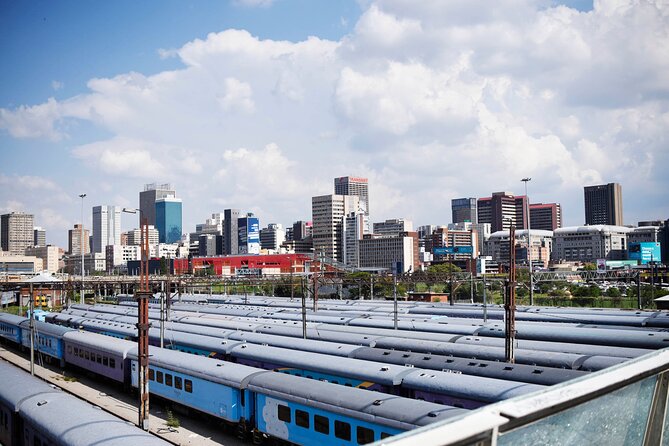
The tour ends with the iconic Nelson Mandela Bridge, with a photo stop and guided time plus scenic views on the way. This is the section where you get your “big Johannesburg” moment, and it ties the day together by linking neighborhoods and showing the city’s scale.
You’ll likely take the cleanest photos here because the focus is scenery and perspective, not a packed stop list. It’s also a natural transition into your post-walk plan, like heading to dinner nearby.
If the weather is good, give yourself a few extra seconds when you reach the viewpoint. On a walking tour, that patience often pays off.
Braamfontein ending: youthful energy after the heavy history
Your tour concludes in the Braamfontein area, described as a newer artistic hub with youthful energy. After hours of gold-rush origins, legal history, and labor stories, this ending helps you shift your mental gear.
Braamfontein works well as a “last mood” because it hints at Johannesburg’s ongoing creativity, not only its past.
Safety, route guidance, and why the guide really matters
The biggest difference between a good walking tour and an okay one is the guide. The reviews you provided underline how guides like Refiloe, Thabo, Mulalo, and Mathapelo help people feel comfortable while walking in the CBD. That includes route choices and pacing, and it shows up in how often visitors describe feeling safe and cared for.
You should still use common sense, like you would anywhere downtown. Keep your phone and camera secure while you move, and stay with the group during transitions. The value here is not that the CBD is magically trouble-free, but that you get a guide who knows what to prioritize.
Who this tour is best for
This tour is a great fit if you:
- want Johannesburg CBD history with present-day context
- like architecture, politics, and stories that connect to real streets
- enjoy walking tours where the guide explains what you’re seeing, not just naming sites
It may be less ideal if you:
- need lots of seating or long breaks
- have a condition that makes steady walking hard
- are pregnant, since it is specifically noted as not suitable
Also, note the accessibility details are mixed. The activity says wheelchair accessible, but it also says it is not suitable for wheelchair users. If you use a wheelchair, I’d recommend contacting the operator before booking so you get a clear, accurate answer for your situation.
Practical tips so your experience feels smooth
A few things you can do to make the walk easier:
- Bring comfy shoes. The itinerary has multiple short stops plus real walking time.
- Wear sun protection if it is bright out. You’ll be exposed between stops.
- Charge your phone before you start. You’ll want photos, especially at Mandela Bridge.
- Keep questions ready. Many guides handle extra time well, like I’ve seen happen when people are especially curious.
And if you care about the full museum experience, keep an eye on the day you go. The Workers Museum closure on Mondays has shown up in guest accounts, so plan accordingly.
Bottom line: should you book this Johannesburg city center walking tour?
I think you should book this tour if you want a focused, guided way to understand Johannesburg beyond the surface headlines. The route ties together gold mining origins, Mandela and Oliver Tambo’s law firm connection at Chancellor House, migrant labor history at the Workers Museum area, and a satisfying finish at Mandela Bridge with views.
If you’re already planning to explore Newtown and Braamfontein anyway, this is the format that gives those neighborhoods meaning. And if you want to feel confident walking the CBD, the guide support is a big part of why people rate this experience so highly.
Don’t book it if you only want light sightseeing, or if steady walking is a problem for you. Also, if accessibility is a key factor for you, confirm details directly, because the provided notes do conflict.
If you book, go in with a curious mindset, good shoes, and an openness to history that includes difficult parts. This is the kind of tour where Johannesburg starts making sense, one street at a time.
FAQ
How long is the Johannesburg City Centre Walking Tour?
The tour runs for 3 hours.
Where do I meet the guide?
Meet your guide outside Nando’s Restaurant at Gandhi Square in the Metropolitan Building area.
What is included in the ticket price?
The price includes entrance fees, bottled water, a guide, and the walking tour.
Is lunch included?
No. Lunch is not included.
What language is the tour guide?
The live tour guide is English.
Are all ages welcome?
Yes, all ages are welcome. You should bring comfy shoes and have a sense of adventure.
Is the tour suitable for wheelchair users?
The information provided says wheelchair accessible, but it also states it is not suitable for wheelchair users. You should confirm details directly before booking.
What is the cancellation policy?
You can cancel up to 24 hours in advance for a full refund.
Walk It: More of Johannesburg
Another Day in Johannesburg, Planned Out
Johannesburg, Block by Block
- From Johannesburg: Pilanesberg Nature Reserve Game Safari
- Johannesburg: Hop-On Hop-Off Bus with Optional Soweto Tour
- Soweto /Johannesburg and Apartheid Museum Guided Full Day Tour
- Johannesburg Hop-On Hop-Off City Tour with Soweto Option
- Full Day Ultimate Pilanesberg National Park Safari from Johannesburg or Pretoria
Keep going: the rest of our Johannesburg write-ups
- Soweto Private half day tour
★ 4.5 · 3 reviews - Johannesburg’s Migration History with a local lunch
★ 5.0 · 3 reviews - Johannesburg: Soweto, Apartheid Museum, and Cradle tours
★ 4.7 · 3 reviews - Soweto Apartheid Museum and Lunch
★ 5.0 · 3 reviews - Bathongo Rhino & lion park nature reserve tour
★ 5.0 · 3 reviews - Johannesburg: Elephant and Monkey Sanctuary Half Day Tour
★ 5.0 · 3 reviews
Johannesburg City Tours, compared.
 ★ 4.5Johannesburg Hop-On Hop-Off City Tour with Soweto OptionFrom $16768 reviews
 ★ 4.8Johannesburg: Full-Day Tour with Soweto and Apartheid MuseumFrom $104478 reviews
 ★ 4.8Johannesburg and Soweto: Half-Day TourFrom $71439 reviews
 ★ 4.6From Johannesburg: Lion & Safari Park Half-Day TourFrom $167384 reviews
 ★ 5.0Ultimate Johannesburg Soweto Experience with Apartheid MuseumFrom $108313 reviews
 ★ 5.0Half Day Lion Park tour from Johannesburg or PretoriaFrom $100274 reviews
 ★ 4.9Johannesburg: Maboneng Street Art & Culture TourFrom $37257 reviews
 ★ 5.0Johannesburg and Soweto tourFrom $77231 reviews
Browse the lists this tour appears in