
REVIEW · WALKING TOURS
LocalPlaces Understanding Cape Town Walking Tour
Cape Town clicks into place when you walk its story. This 4-hour Understanding Cape Town tour gives you the why behind the streets, from the 1870s Industrial Revolution to pre-colonial roots and on into the 20th century. I especially love how you get great photo viewpoints without needing a car, and how the guide turns big South African history into something you can follow on foot. One thing to consider: it’s not built for a casual, shopping-first stroll, because the focus stays on storytelling and context, not pure sightseeing.
If you like learning as you go, this tour is a strong start. Just keep in mind the walk is about 3.5 km total, and you’ll be moving at a steady pace through several key city areas, including a rooftop bar stop.
In This Review
- Key Highlights Worth Planning For
- Why This Walk Makes Cape Town Easier to Understand
- Starting at Ginja Restaurant, V&A Waterfront, With Table Mountain in Sight
- What you’ll do here
- A small consideration
- Battery Park and the Canal District, Reading the City’s Modern Overlay
- Where the value is
- The Foreshore Reclamation Story, and Why 194 Hectares Matters
- A drawback for some people
- Rooftop Views at 14Stories, Drink Break Plus Bo-Kaap Photo Time
- Important money note
- Why this stop works
- Heritage Square, Greenmarket Square, and St Georges Mall as One Walkable Layer-Cake
- Heritage Square, the 1750s landing zone
- Greenmarket Square and curio browsing
- St Georges Mall architecture walk
- Company’s Gardens, From Dutch Vegetable Plots to Victorian Park to Today
- What I think you’ll remember here
- Price and Value: Is $80.80 for 4 Hours a Good Deal?
- How to Make the Most of the Walking Pace and Photo Opportunities
- Who This Tour Is Best For
- Should You Book the Understanding Cape Town Tour?
- FAQ
- Where do we meet, and what time does the tour start?
- How long is the tour, and how far do we walk?
- Is this a private tour?
- Are snacks or drinks included?
- Does the tour run in bad weather?
- Are service animals allowed?
Key Highlights Worth Planning For

- A history-first route that links Cape Town’s street layout to major turning points in South African history
- V&A Waterfront to Foreshore to the old center, so you see how the city grew from water to neighborhoods
- Two big view stops at the waterfront and a rooftop bar, plus time to frame the Bo-Kaap district
- A paid drink moment (drinks are your own cost), which makes the viewpoints feel like a break, not a lecture
- An easy 3.5 km walking distance in around 4 hours, with short stops built in
- A small, personal feel because it’s run as a private tour for your group
More routes best done on foot
- Cape Town: Nathi Langa Township Walking Tour★ 4.9 · 493 reviews
- Cape Town: Art, Culture & History Walking Tour★ 4.9 · 392 reviews
- Cape Town: Street Art Walking Tour in Woodstock★ 4.8 · 293 reviews
- Cape Town: Langa Township Walking Tour★ 4.8 · 272 reviews
Why This Walk Makes Cape Town Easier to Understand

Cape Town can feel like a postcard city. This tour helps you read the postcard, then explain why every part looks the way it does.
You’ll start with the 1870s Industrial Revolution era and the wider Scramble for Africa story, then move backward and forward through time. That mix matters, because the city is layered. You see modern buildings, but you also get the earlier forces that shaped who lived where, how trade worked, and how power changed.
The guide, Gerald, is a big part of the value. In the reviews, people mention his storytelling style, his local knowledge, and the way he keeps a group engaged with both laughs and clear explanations. The goal is practical: when you understand the background, the rest of your trip makes more sense, and your photos stop being random.
Starting at Ginja Restaurant, V&A Waterfront, With Table Mountain in Sight
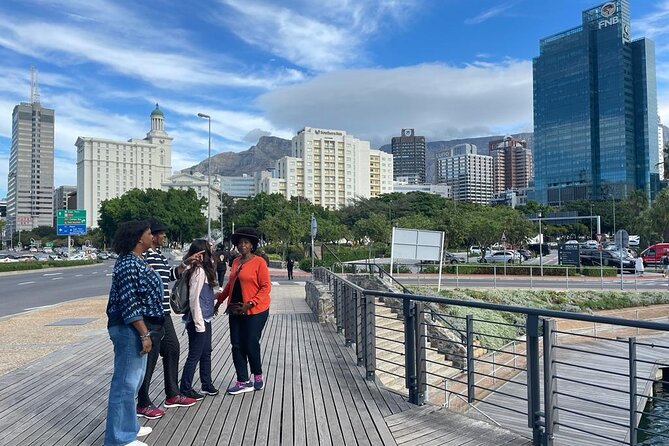
You meet at GINJA Restaurant at the Victoria & Alfred Hotel in the V&A Waterfront, right at the pierhead area. The timing is 9:00 am, and that early start helps you get good light for photos before the city heats up and crowds build.
This first section is all about orientation. You get a sweeping view across the harbor toward Table Mountain and the surrounding port area. The waterfront matters historically because the harbor development ties into British expansion and Prince Alfred’s involvement, which the guide uses to explain how Cape Town became a key stop in global movements of people, goods, and power.
I like this opener because it sets the tone: you’re not just walking past pretty places. You’re looking at a working geography that has always mattered.
What you’ll do here
- Stand somewhere with a strong view, then hear the first thread of the story
- Learn how the city’s “edge” (waterfront) connects to Cape Town’s bigger national story
A small consideration
If you’re hoping for an immediate long stroll away from the waterfront, expect a short start where the guide locks in the context before you move.



Battery Park and the Canal District, Reading the City’s Modern Overlay
Next you shift into the Canal District walkways and head to Battery Park. This is one of those stops that’s easy to like even if you’re not a history nut, because the environment is open and the views stretch out over the harbor side.
Battery Park also gives you a “green in the city” feeling, with space that includes a skate park and basketball courts. That contrast is useful. Cape Town has layers, and the guide uses places like this to show how new uses get layered onto older areas.
This section is less about museums and more about understanding how the city functions now, while still explaining how it got there.
Where the value is
You’re learning to notice the city structure, not just memorizing dates.
The Foreshore Reclamation Story, and Why 194 Hectares Matters
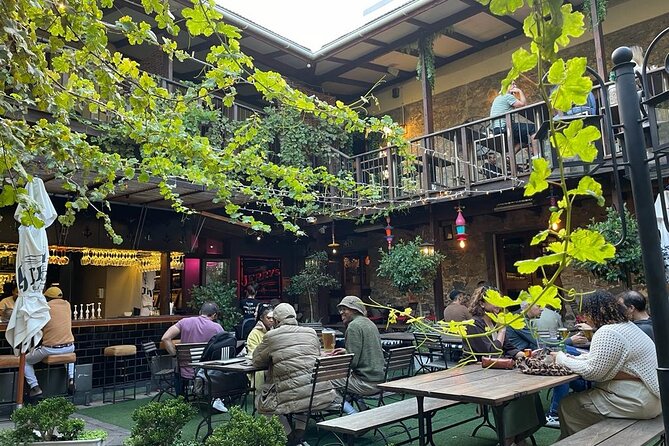
From the waterfront you walk into the Foreshore, an area built on land reclaimed from the sea, about 194 hectares. That detail is the kind of fact that changes how you see the skyline.
The Foreshore today is dominated by modernist buildings, so it can feel like “just downtown.” But in the tour flow, it becomes a bridge between Cape Town’s older port functions and its newer urban form. The guide uses this to explain how expansion and infrastructure can remake a coastline, then change neighborhoods, movement patterns, and economic roles.
If you like learning about how cities physically grow, this stop will land for you. It’s also photo-friendly, because the contrast between older stories and newer architecture shows up clearly in views.
A drawback for some people
If you’re hoping for a lot of time inside historic buildings, this tour keeps things mostly outside. It uses storytelling and the street view as the “exhibit.”
Rooftop Views at 14Stories, Drink Break Plus Bo-Kaap Photo Time
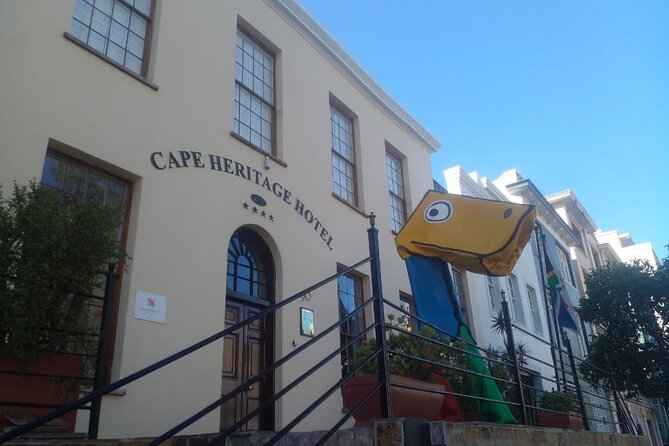
One of the most fun parts is the stop at 14Stories Rooftop Bar. You get storytelling plus a drink break and, importantly, one of the best viewpoint setups in the city.
From up there, you can see multiple landmarks in one sweep: Green Point Stadium, the Waterfront, Table Bay, Blouberg, the Foreshore, the old city centre, and Table Mountain. The guide also uses the view to point you toward a great photography angle for Bo-Kaap, including a chance to line up shots of the colorful area.
This stop lasts about 45 minutes, which feels like a smart pace. You’re not stuck up there forever, but you’re given enough time to relax, take photos, and ask questions.
Important money note
The tour fee covers guiding and storytelling. Food and drinks are your own account, so plan to buy your drink if you want it. The tour does create the opportunity, but it does not bundle the cost.
Why this stop works
It turns history into something you can see at once. You look across the city, then the guide connects what you’re seeing to the timeline he’s building.
Heritage Square, Greenmarket Square, and St Georges Mall as One Walkable Layer-Cake
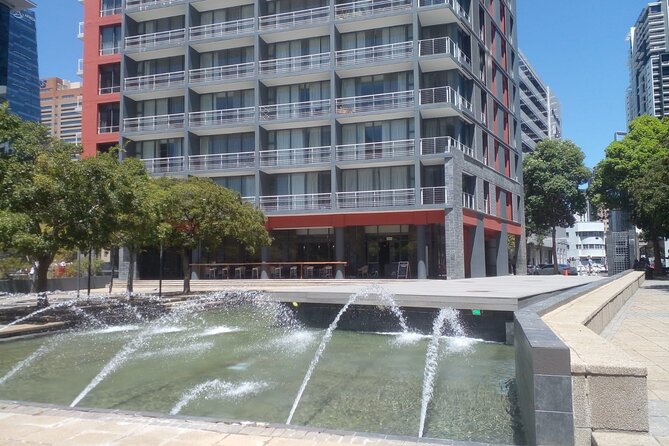
After the rooftop, the route keeps tightening toward the older core of Cape Town. You end the middle stretch around Heritage Square, then move into the markets and pedestrian streets.
Heritage Square, the 1750s landing zone
The tour ends at Heritage Square, a historic complex with buildings dating back to the 1750s. Today it functions as a cluster of a boutique hotel, eateries, bars, and retail spaces. The courtyard includes the oldest grapevine in the city, which is exactly the kind of detail that makes a place feel alive rather than just labeled “historic.”
This is also a good place to slow down and reset your brain. After the big timeline, it’s nice to land somewhere tangible.
Greenmarket Square and curio browsing
Then you move to Greenmarket Square, with Art Deco buildings around the square. This stop gives you short time to browse the curio market.
I like this kind of break because it lets you choose your pace. If you want souvenirs, you can look. If not, you can just watch how local commerce plays out in the street.
St Georges Mall architecture walk
Next is St Georges Mall, a pedestrianized street with standout architecture and layers of history. The point here is simple: you’re walking through the city’s commercial spine while your guide continues tying the present to the past.
This is one of those sections that works best when you keep your eyes up. Look at facades and street rhythm, not only shop fronts.
Company’s Gardens, From Dutch Vegetable Plots to Victorian Park to Today
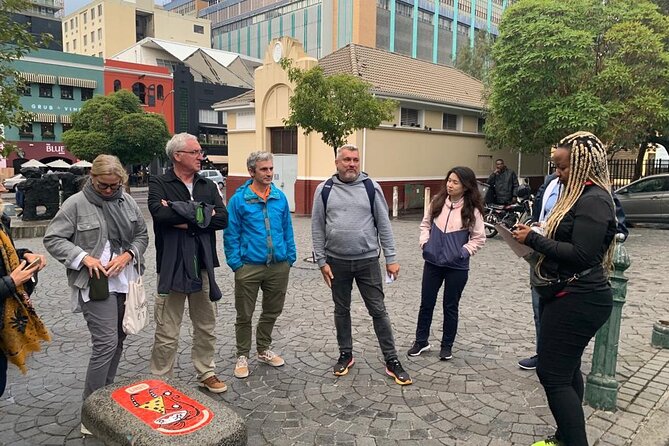
The tour finishes at Company’s Gardens, right along Queen Victoria Street near the Company’s Garden Restaurant. Company’s Gardens is special because it’s not just a park, it’s a timeline.
The gardens started out as a vegetable garden for the Dutch East India Company, then evolved into a Victorian Park as time passed. Today, it’s a major city park in the heart of Cape Town.
This ending is smart. You finish with a calmer pace, and the guide gets you thinking about how spaces change use over centuries. After hours of political and economic history, it’s a relief to have greenery and room to breathe.
What I think you’ll remember here
The contrast between control and community. The gardens show how land use can shift from food production to public recreation.
Price and Value: Is $80.80 for 4 Hours a Good Deal?

At $80.80 per person, this tour sits in the “serious learning” bracket, not the “cheap orientation walk” bracket. For me, the value comes from three places.
First, you’re paying for guiding and storytelling, not a checklist of attractions. That matters because Cape Town’s real story is harder to get on your own. The guide links areas you can see with the forces that shaped them.
Second, you’re getting a structured route that includes multiple viewpoint stops and key historic areas, without needing transportation. The distance is about 3.5 km in around 4 hours, which is manageable for most people if you’re comfortable walking city streets.
Third, the tour feels personal because it’s private for your group. Even with a group size that can vary, the guide is focused on your pace and your questions. The reviews mention that people felt welcomed and that they could ask questions, which is where paying for a guide usually pays off.
If you want a light sightseeing day with almost zero talking, this may feel like too much. If you want your time in Cape Town to feel smarter, this price can make a lot of sense.
How to Make the Most of the Walking Pace and Photo Opportunities
This is an easy walking concept, but it’s still a walking tour. Plan for steady movement between stops and come prepared.
Practical tips that help:
- Wear shoes you trust for city pavements
- Bring a camera or phone with enough battery for rooftop views
- Bring a light layer for wind near the waterfront and on rooftops
- Expect time for photos at the waterfront and rooftop, then shorter photo moments in the older core
Also, remember that drinks and any snack or local tasting opportunity are for your own account. If you want to take part in the rooftop drink stop, set aside a bit of cash or card.
And since it starts and ends in different places, plan your transport for the finish around Company’s Gardens.
Who This Tour Is Best For
This works best if you fit one of these:
- You want to understand Cape Town’s history as you explore it, not after you leave
- You enjoy guides who connect timeline, place, and cause-and-effect
- You like panoramic views and want help framing photos, especially around Bo-Kaap
It may be less satisfying if you:
- Only want scenic stops with minimal talking
- Want a tour that includes long museum time or indoor attractions
Should You Book the Understanding Cape Town Tour?
I’d book it if you’re starting your Cape Town visit and you want a mental map that makes the rest of your days easier. The route pairs big viewpoint moments with a clear timeline, and the guide, Gerald, is a standout for storytelling and keeping people engaged.
I would not book it if you’re planning a “see a lot, buy nothing, talk to nobody” style trip. This one pays off when you’re curious and you enjoy learning while walking.
If the forecast looks good, it’s also a smart choice because the tour needs good weather and can be moved or refunded if poor weather shuts it down.
FAQ
Where do we meet, and what time does the tour start?
The tour starts at GINJA Restaurant at the Victoria & Alfred Hotel in the V&A Waterfront, with a start time of 9:00 am.
How long is the tour, and how far do we walk?
It runs for about 4 hours and covers roughly 3.5 km on foot.
Is this a private tour?
Yes. It’s set up as a private tour/activity, meaning only your group participates.
Are snacks or drinks included?
The fee covers guiding and storytelling. Any food or drinks during the tour are for your own account, including the drinks stop built into the route.
Does the tour run in bad weather?
It requires good weather. If it’s canceled due to poor weather, you’ll be offered a different date or a full refund.
Are service animals allowed?
Yes, service animals are allowed.
Walk It: More of Cape Town
Keep going: the rest of our Cape Town write-ups
- Cape Town to Cape Point Helicopter Flight – 48Min
★ 4.2 · 3 reviews - Full Day Private Hiking Table Mountain & City
★ 5.0 · 3 reviews - Sandboarding with jeep – drive uphill
★ 5.0 · 3 reviews - Full Day Tour for Cape of Good Hope & Boat to Seals Island
★ 5.0 · 3 reviews - 10 Day South Africa Tour Joburg to Cape Town
★ 5.0 · 3 reviews - 5 Day Garden Route Small Group Tour Fr CapeTown – Departs Mondays
★ 5.0 · 3 reviews
Walking Tours, compared.
 ★ 4.9Soweto: Walking Tour with a Local Guide and LunchFrom $43648 reviews
 ★ 5.0Plettenberg Bay: Bungee Jumping with Zipline and Sky WalkFrom $97506 reviews
 ★ 4.9Cape Town: Nathi Langa Township Walking TourFrom $31493 reviews
 ★ 4.9Cape Town: Art, Culture & History Walking TourFrom $37392 reviews
 ★ 4.8Cape Town: Street Art Walking Tour in WoodstockFrom $37293 reviews
 ★ 5.0Soweto Walking Tour with LunchFrom $40288 reviews
 ★ 4.7Stellenbosch: Guided Historical Walking TourFrom $18283 reviews
 ★ 4.8Cape Town: Langa Township Walking TourFrom $37272 reviews
Browse the lists this tour appears in