
REVIEW · WORKSHOPS
Koeksister and Samoosa Class by the Malay Cook Up
Food lessons in Bo-Kaap feel like family. This 2-hour, interactive workshop is a hands-on way to cook Cape Malay favorites, koesister and samoosa, right where the flavors belong. You also get local context as you work, not just a recipe lesson.
I especially like the step-by-step coaching from an accomplished Cape Malay cook and the way the class stays lively and welcoming. You end up with both a savoury snack (samoosa) and a sweet-spicy treat (koesister), plus time to sit down and eat what you made.
One thing to consider: while the class is described as making both items from scratch, one participant found parts of the process were pre-made, like store-bought pastry and pre-done fillings. If you are the kind of person who wants every single component homemade, it’s smart to ask what is made in class versus prepared ahead.
In This Review
- Key things to know before you go
- Why Koeksister and Samosa Make Such a Great Cooking Class in the Western Cape
- Inside the 2-Hour Workshop: How the Class Usually Unfolds
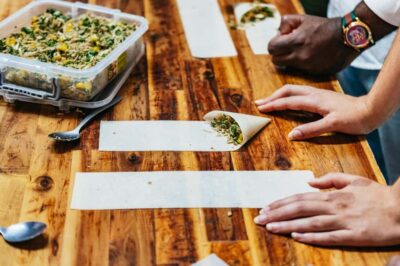
- Making Samosa: The Savoury Triangle Lesson (and What to Expect)
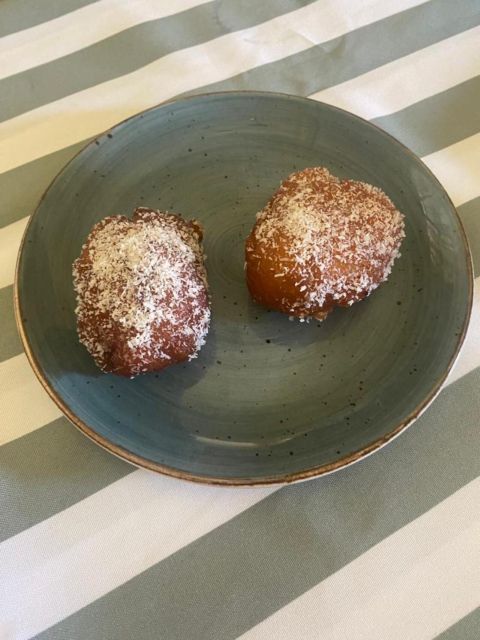
- Koesister: The Sweet-Spicy Doughnut Part You Will Actually Want More Of
- The Tasting and Conversation Moment: Why It Changes the Value
- Price and Value: Is $23 Fair for Two Hours of Food Learning?
- Cape Malay Flavours and Local Context You Actually Use
- Languages, Rules, and How to Prepare So You Enjoy the Whole Session
- Who This Class Suits Best
- Should You Book the Koeksister and Samosa Workshop?
- FAQ
- How long is the koesister and samoosa class?
- What dishes will I learn to make?
- Is tasting included?
- What is included in the price?
- What languages are available?
- Are alcohol or drugs allowed?
- Can I reserve and pay later?
- What is the cancellation policy?
Key things to know before you go
- Bo-Kaap home kitchen setting, so it feels personal and informal rather than staged
- Interactive coaching led by an experienced Cape Malay cook
- Hands-on tastings at the end, so you get to enjoy your own samoosa and koesister
- Authentic Cape Malay flavors, with local history woven in
- Two-snack payoff: savoury samoosa plus sweet-spicy koesister
- Clear expectations on alcohol, since alcohol and drugs are not allowed
Still weighing it up? These Cape Town trips are the ones our readers open next.
- Wine Tour: Paarl, Franschhoek & Stellenbosch incl 3 wineries★ 5.0 · 3,940 reviews
- Cape Town: Hop-On Hop-Off Bus Tour with Optional Cruise★ 4.8 · 3,929 reviews
- Cape Town: Cape of Good Hope & Penguins Day Tour with Pickup★ 4.7 · 3,362 reviews
- Zipline Cape Town – From Foot of Table Mountain Reserve★ 5.0 · 3,179 reviews
Why Koeksister and Samosa Make Such a Great Cooking Class in the Western Cape
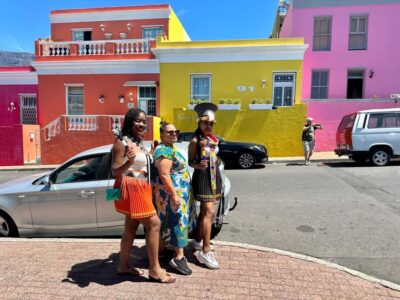
In South Africa’s Western Cape, koesister and samoosa are more than just snacks. They are part of the everyday food culture of the Bo-Kaap community, tied to the area’s earliest Cape Malay residents. What I like about this workshop is that it treats the food as living tradition, not a museum piece.
The class happens in a home kitchen in Bo-Kaap, and that small detail changes the whole vibe. Instead of standing at a distance, you work through the process with guidance. The host also keeps the atmosphere relaxed enough that you can ask questions, swap thoughts, and actually talk while cooking.
You’re also not choosing between sweet or savoury. You get both: a savoury pastry triangle (samoosa) and a sweet-spicy doughnut-style snack (koesister). For me, that mix makes the 2 hours feel efficient. You leave with two flavors to remember, not one.
Inside the 2-Hour Workshop: How the Class Usually Unfolds
The workshop is designed to be step-by-step, and that matters. Cooking lessons move fast when you do not know the sequence, and here the goal is to take you through the flow from start to finish. You learn how to make both items from scratch, with an accomplished Cape Malay cook coaching you throughout.
Because it is an interactive cooking class, you are not just watching. You follow along, make choices during the process, and get feedback along the way. The setting being a home kitchen also helps. There is less formality, and you are more likely to feel comfortable asking why something works a certain way.
Local history is part of the experience too. You learn how koesister and samoosa became synonymous with Bo-Kaap’s early inhabitants and how the foods remain widely eaten across South Africans today, regardless of culture or religion. That context helps the snacks land differently, like you are learning why these flavors matter, not only how to copy a recipe.
Finally, the tasting is built in. At the end of the class, you sit down with the host and enjoy what you made. That is where the workshop stops being a lesson and becomes a shared meal.
Making Samosa: The Savoury Triangle Lesson (and What to Expect)
Samoosa is the savoury half of the class, the pastry triangle you can find in many forms across the region. Here, the emphasis is on the process of creating the pastry and putting together the filling, guided by the host.
From the class description, the idea is that you learn the samoosa from scratch, step-by-step. In practice, though, one participant reported that the samosa pastry was store-bought and the fillings were pre-done. That person felt the Koesister portion was more interactive, while the samoosa part was more limited than expected.
So how do you handle that as a decision-maker? You can enjoy the experience even if parts are prepared ahead, because you still get flavour, technique coaching, and the satisfaction of working on the parts you do handle. But if your main goal is full DIY, you should manage expectations.
My practical take: if you care deeply about making every element yourself, message ahead and ask what will be homemade during the session and what may be prepared. That one question helps you match the workshop to your style of learning.
Koesister: The Sweet-Spicy Doughnut Part You Will Actually Want More Of
Koesister is the other half of the class, and it is where the sweetness and spice show up in a bold way. The workshop is set up so you learn how to make koesister from scratch as well, again with step-by-step guidance from an experienced Cape Malay cook.
Even when participants described the samoosa part as less hands-on, the koesister section still earned strong praise for being interactive and enjoyable. People also said the koesister tasted very good, which is a big deal because this is not a demo you watch and leave. You eat it.
Why that matters is simple. A cooking class is only worth it when you get results you can taste. Here, the koesister payoff is direct, and you can use what you learn to recreate the snack at home with friends.
Also, koesister carries a lot of cultural identity for Bo-Kaap. Learning it in a Cape Malay home kitchen, while someone explains the tradition behind it, makes the snack feel connected to a place, not just a dessert you ordered once.

The Tasting and Conversation Moment: Why It Changes the Value
Many cooking classes end when the meal should start. This one builds in the opposite rhythm. After you cook, you sit down with the host to enjoy the snacks and talk.
That is not just friendly. It turns the experience into something you can carry with you. You can ask follow-up questions while the food is still fresh, and you can also get extra context that you would never learn from a cookbook.
The atmosphere is also described as informal and relaxed, with a welcoming host and a comfortable feeling inside the home kitchen. That kind of hosting is what makes food memories stick. You remember how the room felt, not only how the dish tasted.
Price and Value: Is $23 Fair for Two Hours of Food Learning?
At $23 per person, this class is priced like an experience, not like a tourist performance. And the inclusions help justify the cost.
You get:
- A 2-hour class including tasting
- All equipment and ingredients provided
- Authentic ingredients
- Local history shared
- Languages available in English and Afrikaans
For a reader, the key value question is what you would otherwise pay and do on your own. If you tried to recreate this at home, you would spend money on ingredients, you would need tools, and you would still be guessing at technique. Here, you are paying for guidance plus the ingredients plus the final eating part, all in one session.
That said, value also depends on how hands-on the process feels for you. Because at least one participant noted some components like pastry and fillings may be pre-done, I would treat this as a guided learning experience with cooking involvement, not necessarily a 100 percent from-scratch make-everything workshop.
If you are open-minded and just want to learn the shapes, flavour direction, and key steps, you will likely feel it is worth it. If your goal is to do every component yourself, ask what is homemade in-session. That one bit of clarity protects your expectations.
Cape Malay Flavours and Local Context You Actually Use
One of the best parts of this workshop is that it links the snacks to Bo-Kaap and the Cape Malay community. You learn that koesister and samoosa are synonymous with the earliest inhabitants of the area, and that these foods remain widely eaten across South Africa today.
I love this kind of context because it changes how you cook later. When you understand the food’s cultural background, you stop treating it like a random recipe. You start thinking about why the flavours balance the way they do.
And the class leans into authentic Cape Malay ingredients. Even if some components are prepared ahead, the flavour profile is the point. You get to learn the taste you are aiming for, then build the process around it.
In the end, you are not just leaving with snacks. You are leaving with an understanding of why these foods show up again and again in Bo-Kaap life.
Languages, Rules, and How to Prepare So You Enjoy the Whole Session
The class is offered in English and Afrikaans, which is helpful if you want to follow along comfortably or switch languages during questions. For me, that makes the class feel easier to participate in, especially when you are trying to understand small technique cues.
There are also clear rules: alcohol and drugs are not allowed. That is normal for a cooking class, but it’s still useful to know so you plan your evening accordingly.
As for how to prepare emotionally, go in hungry and curious. This is a tasting-focused workshop, so you want to arrive ready to enjoy what you make at the end. And if you are the type who asks detailed questions, bring that energy. The class is described as interactive and engaging.
One more preparation tip, based on a real concern raised by a participant: if hands-on time for the samoosa pastry and fillings is your top priority, ask directly what parts are made during the class. You might still enjoy the class a lot, but you will feel better knowing what you will actually do.
Who This Class Suits Best
This workshop is a great fit if you want an authentic taste of Bo-Kaap food culture. It is also ideal if you like learning by doing, in a home-kitchen setting where questions are welcome.
You will probably enjoy it most if:
- You like both savoury snacks and sweet-spicy treats
- You want local context, not just a recipe
- You enjoy interactive classes with a warm, relaxed atmosphere
- You plan to travel with friends or family, since one participant described it as a fun outing
It may be less ideal if your personal definition of a cooking class is full, step-by-step homemade everything, with no prepared elements at all. The koesister portion seems to score higher on interaction, so keep that in mind when deciding.
Should You Book the Koeksister and Samosa Workshop?
Yes, I would book it if you want a flavour-forward, Cape Malay food experience in Bo-Kaap with tasting included. The interactive coaching, the welcoming home-kitchen feel, and the clear payoff of making and eating both snacks are strong reasons to go.
My one caution is expectations around how fully homemade each component is during the class. If you care about that level of detail, message ahead and ask what is made in-session versus prepared ahead of time. Do that, and you protect your enjoyment.
If you are flexible, hungry, and excited about Cape Malay tradition, this is the kind of workshop that gives you more than just food. It gives you a story you can recreate at home.
FAQ
How long is the koesister and samoosa class?
The workshop lasts 2 hours, and it includes tasting.
What dishes will I learn to make?
You will learn how to make samoosa (pastry triangle) and koesister (sweet-spicy doughnut) from scratch.
Is tasting included?
Yes. The class includes a tasting, and at the end you sit down with the host to enjoy what you prepared.
What is included in the price?
All equipment and ingredients are provided, and local history is shared as part of the class.
What languages are available?
The class is offered in English and Afrikaans.
Are alcohol or drugs allowed?
No. Alcohol and drugs are not allowed.
Can I reserve and pay later?
Yes. You can reserve your spot and pay nothing today.
What is the cancellation policy?
You can cancel up to 24 hours in advance for a full refund.
Keep going: the rest of our Cape Town write-ups
- Cape Town to Cape Point Helicopter Flight – 48Min
★ 4.2 · 3 reviews - Full Day Private Hiking Table Mountain & City
★ 5.0 · 3 reviews - Sandboarding with jeep – drive uphill
★ 5.0 · 3 reviews - Full Day Tour for Cape of Good Hope & Boat to Seals Island
★ 5.0 · 3 reviews - 10 Day South Africa Tour Joburg to Cape Town
★ 5.0 · 3 reviews - 5 Day Garden Route Small Group Tour Fr CapeTown – Departs Mondays
★ 5.0 · 3 reviews
Workshops, compared.
 ★ 4.8Cape Town: Malay Cooking Class and Lunch in Bo-KaapFrom $49515 reviews
 ★ 4.8Cape Town: Cape Malay Cooking Class in Bo-KaapFrom $52120 reviews
 ★ 4.7Cape Town: Bo-Kapp Walking Tour and Malay Cooking ClassFrom $68105 reviews
 ★ 5.0Private Surf LessonFrom $2653 reviews
 ★ 5.0Private Surf Lesson in Cape Town – Transport & Photos IncludedFrom $18450 reviews
 ★ 4.8Jeffreys Bay: Private Surfing Lesson for BeginnersFrom $4343 reviews
 ★ 5.0Muizenberg Cape Town: Private Surf LessonFrom $3437 reviews
 ★ 5.0Exploring Johannesburg through Skateboarding – incl. skate lesson for beginners!From $5135 reviews
Browse the lists this tour appears in