
REVIEW · JOHANNESBURG CITY TOURS
Full Day Soweto, Johannesburg and Apartheid Museum Guided Tour
One day, three powerful perspectives. I love how this route pairs Constitution Hill with the Apartheid Museum, so you don’t just see exhibits, you understand the story arc from imprisonment to democracy. It’s a guided day that moves with purpose through Johannesburg’s contrasts and then into Soweto.
I also really liked the way Nhlanhla (Lucky) kept the pace organized and the group comfortable, and that shows up in the small things like clear timing and safe-feeling driving. Starting at Houghton Estate, you get a Mandela connection before the day turns toward harder truths in the museum stops. The main drawback to plan for is that it’s a long, full day and lunch isn’t included, so you’ll want to budget for food or bring a snack.
This is a private tour, so you’re not stuck with strangers making things awkward. You’ll ride in an air-conditioned vehicle with bottled water, pick up and drop-off are handled near hotels in Johannesburg and Pretoria, and several key sites are covered by admission.
In This Review
- Key things I’d focus on before you go
- A day that ties Johannesburg and Soweto into one story
- Pickup, comfort, and the rhythm of a 7 to 8 hour schedule
- Houghton Estate: Mandela’s neighborhood starts the day gently
- Munro Drive viewpoint and the Italian POW-built viewpoint detail
- Hillbrow to Constitution Hill: reading the city through contrasts
- Nelson Mandela Bridge, the CBD, and how Johannesburg grew from mining
- Ferreira Mine Stope in the Standard Bank building: early mining, preserved
- Maboneng Precinct: a turn toward the inner-city today
- The Apartheid Museum: where the emotional weight becomes clear
- FNB Stadium and the drive-past stops that break up the day
- Diepkloof Park and Soweto neighborhoods: seeing class differences on the ground
- Chris Hani Baragwanath Hospital: a huge scale reality check
- Orlando Towers: old infrastructure turned into entertainment
- Vilakazi Street and Sakhumzi Restaurant: Mandela and Desmond Tutu in the same frame
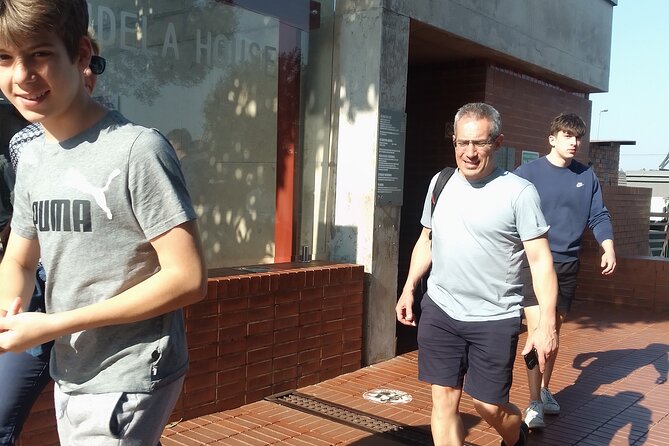
- Mandela House: a guided look inside a former home
- Hector Pieterson Museum and Memorial: self-guided, and worth slowing down
- Driving back and why the order matters
- Price, value, and who this day tour is best for
- Should you book this Soweto and Apartheid Museum day tour?
- FAQ
- What is the duration of the full day Johannesburg and Soweto tour?
- Do you offer hotel pickup and drop-off?
- Is this a private tour?
- What admissions are included?
- Is lunch included in the price?
- How long do you spend at the Apartheid Museum?
- Is the Hector Pieterson Museum and Memorial guided or self-guided?
- Does the tour run in any weather?
Key things I’d focus on before you go
- A strong museum pair: Constitution Hill plus the Apartheid Museum gives you two different angles on oppression and human rights.
- Time-efficient Soweto access: you hit the major Mandela-related sights, plus Vilakazi Street and the Hector Pieterson Museum area.
- Houghton Estate context: seeing Mandela’s residential area early helps the day feel more grounded, not just informational.
- Guided moments where it matters: Constitution Hill and Mandela House include guided time, not just “look and go.”
- Practical city contrast stops: viewpoints, inner-city drives, and places like Maboneng help you read Johannesburg beyond the big labels.
- Good pacing with a pro guide: the tour’s schedule stays on track, and safety and comfort are part of how it runs.
Other Soweto routes we have reviewed, each with a local guide
- Johannesburg and Soweto tour★ 5.0 · 231 reviews
- Soweto Half Day Tour★ 5.0 · 231 reviews
- Soweto walking tour with a taxi ride★ 4.5 · 42 reviews
- Soweto, Kliptown, Eldorado Park Tour★ 5.0 · 41 reviews
A day that ties Johannesburg and Soweto into one story
This tour is built like a story with chapters. You start with introductions and quick orientation, then you move through neighborhoods that show how Johannesburg changed, who benefited, and who paid the price. The day doesn’t jump randomly between places. It flows from “how the city formed” to “what apartheid did,” then to “how people resisted,” with Soweto taking center stage.
The value here is not only the stops, it’s how long you spend at the heavy hitters. Constitution Hill and the Apartheid Museum are given real time, and both are the kind of places where you need slow moments to absorb what you’re seeing. That makes this tour a good fit if you have limited days in Johannesburg but still want more than a quick highlights loop.
Also, because it’s private, the guide can keep your group together through transitions, which matters when you’re moving between inner city areas and Soweto.
Pickup, comfort, and the rhythm of a 7 to 8 hour schedule
You’ll be picked up from your hotel in Johannesburg or Pretoria surroundings, then dropped back at your accommodation or the starting point. The vehicle is air-conditioned and you get bottled water, so you can focus on the route instead of logistics.
This kind of day tour is 80 percent riding and timing, 20 percent walking. That’s not a bad thing, as long as you treat it like a structured day: wear comfortable shoes, keep a small day bag handy, and plan for heat because several stops involve outdoor viewpoints and short walks. Since lunch isn’t included, it also helps to plan your calories around the stops where food might be available.
Houghton Estate: Mandela’s neighborhood starts the day gently
The first meaningful stop is Houghton Estate, described as one of Johannesburg’s most affluent suburbs. Mandela lived in this neighborhood, and you can see a surprise house connected to where he lived during his presidency and where he died in December 2013.
Why this matters: it sets a contrast in your head early. Johannesburg is not only one story, it’s many, including the way wealth and power shaped geography and access. Starting here before Constitution Hill helps you feel the day’s emotional weight increase in steps rather than all at once.
The practical bonus is that it’s early and relatively straightforward. It’s a good warm-up before the museum intensity later.
Munro Drive viewpoint and the Italian POW-built viewpoint detail
Next is the Munro Drive Viewpoint, a national monument built by Italian prisoners of war captured during World War II. From there, you look over northern Johannesburg with a view of the world’s largest man-made subtropical forest.
This is a quick stop, about 10 minutes, and admission is free. It’s the kind of viewpoint break that keeps the day from turning into only museums and heavy topics. Also, having it before the city drives later helps you understand scale. Johannesburg can feel chaotic on the ground, but from a height you can start to read it as neighborhoods laid out across space.
More sites and museums that record the apartheid years
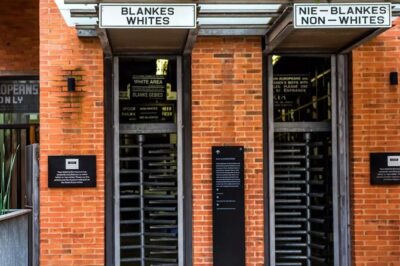
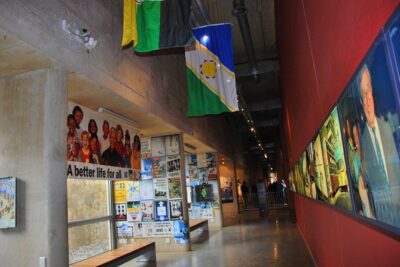
Hillbrow to Constitution Hill: reading the city through contrasts
As you drive through Hillbrow, you’ll see a neighborhood where the influx of people is expected, tied to Johannesburg’s role as a destination for immigrants and people from different parts of the continent and South Africa. The guide’s point is simple: the neighborhoods can feel like you’re crossing between countries.
Then comes Constitution Hill Human Rights Precinct. This is a former prison and military fort turned living museum, and it also ties into modern justice since it’s a home to the highest court in the land. It’s not just a static exhibit. It’s a place where the building itself is part of the message.
You’ll learn about prominent political leaders connected to incarceration there, including Nelson Mandela, Mahatma Gandhi, Winnie Madikizela-Mandela, and others. Constitution Hill focuses on the story of South Africa’s move toward democracy, and it specifically references sites like the Old Fort, Women’s Jail, and Number Four.
You get about 1 hour here, and admission is included. For me, the best reason to spend real time at Constitution Hill is this: you can physically stand in spaces tied to imprisonment and then connect that to the idea of human rights and legal change. It makes the later Apartheid Museum visit hit harder, in a good way.
Nelson Mandela Bridge, the CBD, and how Johannesburg grew from mining
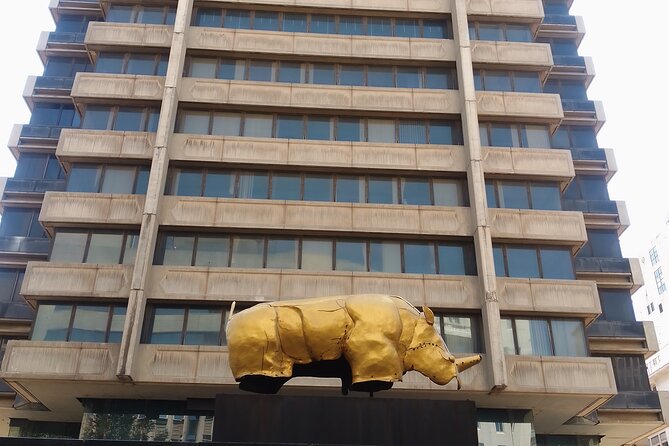
You’ll drive on Nelson Mandela Bridge on the way to New Town, and the guide provides orientation for Johannesburg, including historic sites and heritage buildings.
Then the tour shifts to Johannesburg CBD and its gold rush-era roots in the late 1800s. The day’s language around the city includes the idea that Johannesburg sits atop a watershed in a highveld grassland environment, and it was shaped by segregation, exclusion, and resistance. Even if you’ve read about the gold rush before, seeing these areas with a guide can help you understand why certain parts of the city developed the way they did.
This section is about context, not a long stop. You’re moving through the city and picking up “why this is here” clues, which makes the museum stops feel less like isolated tickets and more like parts of a single system.
Ferreira Mine Stope in the Standard Bank building: early mining, preserved
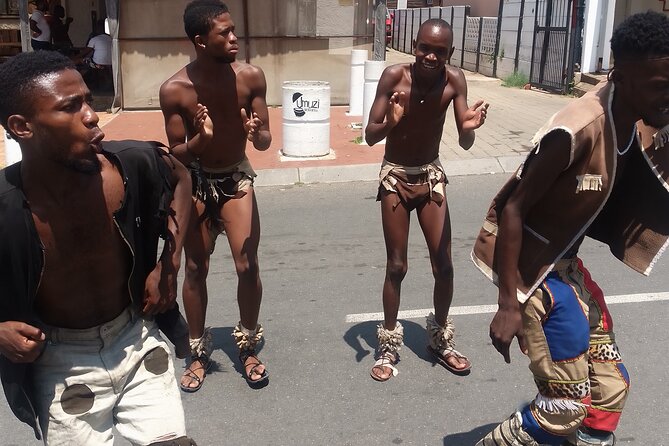
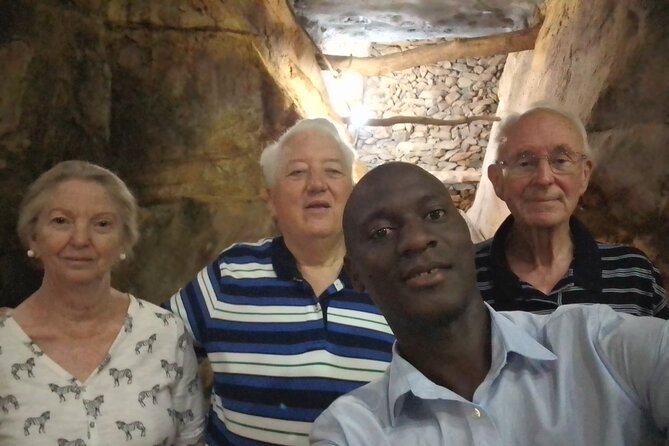
One of the neat, quick stops is the Standard Bank Ferreira Mine Stope. It’s in the basement of the Standard Bank headquarters in downtown Johannesburg. The long-forgotten mine entrance was discovered during construction of the building and has been preserved as a small museum.
This is about 20 minutes, and admission is free. It’s not huge, but it’s memorable because it’s hidden inside a modern corporate space. That contrast is the point: mining shaped the city, and here you can still see an early site that got wrapped into later development.
Maboneng Precinct: a turn toward the inner-city today
Maboneng Precinct is described as newly rejuvenated. It used to be abandoned, and now it’s a mix of restaurants, coffee shops, clothing boutiques, art galleries, and retail and studio spaces. The idea is that the area draws people back into the inner city.
You’ll spend about 30 minutes here, and admission is free. I like having this stop during the day because it stops the emotional roller coaster from becoming constant. It doesn’t erase apartheid or struggle, but it reminds you that cities keep moving and reshaping themselves, driven by real people and businesses.
If you’re the type who wants a photo break and a place to buy a cold drink, this is the kind of stop where that’s easiest.
The Apartheid Museum: where the emotional weight becomes clear
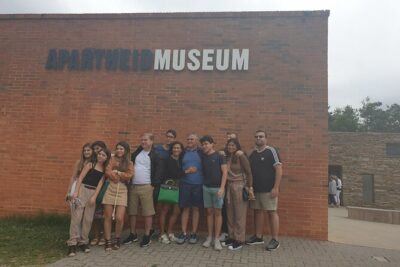
The Apartheid Museum is the core museum experience on this day. It’s described as internationally recognized as one of the best museum of the 20th century, and it unpacks the rise and fall of South Africa’s segregation and oppression.
You’ll be inside for about 2 hours 30 minutes, and admission is included. Plan for the tone. The museum is described as depressing and inspiring, emotional but uplifting. That mix matters. You don’t leave only shocked or only comforted. You leave with the understanding of what happened and the fact that resistance and truth did matter.
There’s also a practical rhythm suggested for after your visit: after two to four hours inside, allow yourself a half hour to contemplate what you saw. You can use that time to process the shock and then walk away with a sense of relief that you’re on the terrain where truth spoke to power and won.
Because this stop is long, it’s where you feel the biggest difference between a cheap, fast tour and a thoughtful one. You’re paying for the time you get, and here that time really counts.
FNB Stadium and the drive-past stops that break up the day
You’ll drive past FNB Stadium, described as the largest football stadium in Africa. It hosted opening ceremony, matches, and the final of the 2010 FIFA World Cup.
This is about 20 minutes, admission free. It’s a drive-by orientation stop, not a full visit. But it adds a modern Johannesburg anchor so the day doesn’t feel stuck in the past the whole time.
Diepkloof Park and Soweto neighborhoods: seeing class differences on the ground
Diepkloof Park is divided into different sections, and Diepkloof Extension is described as an upmarket part of Soweto where many professionals live. The area is characterized by formal, owner-built, larger houses owned by the Black lower and upper middle class, and it’s noted as having higher than average house prices compared to other Soweto suburbs.
You’ll spend about 20 minutes, and admission is free. Why I think this is worth including: it pushes back against the idea that Soweto is only one thing. People live in different economic realities, and those realities shaped daily life in the post-apartheid years too. A tour like this helps you notice that you can learn from a drive past, not only from a museum.
Chris Hani Baragwanath Hospital: a huge scale reality check
You’ll also pass the Chris Hani Baragwanath Hospital. It’s described as the 3rd largest hospital in the world, covering around 173 acres and occupying about 3200 beds, with about 6,760 staff members.
This stop is a drive-past view with learning time. Admission details aren’t listed, so think of it as a sighting plus explanation, about 20 minutes. The value is scale: it reminds you that Soweto is home to major institutions, not only residences. It’s one of those “pay attention” moments where your mental map updates.
Orlando Towers: old infrastructure turned into entertainment
Orlando Towers are two cooling towers used now as an entertainment center, including a famous bungee jump and a barbecue restaurant. You’ll spend about 20 minutes, and admission is not included.
This is another stop that depends on your curiosity. If you like landmarks and aren’t looking for ticketed attractions right now, the towers are an interesting visual. If you want to actually do the bungee jump or eat there, you’ll need to plan to pay separately since admission is not included.
Vilakazi Street and Sakhumzi Restaurant: Mandela and Desmond Tutu in the same frame
Soweto’s heart on this route is Vilakazi Street. The key detail here is that this street can claim two Nobel Laureates as residents: Nelson Mandela and Archbishop Emeritus Desmond Tutu.
Your stop includes Sakhumzi Restaurant near the Mandela House Museum. Sakhumzi is popular for a Soweto-style buffet with traditional dishes like umngqusho (samp and beans) and mogodu (tripe), plus other South African favorites. The schedule gives you about 40 minutes here, and admission is free.
This is one of the best places to deal with the lunch issue. Since lunch is not included, treat this as your chance to eat at your own cost, or grab something simple if you’re still managing museum fatigue.
Mandela House: a guided look inside a former home
Next is Mandela House. You get an included guided tour that explores exhibits and artefacts in Nelson Mandela’s previous house. The house is presented as one of South Africa’s most significant heritage sites, and it uses sound, film, interpretive panels, and guided tours to tell the stories.
You’ll spend about 20 minutes, and admission is included. This is shorter than the big museums, but it’s focused. I like pairing this with Vilakazi Street because it keeps everything connected: Nobel Laureate neighbors, then Mandela in his personal residential setting.
Even if you think you know Mandela’s story, this kind of guided visit tends to bring the timeline into sharper focus because you’re looking at place-based material.
Hector Pieterson Museum and Memorial: self-guided, and worth slowing down
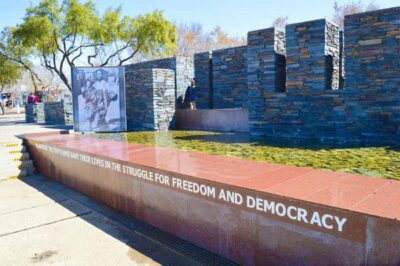
The day ends with the Hector Pieterson Museum and Memorial, named after one victim of the 1976 Soweto student uprising, a 13-year-old boy. The museum is described as a symbol of resistance against the brutality of the apartheid regime.
Here, the tour is self-guided, about 40 minutes, and admission is not included. This is a good structure choice because a guided museum tour can sometimes rush the most emotional parts. With self-guided time, you can spend an extra minute on what hits you personally.
If you’re short on time or want a quick overview, you can keep it brisk. If you want to read everything carefully, 40 minutes can feel like it’s just enough.
Driving back and why the order matters
After Hector Pieterson, you return to your accommodation or the starting point.
The order is one of the smartest things about this day. Constitution Hill sets the tone with incarceration and justice. The Apartheid Museum adds the broad story of segregation and oppression. Then Mandela House and the Hector Pieterson memorial bring you back to individuals and resistance in Soweto.
That sequencing helps you avoid the common trap of collecting places without collecting meaning.
Price, value, and who this day tour is best for
At $112.89 per person for about 7 to 8 hours, the price sits in the “full day, meaningful sites” category. The value is strongest in what’s included:
- admissions for Constitution Hill and Mandela House
- air-conditioned private transportation and bottled water
- hotel pickup and drop-off in the Johannesburg and Pretoria area
You’re also getting several free stops, like Munro Drive viewpoint, the Standard Bank Ferreira Mine Stope, Maboneng Precinct, and the drive-by FNB Stadium. That helps you stretch what you pay for into experiences rather than just basic transportation.
What’s not included is also important for your budgeting:
- lunch
- coffee or tea
- admission not included for places like Orlando Towers and the Hector Pieterson Museum and Memorial
This tour is best for you if:
- you have a limited amount of time in the Johannesburg area
- you want the human-rights story and not just a checklist of landmarks
- you like a structured day with real time in major museums
- you prefer a private group pace and a professional guide
It might not be ideal if you hate long days or want total freedom to wander without a schedule. This is not a “drop you off everywhere and wait” setup. It’s a guided route with stops that have defined time windows.
Should you book this Soweto and Apartheid Museum day tour?
If you care about understanding apartheid beyond posters and headlines, I’d book it. The combination of Constitution Hill and the Apartheid Museum gives you two necessary lenses, and Mandela House plus the Hector Pieterson Museum keeps Soweto personal instead of abstract. Add a guide like Nhlanhla (Lucky), who is described as punctual, polite, organized, and safety-focused, and you have a day that feels handled rather than improvised.
Just go in with two practical expectations: it’s long, and lunch is on you. If you plan for food and comfort, this is the kind of day trip that will stick with you for the right reasons.
FAQ
What is the duration of the full day Johannesburg and Soweto tour?
The tour runs about 7 to 8 hours.
Do you offer hotel pickup and drop-off?
Yes. Pickup and drop-off are offered at hotels in Johannesburg and Pretoria surroundings.
Is this a private tour?
Yes. It’s a private tour/activity with only your group participating.
What admissions are included?
Admission is included for Constitution Hill and Mandela House. Other stops listed as free have no admission cost, while Hector Pieterson Museum and Memorial and Orlando Towers are not included.
Is lunch included in the price?
No. Lunch is not included. Coffee or tea is also not included.
How long do you spend at the Apartheid Museum?
You spend about 2 hours 30 minutes at the Apartheid Museum.
Is the Hector Pieterson Museum and Memorial guided or self-guided?
It is self-guided, with about 40 minutes allocated.
Does the tour run in any weather?
It requires good weather. If canceled due to poor weather, you’ll be offered a different date or a full refund.
Johannesburg, Block by Block
Apartheid History: Other Sites We Have Documented
Soweto: Other Guided Routes
Keep going: the rest of our Pretoria write-ups
- Pretoria City Tour and Cullinan Mine Tour from Johannesburg
★ 5.0 · 3 reviews - Full Day Soweto, Johannesburg and Apartheid Museum Guided Tour
★ 5.0 · 3 reviews - Cradle of Humankind Full Day Tour from Pretoria and Johannesburg
★ 4.5 · 3 reviews - 3-Day Private Tour Johannesburg – See everything
★ 5.0 · 3 reviews - From Johannesburg: Pretoria Guided City Tour
★ 4.5 · 3 reviews - Pretoria Tour-Voortrekker Monument, Town, Union Buildings
★ 5.0 · 3 reviews
Johannesburg City Tours, compared.
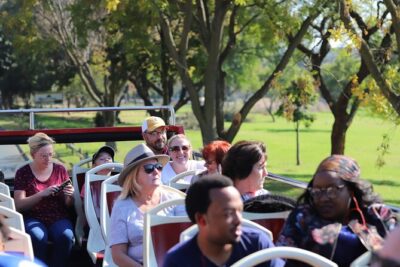 ★ 4.5Johannesburg Hop-On Hop-Off City Tour with Soweto OptionFrom $16768 reviews
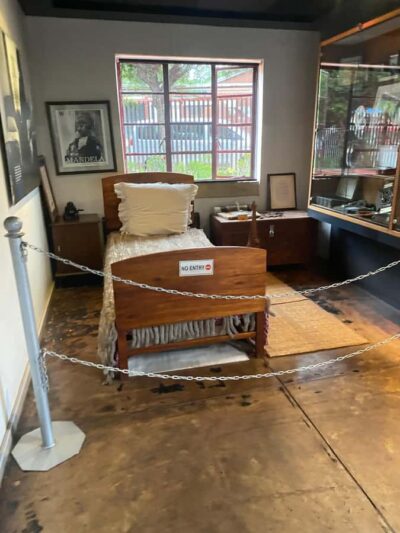 ★ 4.8Johannesburg: Full-Day Tour with Soweto and Apartheid MuseumFrom $104478 reviews
 ★ 4.8Johannesburg and Soweto: Half-Day TourFrom $71439 reviews
 ★ 4.6From Johannesburg: Lion & Safari Park Half-Day TourFrom $167384 reviews
 ★ 5.0Ultimate Johannesburg Soweto Experience with Apartheid MuseumFrom $108313 reviews
 ★ 5.0Half Day Lion Park tour from Johannesburg or PretoriaFrom $100274 reviews
 ★ 4.9Johannesburg: Maboneng Street Art & Culture TourFrom $37257 reviews
 ★ 5.0Johannesburg and Soweto tourFrom $77231 reviews
Browse the lists this tour appears in