
REVIEW · WALKING TOURS
Cape Town: Half-Day Walking City Tour and African Lunch
Mandela and lunch in one 5-hour walk. That combo turns Cape Town history into something you can actually feel on the street. I love that this tour is anchored by major landmarks and then caps it off with Bo-Kaap color and an African lunch you can smell from the sidewalk.
You get a local guide to connect the dots across the city, from the Bartolomeu Dias monument to the political heartbeat around City Hall and Parliament. You also get just enough time for photo stops in Bo-Kaap, plus Cape Malay snacks like samosas and koeksisters.
One thing to consider: the tour is outdoors and you will be walking a fair bit, with no entry inside the Castle of Good Hope or the Slave Lodge. If you are sensitive to weather or need step-free access, plan carefully.
In This Review
- Key highlights at a glance
- Walking Cape Town with purpose, not just pictures
- What I like most about the pacing
- A potential drawback to plan around
- Where the tour begins: Cape Town Central to the Bartolomeu Dias monument
- Castle of Good Hope: why a pentagonal fortress still matters
- What to expect here
- Mandela in the civic center: City Hall and the political corridor
- Why this matters for your time
- What you see along the way: Parliament, Slave Lodge, Company Gardens
- Practical tip for this stretch
- Bo-Kaap: colorful houses, photo time, and Cape Malay snacks
- How to get the most out of the Bo-Kaap portion
- Lunch at AfroDeli Eatery on Long Street, what you actually get
- What the lunch experience feels like
- Price and value: is $124 for 5 hours a fair deal?
- What to bring, and what might throw you off
- A note on what you do not do
- Who should think twice
- Best fit: who will enjoy this the most
- Should you book Cape Town half-day walking tour and African lunch?
- FAQ
- What is included in the tour price?
- Where does the lunch take place?
- How long is the Cape Town walking tour?
- Will we enter the Castle of Good Hope or the Slave Lodge?
- What should I bring for the walk?
- Is the tour suitable for everyone?
Key highlights at a glance
- Local guide storytelling that ties landmarks to South African history
- Castle of Good Hope seen up close as an old pentagonal colonial fortress
- Nelson Mandela stops including City Hall, plus a walk past major civic sites
- Bo-Kaap photo time with bright houses and Cape Malay snack breaks
- Lunch at AfroDeli Eatery (food only), filling and culturally specific
- Small-group comfort with Mercedes-Benz transport or similar when needed
Other city days, orientation to deep dive
- Cape Town Hop-On Hop-Off City Tour with Optional Cruise★ 4.5 · 1,793 reviews
- Cape Town: 12-Minute City Scenic Helicopter Tour★ 4.8 · 853 reviews
- Cape Town City Pass: Save Over 50% on 80+ Top Attractions★ 4.5 · 348 reviews
- Cape Town City Center Tour with Champagne★ 5.0 · 221 reviews
Walking Cape Town with purpose, not just pictures
Cape Town is a city where you can spend a whole day “seeing sights” and still leave wondering what any of it means. This half-day walking city tour is designed to keep the story moving, with a tight route and a guide who explains why places matter.
The format works well for first-timers. You start in Cape Town Central, then move through the historic core where key political and cultural moments played out. After that, you shift into Bo-Kaap for the visual payoff and a taste of Cape Malay food culture.
What I like most about the pacing
Two parts are especially strong. First, the tour brings Mandela history into the same walkable space you can see and photograph, including a stop connected to his first speech as a free man at City Hall. Second, you finish with food that feels like part of the culture, not an afterthought. Lunch at AfroDeli Eatery in Long Street (or the Strand Street meeting point area, depending on the day) gives you a real break, and it is food only, so you stay focused on the meal itself instead of adding extra costs on the spot.
A potential drawback to plan around
Because you are not going inside the Castle of Good Hope or the Slave Lodge, this is not a history museum tour. It is a “see the places and understand them” tour. You should go in expecting photos, viewpoints, and guided context, not long interior exhibits.
Where the tour begins: Cape Town Central to the Bartolomeu Dias monument
You meet your guide in the heart of the city, and the first moments are about getting your bearings fast. The tour heads toward the Bartolomeu Dias monument in Cape Town Central, and this opening matters more than it sounds.
Bartolomeu Dias is one of the big names tied to the maritime routes that helped shape European interest in southern Africa. Starting here lets the guide set a broader context before you hit the colonial and political landmarks. It is a helpful way to understand why Cape Town’s center is packed with buildings tied to power and trade.
This early stage also gives you a rhythm for the rest of the walk. You are not thrown into the deepest part of the story immediately. You ease into it, which makes the later Mandela and civic-site section easier to follow.
More routes best done on foot
Castle of Good Hope: why a pentagonal fortress still matters
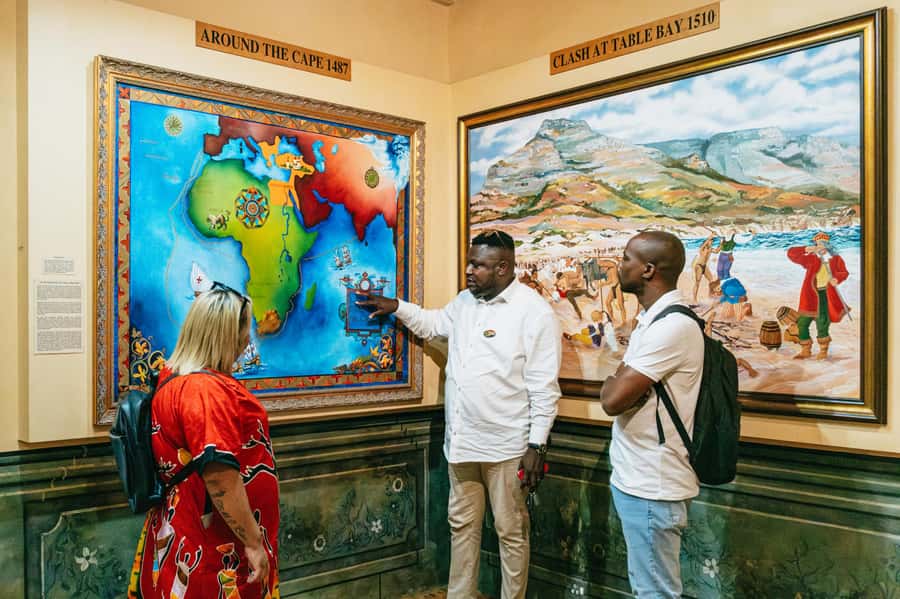
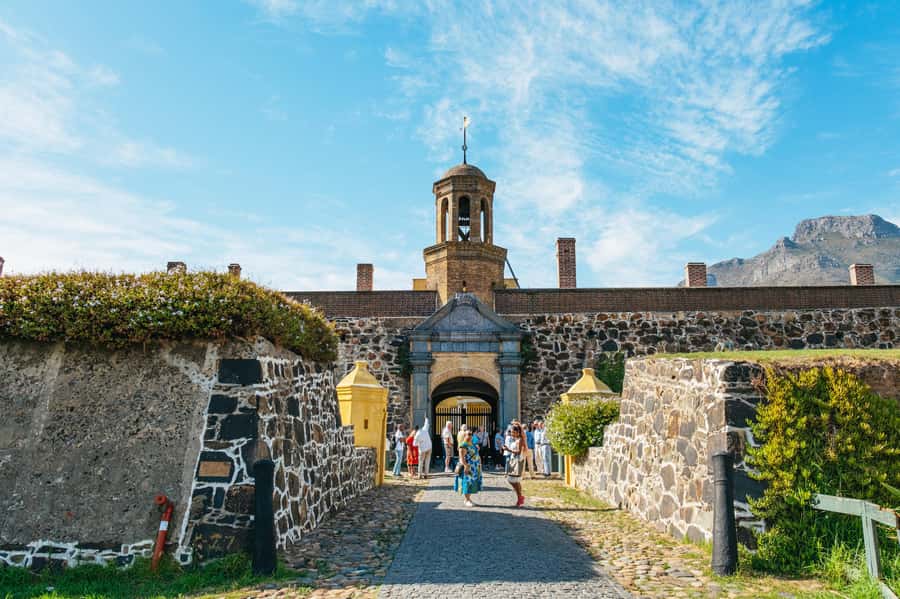
Next up is the Castle of Good Hope, a pentagonal fortress that is considered the oldest colonial building in South Africa. Even from outside, the shape and scale tell you a lot. Fortifications were not just about defense, they were about control, signal, and permanence.
The tour also makes one key point clear: you are not just looking at a pretty old building. You are seeing an artifact of how colonial governance left physical marks across the city. That context is what turns a fortress photo into an understanding moment.
What to expect here
You will learn about important figures in South Africa’s history, and the guide connects the fortress era to later political developments. You will not go inside the Castle of Good Hope, so plan your expectations accordingly. Bring your camera ready, because the area is also a great place to orient yourself for the rest of the central-city route.
Mandela in the civic center: City Hall and the political corridor
This is one of the tour’s strongest sections, and it has real-world clarity because you are walking through the civic core.
You will immerse in Mandela’s history with a specific stop at City Hall, where he made his first speech as a free man. That detail is the kind of fact that makes the whole route feel intentional. Instead of hearing generic statements about struggle and freedom, you are connecting them to a named location and a concrete moment.
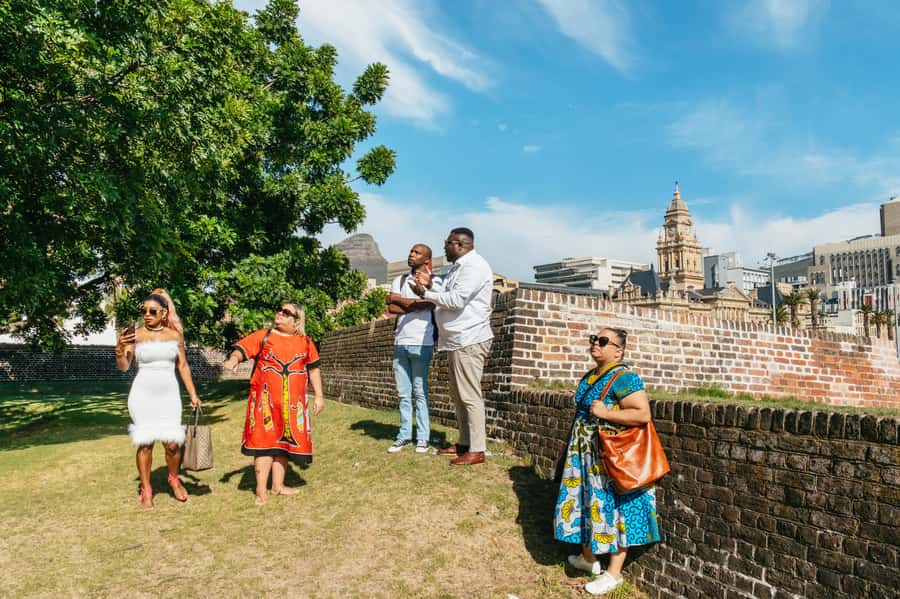
From there, you continue on past major civic sites, including Parliament, the Slave Lodge, Company Gardens, Cathedral, St. George’s Mall, and Greenmarket Square. Even without entering certain buildings, the walk gives you a sense of how tightly these institutions sit together.
Why this matters for your time
In a 5-hour experience, you do not have time to chase every detail around town. This route solves the biggest problem: you get the storyline in a compact area where the city layout actually supports the history.
Also, it helps a lot if you are the type who likes to ask questions mid-walk. In the feedback I saw, guides were singled out for being dedicated and informative, which is exactly what you want when you are walking and learning at the same time. People named guides like Jason, Martin, and Alfani, and the consistent theme was how well they kept the story flowing.
What you see along the way: Parliament, Slave Lodge, Company Gardens
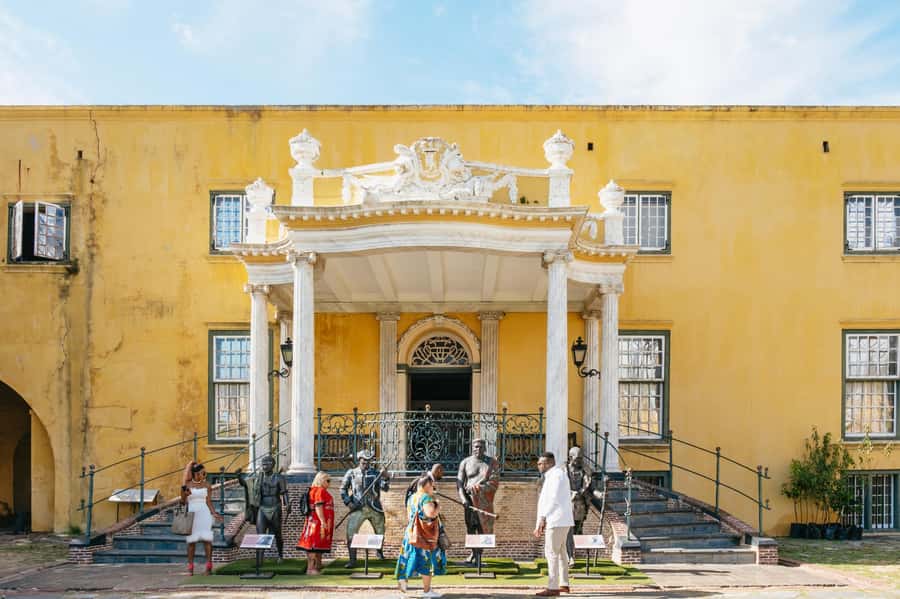
Walking past the Slave Lodge is a key emotional contrast. You will learn about it from the outside, not by entering the site. That can still be powerful, especially when your guide explains the context and why Cape Town’s institutional buildings are part of the larger history of slavery and control.
Company Gardens is another important shift. It is a reminder that the city’s “center of power” is also a place where everyday life unfolded. When your route includes both heavy history and everyday public space, you get a fuller picture of how people moved through Cape Town over time.
Cathedral, St. George’s Mall, and Greenmarket Square round out the civic and commercial blend. These stops help you understand how Cape Town functions today, not only how it functioned in the past. If you are photographing, this section tends to give you buildings, streetscape angles, and a good sense of scale.
Practical tip for this stretch
Wear something comfortable under your normal walking shoes. You will cover a lot of ground in a short time, and this is the part where fatigue can show up first. If it starts raining, you are not stuck in the worst-case scenario. One tour experience I saw described rain starting right when they began, and the guide adjusted by using the car for moving parts while keeping stops efficient.
Bo-Kaap: colorful houses, photo time, and Cape Malay snacks
Then you move into Bo-Kaap, and it’s like the city changes mood.
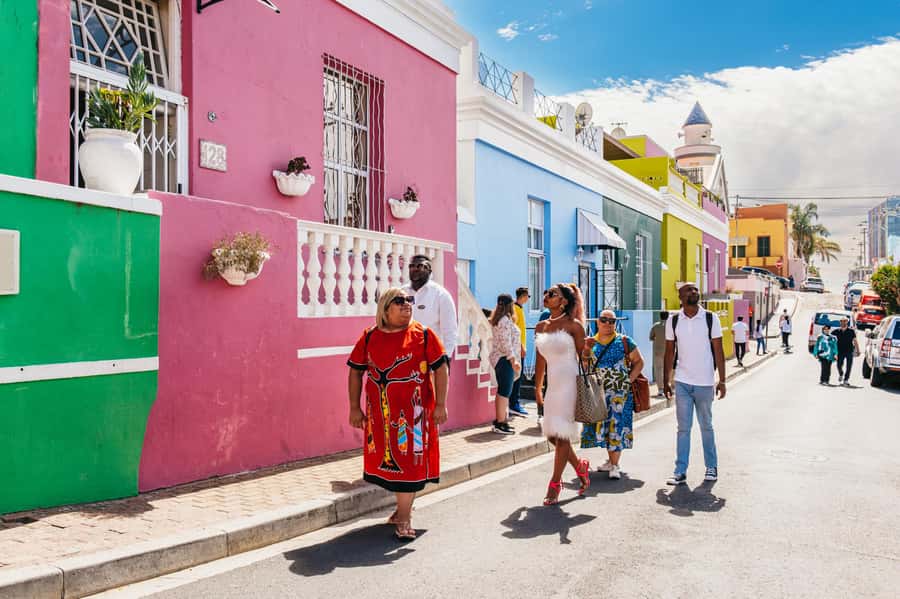
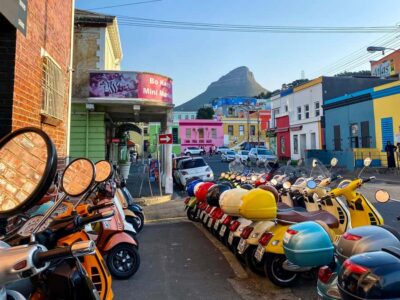
This is your photo payoff. You will take pictures of the brightly coloured houses, and the guide frames what you are seeing so it is not just Instagram color. Bo-Kaap is often discussed as a cultural neighborhood shaped by people who brought foodways and traditions with them, and that theme shows up again in the snack segment.
You can expect Cape Malay snacks such as samosas and koeksisters. This is one of those moments that makes the day feel complete. History is great, but food is a fast way to make culture stick in your memory.
How to get the most out of the Bo-Kaap portion
Plan your photos early. You get a limited window, so pick a couple of angles and stick with them. If you are traveling with someone, agree ahead of time on what each of you wants: street scenes, house facades, or people-and-street details. Also, keep an eye on the guide, because the story pieces matter here too. The snack is not random. It connects back to the Cape Malay culture you are walking through.
Lunch at AfroDeli Eatery on Long Street, what you actually get

The tour culminates with lunch at AfroDeli Eatery in Long Street or a Meeting Point option in Strand Street. Either way, you should treat lunch as a planned pause after walking and learning.
The most important detail: lunch includes food only, and drinks are not included. That keeps the tour pricing cleaner, but it also means you might want to plan for water or other beverages separately depending on your budget and your thirst level.
What the lunch experience feels like
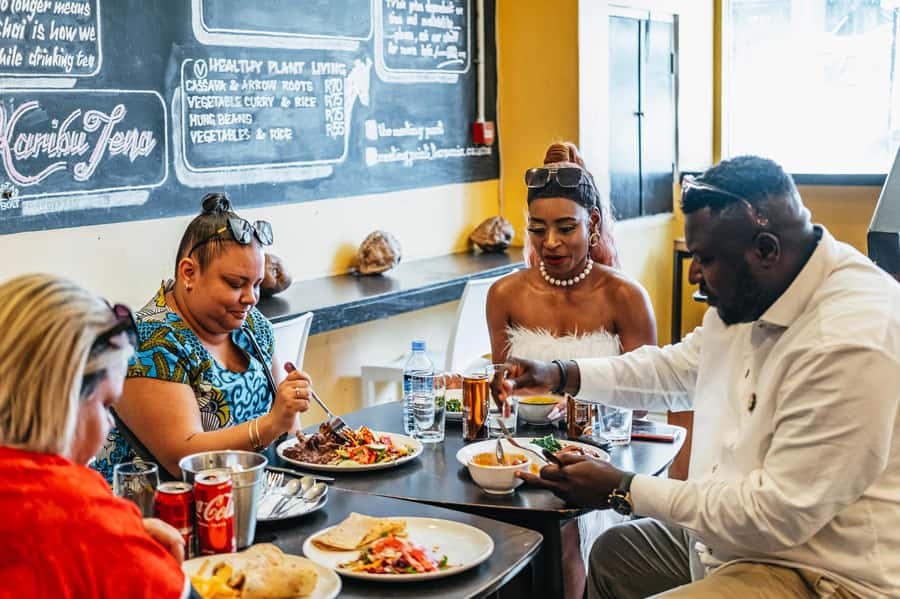
The best descriptions point to it being delicious and traditional, not just filling. It also helps that lunch lands after Bo-Kaap, so you are still in that cultural momentum. When the flavors come right after the snack portion, the day feels like one continuous experience instead of two unrelated parts.
If you have dietary needs, the tour info you were given does not specify options. So it is smart to check directly with the provider before you go, especially if you avoid particular ingredients.
Price and value: is $124 for 5 hours a fair deal?
At $124 per person for a 5-hour small-group tour, the price is not cheap, but it can make sense for the kind of day you want.
Here is why it can be good value:
- You get a local tour guide with a guided walk that ties multiple locations together.
- You get a planned lunch at AfroDeli Eatery, which is included as food.
- You also get small-group comfort. The tour includes Mercedes-Benz transport or similar, which matters when weather hits or the route needs quick transfers.
Here is when it might feel expensive:
- You are not getting paid-entry experiences. You will not go inside the Castle of Good Hope or the Slave Lodge.
- Drinks are not included.
- The day is walking-heavy, so if you would rather spend extra time in fewer places, you might prefer a different format.
In plain terms: this is a smart choice if you want a guided story, not a free-for-all, and you want lunch handled for you.
What to bring, and what might throw you off
This tour is practical, but Cape Town weather can change fast. At minimum, bring:
- Sunglasses
- Sun hat
- Sunscreen
Also, plan your energy. This is not a “sit and listen” tour. It is a walk with stops, and you will need comfortable shoes.
A note on what you do not do
You will not go inside the Castle of Good Hope or the Slave Lodge. That is not a bad thing, but it changes the expectation: you are viewing and learning on the street level.
Who should think twice
This tour is not suitable for:
- Children under 6
- Wheelchair users
- People with pre-existing medical conditions
If any of those apply, you should look for a different Cape Town option with step-free access and a more flexible pace.
Best fit: who will enjoy this the most
I think this is a great match for:
- First-time visitors who want a focused introduction to Cape Town in one morning or afternoon block
- History-minded travelers who like facts tied to real locations, not just general stories
- People who enjoy culture through food, especially Cape Malay flavors like samosas and koeksisters
- Anyone who prefers a small-group feel, with the backup comfort of Mercedes-Benz transport or similar when needed
If you are the kind of traveler who wants long museum time inside buildings, or you dislike walking, you might feel rushed. But if you can handle a half-day walk and you like guided context, this route is an efficient and satisfying way to understand the city.
Should you book Cape Town half-day walking tour and African lunch?
Yes, consider booking it if you want a guided story that connects Mandela sites, a major colonial fortress, and Bo-Kaap color into one coherent half-day plan. The guide-led approach seems to be the core strength, and the lunch at AfroDeli Eatery is included as food, which is a real win for value and convenience.
I would skip it or choose another option if you need wheelchair access, if you cannot manage walking, or if you specifically want to enter the Castle of Good Hope or Slave Lodge. Since this tour keeps you outside at those sites, it is built for seeing and understanding, not for heavy indoor sightseeing.
If your goal is to leave Cape Town with clear context and a good meal, this one fits the bill.
FAQ
What is included in the tour price?
The tour includes a tour guide and lunch at AfroDeli Eatery as food only. Drinks are not included.
Where does the lunch take place?
Lunch is at AfroDeli Eatery in Long Street, or at the Meeting Point in Strand Street.
How long is the Cape Town walking tour?
The total duration is 5 hours.
Will we enter the Castle of Good Hope or the Slave Lodge?
No. The tour does not go inside the Castle of Good Hope or the Slave Lodge.
What should I bring for the walk?
Bring sunglasses, a sun hat, and sunscreen.
Is the tour suitable for everyone?
It is not suitable for children under 6, wheelchair users, or people with pre-existing medical conditions.
Walk It: More of Cape Town
Another Day in Cape Town, Planned Out
Keep going: the rest of our Cape Town write-ups
- Cape Town to Cape Point Helicopter Flight – 48Min
★ 4.2 · 3 reviews - Full Day Private Hiking Table Mountain & City
★ 5.0 · 3 reviews - Sandboarding with jeep – drive uphill
★ 5.0 · 3 reviews - Full Day Tour for Cape of Good Hope & Boat to Seals Island
★ 5.0 · 3 reviews - 10 Day South Africa Tour Joburg to Cape Town
★ 5.0 · 3 reviews - 5 Day Garden Route Small Group Tour Fr CapeTown – Departs Mondays
★ 5.0 · 3 reviews
Walking Tours, compared.
 ★ 4.9Soweto: Walking Tour with a Local Guide and LunchFrom $43648 reviews
 ★ 5.0Plettenberg Bay: Bungee Jumping with Zipline and Sky WalkFrom $97506 reviews
 ★ 4.9Cape Town: Nathi Langa Township Walking TourFrom $31493 reviews
 ★ 4.9Cape Town: Art, Culture & History Walking TourFrom $37392 reviews
 ★ 4.8Cape Town: Street Art Walking Tour in WoodstockFrom $37293 reviews
 ★ 5.0Soweto Walking Tour with LunchFrom $40288 reviews
 ★ 4.7Stellenbosch: Guided Historical Walking TourFrom $18283 reviews
 ★ 4.8Cape Town: Langa Township Walking TourFrom $37272 reviews
Browse the lists this tour appears in