REVIEW · WORKSHOPS
African Art Workshop
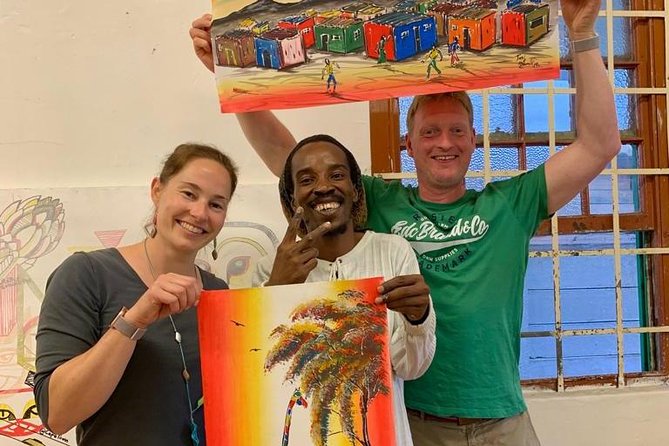
Painting in Langa feels personal fast. In this small-group session with artist Tozamile Mnapu (often called Toz), you get an art lesson plus a bit of township context, then you paint your own piece with the tools provided. You’ll also hear the personal journey behind the work and how African art history shows up on the canvas.
Two things I really like: the hands-on format (you’re creating from scratch during the 3 hours) and the fact that you leave with a bespoke painting you made yourself. One thing to keep in mind is the workshop starts in Langa, at 20 Bitterhout St, so plan your arrival time and route with local transit in mind.
In This Review
- Key Points at a Glance
- Your Workshop Starts in Langa, at 20 Bitterhout St
- What You’ll Do in the Studio: History, Story, then Paint
- The Small-Group Setup (10 People Max) That Makes You Faster
- How the Workshop Helps You Paint From Scratch
- Your Materials Choice: Prepared Surface or Blank Canvas
- The Conversation Part: Art, Community, and Social Issues
- What Makes This a Good Souvenir (Beyond the Postcard)
- Price and Value: Why $29.47 Can Make Sense Here
- Who This Workshop Is For (and Who It’s Not)
- Timing, Transport, and How to Show Up Ready
- Should You Book the African Art Workshop in Cape Town?
- FAQ
- How long is the African Art Workshop in Cape Town?
- Where is the meeting point, and where does the activity end?
- What is the maximum group size?
- What will I do during the workshop?
- Do I need to bring art supplies?
- Can most people participate, including first-timers?
- Is there free cancellation?
- Are service animals allowed, and is it near public transportation?
Key Points at a Glance
- Small group, capped at 10: More time with the artist and less standing around.
- From scratch, with guidance: You learn the approach first, then you create your own piece.
- Equipment provided, light packing: You can focus on painting, not shopping for supplies.
- Choose your base: You can paint on material prepared for you or on a blank surface.
- You meet the artist in his studio: Expect stories, demonstrations, and practical tips.
Still weighing it up? These Cape Town trips are the ones our readers open next.
- Wine Tour: Paarl, Franschhoek & Stellenbosch incl 3 wineries★ 5.0 · 3,940 reviews
- Cape Town: Hop-On Hop-Off Bus Tour with Optional Cruise★ 4.8 · 3,929 reviews
- Cape Town: Cape of Good Hope & Penguins Day Tour with Pickup★ 4.7 · 3,362 reviews
- Zipline Cape Town – From Foot of Table Mountain Reserve★ 5.0 · 3,179 reviews
Your Workshop Starts in Langa, at 20 Bitterhout St
This experience begins right in the Langa neighborhood, at 20 Bitterhout St, Cape Town, 7456. That matters because it shapes the feel of the workshop. You’re not moving through a polished tourist setting. You’re stepping into the working space of an artist and meeting him in the place that gives his work meaning.
The activity ends back at the meeting point. That makes your planning easier, especially if you’re pairing this with other Cape Town time later. It also helps you avoid the usual scramble of trying to find transport at the end of an unfamiliar area.
The good news: the location is described as near public transportation and service animals are allowed. If you rely on transit or have a service animal, this is a practical choice.
What You’ll Do in the Studio: History, Story, then Paint
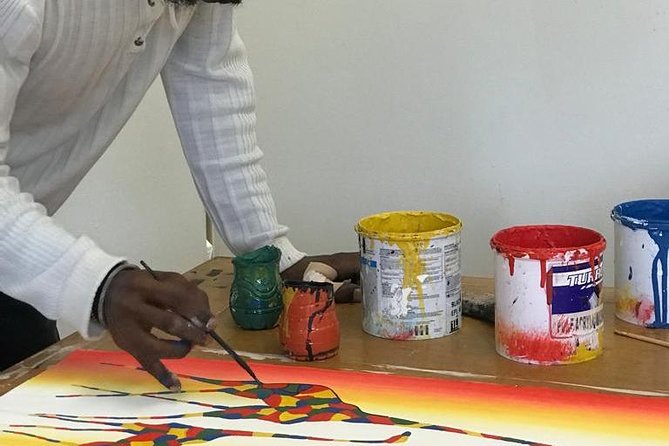
The workshop runs about 3 hours, and the flow is simple. You’ll be welcomed into the studio first. From there, Tozamile Mnapu shares context about African art history and his own life journey as an artist. This isn’t just trivia. It gives your painting choices a frame, so your colors and brushwork feel like part of a bigger conversation rather than random decoration.
Next comes the teaching piece. You’ll see how he creates his paintings from scratch, which is a big deal for first-timers. Instead of only showing finished works, you learn an approach. The goal is to help you understand how a piece can start blank and still become something intentional.
Then you get to your part. You’ll choose where you want to paint: on a material prepared for you or on a blank material. That choice is about control. Prepared materials can help you start quickly if you’re nervous. A blank surface gives you full freedom if you want to work without any pre-set foundation.
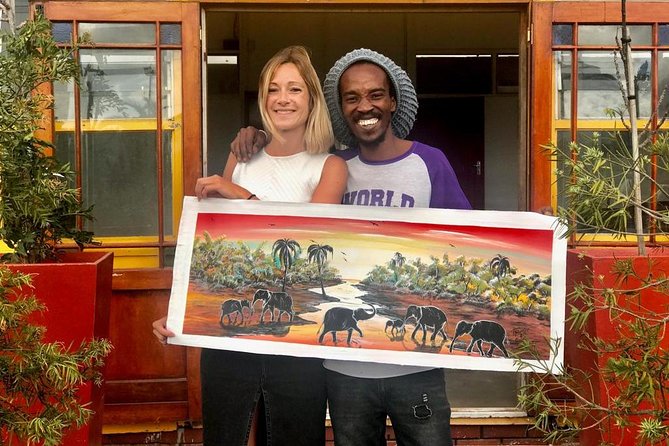
Finally, after those 3 hours of creating, you go home with your painting. No waiting for shipping. No awkward handoff with no control over what happened to your art.
The Small-Group Setup (10 People Max) That Makes You Faster
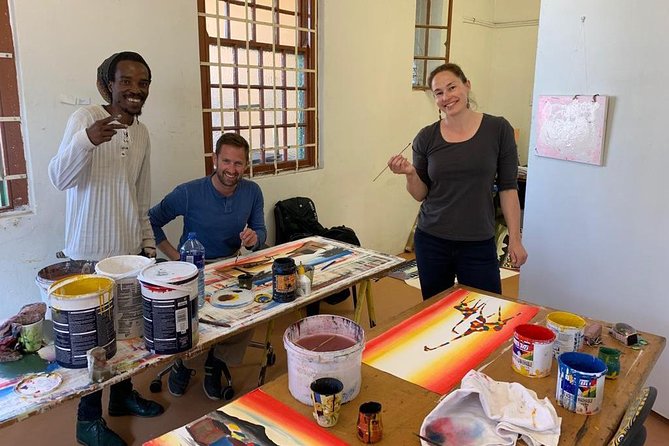
This workshop is built around a small group, capped at 10. That number matters more than you might think.
In a bigger class, someone is always waiting their turn, or the instructor has to give you general advice because time is tight. Here, the size lets the artist watch you as you work and give expert tips where they actually help. If you pause because your brush is suddenly doing something new, you can get the nudge you need rather than pressing onward with frustration.
And the reviews point to the same theme: the instructor is friendly and patient, and he works to bring out creativity even when it’s a first attempt at painting. That kind of teaching style is the difference between a fun souvenir and a real skill-building experience.
How the Workshop Helps You Paint From Scratch
The workshop’s big promise is that you can create a piece starting from nothing. That sounds bold, but the structure makes it believable.
Here’s what that usually means in practice:
- You start with a setup that helps you understand the process, not just the end result.
- You get a sense of how colors and brush techniques fit together.
- You then translate those ideas onto your chosen surface, prepared or blank.
What I like about this approach is that it respects your time. In 3 hours, you probably won’t turn into a trained painter. But you can absolutely learn how to think while you paint. That includes how to plan quickly, how to experiment without panic, and how to build confidence by finishing something.
The workshop also gives you lots of room to personalize the work. You’re free to express yourself with a wide range of colours and brushes. So the end result should feel like you, not like a cookie-cutter lesson.


Your Materials Choice: Prepared Surface or Blank Canvas
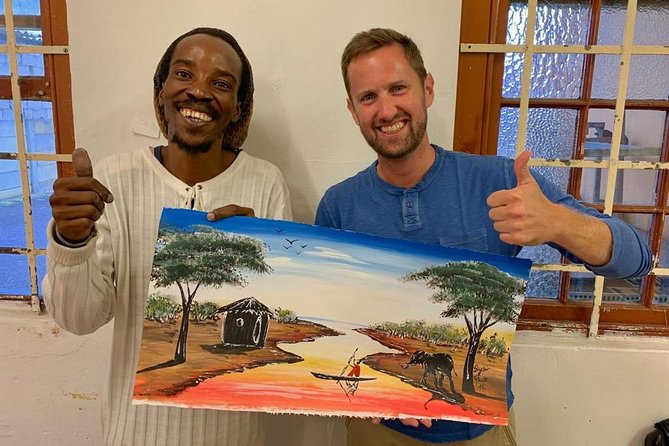
When you arrive at the painting stage, you get a choice: start on a material prepared for you, or start on a blank one. This is a smart option because it works for different comfort levels.
If you want less pressure, the prepared material helps you get moving. You can focus on your color decisions and your brush style, and let the base do some of the early work.
If you want full creative freedom, the blank option pushes you to decide everything yourself. That can be especially satisfying if you like planning, or if you just want to see what you can build from the beginning.
Either way, the workshop keeps the emphasis on making. You’re not watching for long stretches. You’re doing the painting.
The Conversation Part: Art, Community, and Social Issues
This workshop isn’t only about paint. In the studio, the artist’s personal story is part of the experience, and it naturally opens the door to conversation.
One review highlights that the session included a short tour and learning about the Langa township, and it felt moving. Another notes that after the art time, there was a chance to talk about social issues going on in Cape Town and even comparisons with the United States. Those kinds of discussions can turn a class into a cultural exchange you actually remember.
This is one of those “take your time, pay attention” activities. If you’re the type who enjoys asking questions and listening, you’ll get more out of it. If you’d rather keep things quiet and focused, you still have plenty to do with your painting, and the guidance should keep you on track.
What Makes This a Good Souvenir (Beyond the Postcard)
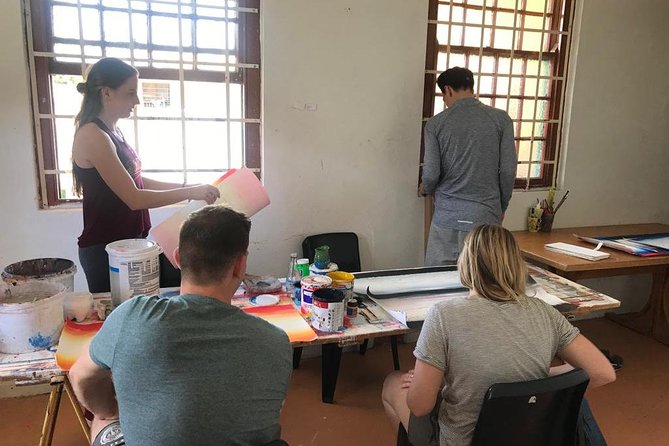
A lot of Cape Town shopping is about buying something made elsewhere. This is different. You’re taking home your own work, made in the moment with the guidance of a local artist.
That means your souvenir is personal in a very specific way:
- You made the choices for color and style.
- You completed an actual project, not just a sample.
- You have a story for how it came together: the history you heard, the approach you were shown, and the moment you finished.
And because the workshop provides art equipment, you can travel light. You are not planning your trip around carrying supplies. You come to the studio, paint, and leave with the result.
Price and Value: Why $29.47 Can Make Sense Here
At $29.47 per person, this workshop is positioned as an accessible creative experience. The value isn’t only the low cost. It’s what you get for the time and the price.
You’re paying for:
- Instruction from Tozamile Mnapu in his studio setting
- A small group size that supports real guidance
- Materials and equipment provided so you can avoid extra spending
- A finished painting that you take home after about 3 hours
If you’ve ever tried a higher-priced art class, you know how quickly costs rise once you factor in supplies and more hours. Here, the structure is designed around a short session with a clear outcome: you create something you can keep.
It’s also smart that the experience is designed as a mobile ticket. That’s one less thing to manage while you’re already navigating a new city.
Who This Workshop Is For (and Who It’s Not)
This workshop fits best if you want a practical, hands-on experience that connects you to local culture without requiring you to be an expert.
You’ll likely enjoy it if you:
- Want a guided way to paint from scratch
- Prefer small-group settings over crowded classes
- Like hearing personal stories connected to art and community
- Want a souvenir with real meaning, not just a bought object
You might consider something else if:
- You’re short on time and 3 hours feels too long
- You prefer strictly sightseeing without studio conversation
- You’re expecting a formal museum-style deep lecture. This is more interactive and practical than academic.
Timing, Transport, and How to Show Up Ready
The session runs for about 3 hours, so treat it like a real appointment. You’re arriving at a specific street in Langa, and you’ll want to be on time so the artist can walk you through the process smoothly.
Because the site is described as near public transportation, you can plan to use local routes. If you’re unsure, you’ll be better off building in extra travel time than trying to thread the needle minutes before the start.
As for packing, the big advantage is that art equipment is provided. Still, it’s wise to wear comfortable clothes you don’t mind getting paint on. For many people, that small step makes the experience feel stress-free.
Also, confirmation is received at booking, and the ticket is mobile, so keep your phone handy.
Should You Book the African Art Workshop in Cape Town?
I’d book it if you want a Cape Town activity that mixes creativity with real human context. The small-group size, the patient teaching style, and the promise of a finished, take-home painting make it a strong value at $29.47. You also get more than brushwork, you get African art history explained through the artist’s own life, plus the chance to talk about community and social issues if you want to.
Skip it only if you dislike hands-on activities, or if you need something purely passive and sightseeing-only.
If you’re open to getting messy with color and learning a simple process that leads to a finished piece, this is the kind of experience that sticks with you long after the paint dries.
FAQ
How long is the African Art Workshop in Cape Town?
The workshop lasts about 3 hours.
Where is the meeting point, and where does the activity end?
It starts at 20 Bitterhout St, Langa, Cape Town, 7456, South Africa. It ends back at the same meeting point.
What is the maximum group size?
The workshop has a maximum of 10 travelers.
What will I do during the workshop?
You will be welcomed in the artist’s studio, hear about African art history and the artist’s life journey, watch demonstrations, and learn how to create a painting from scratch. You then paint your own piece and take it home.
Do I need to bring art supplies?
No. Art equipment is provided, so you can travel light. You will also be able to choose to paint on a material prepared for you or on blank material.
Can most people participate, including first-timers?
Yes. The experience notes that most travelers can participate, and the guidance is described as friendly and patient for people painting for the first time.
Is there free cancellation?
Yes. Free cancellation is available up to 24 hours in advance for a full refund.
Are service animals allowed, and is it near public transportation?
Service animals are allowed. The meeting point is also described as near public transportation.
Keep going: the rest of our Cape Town write-ups
- Cape Town to Cape Point Helicopter Flight – 48Min
★ 4.2 · 3 reviews - Full Day Private Hiking Table Mountain & City
★ 5.0 · 3 reviews - Sandboarding with jeep – drive uphill
★ 5.0 · 3 reviews - Full Day Tour for Cape of Good Hope & Boat to Seals Island
★ 5.0 · 3 reviews - 10 Day South Africa Tour Joburg to Cape Town
★ 5.0 · 3 reviews - 5 Day Garden Route Small Group Tour Fr CapeTown – Departs Mondays
★ 5.0 · 3 reviews
Workshops, compared.
 ★ 4.8Cape Town: Malay Cooking Class and Lunch in Bo-KaapFrom $49515 reviews
 ★ 4.8Cape Town: Cape Malay Cooking Class in Bo-KaapFrom $52120 reviews
 ★ 4.7Cape Town: Bo-Kapp Walking Tour and Malay Cooking ClassFrom $68105 reviews
 ★ 5.0Private Surf LessonFrom $2653 reviews
 ★ 5.0Private Surf Lesson in Cape Town – Transport & Photos IncludedFrom $18450 reviews
 ★ 4.8Jeffreys Bay: Private Surfing Lesson for BeginnersFrom $4343 reviews
 ★ 5.0Muizenberg Cape Town: Private Surf LessonFrom $3437 reviews
 ★ 5.0Exploring Johannesburg through Skateboarding – incl. skate lesson for beginners!From $5135 reviews
Browse the lists this tour appears in