

REVIEW · SOWETO TOURS
Private Soweto Heritage Tour
Soweto tells stories fast. I love the 360 HD view from the 49-stair tower, and I love hearing personal stories from a guide who grew up in Soweto. The only catch is that the tower climb asks for moderate fitness.
This is a private tour, so you are not shoved into a crowd rhythm. Pickup is available, the car is air-conditioned, and you use a mobile ticket. In about 3 to 4 hours, you visit major heritage places and also get pointed to less obvious corners of Soweto.
Most stops are short, around 10 to 45 minutes, so you get the important beats, not slow wandering. The good news is that many entrances are handled for you, and that helps the $68.37 per person feel more practical. Lunch is on you, though.
In This Review
- Key reasons this Soweto tour is worth your time
- Meet the Soweto guide, and let the stories do the work
- Getting around in an air-conditioned private vehicle
- Diepkloof Park to the surrounding landmarks: how you get context fast
- FNB Stadium and the 2010 World Cup, from ceremony to lived space
- Orlando Towers: industry history with an adrenaline twist
- Regina Mundi Church: listen for what happened here
- Credo Mutwa Cultural Village and the climb to the 360 HD view
- Nelson Mandela House: heritage you can actually stand beside
- Diepkloof mans hostels and Baragwanath: community life, not just monuments
- What you really get for $68.37 per person
- Practical tips so the tour feels smooth, not stressful
- Should you book this Soweto Heritage Tour?
- FAQ
- How long is the Private Soweto Heritage Tour?
- Is this tour private?
- Is pickup included?
- What is included in the price?
- Are entrance tickets included?
- Is lunch included?
- Do I need moderate physical fitness?
- What is the main viewing highlight on this tour?
- Does the tour use a mobile ticket?
- What is the cancellation policy?
Key reasons this Soweto tour is worth your time

- A 49-stair climb for real orientation: You start in the streets and end up looking down on Soweto from the center.
- A guide with hometown context: If you end up with Maluse (Ephraim Maluse Ledwaba) and Lindi, you get personal, on-the-ground perspective, not just facts read off a screen.
- Sports history plus community stops: You mix the 2010 World Cup stadium with church sites, hostels, and a major hospital.
- Regina Mundi and Mandela House, paced for listening: Time is set aside for what happened there, so you do not just take photos and move on.
- Multiple ticketed sights built in: Admission tickets are included for several stops, which helps value.
- Private group flow: Only your group participates, so the guide can slow down when your questions get real.
Other Soweto routes we have reviewed, each with a local guide
- Johannesburg: Hop-On Hop-Off Bus with Optional Soweto Tour★ 4.6 · 985 reviews
- Soweto /Johannesburg and Apartheid Museum Guided Full Day Tour★ 5.0 · 932 reviews
- Johannesburg Hop-On Hop-Off City Tour with Soweto Option★ 4.5 · 768 reviews
- Half-Day Tour of Soweto Tour★ 4.5 · 712 reviews
Meet the Soweto guide, and let the stories do the work

One of the biggest reasons this tour feels different is the guide. The tour is led by a qualified guide who was born and raised in Soweto, even down to details like being fortunate to grow up in the 1st Township of Soweto. That matters because Soweto is not just a list of monuments. It is people, daily life, and memory stacked on top of memory.
In the best moments, you notice how the guide shapes the pace. The tour is described as being attuned to your energy levels, with time to let things land. That makes it easier to ask questions, especially when you are hearing what a place meant to someone who lived there.
If you get a guide like Maluse (Ephraim Maluse Ledwaba) or Lindi, you are likely to hear personal stories alongside the heritage sites. That is the sweet spot. You leave with more than dates. You get a sense of how the community understands its own landmarks.
Getting around in an air-conditioned private vehicle
You are picked up, and you ride in an air-conditioned vehicle. For a 3 to 4 hour format, that comfort is not a luxury. It is part of the experience, because you are moving between neighborhoods and stopping often enough that the ride matters.
This is also a true private tour, meaning only your group participates. That matters if you want to talk quietly, if you have mobility limits, or if your group includes people who prefer fewer crowd interactions.
Timing is part of the deal here. The tour is built from quick, focused visits. Some stops are around 30 minutes, one is about 45 minutes, and one hospital stop is listed as 10 minutes. That structure is good for a first visit to Soweto, when you want coverage without losing the human thread.
Diepkloof Park to the surrounding landmarks: how you get context fast
The tour starts with an intro stop around Diepkloof Park, and from there it threads through nearby landmarks that help you build a map in your head.
In this early segment, you are shown or routed past places such as Diepkloof extensions and Diepkloof mans hostels, plus major landmarks like Chris Hani Baragwanath Hospital, Orlando Towers, Regina Mundi Church, Credo Mutwa Village, and Nelson Mandela House. Even when these moments are shorter, the goal is clear: you get orientation before you settle into the deeper visits.
This part is valuable because Soweto can feel like a patchwork until someone helps you connect the dots. If you are trying to understand why the later stops matter, this opening is what makes it click. It also sets you up for the more emotional sites later, because you are not arriving cold.
Possible drawback: because so many names appear early, the first 30 minutes can feel like information. Give yourself permission to mentally jot down what stands out, then let the longer stops do the heavy lifting.
FNB Stadium and the 2010 World Cup, from ceremony to lived space

Next is FNB Stadium for about 20 minutes. This is not just a photo stop. You are taken to the 2010 World Cup stadium that hosted the opening and closing ceremony.
That context helps you look at the stadium as more than a big arena. It becomes a reference point for how major global events touch a local setting. If you are a sports fan, you will enjoy seeing how that scale gets anchored to Soweto’s everyday geography.
It is also a good breather stop. A stadium visit is straightforward, easy to understand, and it gives you a change of pace after the smaller community spaces you pass in the morning.
More history you can walk through
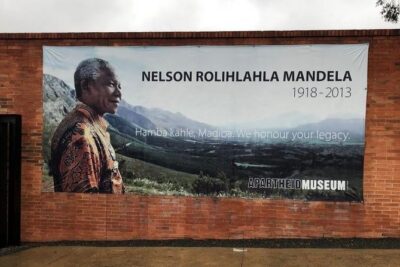


Orlando Towers: industry history with an adrenaline twist
Then you go to Orlando Towers for around 30 minutes. The tower is described as being at the old Johannesburg powers station, and now it is used for bungee jumping.
This is one of those stops that shows how places evolve. You are not only looking back. You are seeing present-day use sitting on top of old infrastructure. If your group likes stories about how cities reinvent themselves, this stop delivers.
You can also think of it as a warm-up for the tower experience later at Credo Mutwa Cultural Village. Even if you do not do bungee jumping, the point is the same: you look up, you notice height, and you start craving a view.
Regina Mundi Church: listen for what happened here
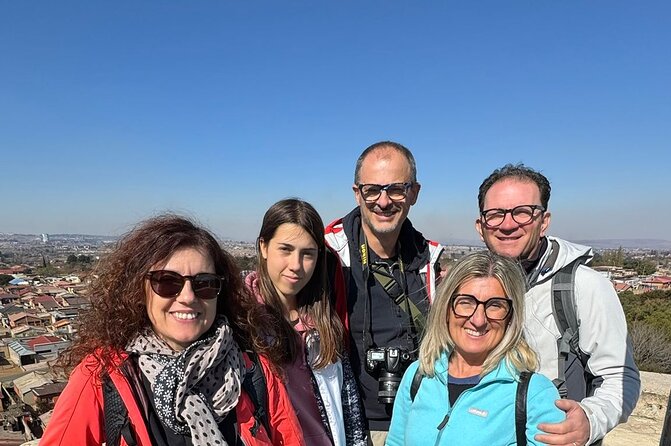
Regina Mundi is next, with about 30 minutes set aside. This stop is described as hearing historical events that took place at the church.
The practical takeaway is that your time here is not meant for idle wandering. The value is in what your guide explains and how the site fits into Soweto’s past. Expect a listening-heavy stop, plus enough time to take in the setting without rushing.
If you are sensitive to emotional or politically grounded topics, this might be the moment where your group shifts from sightseeing mode to reflection mode. That is not a bad thing. It is what gives the tour weight.
Credo Mutwa Cultural Village and the climb to the 360 HD view
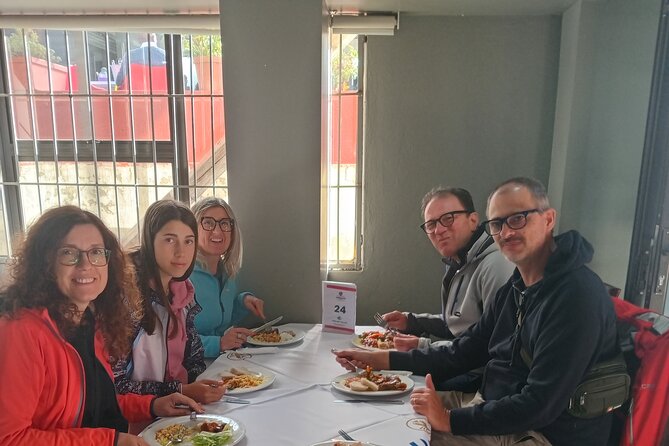
This is the centerpiece: Credo Mutwa Cultural Village for about 45 minutes. The stop includes an area with the Oppenheimer tower, plus the highlight that most people come for.
You climb the 49 stairs tower in the center of Soweto. At the top, you get a 360 HD view of Soweto. That is the moment when the tour stops being a list of locations and turns into a real understanding of the place.
Here is the practical advice: plan for the climb. The tour notes that travelers should have moderate physical fitness, so if you know stairs are hard for you, this is the moment to think it through. Take your time if you need to. This is not a race.
Also, the view is not only for photos. It helps you connect the earlier stops. When you look out over Soweto, you suddenly understand why the guide keeps using certain landmarks to orient you.
If your group is mixed ages, this stop can become a helpful decision point. Some people might enjoy the full climb. Others might prefer to pace more slowly and soak it in from where they can.
Nelson Mandela House: heritage you can actually stand beside
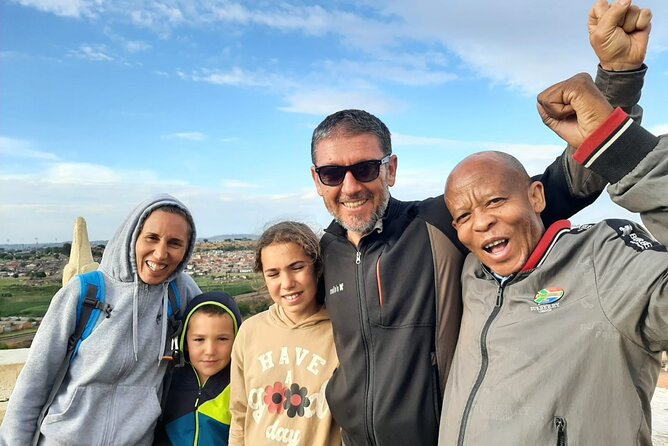
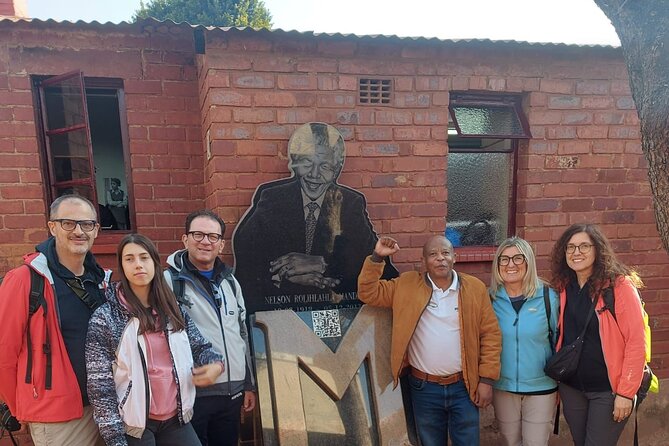
Next is Mandela House for about 30 minutes. You hear historical facts at the house, with your guide framing what you are seeing.
This stop works best when you treat it as a conversation. Sit with it long enough to absorb the story your guide tells, rather than sprinting through it for the sake of checklist completion.
Also, it pairs well with the tower view earlier. You will go from height and overview down to a specific home site. That shift makes the stories feel more grounded.
Diepkloof mans hostels and Baragwanath: community life, not just monuments
Near the end, you get a stop centered on Diepkloof mans hostels, where you hear historical facts about residents and the hostels. This is exactly the kind of place that can get overlooked on a rushed itinerary, but it helps you understand how heritage lives in everyday housing and shared spaces.
Then you visit Chris Hani Baragwanath Hospital. This part is listed as about 10 minutes, and it is included with admission noted as free on the tour. You learn about Chris Hani Baragwanath and the role it plays to the community. The description also calls it the biggest hospital in the Southern Hemisphere.
That “why it matters” framing is key. You are not visiting a building as a museum piece. You are visiting a place where health care and community need meet, which makes it a meaningful counterweight to the more ceremonial sites like churches or stadiums.
If your group likes practical context, this is often the stop where questions get more specific: how people experience these institutions day to day, and why the guide keeps returning to community roles.
What you really get for $68.37 per person
Let’s talk value in plain terms. At $68.37 per person, you are paying for a private, guided half-day format that includes:
- Guide
- All fees and taxes
- Air-conditioned vehicle
- Admission tickets at multiple stops, with Baragwanath specifically noted as free on the tour
Lunch is not included, so you will want to plan for food before or after. But compared with piecing together separate entrance fees plus a local driver plus a guide, this bundled approach usually makes your day less stressful.
You also see the booking demand in the planning window: it is on average booked 117 days in advance. That does not automatically mean it is right for you, but it suggests it is a known, in-demand route.
Who is this price best for? People who want structure in a short time, people who value context from a local guide, and people who would rather pay once and not manage several separate tickets in the field.
Who might feel the price is less worth it? If you already have a deep interest in one narrow topic and want to spend days reading and exploring, a 3 to 4 hour circuit might feel fast.
Practical tips so the tour feels smooth, not stressful
Here are the things that can make or break a short heritage tour like this.
- Wear comfortable shoes for the 49-stair climb. Even if you take breaks, you will still want traction.
- Plan your stamina around the biggest vertical moment. The tour is built on short segments, but that tower climb is the only clearly described physical challenge.
- Bring a camera, but also bring patience. Several stops are designed around listening to what happened there, not just looking at surfaces.
- If your group has mixed mobility or energy levels, tell the guide early. This tour is described as being attuned to your energy, which usually means adjustments are possible.
- Budget for food. LunchMeals are not included, so either eat beforehand or save time after the tour.
Should you book this Soweto Heritage Tour?
I think you should book it if you want a well-organized introduction to Soweto that mixes big landmarks and everyday community stories. The 49-stair tower and the 360 HD view are the headline, but the better part is how the guide connects sites like Regina Mundi, Mandela House, and the community-focused stops like Diepkloof mans hostels and Baragwanath Hospital.
Skip it or reconsider if your group cannot handle moderate fitness needs, since the climb is central to the experience. Also, if you hate short visits and want long, self-directed time at each place, this tour’s structure may feel a bit too tight.
If you book, aim to go in with curiosity and questions. The tour is built for listening, and that is where it tends to shine.
FAQ
How long is the Private Soweto Heritage Tour?
The tour is about 3 to 4 hours.
Is this tour private?
Yes. Only your group will participate.
Is pickup included?
Pickup is offered.
What is included in the price?
The tour includes the guide, all fees and taxes, and an air-conditioned vehicle.
Are entrance tickets included?
Admission tickets are included for the stops that list tickets in the itinerary, and Baragwanath hospital admission is noted as free for this tour.
Is lunch included?
No. LunchMeals are not included.
Do I need moderate physical fitness?
Yes. The tour notes that travelers should have a moderate physical fitness level, mainly because of the stair climb.
What is the main viewing highlight on this tour?
At Credo Mutwa Cultural Village, you climb the 49 stairs tower and get a 360 HD view of Soweto from the top.
Does the tour use a mobile ticket?
Yes. A mobile ticket is provided.
What is the cancellation policy?
You can cancel for a full refund up to 24 hours in advance of the experience start time. If you cancel less than 24 hours before, the amount is not refunded.
The Past, On Foot in Johannesburg
Soweto: Other Guided Routes
Keep going: the rest of our Johannesburg write-ups
- Soweto Private half day tour
★ 4.5 · 3 reviews - Johannesburg’s Migration History with a local lunch
★ 5.0 · 3 reviews - Johannesburg: Soweto, Apartheid Museum, and Cradle tours
★ 4.7 · 3 reviews - Soweto Apartheid Museum and Lunch
★ 5.0 · 3 reviews - Bathongo Rhino & lion park nature reserve tour
★ 5.0 · 3 reviews - Johannesburg: Elephant and Monkey Sanctuary Half Day Tour
★ 5.0 · 3 reviews
Soweto Tours, compared.
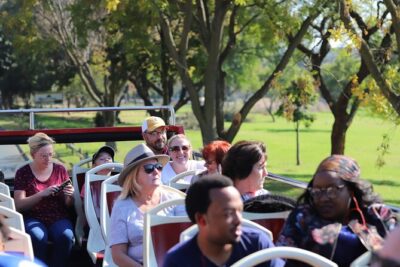 ★ 4.5Johannesburg Hop-On Hop-Off City Tour with Soweto OptionFrom $16768 reviews
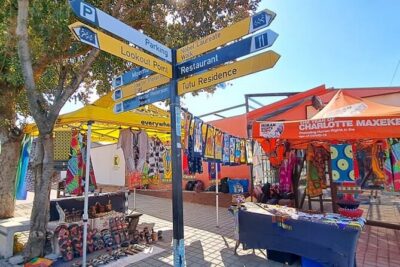 ★ 4.5Half-Day Tour of Soweto TourFrom $63712 reviews
 ★ 4.9Soweto: Walking Tour with a Local Guide and LunchFrom $43648 reviews
 ★ 4.8Jo’berg in 1 Day: Soweto, Apartheid Museum & City TourFrom $142524 reviews
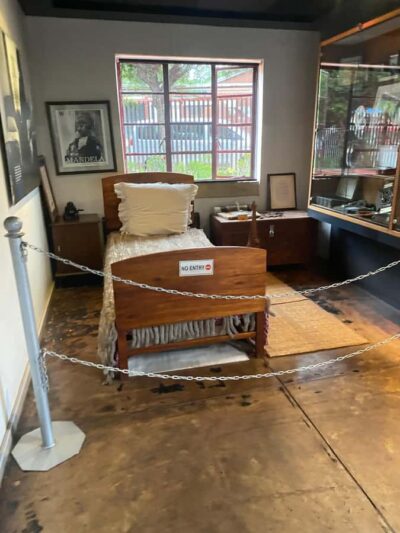 ★ 4.8Johannesburg: Full-Day Tour with Soweto and Apartheid MuseumFrom $104478 reviews
 ★ 4.8Johannesburg and Soweto: Half-Day TourFrom $71439 reviews
 ★ 5.0Full-Day Soweto, Apartheid Museum and Lunch TourFrom $108410 reviews
 ★ 5.0Half Guided Day Tour of Soweto And Apartheid MuseumFrom $69356 reviews
Browse the lists this tour appears in