
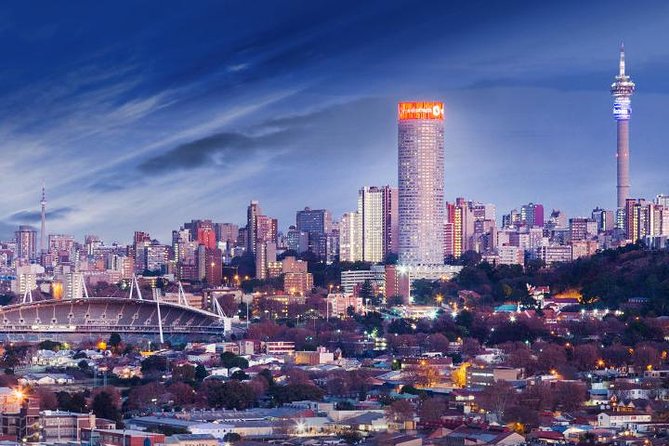
REVIEW · JOHANNESBURG CITY TOURS
Johannesburg Historical, Apartheid Museum & Soweto
Need a quick Johannesburg orientation?
This private, air-conditioned city tour strings together the big political and neighborhood landmarks in one smooth day. I like how it helps you get your bearings fast with a guided route through Constitution Hill, Soweto’s major streets, and the Apartheid Museum. I also like the focus on learning, not just photo stops, plus the extra surprise of an old gold-mining relic preserved under a city building. The main catch to plan for is that some attraction tickets are included and others are not, especially the Apartheid Museum.
You’ll ride in a private vehicle instead of wrestling with crowded transport, which matters when you’re squeezing a lot into a limited day. If you’ve got an early flight or only a short window in Johannesburg, this kind of itinerary is designed to be practical and efficient. The tour can run from about 1 to 7 hours, so you’ll want to be clear on the pace you’re booking.
One more thing I appreciate: Johannesburg has layers, and the route mirrors that. You start with Constitution Hill’s prison-to-rights transformation, then move outward to Soweto streets tied to Nelson Mandela, Desmond Tutu, Hector Pieterson, and the brutal realities of apartheid policies.
In This Review
- Key highlights to look for
- A fast, meaningful Johannesburg loop
- Getting between neighborhoods without losing half your day
- The preserved mine stope under Standard Bank: Johannesburg’s gold rush origin
- Constitution Hill Human Rights Precinct: prisons beside the court
- Maboneng Precinct and the inner-city makeover you can actually see
- Newtown and the big cable-stayed bridge in the mix
- Apartheid Museum: the one-stop place to connect the timeline
- Johannesburg city sights beyond the museum day
- Diepkloof Park, Orlando Towers, and other Soweto-linked viewpoints
- Mandela House on Vilakazi Street: where the story becomes personal
- Hector Pieterson Memorial: a child’s death tied to June 16
- Mzimhlophe station and the Treason Trial era protests
- A colored township reference point: Bulte and the mine dumps
- Lunch and pacing: don’t let the day run you
- Price and what you really get for $107.48
- Who this tour fits best
- The guide factor: what to expect from a pro
- Should you book Johannesburg Historical, Apartheid Museum & Soweto?
Key highlights to look for
- Private, air-conditioned transport to hop between neighborhoods without the city-jam frustration
- Constitution Hill Human Rights Precinct with admission included (a powerful one-stop history stop)
- Soweto highlights on Vilakazi Street, including Mandela House and the Hector Pieterson Memorial
- The preserved mine stope story tied to early gold-mining days beneath the city
- Maboneng Precinct and inner-city regeneration, plus viewpoints around major city landmarks
- Apartheid Museum time is built in, but plan for admission since it is not included
Other Soweto routes we have reviewed, each with a local guide
- Johannesburg: Hop-On Hop-Off Bus with Optional Soweto Tour★ 4.6 · 985 reviews
- Soweto /Johannesburg and Apartheid Museum Guided Full Day Tour★ 5.0 · 932 reviews
- Johannesburg Hop-On Hop-Off City Tour with Soweto Option★ 4.5 · 768 reviews
- Half-Day Tour of Soweto Tour★ 4.5 · 712 reviews
A fast, meaningful Johannesburg loop
This is a day tour built for people who want the essentials of Johannesburg without spending the whole day in transit. The idea is simple: use a private vehicle to link major places together, then rely on your guide to connect the dots so it feels like more than a checklist.
You’ll get a mix of scales. Some stops are about national history and big institutions. Others are about streets and neighborhoods where apartheid laws shaped daily life. That balance helps you understand why the city looks the way it does now, not just what happened in the past.
And because it’s private, it’s easier to pace your interests. If you care more about Soweto, you can spend extra time on the people-and-place stops. If you want the political arc, you’ll likely focus on Constitution Hill and the Apartheid Museum.
Getting between neighborhoods without losing half your day
Johannesburg is spread out, and “just go to the next place” can eat your day. This tour solves that with a private, air-conditioned vehicle and pickup offered. Instead of timing your own route, you show up and move.
There’s also value in having someone who understands how neighborhoods connect. The tour visits central landmarks like the Top of Africa building and Nelson Mandela Square, then shifts into areas with different textures and histories. Without a local guide, it’s easy to miss what to look for, or to confuse what you’re seeing.
Practical tip: if you’re sensitive to long days, choose the shorter time option. The tour has a stated duration range from 1 to 7 hours, so you can likely match it to your schedule.
The preserved mine stope under Standard Bank: Johannesburg’s gold rush origin
One of the tour’s most interesting “wait, what?” stops happens when builders uncovered an entrance to a long-forgotten mine stope while preparing foundations for Standard Bank’s headquarters in the city. The mine stope dates back to the city’s earliest gold-mining days, and it was preserved so it could be opened for visitors.
It’s named for Ignatius Phillip Ferreira, a farmer, soldier, and prospector who left Grahamstown in the Eastern Cape in 1886 to join the Gauteng gold rush. He founded one of the first mining camps in July 1886, and struck gold just three months later.
Why I think this matters: Johannesburg’s story is tied to gold and extraction, and that early mining layer still shapes the city’s development. This stop gives you a physical sense of time and industry right inside a modern business district.
Constitution Hill Human Rights Precinct: prisons beside the court
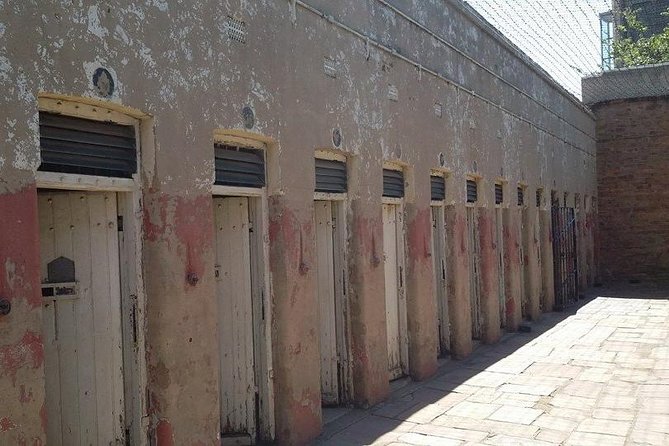
Constitution Hill is one of those places that quietly forces you to slow down. Here, Johannesburg’s old prisons sit next to the Constitutional Court, which symbolizes South Africa’s democratic transition. The precinct is essentially a dramatic pair: the machinery of punishment, then the machinery of constitutional justice.
The tour includes admission ticket for this stop, and it’s scheduled for about 1 hour 30 minutes. In that time, you can walk the grounds, see how the prison system worked, and understand the shift from apartheid-era detention to a post-apartheid rights framework.
A useful way to approach it: don’t treat it like a museum that wraps up quickly. If you’re open to it, read the explanations, then step back and let the layout sink in. The ridge location means you also get views over central Johannesburg, which makes the history feel tied to real space, not just text.
If you’re short on time, this is also the best “single stop” for national-scale understanding before you go deeper into Soweto.
More sites and museums that record the apartheid years
Maboneng Precinct and the inner-city makeover you can actually see
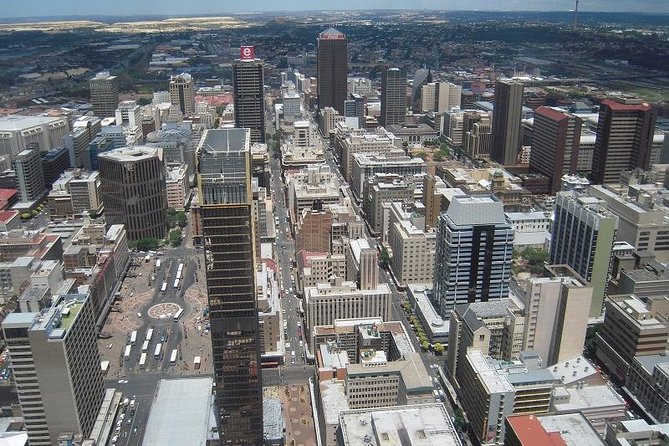
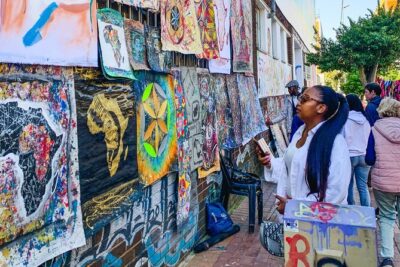
After Constitution Hill, the route moves into the inner city, including the Maboneng Precinct. Maboneng is a Sotho word meaning “place of light,” and the area’s goal is transformation from neglected industrial spaces into a place people want to live, work, and spend time.
The name alone sets the theme, but what you’re really looking at is a shift in how the city uses old warehouses and factories. You’ll likely feel the contrast fast: some blocks are still in transition, while other pockets are active and designed for everyday life.
If you’ve only ever visited Johannesburg from a distance, this is a helpful counterweight to the heavier stops. It doesn’t rewrite the past, but it shows how space and policy changes can shape neighborhoods over time.
Newtown and the big cable-stayed bridge in the mix
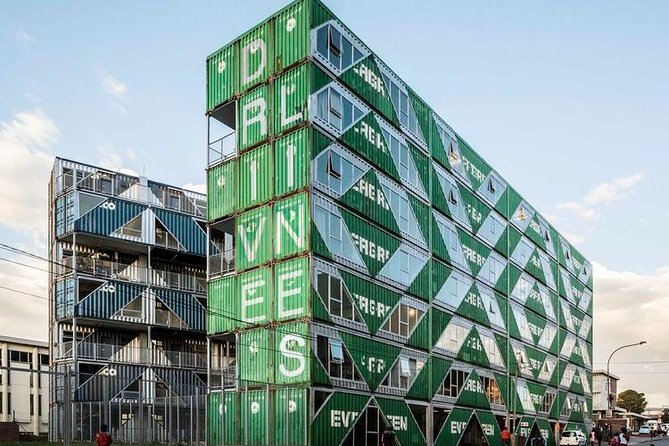
The tour also includes sights around Newtown, an area associated with artists of all races gathering, plus downtown redevelopment. A standout structural detail here is a bridge that spans the railway tracks separating Newtown and Braamfontein.
The bridge took 18 months to build and was completed in 2003. It’s described as the largest cable-stayed bridge in southern Africa, designed by the architectural firm Dissing and Weitling, and built to be lightweight.
Why this is more than trivia: bridges are not just engineering. In a city shaped by segregation, infrastructure can either reinforce separation or encourage connection. Even if you only spend a short time looking around, you’ll likely notice how the built environment affects movement and the feel of different neighborhoods.
Apartheid Museum: the one-stop place to connect the timeline
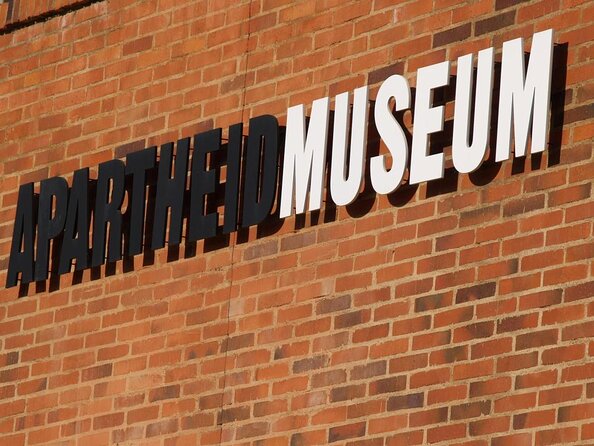
This is the major learning stop on the route, scheduled for about 2 hours. The tour visits the Apartheid Museum, which is described as the first of its kind and focused on the rise and fall of apartheid.
Important budget note: admission is not included for this stop. If you book this tour, it’s smart to set aside money for the museum entry before you go. This also affects how you plan your time on the day, because museums reward slower pacing.
How to get the most value: think of it as the narrative backbone. Constitution Hill gives you one kind of justice story, and Soweto gives you lived experiences tied to specific people and events. The Apartheid Museum helps you stitch those pieces into a clearer timeline.
If you’re the type who likes to understand causes, systems, and policy impacts, this museum is likely your favorite stop. If you’re not into museum-style pacing, still go. The context it provides makes the street-level stops later on feel far more concrete.
Johannesburg city sights beyond the museum day

Between the heavier history stops, the tour includes short “window” moments that help you place the geography. There’s even a brief stop tied to a stamp battery, or stamp mill, used to crush gold-bearing rock brought from underground. That’s another reminder that Johannesburg wasn’t just a political stage. It was an industrial machine powered by extraction.
The tour also includes short stops listed as free admissions, like a stamp battery visit that lasts around 20 minutes. It’s quick, but it adds texture to your understanding of the city’s economic roots.
Diepkloof Park, Orlando Towers, and other Soweto-linked viewpoints
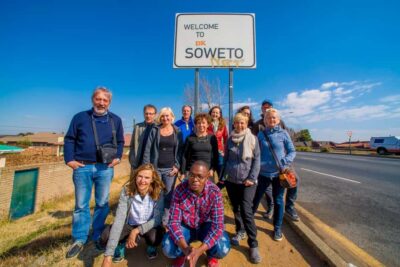
Once the route heads into Soweto territory, you’ll see places described as part of township life and major landmarks.
Diepkloof Park is one of the stops mentioned with context about Diepkloof Extension Upper Class and hostels built to house large numbers of single male migrant workers. This kind of detail helps you understand apartheid labor systems as something that reshaped housing, family life, and daily routine.
You also stop at Orlando Towers, where cooling towers make for an epic bungee-jump site. Even if you don’t jump, it’s a striking silhouette and a reminder that today’s popular thrill spots sit on top of older industrial realities.
Then comes Vilakazi Street, often highlighted for being associated with two Nobel Laureates as residents: Nelson Mandela and Archbishop Emeritus Desmond Tutu. On a street like this, the lesson isn’t just fame. It’s that history happened where people still live, and the neighborhood’s life continues alongside memorial meaning.
Mandela House on Vilakazi Street: where the story becomes personal
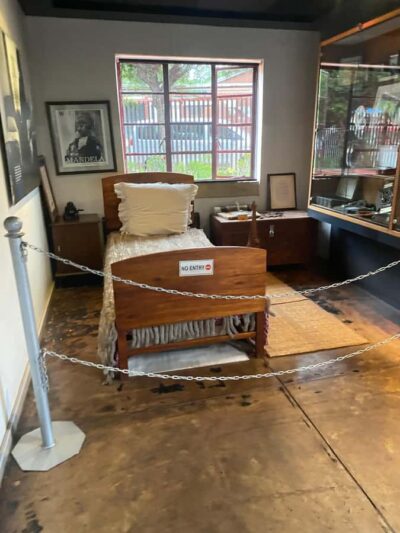
Mandela House is scheduled as about 30 minutes and includes admission ticket. It’s described as a small, face-brick house at 8115 Vilakazi Street where the Mandela family lived from 1946 to the 1990s. Today it’s a museum celebrating his life through artwork.
This is one of the stops where I think a guide’s pacing matters. Too fast, and it becomes another room. Just right, and you notice the human scale of it. Even if your main draw is apartheid history, this stop can help you understand the personal endurance behind the political events.
Hector Pieterson Memorial: a child’s death tied to June 16
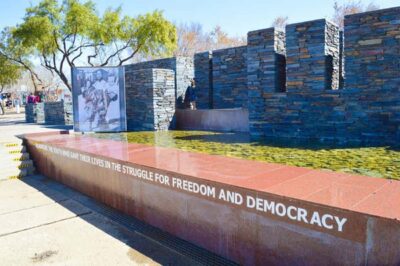
The Hector Pieterson Memorial is scheduled for about 30 minutes. It commemorates 12-year-old Hector’s death on June 16, described as the first child to die by police bullet. He is buried in Avalon Cemetery, where many of apartheid’s victims are also buried.
This stop is likely to hit hardest. The details given are direct and heavy, so I’d suggest you let yourself feel it instead of turning it into a rapid photo session. If you’re traveling with teens or older kids, this memorial can be a strong way to connect textbook terms to a specific person and a specific date.
Mzimhlophe station and the Treason Trial era protests
The tour also includes a pass by Mzimhlophe station in Soweto. The context given ties it to protests during the Treason Trial, meant to highlight injustices of the South African government. The area is also described as home to unique Elephant Houses.
Because this is a “pass by” moment, you might not get deep time for reading on site. Still, it’s a useful link between big political trials and the streets where people gathered, argued, and resisted.
If you’re someone who likes to know what happened, where it happened, and why the place mattered, ask your guide how the station fits into that wider story.
A colored township reference point: Bulte and the mine dumps
The tour data also mentions a colored township colloquially called Bulte, meaning Hills. It notes the surrounding mine dumps that visually define the area and explains that the name Bulte was coined by residents as a form of endearment.
This is the kind of detail that most short city tours skip. If you’re willing to keep your mind open to multiple layers of community identity, this stop can help you see apartheid’s effects beyond the most famous names.
Lunch and pacing: don’t let the day run you
The tour includes bottled water, and lunch can be added, but lunch and snacks are not included by default. Plan for breaks that keep you comfortable, especially because the route includes both museum time and shorter street stops.
If you choose the longer end of the duration range, you’ll likely feel the itinerary in your legs. If you go for the shorter option, you’ll still get the core story stops, but you may have less time for reading at each place.
A practical move: eat before you start if you can, or add lunch. It keeps you from getting grumpy halfway through the more emotional sites.
Price and what you really get for $107.48
At $107.48 per person, this tour can be good value when you compare it to the cost of hiring a private guide plus paying for key admissions and transport. The tour includes things that matter in practice: an air-conditioned vehicle, bottled water, and admission tickets for some major stops like Constitution Hill and Mandela House.
But remember the trade-off: the Apartheid Museum admission is not included, and that can change your final budget. So when you judge value, think of it like this: you’re paying for a guided, efficient route that reduces guesswork and time loss, and you’re still responsible for certain museum entry fees.
If you’re traveling in a small group and can benefit from group discounts, the per-person value tends to improve.
Who this tour fits best
This works especially well if:
- You have limited time and want a structured Johannesburg and Soweto overview
- You want a guided historical thread tying Constitution Hill, Mandela, and the apartheid system together
- You prefer private transport so you can focus on learning and photos instead of logistics
If you’re deeply sensitive to heavy content, consider choosing a shorter duration option. This route includes memorial and prison-history sites, and you’ll likely want space to process.
If you just want a relaxed “look around” day, you might find the schedule intense. This is built to pack in key stops with guided context.
The guide factor: what to expect from a pro
The tour experiences you’ll likely value most come from the guide’s ability to connect neighborhoods and events. One guide name that has stood out is Lesiba, praised for sharing detailed city context and staying well connected across Soweto and the locations you visit.
Even if you get a different guide, ask yourself this before you book: do you want history explained with clear local context? This tour is designed for that, not for silence and generic descriptions.
Should you book Johannesburg Historical, Apartheid Museum & Soweto?
I’d book it if you want a high-impact, well-paced history day that uses a private vehicle to avoid wasting time. It’s not only about the Apartheid Museum. It’s also about understanding why Constitution Hill, Mandela House, Hector Pieterson’s memorial, and Soweto streets all belong to the same story.
I’d think twice if you’re trying to keep costs extremely tight, because the Apartheid Museum ticket is not included, and you’ll also need to plan for meals. Also, if you hate museum-style pacing or you prefer fewer stops with more time at each, you may want a shorter option or adjust expectations.
Overall, if you’re visiting Johannesburg for the first time and you care about getting both facts and context, this is one of the more practical ways to do it in a limited window.
Johannesburg, Block by Block
- From Johannesburg: Pilanesberg Nature Reserve Game Safari
- Johannesburg: Hop-On Hop-Off Bus with Optional Soweto Tour
- Soweto /Johannesburg and Apartheid Museum Guided Full Day Tour
- Johannesburg Hop-On Hop-Off City Tour with Soweto Option
- Full Day Ultimate Pilanesberg National Park Safari from Johannesburg or Pretoria
Apartheid History: Other Sites We Have Documented
Soweto: Other Guided Routes
Keep going: the rest of our Johannesburg write-ups
- Soweto Private half day tour
★ 4.5 · 3 reviews - Johannesburg’s Migration History with a local lunch
★ 5.0 · 3 reviews - Johannesburg: Soweto, Apartheid Museum, and Cradle tours
★ 4.7 · 3 reviews - Soweto Apartheid Museum and Lunch
★ 5.0 · 3 reviews - Bathongo Rhino & lion park nature reserve tour
★ 5.0 · 3 reviews - Johannesburg: Elephant and Monkey Sanctuary Half Day Tour
★ 5.0 · 3 reviews
Johannesburg City Tours, compared.
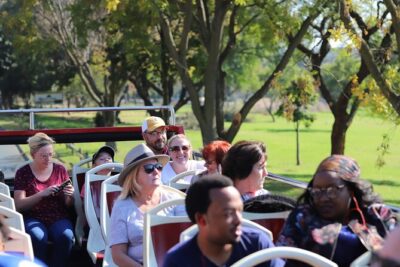 ★ 4.5Johannesburg Hop-On Hop-Off City Tour with Soweto OptionFrom $16768 reviews
 ★ 4.8Johannesburg: Full-Day Tour with Soweto and Apartheid MuseumFrom $104478 reviews
 ★ 4.8Johannesburg and Soweto: Half-Day TourFrom $71439 reviews
 ★ 4.6From Johannesburg: Lion & Safari Park Half-Day TourFrom $167384 reviews
 ★ 5.0Ultimate Johannesburg Soweto Experience with Apartheid MuseumFrom $108313 reviews
 ★ 5.0Half Day Lion Park tour from Johannesburg or PretoriaFrom $100274 reviews
 ★ 4.9Johannesburg: Maboneng Street Art & Culture TourFrom $37257 reviews
 ★ 5.0Johannesburg and Soweto tourFrom $77231 reviews
Browse the lists this tour appears in