
REVIEW · JOHANNESBURG CITY TOURS
LocalPlaces Understanding Johannesburg Walking Tour
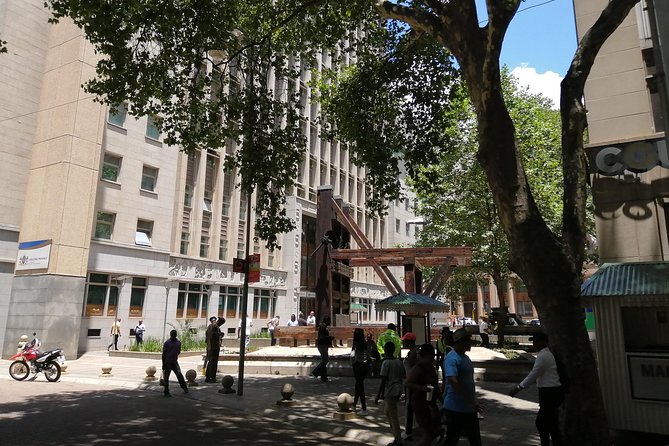
Joburg can feel confusing at first. This walking tour turns it into a clear story, from the pre-gold rush roots to today’s city revival, all inside the inner-city.
I especially like how it explains why Marshalltown and the old Johannesburg CBD matter, then connects those buildings to the people and power that shaped the city. Along the way you also hit Gandhi Square and the Shadow Boxer sculpture tied to Mandela and Tambo, so the past feels physical, not dusty.
Two things I love: the guide’s storytelling that makes the gold rush, the Edwardian era, and the later decline make sense as one timeline, and the fact that you’re walking through the streets where that history still shows up in the architecture. One possible drawback is simple: this is about four hours of walking and it depends on good weather, so bring rain cover and expect to move.
In This Review
- Key highlights you will feel right away
- Why this Johannesburg walking tour works as your first stop
- Starting near 2 Pritchard St: the orientation advantage
- Marshalltown’s gold-rush CBD story, told street by street
- Gandhi Square: the lawyer Gandhi, not the headline Gandhi
- Shadow Boxer and Mandela and Tambo: politics written into place
- Main Street in the middle: modern Johannesburg beside older clues
- Price and time: is $80.80 worth a four-hour walk?
- Pace, weather, and group setup you should plan for
- Who should book this Johannesburg walking tour
- Should you book it?
- FAQ
- Where is the meeting point for the tour?
- What time does the Johannesburg walking tour begin?
- How long does the experience last?
- Is this tour private or shared with other groups?
- Are there any ticket or entry details I should know about?
- Does it require good weather?
- What is the cancellation timeframe for a full refund?
Key highlights you will feel right away
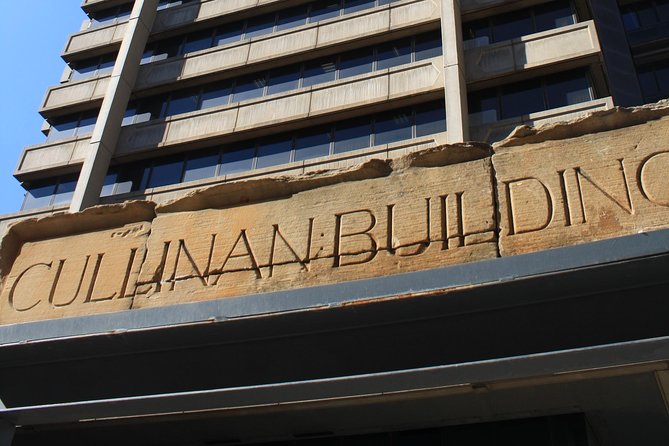
- Marshalltown by foot, with the old Johannesburg CBD’s mining and finance origins explained in plain language
- Gandhi Square stop, including the sculpture of Gandhi as a young lawyer who worked as a business lawyer
- Shadow Boxer sculpture, linked to Mandela and Tambo’s former offices
- Gold-rush to Edwardian to today, so you see change over time instead of random facts
- Main Street inner-city vibe, with coffee shops and eateries along the way to ground the history in modern life
- A “getting bearings fast” tour, ideal for first-time orientation in Johannesburg’s core
More of Joburg, neighbourhood by neighbourhood
- From Johannesburg: Pilanesberg Nature Reserve Game Safari★ 4.8 · 1,327 reviews
- Johannesburg: Hop-On Hop-Off Bus with Optional Soweto Tour★ 4.6 · 985 reviews
- Soweto /Johannesburg and Apartheid Museum Guided Full Day Tour★ 5.0 · 932 reviews
- Johannesburg Hop-On Hop-Off City Tour with Soweto Option★ 4.5 · 768 reviews
Why this Johannesburg walking tour works as your first stop
When you first arrive in Johannesburg, it’s easy to see landmarks and still feel lost. This tour is built to fix that. You start in the inner-city districts where the city’s money, politics, and industry grew, then you walk through the logic of how Johannesburg became what it is now.
The best part is the sequence. You’re not jumping around. You’re moving through the story from pre-gold rush origins, into gold-rush boom days and the plush Edwardian era (early 1900s), then onward to urban decline and current regeneration. That arc matters because Johannesburg’s different eras often sit next to each other, sometimes literally across the street.
I also like the way the tour brings culture into the route. It’s not only monuments. It’s the everyday street rhythm too, including Main Street with its coffee shops and places to grab a bite. That blend helps you understand the city as a living place, not a museum you walk through for an hour and forget.
Finally, the stops are practical. You end where you start, and the pacing is straightforward: the bulk of the time is in Marshalltown, then you spend a shorter moment around Gandhi Square. That makes it a good choice if you want a single, coherent introduction without turning the day into a full marathon.
Starting near 2 Pritchard St: the orientation advantage
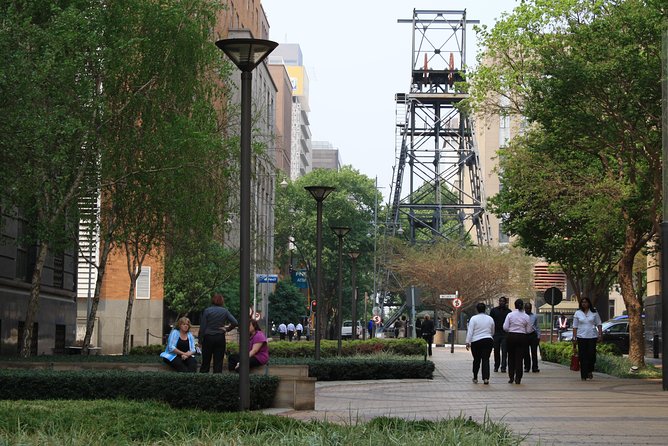
The tour starts at 2 Pritchard St, Johannesburg at 9:00 am and ends back at the meeting point. That matters more than it sounds. When you’re in a new city, starting near where you’ll finish reduces stress, especially if you need to plan lunch, a second activity, or just a quick ride back to your accommodation.
It’s also described as being near public transportation, which is useful. You can treat this like a normal morning plan rather than a complicated mission to reach the city center. And since it’s listed as letting most travelers participate and allows service animals, it’s a fairly inclusive option for a walking-based intro.
Because the tour is about four hours, you’ll want to show up with a comfortable mindset for city walking. The route is urban, the focus is historical, and you’ll likely do enough strolling to feel it by midday. I recommend wearing shoes you trust on uneven sidewalks and bringing something simple for weather, since the experience requires good conditions.
Marshalltown’s gold-rush CBD story, told street by street
Marshalltown is the heart of what makes this tour such a smart first introduction. It’s an older part of the Johannesburg CBD, and it’s where you can trace the origins of the city’s mining and financial companies. In other words, this is where the money story begins.
On this route, you spend about three hours in the Marshalltown area, which is long enough for the guide to build context. That’s important. With only a short stop, you often miss how quickly Johannesburg’s fortunes shifted during the gold-rush era. Here, you get time to connect the dots: boom days, later decline, and the beginning stages of regeneration you can still see today.
What you’re looking at is architecture, but the tour treats buildings as evidence. The guide points out how the city’s wealth showed up in styles and urban planning choices during the early 1900s, often referred to as the plush Edwardian era. Then you see what happens when the economy changes. The contrast between the glamorous ambitions and later abandonment makes the city’s modern patchwork easier to read.
One highlight mentioned in guide experiences is a stop connected to the old stock exchange area, including a look inside a space with stained glass windows. Even if you don’t love museums, this kind of architectural detail helps you understand why people once gathered there, and why that style of wealth mattered.
Practical tip: this is where your photos will come from, but also where you’ll want to pay attention most. The route is packed with story, not just sights. If you walk while listening, you’ll walk away with names, timelines, and reasons, not only images.
Gandhi Square: the lawyer Gandhi, not the headline Gandhi
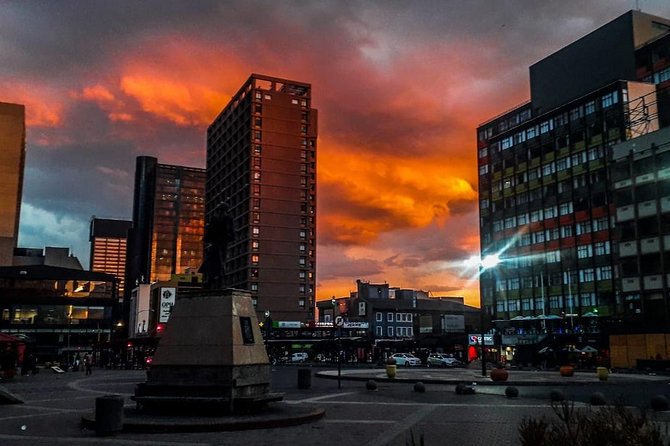
After Marshalltown, the tour shifts to a much shorter but very meaningful stop at Gandhi Square. This part takes about 15 minutes, but it’s designed to deliver a specific insight: Gandhi wasn’t only a political symbol, he worked as a business lawyer in his early days.
You’ll see the sculpture of Gandhi as a young lawyer. The point of the stop is to ground his story in Johannesburg’s legal and civic life. You’re not just looking at a figure. You’re getting the idea that Johannesburg’s history included court work, commerce, and the everyday legal world, not only dramatic political moments.
For me, this stop balances the heavy economic story from Marshalltown. Gold rush wealth and corporate power can make a city feel like numbers and buildings. Gandhi Square reminds you there were people, systems, and debates shaping society from multiple angles.
Also, it’s a good moment to regroup. Fifteen minutes is enough time to take in the sculpture and listen, but not so long that you lose the thread of the overall tour arc.
More routes best done on foot



Shadow Boxer and Mandela and Tambo: politics written into place
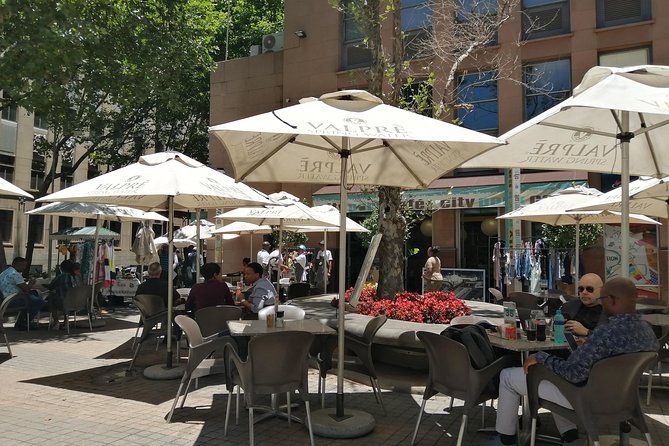
One of the most memorable thematic beats on this tour is the visit to the Shadow Boxer sculpture, connected to the area where Mandela and Tambo once had offices. The sculpture isn’t there as decoration. It’s a marker in the city’s landscape, linking the abstract idea of struggle and leadership to a concrete spot in Johannesburg.
Even if you already know the broad names, this kind of stop gives you spatial context. You begin to understand why certain places matter, not just who is famous. It turns the city into a map of decisions and movements.
It also reinforces what the tour does best: it connects eras. Marshalltown gives you the economic backbone. Gandhi Square adds a civic and legal thread. Then the Mandela and Tambo connection ties the story to modern political life. That layering is what helps the city feel coherent instead of random.
Main Street in the middle: modern Johannesburg beside older clues
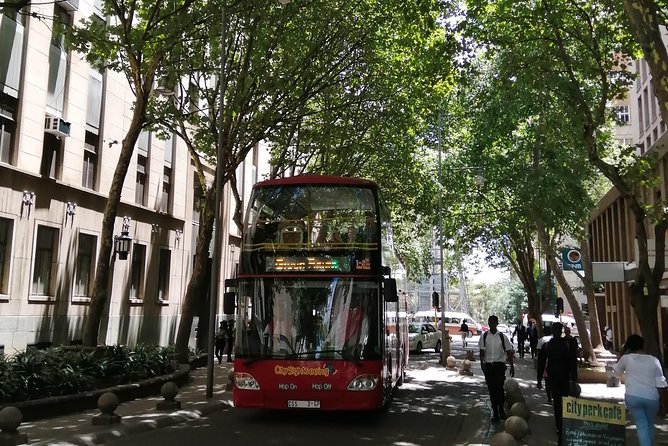
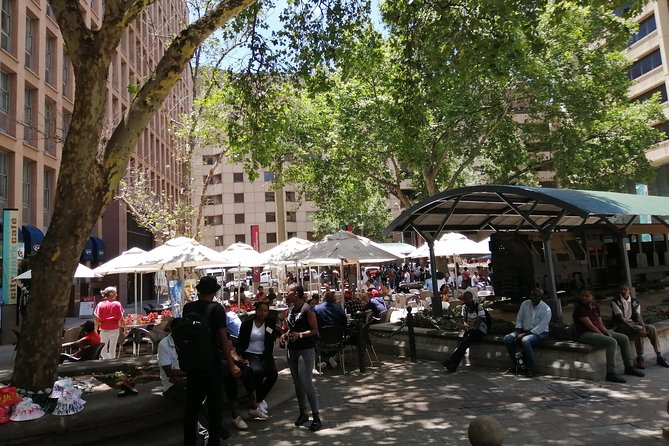
A quieter but valuable element is that the tour includes the “Wiser West” walk into today’s inner-city street life, including Main Street. The description notes coffee shops and eateries, which tells you the route isn’t only about old stone and former offices.
This matters because Johannesburg is not stuck in a single time period. When you’re learning the city, you need points where you can picture yourself living here now. A guided walk that acknowledges modern street culture makes the history easier to hold in your head because it’s attached to something you can experience immediately.
I like routes like this for first-timers because they reduce the mental disconnect. You get a sense of what today’s city feels like, while the guide explains how that present grew out of the past.
Price and time: is $80.80 worth a four-hour walk?
At $80.80 per person for about four hours, this tour is not the cheapest way to spend a morning. But it is priced like an orientation experience that gives you structure. The value comes from the guided narrative, not from a list of random stops.
You are paying for several things at once:
- A time-efficient introduction to Johannesburg’s inner-city story in one walking route
- Focused context around key eras, including gold-rush boom, Edwardian wealth, decline, and regeneration
- Specific landmarks that help you build a mental map quickly, like Gandhi Square and the Shadow Boxer sculpture
- Time to process architecture and its meaning, rather than rushing past it
Also, it’s booked in advance often, with an average booking window of about 15 days. That usually signals demand for this kind of first-timer city orientation. If you wait until the last minute, you risk losing your preferred slot.
If you enjoy walking tours that explain why places look the way they do, and you want a single guided thread to connect Johannesburg’s different eras, this price can feel very fair. If you only want quick photo stops with minimal talking, you might prefer something shorter and lighter.
Pace, weather, and group setup you should plan for
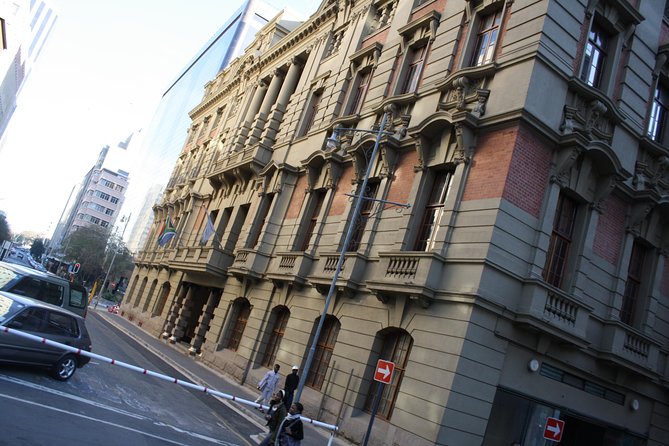
The experience is about four hours, and the stops are designed for that rhythm. Marshalltown takes roughly three hours, then Gandhi Square is brief, and you finish back at the start. That means you’ll want to plan lunch after, not during, unless you have something quick and nearby.
Weather is explicitly a factor. If conditions are poor, you’ll be offered a different date or a full refund. So it’s smart to check the forecast the night before and wear layers you can adjust.
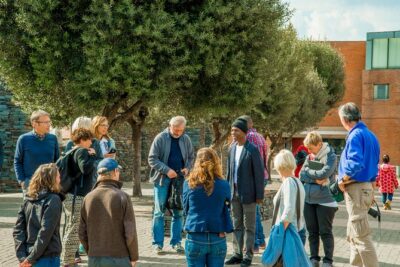
You’ll be walking with a group, but it’s listed as a private tour/activity, meaning only your group participates. That can make the experience feel less crowded and easier for questions. It also usually helps the guide keep the pace comfortable for your group’s needs, especially during the longer Marshalltown segment.
Finally, it’s a morning start at 9:00 am. I’d treat this as your “set the stage” activity. If you do it early in your trip, you’ll have an easier time understanding later neighborhoods, museums, and conversations about the city.
Who should book this Johannesburg walking tour
This is a great fit if you:
- Want a first-time, inner-city introduction that ties history to the present
- Enjoy architecture and want to understand what buildings are telling you
- Like walking with a guide who focuses on a clear storyline rather than scattered facts
- Want specific stops linked to Gandhi and the Mandela and Tambo connection, not only general sightseeing
It may be less ideal if you:
- Prefer very short tours or minimal walking
- Have limited mobility and struggle with four hours of city walking (note that it says most travelers can participate, but this is still a walking-based experience)
- Only want modern Johannesburg and not the longer historical rise, decline, and regeneration narrative
If you’re traveling with kids, you might do it, but you’ll need to keep expectations realistic. This type of tour is story-heavy, not game-heavy. The time frame is short enough to be manageable if the group stays engaged, but it’s still built around listening.
Should you book it?
I recommend booking this Johannesburg walking tour if you want one strong orientation in the inner-city. It’s structured, story-driven, and anchored by real places, including Gandhi Square and the Shadow Boxer sculpture tied to Mandela and Tambo. The long Marshalltown segment gives you time to understand how the city’s gold rush wealth turned into the later decline you can still sense in the urban fabric, and how regeneration is shaping what you see now.
Two reasons I think it’s a smart decision: first, it connects eras instead of listing monuments. Second, it includes modern street life with Main Street, so you don’t end the tour feeling like you only learned about a dead past.
If you’d rather focus on a single type of attraction, like museums only, this might feel too walking and too story-focused. But if you want your bearings fast and you like history with street-level context, this is an excellent choice.
FAQ
Where is the meeting point for the tour?
It starts at 2 Pritchard St, Johannesburg, 2113, South Africa.
What time does the Johannesburg walking tour begin?
The start time listed is 9:00 am.
How long does the experience last?
It runs for about 4 hours.
Is this tour private or shared with other groups?
It’s described as a private tour/activity, meaning only your group participates.
Are there any ticket or entry details I should know about?
You’ll receive a mobile ticket, and you also get confirmation at booking.
Does it require good weather?
Yes, the experience requires good weather. If it’s canceled due to poor weather, you’ll be offered a different date or a full refund.
What is the cancellation timeframe for a full refund?
You can cancel up to 24 hours in advance for a full refund. If you cancel less than 24 hours before the start time, the amount paid will not be refunded.
Walk It: More of Johannesburg
Johannesburg, Block by Block
- From Johannesburg: Pilanesberg Nature Reserve Game Safari
- Johannesburg: Hop-On Hop-Off Bus with Optional Soweto Tour
- Soweto /Johannesburg and Apartheid Museum Guided Full Day Tour
- Johannesburg Hop-On Hop-Off City Tour with Soweto Option
- Full Day Ultimate Pilanesberg National Park Safari from Johannesburg or Pretoria
Keep going: the rest of our Johannesburg write-ups
- Soweto Private half day tour
★ 4.5 · 3 reviews - Johannesburg’s Migration History with a local lunch
★ 5.0 · 3 reviews - Johannesburg: Soweto, Apartheid Museum, and Cradle tours
★ 4.7 · 3 reviews - Soweto Apartheid Museum and Lunch
★ 5.0 · 3 reviews - Bathongo Rhino & lion park nature reserve tour
★ 5.0 · 3 reviews - Johannesburg: Elephant and Monkey Sanctuary Half Day Tour
★ 5.0 · 3 reviews
Johannesburg City Tours, compared.
 ★ 4.5Johannesburg Hop-On Hop-Off City Tour with Soweto OptionFrom $16768 reviews
 ★ 4.8Johannesburg: Full-Day Tour with Soweto and Apartheid MuseumFrom $104478 reviews
 ★ 4.8Johannesburg and Soweto: Half-Day TourFrom $71439 reviews
 ★ 4.6From Johannesburg: Lion & Safari Park Half-Day TourFrom $167384 reviews
 ★ 5.0Ultimate Johannesburg Soweto Experience with Apartheid MuseumFrom $108313 reviews
 ★ 5.0Half Day Lion Park tour from Johannesburg or PretoriaFrom $100274 reviews
 ★ 4.9Johannesburg: Maboneng Street Art & Culture TourFrom $37257 reviews
 ★ 5.0Johannesburg and Soweto tourFrom $77231 reviews
Browse the lists this tour appears in