
REVIEW · JOHANNESBURG CITY TOURS
Johannesburg City Walking Excursion
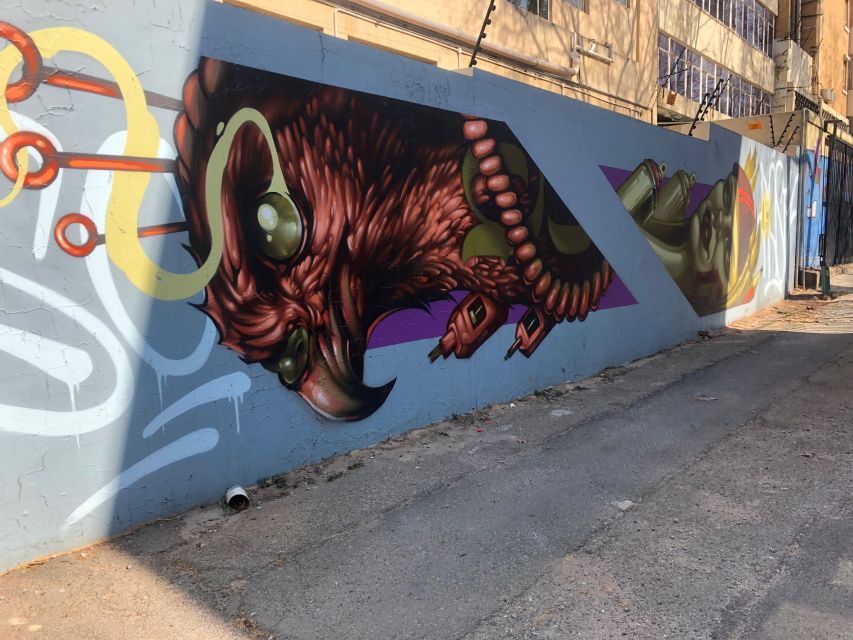
Joburg feels big, and this walk keeps you grounded. I love the local guide angle, where history and today connect block by block, and I love the street art of Joburg that makes the city feel human, not like a textbook. One watch out: it is a full walking route and it is not suitable for wheelchair users, and it runs in all weather.
You start at Wing Republic, get an overview of what you will see, then walk from Braamfontein to Newtown. Along the way you hit major landmarks, including the Nelson Mandela Bridge, Market Theatre, Mary Fitzgerald Square, and Gandhi Square.
This is $40 per person, and for the money you are paying for guided orientation plus local lunch, not museum-style ticket time. You finish at Home of the Bean, where it is easy to grab an Uber back.
In This Review
- Key things you will remember from this Johannesburg city walk
- Why this Joburg walking route works (and when it might not)
- Wing Republic and the route overview that helps everything click
- Braamfontein to Newtown and the Nelson Mandela Bridge moment
- Newtown: Market Theatre and Mary Fitzgerald Square, where music and art have context
- Workers Compound and Labourers Immigration Laws, plus the Science Discovery Centre
- Ferreira Market and Chancellor’s House, Mandela and OR Tambo as attorneys
- Gandhi Square, Johannesburg’s biggest industry, and the Carlton Centre height payoff
- Maboneng: art-world streets, local artists, and a lunch that keeps you moving
- Price and logistics: is $40 good value for what you get?
- Safety, walking comfort, and weather reality in Joburg
- A balanced look at reviews and how to avoid the one bad surprise
- Should you book this Johannesburg City Walking Excursion?
- FAQ
- How much does the Johannesburg City Walking Excursion cost?
- What is included in the tour price?
- Are entry tickets included?
- Where do I meet the guide?
- Does the tour run in bad weather?
- What should I bring for the walk?
- Is the tour suitable for wheelchair users?
Key things you will remember from this Johannesburg city walk
- Wing Republic start with a quick city briefing so the whole route makes sense
- Braamfontein to Newtown on foot for real street-level context
- Mandela-focused stops like Nelson Mandela Bridge, Chancellor’s House, and related landmark points
- Art and culture around Newtown and Maboneng including Market Theatre and street-art areas
- Labour history explained on the route at the Workers Compound and through immigration-law context
- A built-in lunch break plus an art gallery stop at ABSA
More of Joburg, neighbourhood by neighbourhood
- From Johannesburg: Pilanesberg Nature Reserve Game Safari★ 4.8 · 1,327 reviews
- Johannesburg: Hop-On Hop-Off Bus with Optional Soweto Tour★ 4.6 · 985 reviews
- Soweto /Johannesburg and Apartheid Museum Guided Full Day Tour★ 5.0 · 932 reviews
- Johannesburg Hop-On Hop-Off City Tour with Soweto Option★ 4.5 · 768 reviews
Why this Joburg walking route works (and when it might not)
Johannesburg can feel confusing at first, even if you know South Africa’s history from afar. What I like about this tour is that it uses walking as a tool for understanding, not as a fitness challenge you have to manage alone. Your guide pulls you between places that tell different parts of the same story: power, protest, migration, art, and change you can still see today.
Two things drive the best moments here. First, you get history with present-day context, so you are not stuck with old dates and nothing else. Second, you do not only visit monuments, you also see Joburg’s creative side, especially the street art and art-world energy in places like Maboneng.
The main drawback is simple: you are on your feet for a walking tour. It is not suitable for wheelchair users, and it runs regardless of the weather. If you hate walking or you cannot handle heat, sun, or rain, you will feel it fast.
Wing Republic and the route overview that helps everything click
You begin at Wing Republic. Before you start moving, you get an overview of the tour and how Johannesburg fits into modern South Africa. That first framing matters because Joburg’s story is not straightforward, and it is easy to miss the point if you are bouncing between stops without a guide tying it together.
From there, the tour is designed as a sequence you can follow with your eyes. You are walking from Braamfontein toward Newtown, so you gradually shift from one part of the city to another instead of teleporting across town. It is a good way to notice how neighborhoods look and feel, and how the meaning of a place changes depending on the social history behind it.
Practical tip: wear shoes you already trust. The tour is meant to be comfortable under real street conditions, and comfortable shoes will do more for you than any workaround.
Braamfontein to Newtown and the Nelson Mandela Bridge moment
The walk from Braamfontein to Newtown is one of the tour’s core experiences. You are not just traveling between two points, you are using the streets to understand where people lived, worked, and moved over time.
A highlight on this stretch is the Nelson Mandela Bridge. Even if you have seen it in photos, this is the kind of stop that makes sense when you experience the area around it on foot. You will likely hear how Johannesburg ties into larger national stories, especially the post-apartheid shift toward a different kind of South Africa.
If you are taking photos, this is a smart moment to slow down. You will want pictures that show scale, street angles, and how the bridge fits the city around it, not just the bridge as an isolated object.
Newtown: Market Theatre and Mary Fitzgerald Square, where music and art have context
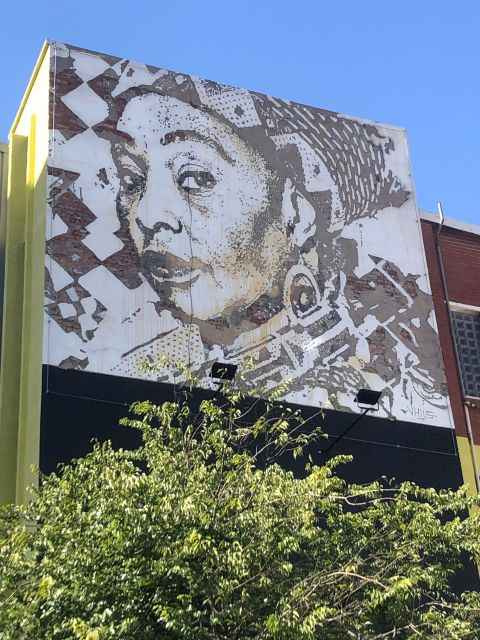
Newtown is where the tour turns toward culture. You visit the Market Theatre and Mary Fitzgerald Square, and you learn about the history of South African music and art.
This is valuable because it connects creativity to the people who made it under pressure. You are not only looking at a performance venue as an architecture photo stop. You are learning why those kinds of spaces matter, and how art became a voice in Johannesburg and beyond.
You will also appreciate that the guide keeps your attention on the present condition of the city, not only the storyline from the past. That is where the tour feels different from a list of famous places. You are seeing how culture lives in the streets and buildings around you.
Other city days, orientation to deep dive
Workers Compound and Labourers Immigration Laws, plus the Science Discovery Centre
Next, you walk to the Workers Compound. This is a key history stop on the route, and it is paired with learning about labourers immigration laws in South Africa. It is the kind of topic that is difficult to grasp from a brochure, so getting it explained in the right place helps it land.
You are also able to see the Science Discovery Centre during this part of the walk. That pairing is interesting in a practical way: the tour does not treat Joburg as only tragedy or only politics. It shows how education and public learning spaces exist in the same city that shaped those labour and migration stories.
If you like understanding systems, pay attention here. Immigration and labour rules are about who could move, who could work, and who could belong. A guide makes the difference between hearing names and actually understanding what the rules did to real lives.
Ferreira Market and Chancellor’s House, Mandela and OR Tambo as attorneys
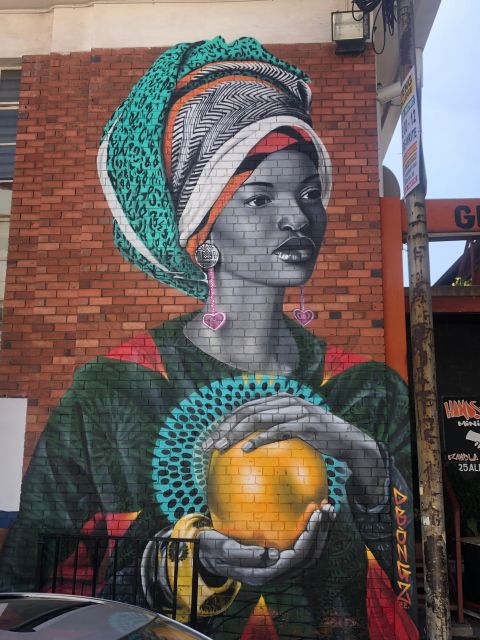
At Ferreira Market, you get another shift in tone, moving from labour history into legal history and major figures. From there you visit the Chancellor’s House, where you learn about the life of Nelson Mandela and OR Tambo as attorneys.
This is one of the best “why these names matter” stops on the tour. Instead of treating Mandela and OR Tambo as only iconic symbols, you are learning them in their professional roles, as lawyers working within the structures of their time. That tends to give people a more grounded sense of how change was argued for, contested, and pursued.
You also have a chance to see the magistrate court. Even if you do not go inside, seeing it on foot helps you understand the city’s legal geography. These places are not abstract. They sit right in the daily world of Johannesburg streets.
Practical tip: if you want photos, keep your camera ready but also keep an eye on your guide. This kind of stop depends on timing and safe movement in active city areas.
Gandhi Square, Johannesburg’s biggest industry, and the Carlton Centre height payoff
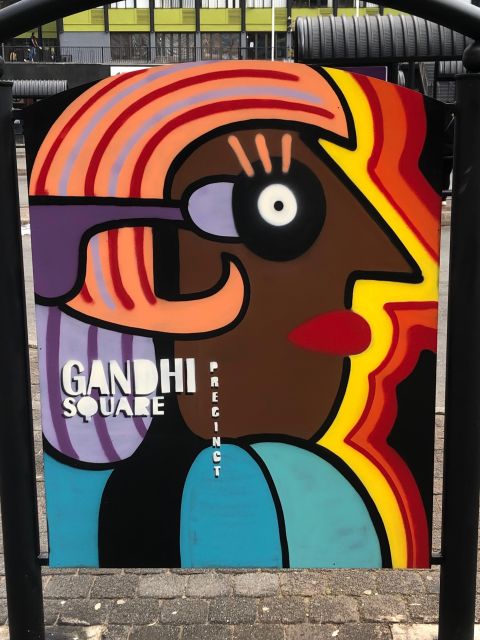
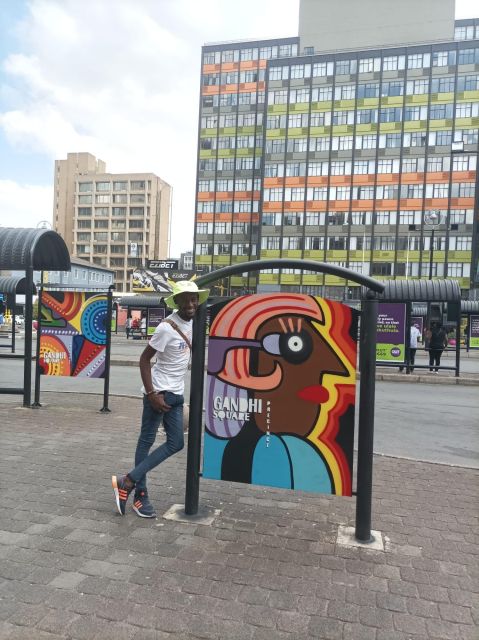
Then you head on Main Street toward Gandhi Square, named after Mahatma Gandhi. This stop comes with context about South Africa’s biggest industry, which helps tie the city’s economic story to the people and movements you saw earlier.
After Gandhi Square, you visit the Carlton Centre, which is the fifth tallest building in Africa. Seeing it during a walking day is a nice contrast. You go from street-level learning to a tall landmark, and the change in scale can make the city feel more real and more legible.
You also visit the ABSA gallery, where they exhibit different art works done by artists from all over Africa. This is a smart cultural angle because it expands beyond local street art and into a wider African art conversation. If you like art that connects to identity, politics, and place, this stop gives you a broader lens.
Maboneng: art-world streets, local artists, and a lunch that keeps you moving

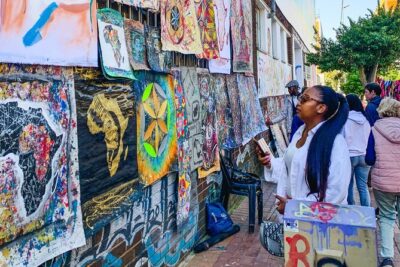
The final major destination is Maboneng, Johannesburg’s art world. Here you see local artists and their work, and the tour feels like it comes full circle from the earlier culture stops.
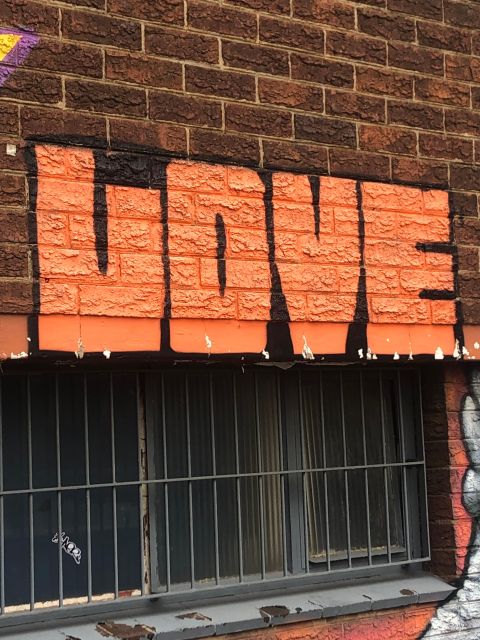
Maboneng is where you can actually sense how art is part of the everyday city. You are not only looking at finished pieces in a gallery setting. You are seeing the city as a working space where creators share what they make and where style becomes a kind of communication.
The tour includes a local lunch, which matters more than you might think. A walking excursion is only enjoyable if your energy stays steady, and having lunch built in removes one stress point. You can focus on the route instead of hunting for food mid-way.
Then you finish at Home of the Bean, a coffee shop that makes it easy to get an Uber back. It is a good landing place at the end of a long walking day, when you want to sit, recharge, and still keep your plans simple.
Price and logistics: is $40 good value for what you get?
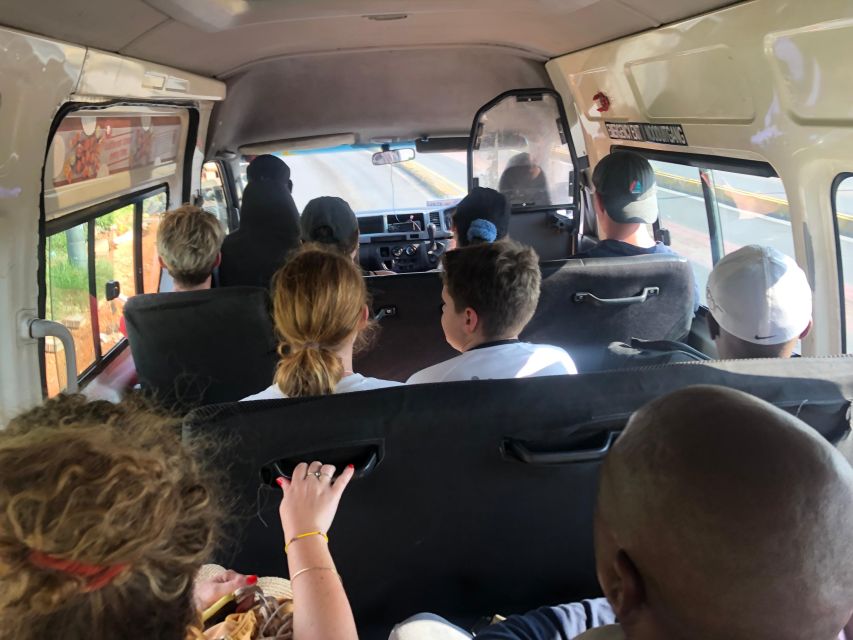
At $40 per person, this tour is priced like a solid city-orientation experience with real stops, not a budget “pass and wander” thing. You are getting transportation during the tour plus a local lunch. Those two items alone help justify the price because they reduce out-of-pocket costs and time spent figuring things out yourself.
What is not included: entry tickets. That means you should not expect your payment to cover every museum-style admission. If any stop involves paying to enter, plan for that possibility.
Also note: there is no hotel pickup and drop-off. You meet at the start location and you end at the end point with an easy way to return by Uber. If you are staying far from the meeting area, you may spend extra on getting to the start, so factor that into your total day cost.
Safety, walking comfort, and weather reality in Joburg
This tour is designed to be guide-led for safety while you move through interesting parts of the city. Still, it is a walking day, so you should be ready for street conditions and group movement.
Bring what the tour requests:
- comfortable shoes
- sunglasses and a sun hat
- camera
- biodegradable sunscreen
- jacket
- hand sanitizer or tissues
- comfortable clothes
- power bank
And it runs despite the weather. That is why a jacket and sunscreen are not optional extras. Sun can be intense, and rain can make streets slippery, so dress for what you might encounter.
One more practical point: the tour is not suitable for wheelchair users. If you need mobility support, this likely will not match what you can do comfortably.
A balanced look at reviews and how to avoid the one bad surprise
The overall rating is 4.3 based on 12 reviews, and most of the praise lands on one thing: guides who explain the city clearly and make you feel safe doing it. One guide name that shows up is Tebogo, and the feedback highlights how much detail he shared about Joburg and how much safer it felt to see the heart of the city with someone local.
There is also a downside you should take seriously. One experience notes that nobody turned up, which is the kind of disappointment you do not want on your vacation. My advice is boring but effective: confirm your meeting details the day before, and show up early enough to handle any confusion with time to spare.
If you manage that, you can focus on the best part: a guided walk that makes Joburg understandable instead of just intimidating.
Should you book this Johannesburg City Walking Excursion?
Book it if you want a guided way to see Johannesburg’s major cultural and historical layers, especially if you like street art, Mandela-related landmarks, and clear explanations of how labour, law, and art connect. The $40 price works best when you value local context, a built-in lunch, and a structured route from Wing Republic through Newtown and into Maboneng.
Skip it or choose another format if walking is a problem for you, since it is not suitable for wheelchair users and it runs in weather. If you are hoping for a mostly indoor, ticket-heavy day, remember that entry tickets are not included.
If you do book, bring your sun protection, wear your comfiest shoes, and plan for a full walking day. Then you’ll get the thing this tour does well: you leave with Joburg feeling like a place you understand, not just a place you passed through.
FAQ
How much does the Johannesburg City Walking Excursion cost?
It costs $40 per person.
What is included in the tour price?
The tour includes a local lunch and transportation during the tour.
Are entry tickets included?
No, entry tickets are not included.
Where do I meet the guide?
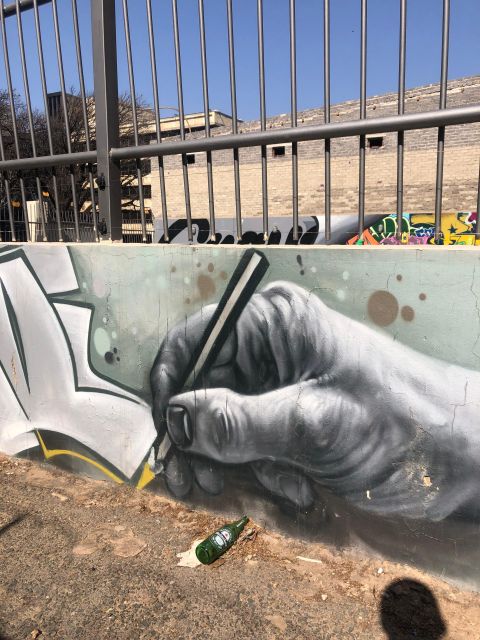
The start is a restaurant with a beautiful black and white art work as its painting. The tour ends back at the meeting point area, and it finishes at Home of the Bean for an easy Uber ride back.
Does the tour run in bad weather?
Yes, the tour will take place despite the weather.
What should I bring for the walk?
Bring comfortable shoes, sunglasses, sun hat, a camera, biodegradable sunscreen, a jacket, comfortable clothes, hand sanitizer or tissues, and a power bank.
Is the tour suitable for wheelchair users?
No, it is not suitable for wheelchair users.
Walk It: More of Johannesburg
Another Day in Johannesburg, Planned Out
Johannesburg, Block by Block
- From Johannesburg: Pilanesberg Nature Reserve Game Safari
- Johannesburg: Hop-On Hop-Off Bus with Optional Soweto Tour
- Soweto /Johannesburg and Apartheid Museum Guided Full Day Tour
- Johannesburg Hop-On Hop-Off City Tour with Soweto Option
- Full Day Ultimate Pilanesberg National Park Safari from Johannesburg or Pretoria
Keep going: the rest of our Johannesburg write-ups
- Soweto Private half day tour
★ 4.5 · 3 reviews - Johannesburg’s Migration History with a local lunch
★ 5.0 · 3 reviews - Johannesburg: Soweto, Apartheid Museum, and Cradle tours
★ 4.7 · 3 reviews - Soweto Apartheid Museum and Lunch
★ 5.0 · 3 reviews - Bathongo Rhino & lion park nature reserve tour
★ 5.0 · 3 reviews - Johannesburg: Elephant and Monkey Sanctuary Half Day Tour
★ 5.0 · 3 reviews
Johannesburg City Tours, compared.
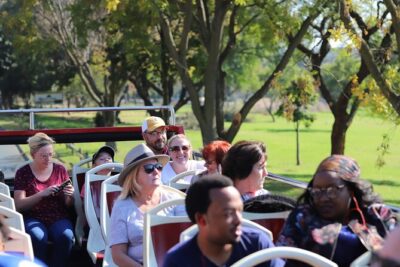 ★ 4.5Johannesburg Hop-On Hop-Off City Tour with Soweto OptionFrom $16768 reviews
 ★ 4.8Johannesburg: Full-Day Tour with Soweto and Apartheid MuseumFrom $104478 reviews
 ★ 4.8Johannesburg and Soweto: Half-Day TourFrom $71439 reviews
 ★ 4.6From Johannesburg: Lion & Safari Park Half-Day TourFrom $167384 reviews
 ★ 5.0Ultimate Johannesburg Soweto Experience with Apartheid MuseumFrom $108313 reviews
 ★ 5.0Half Day Lion Park tour from Johannesburg or PretoriaFrom $100274 reviews
 ★ 4.9Johannesburg: Maboneng Street Art & Culture TourFrom $37257 reviews
 ★ 5.0Johannesburg and Soweto tourFrom $77231 reviews
Browse the lists this tour appears in