
REVIEW · JOHANNESBURG CITY TOURS
Ultimate Johannesburg Soweto Experience with Apartheid Museum
Steel meets soul in Soweto. This 7-hour Johannesburg day threads Nelson Mandela Bridge, Soweto’s most important memory sites, and Constitution Hill into a story you can actually walk through. I love the way the museum stops explain the system and its impact, not just the dates, so you understand what apartheid changed in daily life.
My other favorite part is the tight, human-scale pacing: a small group (max 9), air-conditioned transport, and WiFi on board make the day feel manageable even when the topics are heavy. One drawback to plan for is that lunch is not included, and Mandela House admission is also not included, so you may spend a bit extra and you’ll want to time meals.
In This Review
- Key things I’d watch for on this Soweto day
- From Nelson Mandela Bridge to Soweto, in one clear line
- Apartheid Museum: the system behind the headlines
- Hector Pieterson Museum and Memorial: a turning point remembered
- Mandela House and Vilakazi Street: names you can walk past
- Constitution Hill Human Rights Precinct: the guided hour that ties it together
- Price, inclusions, and timing: is this good value?
- Who this tour suits best, and who might want to add more
- Should you book the Ultimate Johannesburg Soweto Experience with Apartheid Museum?
- FAQ
- How long is the tour?
- What does it cost?
- Is pickup offered?
- Is WiFi included?
- Are museum tickets included?
- Is lunch included?
- What is the group size?
- Can I cancel or change my booking?
Key things I’d watch for on this Soweto day
- Balanced, guided storytelling across apartheid, resistance, and human rights, so the day doesn’t feel one-sided
- Included entry at major sites like the Apartheid Museum, Hector Pieterson Museum, and Constitution Hill
- Short, focused time windows (from bridge views to Vilakazi Street) that keep you moving without rushing the key stops
- Small group size (max 9), which helps the guide answer questions without losing the whole group
- A guided hour at Constitution Hill, giving you structure for a place that can feel intense on your own
Other Soweto routes we have reviewed, each with a local guide
- Johannesburg: Hop-On Hop-Off Bus with Optional Soweto Tour★ 4.6 · 985 reviews
- Soweto /Johannesburg and Apartheid Museum Guided Full Day Tour★ 5.0 · 932 reviews
- Johannesburg Hop-On Hop-Off City Tour with Soweto Option★ 4.5 · 768 reviews
- Half-Day Tour of Soweto Tour★ 4.5 · 712 reviews
From Nelson Mandela Bridge to Soweto, in one clear line
This tour is built like a straight storyline. You start at the Nelson Mandela Bridge, then work through the places that document apartheid’s machinery and Soweto’s resistance, and you end at Constitution Hill’s human rights precinct. It’s a smart way to cover a lot of ground without turning the day into a chaotic checklist.
At the bridge stop, you get time to look around the surrounding city areas. This is handy because Johannesburg can feel spread out. You’ll be near places like Constitution Hill (the human rights site), the Market Theatre, and you’ll also be in the general orbit of Braamfontein, with its cafes, art galleries, and the Neighbourgoods Market. Even if you just use this hour to get your bearings, it helps you understand where the day is heading.
Then the schedule turns your attention from city geography to lived reality. The rest of the day is mostly about memory, evidence, and names you’ll hear again and again in South African history. You should expect emotion. You should also expect clarity. A strong guide matters here, because these sites can turn into either a dry lecture or a vague sob story. The best versions, the kind you want, keep it grounded in what happened and what it means.
Apartheid Museum: the system behind the headlines
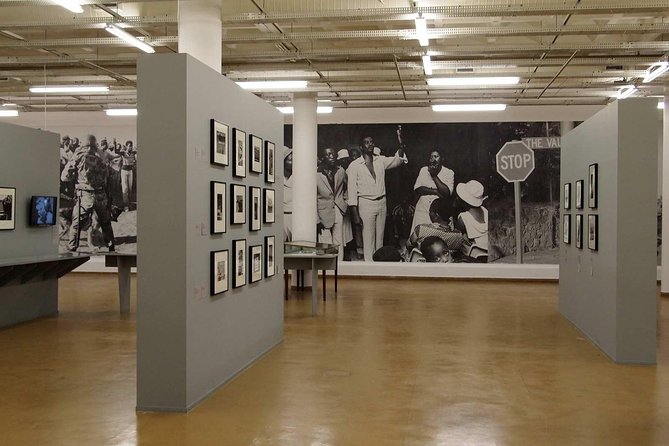
The Apartheid Museum is included and you get about two hours there. That time window is important. Apartheid is not just a political slogan. It was a legalized system of racial segregation enforced by the National Party government, and it shaped nearly every part of life.
What you learn here is the cause-and-effect side of the story. Apartheid laws didn’t just create social separation. They restricted and controlled education, employment, housing, and political rights. That’s the difference between learning about the idea of apartheid versus understanding the mechanics of it. When you’re done, you’re better equipped to interpret what you see later in Soweto, because you know what these communities were fighting against.
Two practical tips help you get more from the visit. First, give yourself time to read carefully, especially when the museum moves from broad policy to individual stories. Second, if you have questions, write them down mentally and ask your guide later. A good guide can connect what you just saw to what you’ll see next.
Also, since admission is included, you avoid that common problem of museum pricing surprises mid-day. The museum stop is also a good emotional anchor. After this, Hector Pieterson’s memorial and Constitution Hill won’t feel random. They will feel like parts of one larger argument about justice.
Hector Pieterson Museum and Memorial: a turning point remembered
Next is the Hector Pieterson Museum and Memorial, also included, with about two hours on site. This is the place that commemorates the Soweto Uprising and honors Hector Pieterson, which matters because the uprising is not just an event. It’s a moment that changed how the world talked about South Africa, and it changed how South Africans remember resistance.
The museum is located near the spot where Hector Pieterson was fatally shot. That physical proximity makes a difference. It’s one thing to read about an uprising in a book, and another thing to be at the location tied to the tragedy. You feel the weight of the place, and you understand why memorials exist, not to turn pain into scenery, but to keep the memory from being edited out.
This is also where the day starts to shift from explaining to reflecting. The museum structure gives you context, but your mindset matters too. If you’re traveling with people who get overwhelmed easily, you may want to take short breaks during your visit. The tour keeps moving after this stop, so pacing yourself helps.
Timing is another plus. Two hours is enough to see the main exhibits without feeling like you’re being forced through. It’s also long enough to let the guide’s explanations land, which is key when the topic is complex and deeply personal.
Mandela House and Vilakazi Street: names you can walk past

After the memorial, you’ll stop at Mandela House for about 30 minutes. Admission here is not included, so budget a bit extra if you want to go in beyond what’s possible from the outside view. Even with the short time, the stop is useful because it connects Nelson Mandela’s legacy to specific places you can point to on the map.
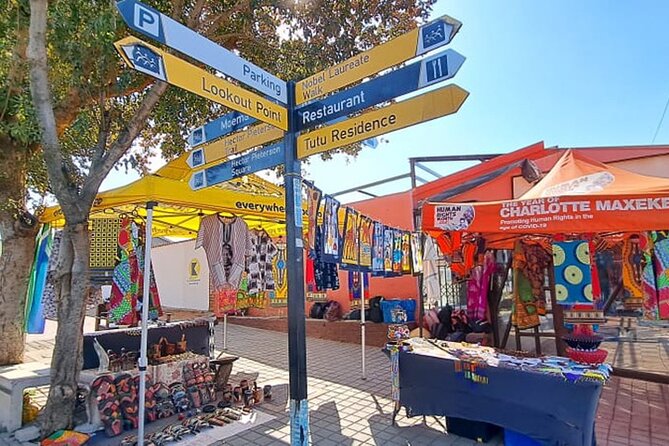
You’ll then have a 30-minute stop on Vilakazi Street. This street is famous for connecting major figures in South African history, including Nelson Mandela and Desmond Tutu. You also get a free stop here, so it’s a low-pressure chance to see how public memory lives in the everyday street environment.
One word of advice: treat Vilakazi Street as a moment to absorb and orient, not a task to complete. The vibe here can feel more personal than museum halls. You’re not just learning. You’re encountering the idea of legacy in a neighborhood context.
If you’re hoping for a full-on community experience like a formal homestay or a long interaction with residents, this particular route may not fully satisfy that. The tour’s strength is the historical sites and guided interpretation. If you want extra human contact beyond that, you may need to add a separate activity.
More sites and museums that record the apartheid years
Constitution Hill Human Rights Precinct: the guided hour that ties it together
Constitution Hill is the final major “why this matters” stop, with an included guided tour of about one hour. Admission is included, so again, it’s value built into the price rather than a surprise at the gate.
This place has a powerful storyline because it began as a former prison and later became a human rights precinct. When you walk into sites like this, it helps to have a guide who can explain the shift from incarceration to rights, and how that history fits into South Africa’s broader transformation. The guided hour is especially helpful because you’re not left guessing which parts to prioritize or how everything connects.
You also get good context for the rest of the day. Once you’re at Constitution Hill, you can look back at the Apartheid Museum and Hector Pieterson and see the throughline: control, resistance, and the push toward rights. That’s where the day becomes more than a set of stops.
Constitution Hill is also a reminder that history is not only what happened, but what societies do afterward to acknowledge it. The guided tour is a practical way to make that concept concrete.
Price, inclusions, and timing: is this good value?

At about $101.01 per person for a roughly 7-hour experience, the price looks like a bargain when you consider what’s included. You get air-conditioned vehicle transport, WiFi on board, and key admission fees are covered at multiple stops: the Apartheid Museum, the Hector Pieterson Museum and Memorial, and the Constitution Hill Human Rights Precinct.
Two stops are free at this route: the Nelson Mandela Bridge stop and Vilakazi Street. Mandela House is the main caution, because admission there is not included. Lunch is also not included.
That matters for your planning. If you want to keep your budget tight, eat before you go and plan for a simple meal during or after the tour window. If you want to visit Mandela House fully, expect to add the entry cost yourself. It’s not a dealbreaker, but it is a budgeting factor you should not ignore.
The tour has a max group size of 9, which is not just a comfort upgrade. Smaller groups make it easier for the guide to manage questions and keep explanations clear, especially on heavy topics. It’s also a reason the day can feel thoughtful instead of rushed.
If you’re making a decision today, I’d treat this as a history-and-human-rights day that uses logistics wisely: you’re not doing museum entry line wrestling, and you’re not trying to connect the sites with your own navigation while trying to understand what you’re seeing.
Who this tour suits best, and who might want to add more
This is a strong choice if you want structured context. You’ll get a guided flow through major sites tied to apartheid, resistance, and human rights. It’s also a good fit if you prefer small-group travel. A tour capped at 9 tends to feel more like a conversation with a plan, rather than a busload of noise.
It may not be ideal if you want a relaxed day with lots of free time, because the schedule is intentionally packed. It’s also less of a “township life hangout” than some other formats. This tour focuses on major memory places and the explanations around them.
If you’re traveling with teens or older kids who want meaning behind the headlines, the mixture of museums and memorials can work well. The key is to prepare them for emotionally heavy content, then let the guide’s balanced explanations do their job.
Should you book the Ultimate Johannesburg Soweto Experience with Apartheid Museum?
If your goal is a coherent, guided day through Soweto and the most important Johannesburg human rights landmarks, I think this is worth booking. The price is more reasonable than it looks because multiple admissions are included, and the small group size helps the guide deliver a clear, balanced storyline.
Skip this only if you strongly need included lunch, long downtime, or a deeper resident-based community interaction beyond the guided stops. Otherwise, it’s a practical way to understand apartheid’s real-world impact, remember the Soweto Uprising with dignity, and finish with the human rights perspective at Constitution Hill.
FAQ
How long is the tour?
It runs about 7 hours.
What does it cost?
The price is listed as $101.01 per person.
Is pickup offered?
Yes, pickup is offered.
Is WiFi included?
Yes, there is WiFi on board.
Are museum tickets included?
Admission is included for the Apartheid Museum, the Hector Pieterson Museum and Memorial, and the Constitution Hill Human Rights Precinct. Nelson Mandela Bridge and Vilakazi Street are free stops. Mandela House admission is not included.
Is lunch included?
No, lunch is not included.
What is the group size?
This experience has a maximum of 9 travelers.
Can I cancel or change my booking?
This experience is non-refundable and cannot be changed for any reason.
Johannesburg, Block by Block
- From Johannesburg: Pilanesberg Nature Reserve Game Safari
- Johannesburg: Hop-On Hop-Off Bus with Optional Soweto Tour
- Soweto /Johannesburg and Apartheid Museum Guided Full Day Tour
- Johannesburg Hop-On Hop-Off City Tour with Soweto Option
- Full Day Ultimate Pilanesberg National Park Safari from Johannesburg or Pretoria
Apartheid History: Other Sites We Have Documented
Soweto: Other Guided Routes
Keep going: the rest of our Johannesburg write-ups
- Soweto Private half day tour
★ 4.5 · 3 reviews - Johannesburg’s Migration History with a local lunch
★ 5.0 · 3 reviews - Johannesburg: Soweto, Apartheid Museum, and Cradle tours
★ 4.7 · 3 reviews - Soweto Apartheid Museum and Lunch
★ 5.0 · 3 reviews - Bathongo Rhino & lion park nature reserve tour
★ 5.0 · 3 reviews - Johannesburg: Elephant and Monkey Sanctuary Half Day Tour
★ 5.0 · 3 reviews
Johannesburg City Tours, compared.
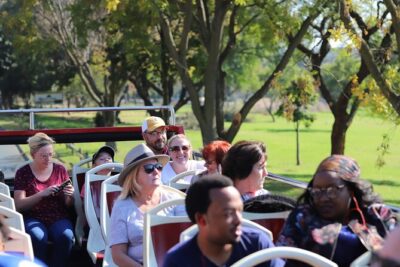 ★ 4.5Johannesburg Hop-On Hop-Off City Tour with Soweto OptionFrom $16768 reviews
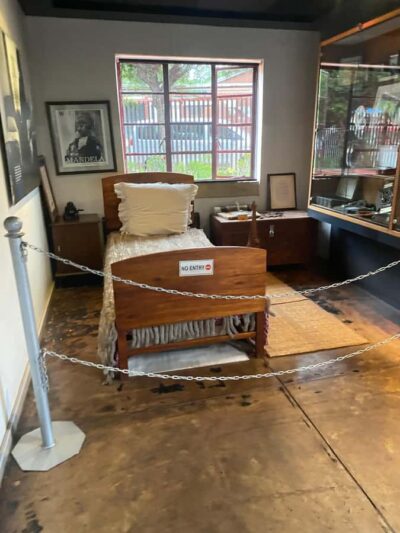 ★ 4.8Johannesburg: Full-Day Tour with Soweto and Apartheid MuseumFrom $104478 reviews
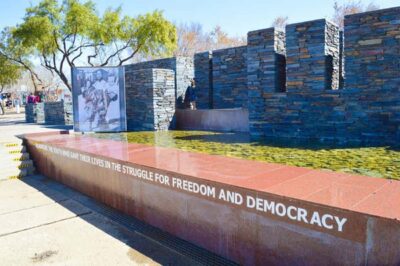 ★ 4.8Johannesburg and Soweto: Half-Day TourFrom $71439 reviews
 ★ 4.6From Johannesburg: Lion & Safari Park Half-Day TourFrom $167384 reviews
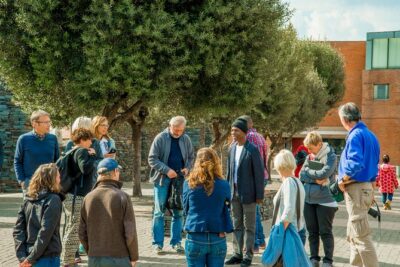 ★ 5.0Ultimate Johannesburg Soweto Experience with Apartheid MuseumFrom $108313 reviews
 ★ 5.0Half Day Lion Park tour from Johannesburg or PretoriaFrom $100274 reviews
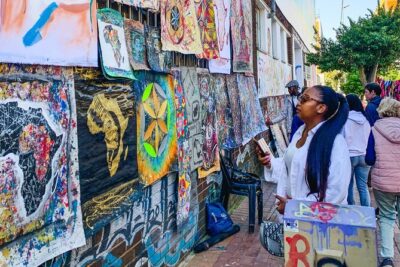 ★ 4.9Johannesburg: Maboneng Street Art & Culture TourFrom $37257 reviews
 ★ 5.0Johannesburg and Soweto tourFrom $77231 reviews
Browse the lists this tour appears in