

REVIEW · SOWETO TOURS
Soweto Township Tours
Soweto hits hard, and this tour feels human. You get a private, door-to-door day with a born-and-raised Sowetan guide, so the story is told from the inside, not from a bus window. I like the hotel-style pickup and drop-off setup, and I also like how the day starts at the Apartheid Museum before you head into Soweto’s streets and neighborhoods.
One thing to plan for: entrance fees are at your expense, even though some stops are listed as free. So, budget for tickets, and don’t let that catch you mid-day.
In This Review
- Key things to know before you go
- A private Soweto day in Johannesburg, told by someone from Soweto
- Starting at the Apartheid Museum, then heading into Soweto
- FNB Stadium and Diepkloof Park, where modern Johannesburg meets Soweto
- Chris Hani Baragwanath Hospital area: large scale services, local importance
- Walter Sisulu Square and the Freedom Charter moment
- The Hector Pieterson Museum and Memorial: the 1976 uprising, up close
- Vilakazi Street and Mandela House: one neighborhood, two global icons
- Orlando Towers and Orlando Power Station: turning heavy industry into a shared space
- How the timing and 8-hour rhythm will feel
- Price, value, and what you are really paying for at $56.95
- Air-conditioned vehicle, mobile ticket, and a private group experience
- Who should book this Soweto Township Tour
- Should you book it?
- FAQ
- FAQ
- How long is the Soweto Township Tours experience?
- How much does the tour cost?
- Is the tour private?
- What’s included in the price?
- Are museum entrance fees included?
- Does the tour offer pickup and drop-off?
- Can I cancel for a full refund?
Key things to know before you go

- Private, local-led experience: The tour is designed to be interactive, led by someone from Soweto, not a distant lecturer.
- Apartheid Museum time first: Expect at least a couple of hours here, since it’s self-guiding and there’s a lot to take in.
- Mandela and Tutu connections: The route includes Vilakazi Street, the Freedom Charter site at Walter Sisulu Square, and Mandela House.
- 1976 is center stage: The Hector Pieterson Museum and Memorial focuses on the Soweto Uprising and the students killed in 1976.
- Everyday-life stops, not just monuments: You’ll also see places like a hospital area, a football stadium, and an entertainment hub at Orlando Power Station.
- Your pace and comfort matter: It’s in an air-conditioned vehicle, and you’re only traveling with your group.
Other township walks led by residents of the neighbourhood
- Johannesburg: Soweto Apartheid & Township Tour with Lunch★ 4.8 · 80 reviews
- Soweto Township Cultural Tour incl Apartheid Museum and Nelson Mandela House★ 5.0 · 30 reviews
- Soweto Township Half Day Tour★ 5.0 · 20 reviews
- Half-Day Guided Tour of Johannesburg and Soweto Township★ 5.0 · 19 reviews
A private Soweto day in Johannesburg, told by someone from Soweto
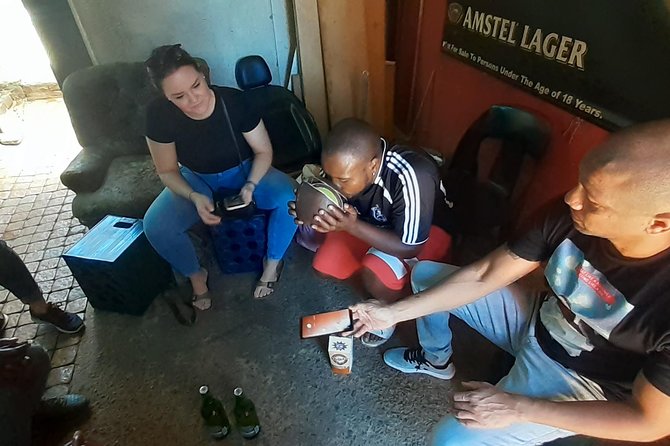
There’s a version of township tourism that can feel like you’re watching people instead of learning from them. This one is built to avoid that. The biggest difference is the guide, a born-and-raised Sowetan who can explain what you’re seeing in plain language, and who can point out what matters in daily life now, not just what happened decades ago.
The other big plus is the format. This is a private tour, so you’re not squeezed into a big group where questions get rushed. And with door-to-door pickup and drop-off (the operator lists an airport meeting point too, so confirm where they’ll pick you up), the day stays calmer, especially if you’re juggling jet lag or limited time in Johannesburg.
Still, set your expectations honestly. This is not a casual sightseeing stroll. The historical sites are intense, and you’ll do a lot in one day. If you know you get overwhelmed by heavy topics, you might want breaks and a slightly slower pace.
Starting at the Apartheid Museum, then heading into Soweto
Your day begins at the Apartheid Museum, described as a self-guiding museum. That matters, because it means you can go at your own speed. The time estimate starts at about two hours minimum, and in practice, these kinds of museums often take longer if you stop to read closely.
This is also a smart opening order. Instead of dropping you straight into the township with only surface context, the museum gives you a framework for understanding what comes next. You’ll be better prepared for what you see around Soweto, especially when the tour moves from heritage and memorials to present-day neighborhoods and public spaces.
After that museum time, you transfer into Soweto itself and get introduced to the township as the largest in South Africa. This isn’t just a geography lesson. It’s the kind of orientation that helps you understand why the later stops feel connected, not random.
Practical tip: bring patience for museum reading time. If you only want a highlight tour, this start can feel long. If you want to make sense of the places, it’s one of the best ways to start.
FNB Stadium and Diepkloof Park, where modern Johannesburg meets Soweto
Once you’ve gotten historical context, the tour shifts gears a bit with stops that show you how life works in and around Soweto.
At FNB Stadium (also known as Soccer City and The Calabash), you’re near the Soweto border area in Nasrec. It’s managed by Stadium Management South Africa and is closely tied to South African football culture, including being a home ground for Kaizer Chiefs. The stadium is also linked to major international events, as it was used as a main association football venue for the 2010 FIFA World Cup.
This stop is short by design. It’s about giving you a real sense of where sports energy lives in the region, and how big city infrastructure runs alongside township neighborhoods.
Next comes Diepkloof Park. Even if you only spend around fifteen minutes, it’s a helpful reminder that Soweto is not just museums and memorials. This area is part of a broader patchwork of communities, and seeing a park zone keeps your day from becoming only political and architectural.
The trade-off: these are quick stops. If you want long stays in each neighborhood, you’ll need a multi-day approach. But for an eight-hour window, short stops work, because they keep the day balanced.
Chris Hani Baragwanath Hospital area: large scale services, local importance
One of the more meaningful “everyday life” stops is Chris Hani Baragwanath Hospital, located in the Soweto area. It’s described as the largest hospital in Africa, with thousands of staff members and thousands of beds, and it’s also a teaching hospital tied to the University of the Witwatersrand.
Even though your time here looks brief, this kind of stop can change how you see the township. It pushes you beyond the idea that Soweto is only a story of the past. It’s also a place where major services operate, where health care happens at real scale, and where the region’s challenges and strengths play out in daily systems.
What to keep in mind: since the tour time at each site is limited, this is more of a viewpoint and context stop than a facility tour. Still, it’s a strong choice for travelers who want present-day context, not only memorials.
Other Soweto routes we have reviewed, each with a local guide

Walter Sisulu Square and the Freedom Charter moment
At Walter Sisulu Square, you’re at a place where, on 26 June 1955, the Congress of the People met to draw up the Freedom Charter. The charter is described as an alternative vision to apartheid policy, emphasizing a non-racial society and rights for individuals. It’s also tied to the African National Congress policy today and is seen by many as a foundation for South Africa’s 1996 constitution.
This is one of those stops where your guide’s explanations matter. A physical location like this becomes more powerful when you understand that it wasn’t just a protest moment. It was a stated vision for the kind of country people wanted.
If you’re the type who enjoys political context, you’ll likely appreciate this stop. If you prefer purely narrative history, it still works because it connects the sites to how change was imagined and argued for.
The Hector Pieterson Museum and Memorial: the 1976 uprising, up close
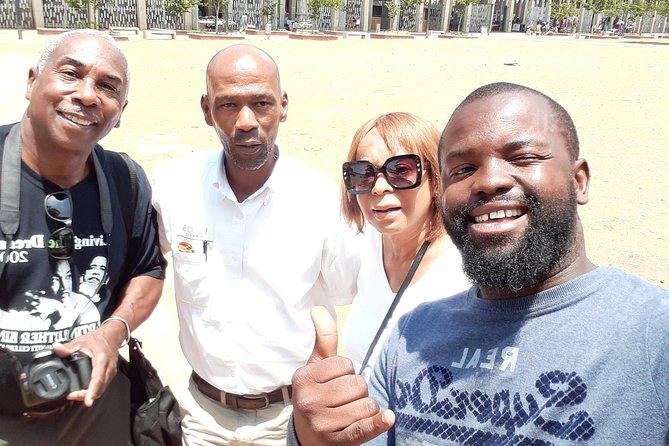
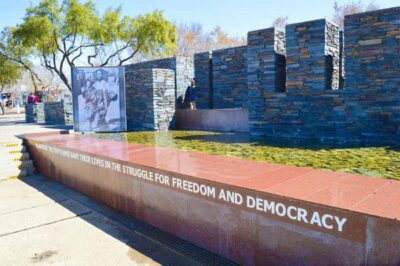
The heart of the emotional weight on this route is the Hector Pieterson Museum and Memorial in Orlando West. It’s named for Hector Pieterson, who was shot and killed on 16 June 1976. The museum focuses on the anti-apartheid Soweto Uprising, when more than 170 protesting school children were killed.
Time is listed at about forty-five minutes, and the museum entrance is noted as not included in your tour price. This means you should plan to pay the entry fee yourself, if you choose to go in, depending on how the operator handles payment day-of.
I also like the way this stop fits into the day. You get the Apartheid Museum context first. Then you get everyday-life and public-service views. Then you return to the moment when students were killed during the uprising. It helps you see how the past still echoes through how people live, gather, and remember.
If you’re sensitive to violence and grief in museums, give yourself permission to take breaks. You will not be rushed if your guide is doing a good job.
Vilakazi Street and Mandela House: one neighborhood, two global icons
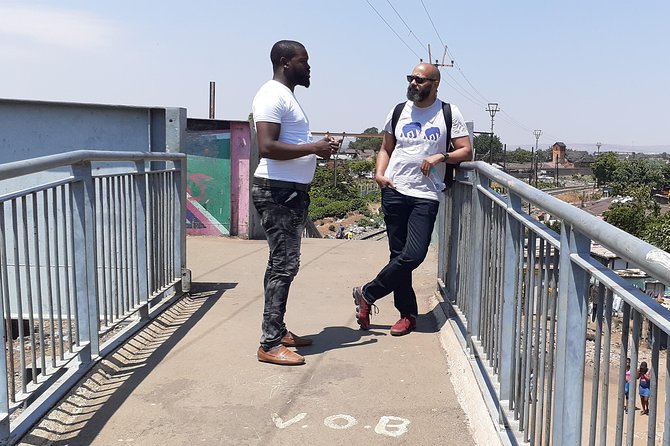
After the memorial focus, the tour shifts into one of Soweto’s most famous streets: Vilakazi Street. The street is named after Benedict Wallet Vilakazi, described as a Zulu poet, novelist, and educator, and the first Black South African to receive a PhD. It is also famous because both Nelson Mandela and Desmond Tutu once lived there.
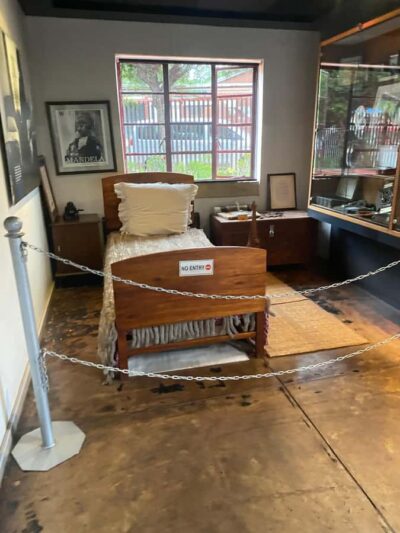
From Vilakazi Street, you continue to Mandela House, also known as the Nelson Mandela National Museum. Mandela lived here from 1946 to 1962. The tour notes the entrance is not included, and your time estimate is about forty-five minutes.
These stops are where the day becomes personal and legible. You’re not only learning names. You’re seeing a living space, a location where political life and resistance were shaped, before Mandela’s story entered the global stage.
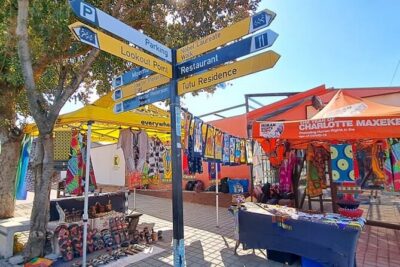
One more practical point: this part of the day can feel warmer, slower, and more reflective. If you’re traveling with someone who wants photos, both Vilakazi Street and Mandela House offer good opportunities. Still, keep your attention on reading and listening, because your guide can connect the dots better than a photo ever will.
Orlando Towers and Orlando Power Station: turning heavy industry into a shared space
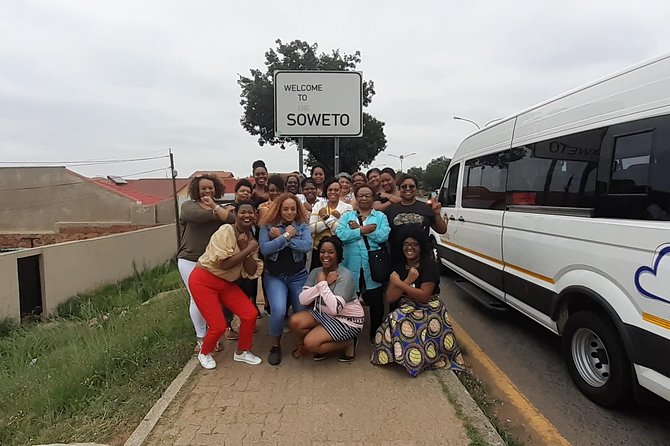
To round out the tour, you visit Orlando Towers, connected with the transformation of the Orlando Power Station site. The power station is described as a decommissioned coal-fired plant that served Johannesburg for over fifty years. Work began in 2006 to transform the site into an entertainment and business center.
Even if you only spend about twenty minutes, this stop matters. It shows how places can change roles over time, shifting from industrial production to social and commercial use. It’s a reminder that Soweto is not frozen in time.
The risk here is expecting a dramatic wow moment. It’s short and more of a viewpoint stop, a chance to see what reuse looks like in practice. If you want longer time here, you can add on your own walking or shopping after the tour ends.
How the timing and 8-hour rhythm will feel
An eight-hour day is a lot in Johannesburg traffic, even with an air-conditioned vehicle. The tour is built with short blocks at each site, ranging from about ten minutes to longer museum time. The longest anchor point is the Apartheid Museum start, described as self-guiding with a minimum of two hours.
That means your day is really two modes:
- Deep reading and emotional focus, especially at the museum and memorial stops
- Quick context stops, like the stadium, park, hospital area, and Orlando Power Station
So plan your energy. Wear comfortable shoes. Hydrate. And if you’re prone to information overload, pick one or two stops you really want to absorb deeply, like the Hector Pieterson Museum, and treat the others as context builders.
Also note: the tour lists a few sites as having free admission and also states that entrance fees are at your own expense. Since that can create confusion, I recommend you confirm entry costs with your operator when you book. It keeps the day smooth.
Price, value, and what you are really paying for at $56.95
At $56.95 per person for an approximately eight-hour private tour, this isn’t just paying for a vehicle. You’re paying for guidance, routing, and the ability to move through key Soweto landmarks without turning it into a logistics project.
Here’s where the value can be strong:
- Private format means you get more question time and less waiting.
- Hotel-style pickup/drop-off or airport-area meeting reduces friction.
- The itinerary includes both heavy, essential heritage sites and real-life context stops like the stadium and hospital area.
Here’s the catch to plan for: lunch and museum entrances are not included. Also, the tour states all entrance fees are at your own expense. That means your final spend is likely higher than the base price once you add tickets and your meal.
If you do the math, the base price is fair if you want a guided, door-to-door day that covers major sites efficiently. If you’d rather go at your own pace, pay individual museum tickets, and spend more time per location, then a self-guided approach could be cheaper. But you’d lose the local context that’s clearly central to this experience.
Booking lead time is another clue: this tour is often booked about 57 days in advance on average. If your dates are fixed, don’t wait until the last moment.
Air-conditioned vehicle, mobile ticket, and a private group experience
Operationally, the tour is set up to be straightforward. You get an air-conditioned vehicle and a mobile ticket. Confirmation is received at booking, and it’s listed as a private tour, meaning only your group participates.
The tour also notes that it’s near public transportation and that most travelers can participate. That’s good news if you’re fitting this into a busy Johannesburg itinerary.
One more detail that matters for comfort: the day ends back at the meeting point. So plan your onward plans with enough buffer afterward, especially if you’re connecting to dinner or a flight.
Who should book this Soweto Township Tour
I’d steer you toward this tour if you want:
- A private, local-led experience rather than a mass-market bus tour
- A route that includes both the Apartheid Museum and the Hector Pieterson Museum and Memorial
- Mandela-focused stops like Vilakazi Street and Mandela House
- A balanced mix of memorial sites and everyday context stops like a hospital area, a stadium, and an entertainment and business hub at Orlando Power Station
If you hate emotional museum content, or you need a lighter day with less reflection, you might want a different style of tour. Also, if you want lots of free time and slow wandering, this eight-hour format might feel tight, since it’s built around multiple stops.
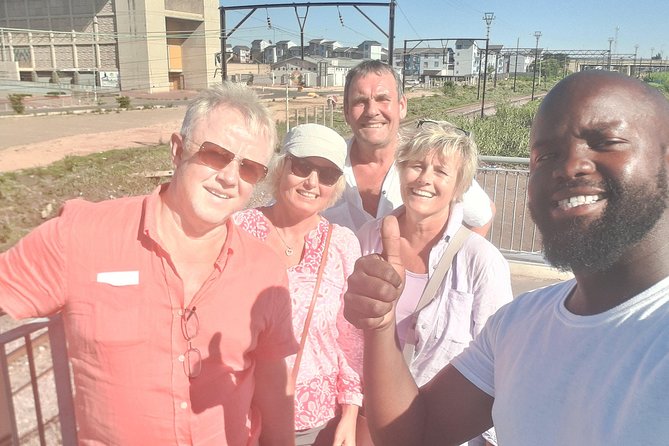
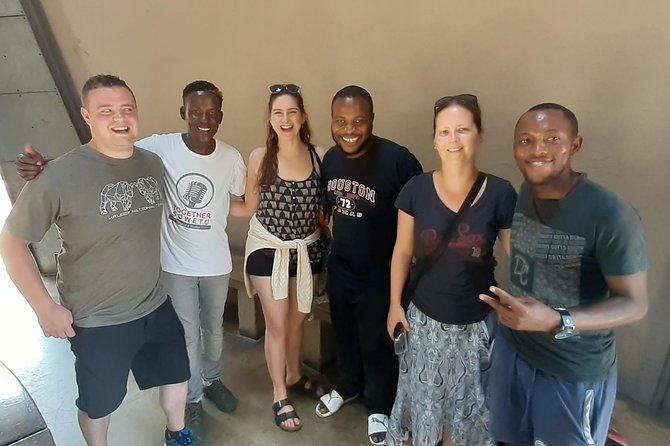
On the “how it feels” side, the guides can make the experience. One guide named Jabulani is highlighted as a strong ambassador for his community, and people describe the conversations as informative and grounded in South Africa’s current reality. Some run-throughs also include meeting local singers and an artist, which can add a human layer beyond the monuments.
Should you book it?
Yes, if you want a thoughtful, guided Soweto day that covers the big, meaningful sites and still includes real-life context. The private format and local perspective are the biggest reasons to choose this over a generic tour.
Book with eyes open about costs. Entrance fees and lunch are not included, and the museum stops can take real time, especially at the Apartheid Museum. If you confirm entry fees when you book and plan your schedule, this can be a powerful Johannesburg experience that doesn’t feel voyeuristic.
FAQ
FAQ
How long is the Soweto Township Tours experience?
It’s listed as about 8 hours.
How much does the tour cost?
The price is $56.95 per person.
Is the tour private?
Yes. It’s a private tour, so only your group participates.
What’s included in the price?
The tour includes an air-conditioned vehicle, and you’ll receive a mobile ticket.
Are museum entrance fees included?
No. Museum entrances are not included, and the tour notes that entrance fees are at your own expense.
Does the tour offer pickup and drop-off?
Pickup is offered, and the tour also lists an activity start meeting point near O.R. Tambo International Airport. Because those details can both apply depending on your situation, confirm where your driver will meet you.
Can I cancel for a full refund?
Yes, you can cancel up to 24 hours in advance for a full refund. If you cancel less than 24 hours before the start time, it won’t be refunded.
Soweto: Other Guided Routes
Township Tours Led by the People Who Live There
Keep going: the rest of our Johannesburg write-ups
- Soweto Private half day tour
★ 4.5 · 3 reviews - Johannesburg’s Migration History with a local lunch
★ 5.0 · 3 reviews - Johannesburg: Soweto, Apartheid Museum, and Cradle tours
★ 4.7 · 3 reviews - Soweto Apartheid Museum and Lunch
★ 5.0 · 3 reviews - Bathongo Rhino & lion park nature reserve tour
★ 5.0 · 3 reviews - Johannesburg: Elephant and Monkey Sanctuary Half Day Tour
★ 5.0 · 3 reviews
Soweto Tours, compared.
 ★ 4.5Johannesburg Hop-On Hop-Off City Tour with Soweto OptionFrom $16768 reviews
 ★ 4.5Half-Day Tour of Soweto TourFrom $63712 reviews
 ★ 4.9Soweto: Walking Tour with a Local Guide and LunchFrom $43648 reviews
 ★ 4.8Jo’berg in 1 Day: Soweto, Apartheid Museum & City TourFrom $142524 reviews
 ★ 4.8Johannesburg: Full-Day Tour with Soweto and Apartheid MuseumFrom $104478 reviews
 ★ 4.8Johannesburg and Soweto: Half-Day TourFrom $71439 reviews
 ★ 5.0Full-Day Soweto, Apartheid Museum and Lunch TourFrom $108410 reviews
 ★ 5.0Half Guided Day Tour of Soweto And Apartheid MuseumFrom $69356 reviews
Browse the lists this tour appears in