
REVIEW · JOHANNESBURG CITY TOURS
Soweto and Johannesburg Exclusive Full Day Guided Tour
Johannesburg history hits in unexpected places. This full-day tour strings together Johannesburg highlights and Soweto’s defining sites so you understand the city and the township as one story, not two separate stops.
I love how the pacing stays practical: hotel pickup and drop-off, an air-conditioned vehicle, and bottled water means you are not wrestling logistics all day. I also like the built-in mix of sights, from iconic skyline spots and viewpoints to the places where South Africa’s democracy story is told in person.
One consideration: it is a long, packed day with lots of short visits, and lunch plus coffee or tea are not included. If you want slow time to linger in one place, you will need to manage your expectations and use breaks wisely.
In This Review
- Key Highlights You Should Care About
- Why This Johannesburg and Soweto Combo Works in One Day
- Price and What You Actually Get for $100.65
- Getting Picked Up in Johannesburg or Pretoria (and Staying Comfortable)
- Johannesburg Highlights: Mandela Square, Houghton, Munro Drive, and Hillbrow Tower
- Constitution Hill: The Prison Site That Explains Democracy
- Braamfontein, Newtown, Mining District, and the City of Gold
- Gandhi Square, the Johannesburg CBD, and a Pass by Soccer City
- Heading Into Soweto: Diepkloof Park and Orlando Towers
- Vilakazi Street and Mandela’s House: When History Feels Personal
- Hector Pieterson Museum, Regina Mundi Catholic Church, and Memory of Resistance
- Kliptown Youth Program Optional Stop (Squatter Camp Tour)
- Tips to Make a Long, Packed Day Feel Easier
- Should You Book This Johannesburg and Soweto Full Day Guided Tour?
- FAQ
- What time does the tour start?
- How long is the Soweto and Johannesburg full day tour?
- Is hotel pickup and drop-off included?
- Are any admission tickets included in the price?
- Is lunch included?
- What is the cancellation policy?
Key Highlights You Should Care About

- Hotel pickup and drop-off from Johannesburg or Pretoria keeps the day stress-free
- Constitution Hill and major Soweto memorials are admission-included, saving time and ticket hassle
- Small group size (maximum about 13 travelers) means your guide can actually work with you
- A single-day Johannesburg to Soweto arc helps you connect the skyline to the struggle and the change
- Guides named Banele, Mo, John, Tsholo, and Thabang are repeatedly praised for clear, human explanations
Other Soweto routes we have reviewed, each with a local guide
- Johannesburg: Hop-On Hop-Off Bus with Optional Soweto Tour★ 4.6 · 985 reviews
- Soweto /Johannesburg and Apartheid Museum Guided Full Day Tour★ 5.0 · 932 reviews
- Johannesburg Hop-On Hop-Off City Tour with Soweto Option★ 4.5 · 768 reviews
- Half-Day Tour of Soweto Tour★ 4.5 · 712 reviews
Why This Johannesburg and Soweto Combo Works in One Day
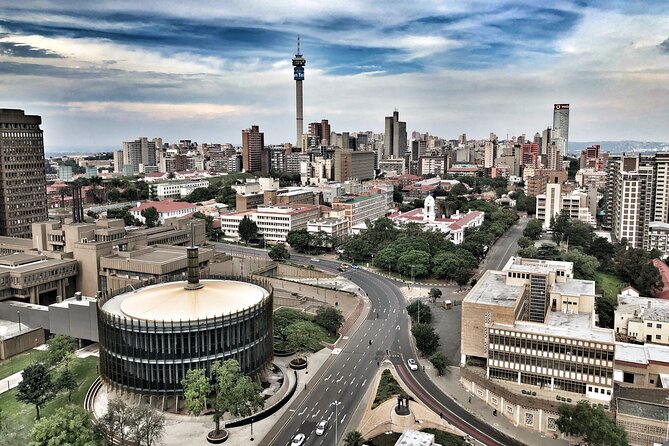
If you only have one day in Johannesburg, this is one of the smartest ways to use it. You start with well-known city landmarks, then you gradually shift toward Soweto. That flow matters. You get context for why certain neighborhoods look the way they do, how the economy shaped daily life, and how the apartheid era still echoes in today’s streets.
I like that you are not just chasing photo spots. You spend time at places that explain how people lived, resisted, and rebuilt. The day connects the dots between power, protest, and identity through sites linked to Nelson Mandela and the Soweto uprising.
You also get the benefit of a guide who knows how to talk through heavy topics without turning the day into a lecture marathon. The best part is that the tour format keeps you moving so you see both the famous and the meaningful without spending the whole day in transit.
Price and What You Actually Get for $100.65
At $100.65 per person, this is not a bargain-bucket tour. But it often feels fair because the day includes more than generic sightseeing.
Here is the value picture as you plan:
- You get air-conditioned private transport plus bottled water.
- You get pickup and drop-off from hotels around Johannesburg or Pretoria.
- Several key stops have admission included, especially at Constitution Hill and major Soweto sites like Mandela’s house, Hector Pieterson Museum and Memorial, and Regina Mundi Catholic Church.
A lot of stops are free to enter, so you are not paying over and over for quick photo stops. But you are still getting time inside the places that require ticketed access.
The trade-off is that you still need to handle personal expenses. Lunch, coffee and tea, and soda are not included. WiFi is also not included on board, so keep your data plans or offline maps ready.
In plain terms: you are paying for transportation, a full itinerary with ticketed highlights, and a guide who can translate the history into something you can actually use.
Getting Picked Up in Johannesburg or Pretoria (and Staying Comfortable)
The tour starts at 8:30 am, and the total time usually runs 7 to 8 hours. That early start helps you get through the city traffic and still reach Soweto with enough daylight and energy.
You will ride in an air-conditioned vehicle, which is a big deal in Johannesburg. Your guide also brings bottled water, so you can pace yourself without constantly buying drinks. For comfort, this matters because the tour is not one long drive with one attraction at the end. It is a series of stops, many of them short.
The group is capped at a maximum of about 13 travelers. Another part of the tour description mentions private tours for up to 14 people, so think small-group, not a giant bus. In practice, that size is what lets guides slow down for questions and adjust the rhythm of the day.
You will also get a mobile ticket, which makes check-in easier at sites where you need it.
Johannesburg Highlights: Mandela Square, Houghton, Munro Drive, and Hillbrow Tower
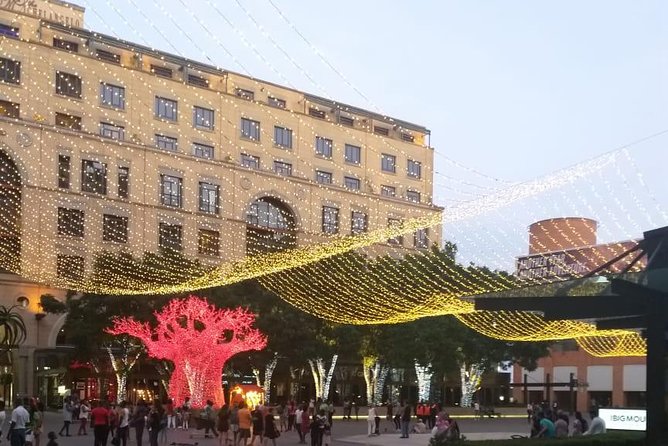
The city portion is not random. It is about atmosphere and structure. You start at Nelson Mandela Square, a central place with a big Mandela statue and a classic Johannesburg-meets-tourism feel. Even if you already know the name, seeing the statue here gives you a quick emotional baseline for the day.
Next you head through Houghton Estate, tied to Mandela’s move during the later part of his presidency. It is a short stop, but it helps you understand how Johannesburg’s geography reflects power and politics, from leafy northern suburbs down toward the lived reality of Soweto.
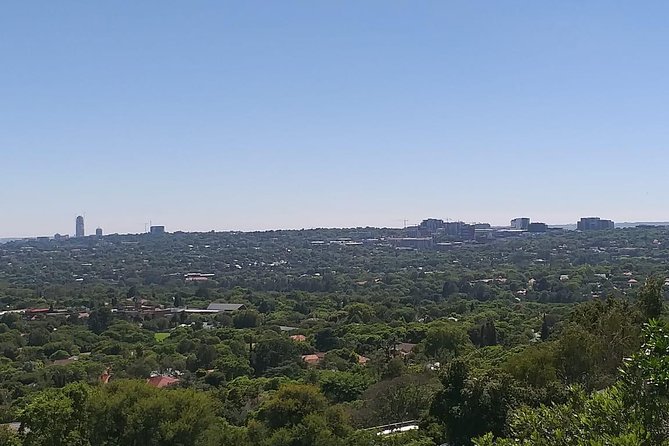
Then you get to Munro Drive, a viewpoint with scenic perspective over Johannesburg North. Stops like this are not just for photos. They let you grasp how spread out the city is, which makes later township locations easier to understand.
After that, you see the Hillbrow Tower in Johannesburg’s skyline. It is a recognizable symbol, and it also hints at the way the city has changed over decades. It gives you that moment of, okay, I am looking at the real shape of the city, not just museum history.
More of Joburg, neighbourhood by neighbourhood


Constitution Hill: The Prison Site That Explains Democracy
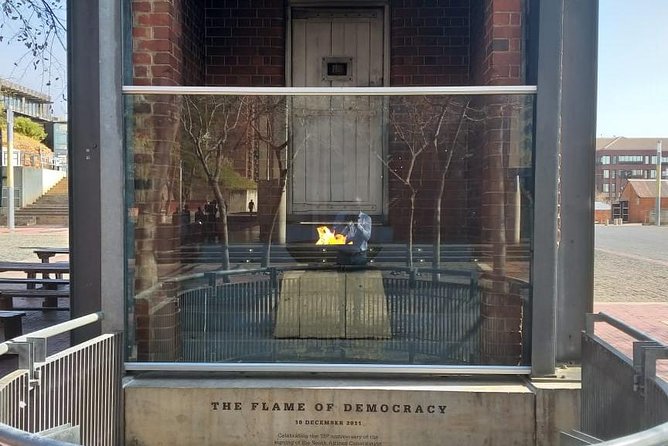
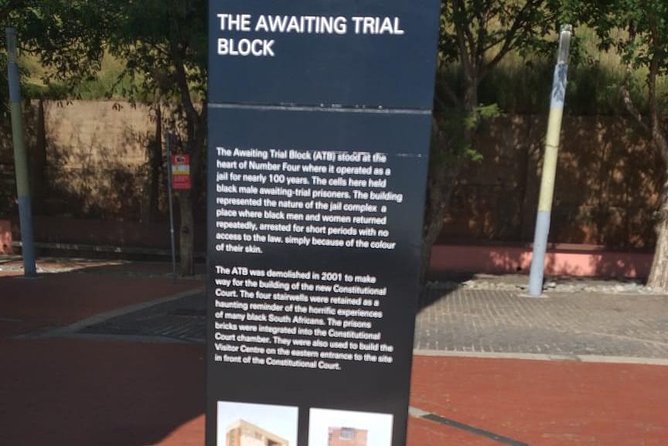
Constitution Hill is the heart of the “this is real, not abstract” part of the day. You spend about 1 hour here with admission included.
This place is described as a living museum that traces South Africa’s journey to democracy. The big idea is that you are not visiting a monument that stays frozen in time. You are visiting the grounds of a former prison and military fort, and today the Constitutional Court operates there, focused on citizens’ rights.
What makes this stop especially useful for you is how it frames the rest of the day. When you later see Hector Pieterson and other Soweto sites, you understand those memories in relation to the broader political struggle. Constitution Hill also gives you language for what apartheid meant in everyday life: detention, control, and the fight for legal recognition of rights.
If your schedule feels full, treat this as your anchor. It is the place where the day’s emotions and context line up best.
Braamfontein, Newtown, Mining District, and the City of Gold
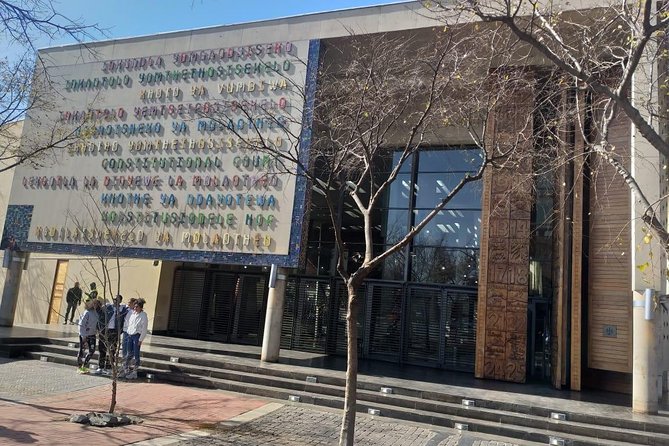
After Constitution Hill, the tour shifts into Johannesburg culture and character. Braamfontein is the kind of area that shows you modern Johannesburg, with museums and theatres, nightlife, restaurants, and art galleries. It is a stop that works as a palate cleanser after heavy historical sites.
Then you head to Nelson Mandela Bridge, a newer landmark that quickly became iconic. It is quick, but it helps you see Johannesburg as a city still building and reshaping itself.
Newtown is next, and it is about creative energy and older roots. You get a look at the Newtown Precinct with cultural sites and references that stretch back to the late 1800s. It also connects well to South Africa’s story of change, from industrial eras to arts and public life.
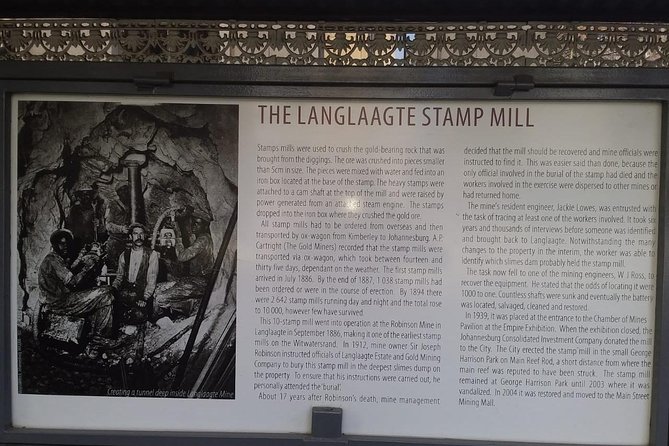
The Mining District is one of the most interesting practical stops because it connects history to physical objects. You see early gold rush relics like mining headgear, stamp presses, and carts, with information boards explaining mining history. This matters because mining shaped labor migration, wealth, and the structure of where people lived.
If you are trying to understand Johannesburg beyond the headline stories, this is one of your best chances to connect politics to the economic engine.
Gandhi Square, the Johannesburg CBD, and a Pass by Soccer City
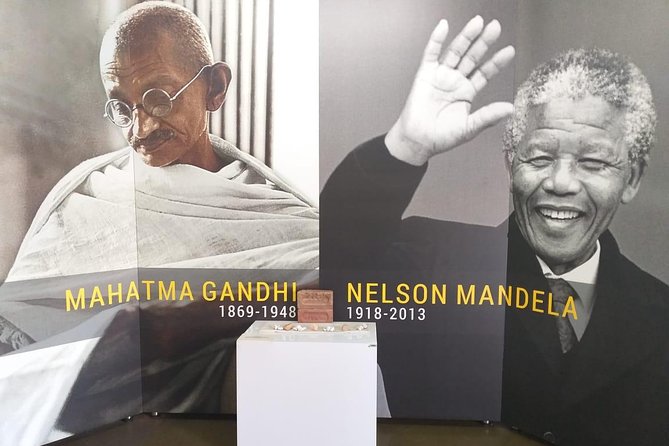
You also see Gandhi Square, with a statue depicting Mahatma Gandhi as a young independence campaigner and pacifist. It is a short stop, but it points to the broader international currents of nonviolence and political struggle.
Then you go through the Central Business District, often called the Johannesburg CBD. You get a sense of scale, especially since Johannesburg is known for dense skyscrapers in Africa. It is another “get your bearings fast” moment. You can start to picture how money, offices, and power operated alongside the realities of segregation and forced removals.
On your way toward Soweto, you pass FNB Stadium, also associated with the 2010 FIFA World Cup opening and closing ceremonies. You are not lingering here, but it is a striking landmark and a reminder that Johannesburg has major global stages as well as heavy local chapters.
Heading Into Soweto: Diepkloof Park and Orlando Towers
The Soweto portion begins to feel different right away, and Diepkloof Park is a key early stop. It gives you a sense of the origins of the township, plus a view into current kasi life. The goal is not to treat Soweto as a single story. The guide’s job here is to help you see continuity and change.
After that, you visit Orlando Towers, which are among the most distinctive landmarks in Soweto. Even for people who do not study architecture, towers like these act as quick markers of place. You can look at them and understand, okay, this is identity through form.
This stretch matters because it sets you up emotionally for the next stops on Vilakazi Street and Mandela’s home area, where history becomes personal.
Vilakazi Street and Mandela’s House: When History Feels Personal
Vilakazi Street is one of the most meaningful stops on the itinerary. You spend about 45 minutes here with admission included.
The focus is on the homes of Nobel peace prize winners Nelson Mandela and Archbishop Desmond Tutu on Vilakazi Street. This is not just a sightseeing moment. It is a way to ground the story in specific people and specific lives.
Next comes Mandela’s House, also admission included, with about 20 minutes allocated. This is the house where Mandela lived, listed as No. 8115, and it is described as a heritage site with sound, film, interpretive panels, and guided tours.
What I like about structuring it this way is that you get two layers:
1) the street and its significance, with context for who lived where and why it mattered
2) the house itself, which makes the message feel human and concrete
If you have any interest in how leadership shaped daily life and the symbolism of home and community, you will feel the impact here.
Hector Pieterson Museum, Regina Mundi Catholic Church, and Memory of Resistance
Then the tour moves into some of the most important remembrance spaces.
You visit the Hector Pieterson Museum and Memorial, about 20 minutes with admission included. This site is tied to June 16, 1976, when Hector, age 13, was shot during the Soweto uprising. The memorial stands as a symbol of resistance to apartheid brutality.
After that, you go to Regina Mundi Catholic Church, about 20 minutes with admission included. The church is described as the people’s church and notes a pivotal role in the township’s resistance against apartheid. This is one of those stops where the setting itself explains part of the story. It helps you understand how faith communities and public life intersected during political struggle.
This pairing is why the day works emotionally. You go from public resistance and youth memory to community support structures, and you start to see how networks kept people going.
Kliptown Youth Program Optional Stop (Squatter Camp Tour)
At the end, there is an optional stop connected to Kliptown Youth Program, described as a squatter camp tour. The time is about 15 minutes.
I like that it is optional, because this is exactly the kind of stop where you might want either:
- more context if you are already fully engaged with township history
- or a lighter ending if you are tired from a long day
If you choose to add it, treat it as a short education add-on rather than a replacement for the key Mandela and memorial stops earlier in the itinerary.
Tips to Make a Long, Packed Day Feel Easier
This tour is built around many stops, some of them only 10 to 20 minutes. That is not a bad thing, but you should plan for it.
A few practical tips:
- Wear comfortable shoes. You will be walking more than you expect across viewpoints, precincts, and museum areas.
- Plan for food on your own. Lunch is not included, and coffee or tea is not included. Bottle water is included, so you will not be dehydrated, but you still need a meal strategy.
- Bring something for sun and heat. You will have open-sky viewpoints and outdoor memorial areas.
- Charge your phone and plan offline maps. WiFi on board is not included, and you will want navigation and timing for pickup routines and restrooms.
- Ask your guide one question per stop. Even short stops become meaningful when you connect what you see to why it mattered.
For families, this can be a good match because the group size stays small. Just know it is a history-heavy day with serious topics.
Should You Book This Johannesburg and Soweto Full Day Guided Tour?
I think you should book if you want a guided, structured one-day introduction to Johannesburg and Soweto that does not leave you scrambling for tickets or transport. The admission-included stops at Constitution Hill, Vilakazi Street, Mandela’s House, Hector Pieterson Museum and Memorial, and Regina Mundi make the day feel like more than a checklist of landmarks.
You should also consider it if you value a guide who can connect places to meaning. People often praise guides for explaining history in a clear, human way, and names like Mo, John, Banele, Tsholo, and Thabang are repeatedly connected to that kind of delivery.
Skip it only if you want a slower pace or lots of free time to wander without structure. This day is full, and lunch is on you. If that sounds stressful, you may prefer a shorter or more flexible tour.
FAQ
What time does the tour start?
The tour starts at 8:30 am.
How long is the Soweto and Johannesburg full day tour?
It runs about 7 to 8 hours.
Is hotel pickup and drop-off included?
Yes. Pickup and drop-off are included from hotels around Johannesburg or Pretoria.
Are any admission tickets included in the price?
Yes. Admission is included at Constitution Hill, Vilakazi Street, Mandela’s House, Hector Pieterson Museum and Memorial, and Regina Mundi Catholic Church.
Is lunch included?
No. Lunch is not included, and coffee and tea are also not included.
What is the cancellation policy?
Free cancellation is available. You can cancel up to 24 hours in advance for a full refund. If you cancel less than 24 hours before the start time, the amount paid is not refunded.
Johannesburg, Block by Block
- From Johannesburg: Pilanesberg Nature Reserve Game Safari
- Johannesburg: Hop-On Hop-Off Bus with Optional Soweto Tour
- Soweto /Johannesburg and Apartheid Museum Guided Full Day Tour
- Johannesburg Hop-On Hop-Off City Tour with Soweto Option
- Full Day Ultimate Pilanesberg National Park Safari from Johannesburg or Pretoria
Soweto: Other Guided Routes
Keep going: the rest of our Johannesburg write-ups
- Soweto Private half day tour
★ 4.5 · 3 reviews - Johannesburg’s Migration History with a local lunch
★ 5.0 · 3 reviews - Johannesburg: Soweto, Apartheid Museum, and Cradle tours
★ 4.7 · 3 reviews - Soweto Apartheid Museum and Lunch
★ 5.0 · 3 reviews - Bathongo Rhino & lion park nature reserve tour
★ 5.0 · 3 reviews - Johannesburg: Elephant and Monkey Sanctuary Half Day Tour
★ 5.0 · 3 reviews
Johannesburg City Tours, compared.
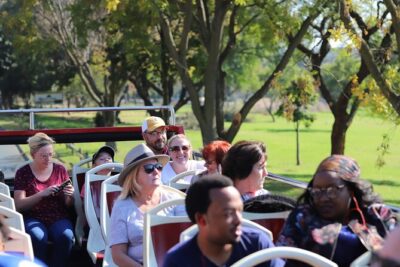 ★ 4.5Johannesburg Hop-On Hop-Off City Tour with Soweto OptionFrom $16768 reviews
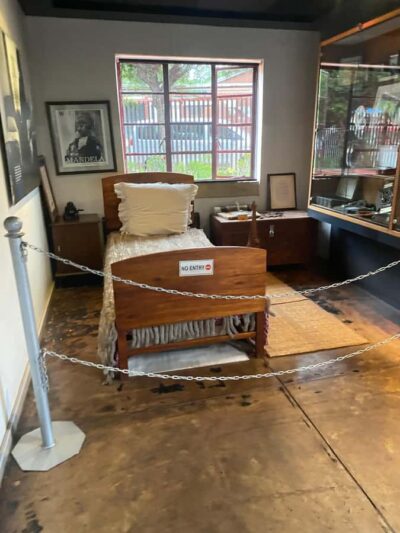 ★ 4.8Johannesburg: Full-Day Tour with Soweto and Apartheid MuseumFrom $104478 reviews
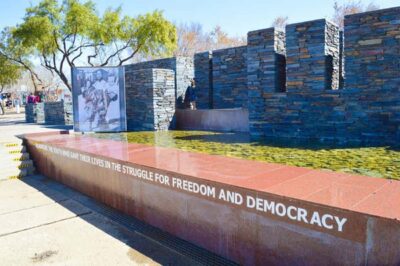 ★ 4.8Johannesburg and Soweto: Half-Day TourFrom $71439 reviews
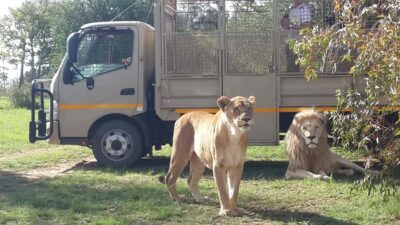 ★ 4.6From Johannesburg: Lion & Safari Park Half-Day TourFrom $167384 reviews
 ★ 5.0Ultimate Johannesburg Soweto Experience with Apartheid MuseumFrom $108313 reviews
 ★ 5.0Half Day Lion Park tour from Johannesburg or PretoriaFrom $100274 reviews
 ★ 4.9Johannesburg: Maboneng Street Art & Culture TourFrom $37257 reviews
 ★ 5.0Johannesburg and Soweto tourFrom $77231 reviews
Browse the lists this tour appears in