
REVIEW · JOHANNESBURG CITY TOURS
Private Tour of Johannesburg, Soweto and Apartheid Museum
Johannesburg tells its story up close. This private 8-hour route takes you from Constitution Hill to the Apartheid Museum, then into Soweto for the 1976 street walk and Mandela landmarks. What I like most is how the Spanish guide keeps the day organized and clear, so the big ideas land without feeling like a lecture. I also love that key museum time comes with admission included, so you spend more hours seeing and less time figuring out tickets.
One thing to plan for: lunch is not included, and the schedule does not build in a long sit-down meal. Also, you are moving through sites tied to imprisonment and state violence, so keep your expectations realistic and bring some emotional bandwidth.
In This Review
- Key Things That Make This Tour Worth Your Time
- A Private 8-Hour Route That Makes Johannesburg Feel Understandable
- Nelson Mandela Square: A Quick Orientation Photo and City Context
- Constitution Hill Human Rights Precinct: Prison Bricks to Constitutional Court
- Apartheid Museum: How the Tragedy of Apartheid Gets Explained
- FNB Stadium: Photo From Outside, Real Historical Moments
- Vilakazi Street in Soweto: A Walk Through 1976-Era Memory
- Mandela House: A Short, High-Meaning Visit
- Why the Spanish Guides Matter, Irma and Daniela as Examples
- Price and Value: What You Get for $131.53 Per Person
- Practical Tips for a Strong Day: Timing, Shoes, and Weather
- Should You Book This Johannesburg, Soweto, and Apartheid Museum Tour?
- FAQ
- What is the duration of the Private Tour of Johannesburg, Soweto and Apartheid Museum?
- Does the tour include hotel pickup?
- Is this a private tour or a shared group tour?
- Is lunch included in the tour price?
- Which stops have admission included?
- Is there any admission cost for Nelson Mandela Square or Vilakazi Street?
- Does the tour include transportation?
- What if the weather is poor?
Key Things That Make This Tour Worth Your Time
- Hotel pickup and a private vehicle keep the day efficient, especially for a first trip to Johannesburg
- Constitution Hill combines a unique architecture moment with the history of a former prison site
- Apartheid Museum admission is included, and it is built specifically to explain how apartheid worked and fell
- Soweto walking time on Vilakazi Street gives you a human pace, with craft stalls along the way
- Mandela House admission is included, giving you access to an iconic family home landmark
- A comfort-smart day with an air-conditioned vehicle and focused stops, not scattered sightseeing
Other Soweto routes we have reviewed, each with a local guide
- Johannesburg: Hop-On Hop-Off Bus with Optional Soweto Tour★ 4.6 · 985 reviews
- Soweto /Johannesburg and Apartheid Museum Guided Full Day Tour★ 5.0 · 932 reviews
- Johannesburg Hop-On Hop-Off City Tour with Soweto Option★ 4.5 · 768 reviews
- Half-Day Tour of Soweto Tour★ 4.5 · 712 reviews
A Private 8-Hour Route That Makes Johannesburg Feel Understandable

If Johannesburg feels like a place of contrasts when you first arrive, this tour is a good antidote. You get a structured day that links the city’s modern identity to the political fight that shaped it. Starting with pickup and using an air-conditioned car matters here. The distances are real, and traffic can be real too.
Because it is private, you are not stuck in a big group rhythm. Your guide can answer questions, adjust the pace, and move quickly between major stops. That is a quiet quality-of-life benefit, not just a luxury. If you have limited time in South Africa, this kind of focused route helps you avoid the classic first-day problem: seeing a lot of things, but not connecting them.
The schedule is about 8 hours total, starting at 9:00 am. Your timing will be tight enough that you feel momentum, but not so rushed that every stop becomes a photo sprint. Still, treat it as an active history day, not a slow sightseeing cruise.
Nelson Mandela Square: A Quick Orientation Photo and City Context
You begin around Nelson Mandela Square, in the financial heart of South Africa. It is one of those places where the landmark itself is part of the message. You can take the obligatory photo with the Nelson Mandela icon, and then you are off again.
What makes this first stop useful is what happens right after it: you drive through parts of Johannesburg while hearing how the city grew. You pass the setting where gold was discovered, and you get a sense of why Johannesburg became the magnet it did. If you enjoy learning the “why” behind the skyline, this opening phase sets you up well for the heavier stops later.
One highlight along the drive is the Top of Africa building. You are not touring it as part of this day, but seeing it helps you place the city in context fast. It is a good moment to get your bearings before the day shifts into prison history and township streets.
Constitution Hill Human Rights Precinct: Prison Bricks to Constitutional Court
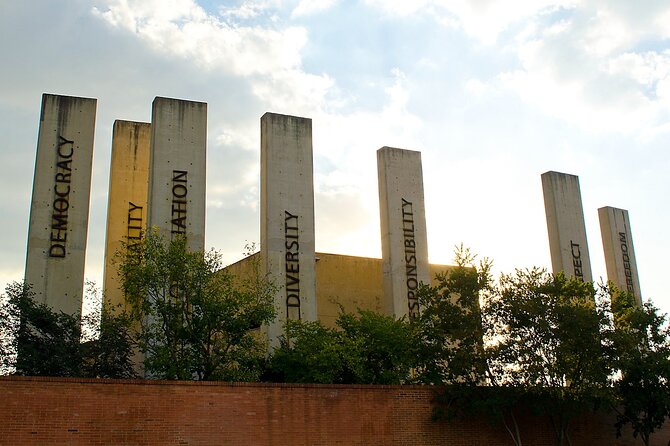
This is the stop that often changes people’s understanding of the city. Constitution Hill works as a living museum, and it is not just because of the exhibits inside. The location itself carries meaning. This is a former prison and military fort site, and today it is home to South Africa’s Constitutional Court, which upholds the rights of citizens.
The Constitutional Court building’s design is described as unique worldwide, and it is built on the site using bricks from an old prison. That detail matters. You are not looking at history from a distance. You are standing on the same ground where oppression happened, and seeing how a new legal system took root there.
You also hear about key political figures linked to the old prison period, including Gandhi and Mandela. Even if you have read about them before, the place makes the story feel more specific and more real. Plan for about an hour here. It is enough time to move at a thoughtful pace without losing the rest of the day.
Small consideration: because this site is strongly tied to human rights and imprisonment, expect a serious tone. If you want a day of only upbeat sightseeing, this is not the tour for that mood. If you want truth and context, it is a strong match.
Apartheid Museum: How the Tragedy of Apartheid Gets Explained
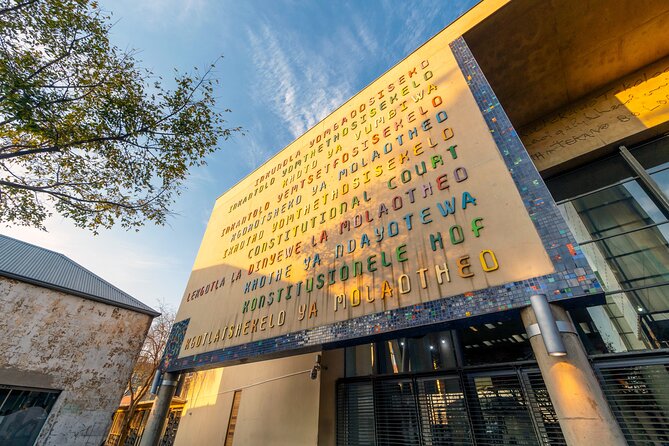
After Constitution Hill, you move to the Apartheid Museum, known as the Essence of the Nation. This museum focuses directly on the rise and fall of apartheid, and it is built to show not just dates and laws, but what the system did to people’s lives.
The description of the museum is powerful: the walls represent tragedy, destruction, brutality, and the struggle for democracy. That is not decorative language. It sets expectations for the experience you will have inside. You are walking through a 20th-century South Africa narrative with apartheid at the center.
You get about 1 hour 30 minutes here, and that time is a good length for absorbing a lot without feeling trapped in a long maze. If you are the kind of person who likes to understand cause and effect, this is where the day’s earlier context starts clicking. You begin to see how the country’s legal and political shifts connect back to what you are seeing in Soweto later.
If you travel with someone who gets overwhelmed by heavy content, you can still make this work. The key is to keep a steady pace, take breaks when needed, and let the guide’s explanations do the heavy lifting. This is also a place where a Spanish guide can be especially valuable if you want to follow every idea clearly.
More sites and museums that record the apartheid years
FNB Stadium: Photo From Outside, Real Historical Moments
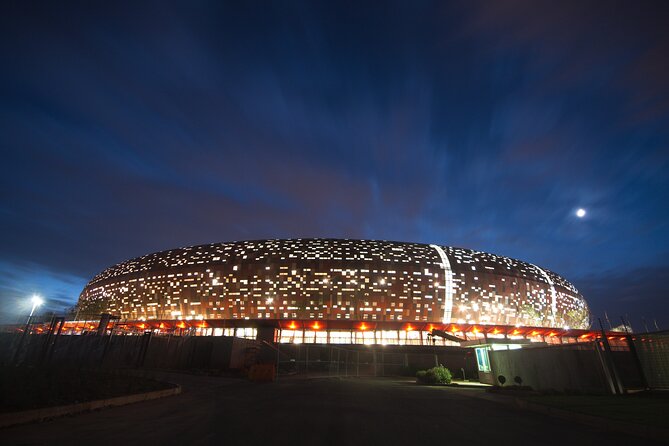
Next comes FNB Stadium, also nicknamed The Gourd for its shape. You are not going inside. You get a quick stop for photos from the outside, about 15 minutes. It sounds brief, and it is, but it still fits the tour’s bigger purpose.
Here is why the stop is not just a sightseeing gimmick: the stadium is linked to major moments in modern South African life. It was the venue for Nelson Mandela’s first Johannesburg speech after his release in 1990. It also hosted the 2010 FIFA World Cup final, with Netherlands vs Spain.
Even if sports are not your main interest, the stadium works as a symbol of change. It reminds you that South Africa’s story is not only about struggle. It is also about public life, national events, and identity built in new ways.
Practical note: because it is an outside-only photo stop, come ready to treat it as a passing highlight, not a long attraction.
Vilakazi Street in Soweto: A Walk Through 1976-Era Memory
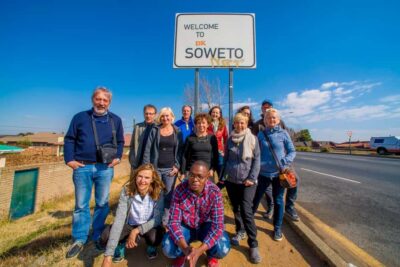
Then you head into Soweto, and that shift is noticeable. From the road, you pass the football stadium site connected to the 2010 World Cup. Once in Soweto, you walk down Vilakazi Street, which is famous because two Nobel Peace Prize winners lived there. The street is also associated with Nelson Mandela and Desmond Tutu, so the walk is history in human scale.
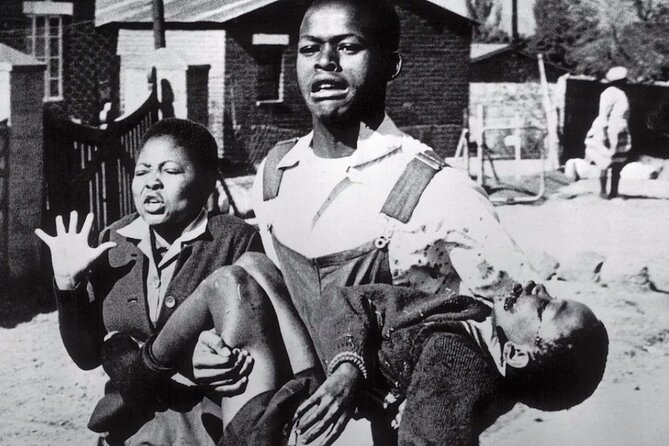
The tour framing ties Vilakazi Street to 1976, the year that strongly influenced the struggle for freedom. That matters because it helps you understand Soweto not as a single tourist zone, but as the site of political awakening and resistance.
You also get time to interact with the area, including craft stalls. If you like browsing handmade items, this is one of the more approachable moments of the day. You also have time for lunch on your own. The tour itself excludes lunch, but this is your window to grab something casual nearby.
This stop is about 1 hour. It feels right for a guided walking experience, especially since you are moving through the neighborhood rather than only standing at a single viewpoint. Wear comfortable shoes, because walking is the main activity here.
Mandela House: A Short, High-Meaning Visit
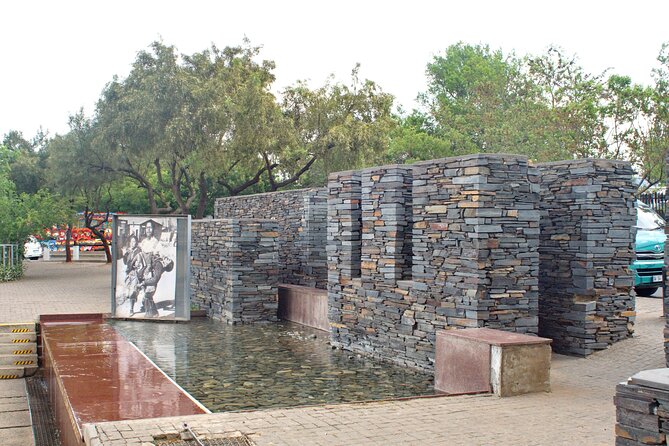
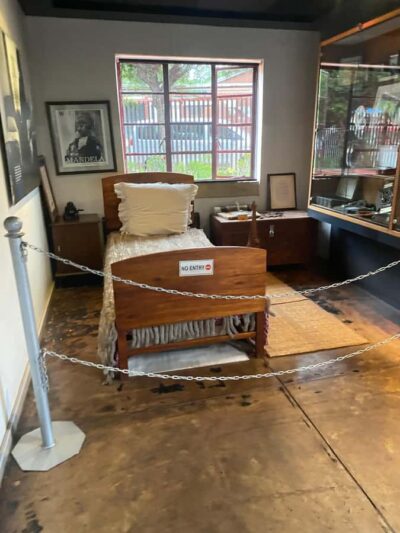
The final core stop in Soweto is Mandela House, located on Vilakazi Street. The visit includes admission and lasts about 20 minutes. That short time is on purpose. It gives you access to a key landmark without eating the day.
What makes the stop powerful is the specific connection to Nelson Mandela’s family life, not just his public political role. You are seeing a home tied directly to the personal side of the man whose name you have been hearing all day. It also reinforces the Nobel Peace Prize link through the Vilakazi Street context, since Desmond Tutu is connected to the street as well.
Because it is a relatively brief visit, I suggest you go in ready to pay attention. If you are the type who likes reading every label slowly, you might feel rushed. A good guide can help you focus on what is most meaningful, and that is where having a strong Spanish-speaking guide helps again.
By the time you leave, the day has moved from architecture and museum storytelling to street-level memory and an iconic home. That arc is one of the tour’s biggest strengths.
Why the Spanish Guides Matter, Irma and Daniela as Examples
A big part of why this tour works is the guide quality. The information you get is not generic. Guides like Irma and Daniela are praised for deep preparation and for making sure you do not miss key points. You also see a pattern: they focus on clarity, not just facts.
One detail that stands out from guide feedback is long-term local experience. Irma is specifically described as having lived in Johannesburg for about two decades, which helps when the guide explains how the city has changed. That local perspective can make the story feel less like a textbook.
Another strong point is adaptability. The tour is designed to run as a complete route, but guides have adjusted based on how much time you have available in Johannesburg. If your trip days are complicated, this flexibility can make a difference.
And yes, safety and punctuality matter. When the day is built around specific museum hours and timed walking, arriving at the right moment changes everything. A guide who keeps things tight helps you enjoy the day instead of worrying about logistics.
Price and Value: What You Get for $131.53 Per Person
At about $131.53 per person, this tour is not a budget-only option, but it can be good value for the day it gives you.
Here’s why:
- Admissions are included for the big time sinks (Constitution Hill, Apartheid Museum, Mandela House). That reduces your mental load and helps you plan.
- Private transportation means you are not spending your time in shared vehicles, and you get a smoother route.
- Hotel pickup and an air-conditioned vehicle help make the 8 hours actually enjoyable rather than tiring.
- The guide is in Spanish, which is a real advantage if you want to understand the context fully.
Lunch is excluded, so you will need to budget for that separately. Also, because this tour is private, it can cost more than a group option. If you are traveling solo or as a couple, it may still feel worth it because the day is tightly structured. If you are a family or a group of friends, check how the group discount applies in practice to see whether it becomes the best value for your specific party size.
Practical Tips for a Strong Day: Timing, Shoes, and Weather
Because your day includes walking in Soweto and substantial indoor museum time, plan like this:
- Bring comfortable walking shoes for the street walk on Vilakazi Street.
- Pack water, especially for the Soweto portion where it can feel more exposed.
- Expect serious subject matter, so carry a small break plan for yourself (even stepping aside for a minute can help).
- Dress for weather, because the experience requires good weather. If poor weather happens, you should expect an alternate date or a full refund.
The day starts at 9:00 am, and the tour runs about 8 hours. Since lunch is excluded, I recommend you treat the Vilakazi Street hour as your chance to eat something simple and keep momentum.
Should You Book This Johannesburg, Soweto, and Apartheid Museum Tour?
I think this is a smart booking if you want Johannesburg to make sense quickly. It is best for first-time visitors, history-minded travelers, and anyone who prefers a structured day with a Spanish guide rather than piecing together transportation and admissions on your own.
I would skip it if you want a light, purely scenic outing. This route takes you through places tied to imprisonment and apartheid brutality, and the tone is serious. Also, if you strongly prefer a long lunch break or a slower pace, the schedule may feel tight because lunch is excluded and the stops are timed.
If you can handle that, you will likely feel like you got real understanding out of your day, not just photos.
FAQ
What is the duration of the Private Tour of Johannesburg, Soweto and Apartheid Museum?
The tour lasts about 8 hours.
Does the tour include hotel pickup?
Yes, pickup is offered and the tour starts at 9:00 am.
Is this a private tour or a shared group tour?
It is private, meaning only your group participates.
Is lunch included in the tour price?
No. Lunch is excluded.
Which stops have admission included?
Admission tickets are included for Constitution Hill Human Rights Precinct, the Apartheid Museum, and Mandela House.
Is there any admission cost for Nelson Mandela Square or Vilakazi Street?
Nelson Mandela Square has free admission, and Vilakazi Street is also listed as admission free.
Does the tour include transportation?
Yes, you get a private, air-conditioned vehicle.
What if the weather is poor?
The experience requires good weather. If it is canceled due to poor weather, you will be offered a different date or a full refund.
Johannesburg, Block by Block
- From Johannesburg: Pilanesberg Nature Reserve Game Safari
- Johannesburg: Hop-On Hop-Off Bus with Optional Soweto Tour
- Soweto /Johannesburg and Apartheid Museum Guided Full Day Tour
- Johannesburg Hop-On Hop-Off City Tour with Soweto Option
- Full Day Ultimate Pilanesberg National Park Safari from Johannesburg or Pretoria
Apartheid History: Other Sites We Have Documented
Soweto: Other Guided Routes
Keep going: the rest of our Johannesburg write-ups
- Soweto Private half day tour
★ 4.5 · 3 reviews - Johannesburg’s Migration History with a local lunch
★ 5.0 · 3 reviews - Johannesburg: Soweto, Apartheid Museum, and Cradle tours
★ 4.7 · 3 reviews - Soweto Apartheid Museum and Lunch
★ 5.0 · 3 reviews - Bathongo Rhino & lion park nature reserve tour
★ 5.0 · 3 reviews - Johannesburg: Elephant and Monkey Sanctuary Half Day Tour
★ 5.0 · 3 reviews
Johannesburg City Tours, compared.
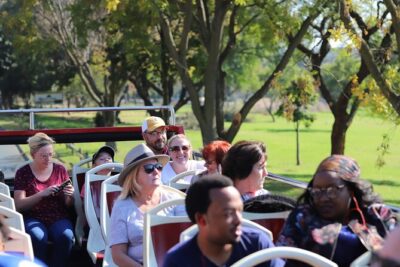 ★ 4.5Johannesburg Hop-On Hop-Off City Tour with Soweto OptionFrom $16768 reviews
 ★ 4.8Johannesburg: Full-Day Tour with Soweto and Apartheid MuseumFrom $104478 reviews
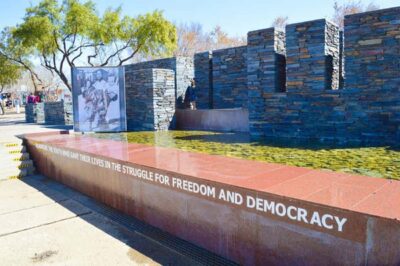 ★ 4.8Johannesburg and Soweto: Half-Day TourFrom $71439 reviews
 ★ 4.6From Johannesburg: Lion & Safari Park Half-Day TourFrom $167384 reviews
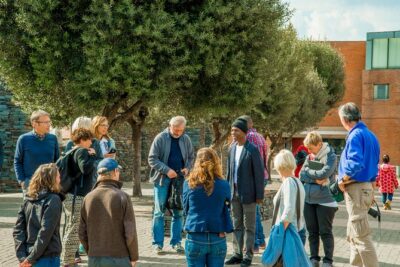 ★ 5.0Ultimate Johannesburg Soweto Experience with Apartheid MuseumFrom $108313 reviews
 ★ 5.0Half Day Lion Park tour from Johannesburg or PretoriaFrom $100274 reviews
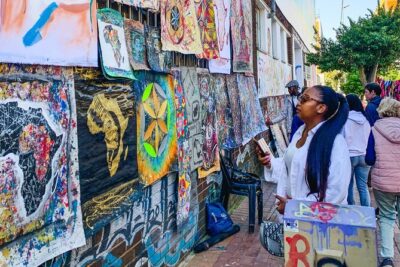 ★ 4.9Johannesburg: Maboneng Street Art & Culture TourFrom $37257 reviews
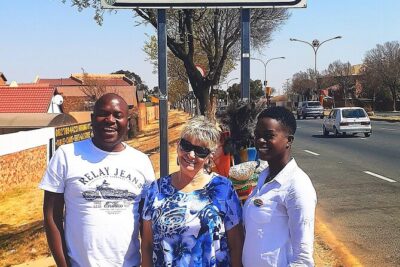 ★ 5.0Johannesburg and Soweto tourFrom $77231 reviews
Browse the lists this tour appears in