
REVIEW · PRETORIA CITY TOURS
Pretoria City Tour
Pretoria turns into a history-and-government slideshow fast. This half-day, 4 to 5 hour city tour in Tshwane helps you connect the dots between the country’s early settler era, today’s leadership, and the human rights story still shaping South Africa. I especially like the mix of big landmarks and real cultural context, plus the fact it runs in a private group format with pickup and an air-conditioned vehicle.
Two things I like a lot: you start with the Voortrekker Monument’s pioneer story, then end at Freedom Park, where the tone gets more reflective and personal. The one thing to consider is that a couple of major stops are not included in the price, so you should plan for extra on-site admission if you want the full experience.
In This Review
- Key highlights you will feel right away
- Pretoria, called Tshwane, and why this 4-5 hour loop makes sense
- Getting there in comfort: pickup, bottled water, and a private group pace
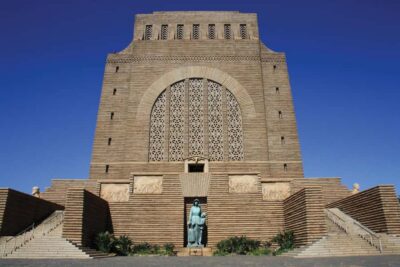
- Stop 1: Voortrekker Monument and the pioneer story you can actually picture
- The Pretoria leadership theme: Presidential Resident and the city’s historic center
- UNISA scale and why Pretoria feels academic
- Nature and old land stories: Groenkloof, Apies River, and Fountains Valley
- Union Buildings from Meintjieskop: government in sandstone and the Mandela moment
- Freedom Park: a memorial you can feel, and a storyline that keeps going
- How the guides shape the whole day: Martin, Lesiba, Lebisa, and personalized focus
- Price and value: what $108.52 gets you for 4-5 hours
- Who should book this Pretoria City Tour, and who might not
- Should you book? My call based on what you’ll experience
- FAQ
- How long is the Pretoria City Tour?
- What is the price per person?
- Is pickup included?
- Is this a private tour or group tour?
- What is included in the tour price?
- Are admission tickets included?
- Is lunch included?
- Is there free cancellation?
- Are service animals allowed?
Key highlights you will feel right away
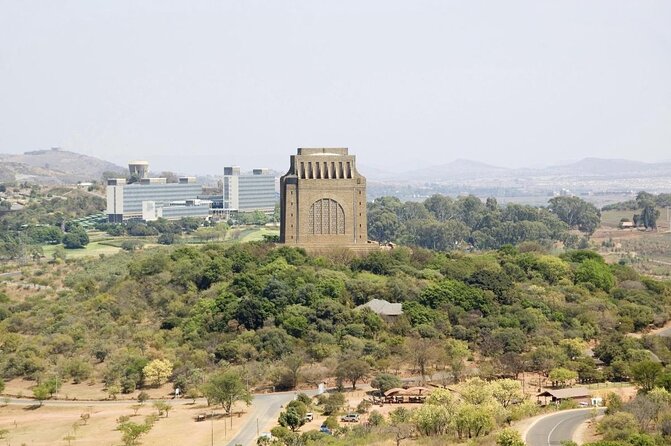
- Voortrekker Monument pioneer storytelling that sets the timeline for everything else
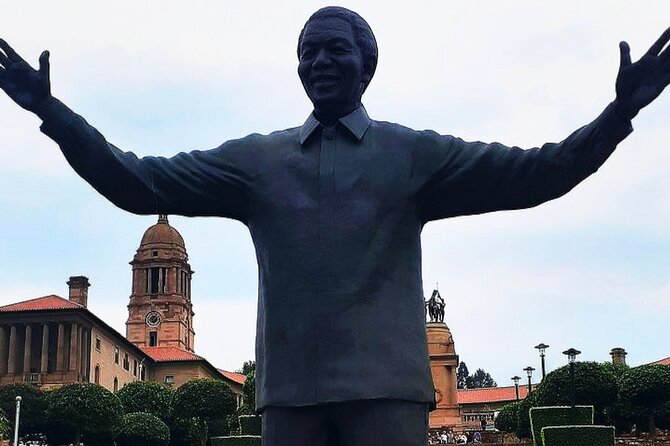
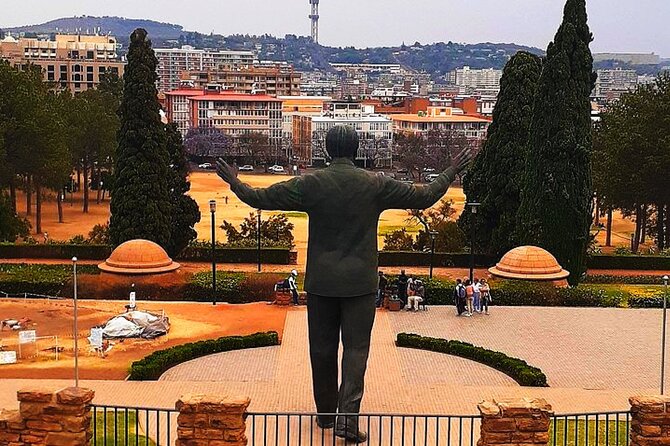
- Union Buildings views from Meintjieskop and a moving stop for the Mandela statue
- Freedom Park memorial approach that links South African conflicts and human rights
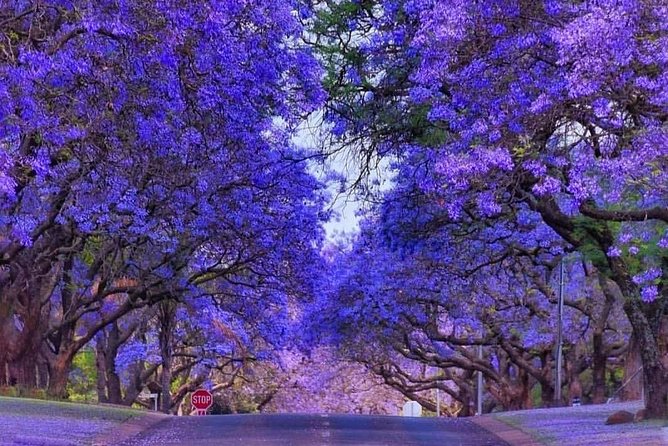
- Jacaranda City vibes in spring, when Tshwane shifts from grey to purple
- Smart pacing for a short day across government, culture, and remembrance
Other days out in Pretoria and Tshwane
- Full Day Ultimate Pilanesberg National Park Safari from Johannesburg or Pretoria★ 4.5 · 718 reviews
- Half Day Lion Park tour from Johannesburg or Pretoria★ 5.0 · 274 reviews
- Half Day Pretoria City Tour from Johannesburg or Pretoria★ 5.0 · 150 reviews
- From Johannesburg: Pretoria Half Day Tour★ 4.5 · 93 reviews
Pretoria, called Tshwane, and why this 4-5 hour loop makes sense
Pretoria is often described as an academic capital, and there is truth to that. With universities, research organizations, and the administrative machinery of government all present, the city has a steady, purposeful feel. You get to see why it’s also nicknamed Jacaranda City, because in spring the streets can go from muted grey to purple as the jacaranda trees flower. Even outside peak season, the city planning and institutional sites help Pretoria feel like more than just a stopover.
What makes this tour practical is the structure. You are not trying to do everything on your own in a half day. Instead, you move from one major theme to the next: early pioneer history, historic civic space, modern education scale, current leadership, then remembrance and human rights. If your time in Johannesburg is limited, this kind of focused route helps you get bearings fast.
Getting there in comfort: pickup, bottled water, and a private group pace
This is set up for convenience from the start. You get pickup offered, private transportation in an air-conditioned vehicle, and bottled water. For me, that matters in Pretoria because your day will include multiple stops with walking and changing viewpoints, and you want a low-friction rhythm.
Also, this is listed as a private tour/activity, meaning only your group participates. That changes the experience. In a small group, your guide can slow down where you want clarity, or speed up if you want more viewpoints and less explanation. Many people appreciate that flexibility, and the guide experience is where this tour seems to score highest.
Stop 1: Voortrekker Monument and the pioneer story you can actually picture
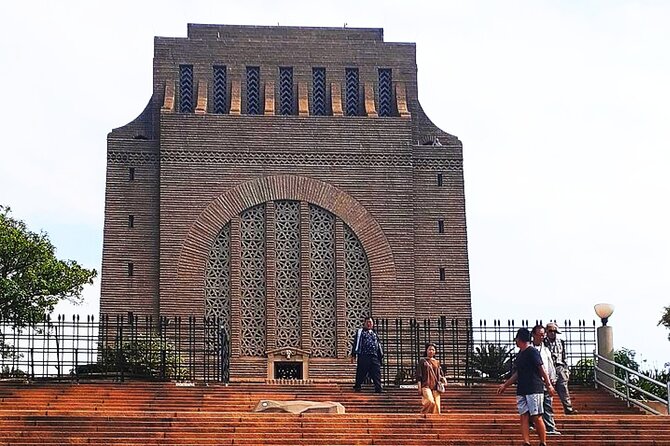
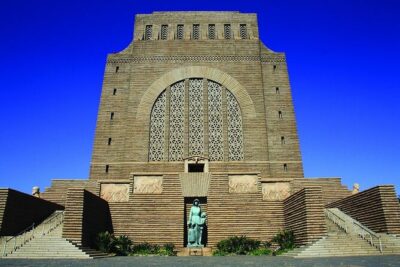
You begin at the Voortrekker Monument, with a guided tour focused on pioneers moving from the Cape into the interior in the 1836 to 1837 era. That timeframe is a key starting point because it explains why later building blocks of South African society developed the way they did.
The monument is also a visual teacher. You are not just hearing dates, you are standing in a space designed to communicate the story. If you’ve ever felt history tours are either too abstract or too heavy, this start often hits a better middle ground, because it frames later locations you’ll see, including government-era symbolism.
One important practical note: admission for this stop is not included, so check what you will pay on site and carry cash or cards as needed. The good news is that this is a big “first impression” stop, and many people say it’s their favorite part of the day because it gives the rest of the tour context.
The Pretoria leadership theme: Presidential Resident and the city’s historic center
After the pioneer start, the tour shifts toward Pretoria’s civic and political identity. You spend time around the Presidential Resident, described as the first in Pretoria to be lit by electricity. That detail is more than trivia. It shows how quickly Pretoria tried to modernize its public life and why the city’s government presence mattered as soon as the administrative role became central.
There is also a house story included that focuses on how people worked with what they had. You’ll hear a fascinating bit called House with a Taste, where milk was used instead of water for mixing the cement, because the cement available at the time was of poor quality. It’s the kind of human, practical fact that makes history feel less like a textbook.
Then you head to Church Square, the historic center of Pretoria. The founder, Marthinus Pretorius, determined that the square should function as both a market place and church yard. Later, it was named for church buildings standing at the center from 1856 to 1905. Even if you are not a big architectural person, the idea of a town square doing daily life and community work is easy to connect to how cities grew.
Church Square is free to visit, so you can take a breath here without worrying about extra fees.
Other city days, orientation to deep dive
UNISA scale and why Pretoria feels academic
At some point during the tour, you get a window into the education powerhouse called UNISA, the University of South Africa. This is not a small campus story. UNISA is described as the largest university system in South Africa and Africa by enrollment, drawing a third of all higher education students in South Africa.
The scale is staggering: UNISA is over 300,000 students, including international students from 130 countries worldwide. It was founded in 1873 as the University of the Cape of Good Hope, began life as an examining agency for Oxford and Cambridge, and later became a distance education university in 1946.
If you’re wondering why this matters on a city tour, here’s the practical angle: Pretoria’s identity isn’t only about politics and monuments. It also has a constant “thinking city” energy. You’ll feel it in the way neighborhoods and institutions are laid out, and in the fact that big national roles are not the only roles here.
If you like learning how modern South Africa works, UNISA is a great reminder that education is one of the country’s long-term engines.
Nature and old land stories: Groenkloof, Apies River, and Fountains Valley
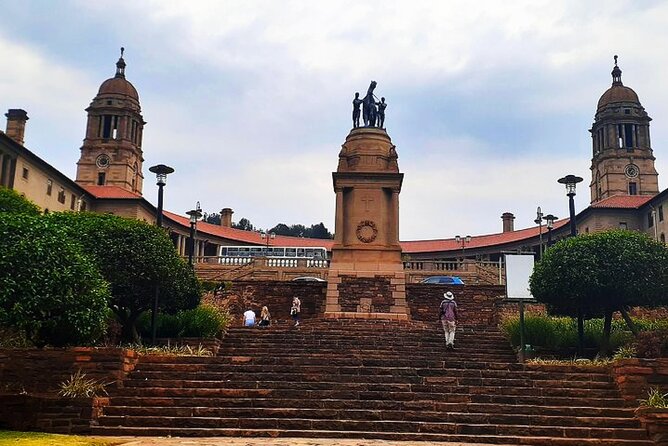
Pretoria is often marketed as government and monuments, but the tour also brings nature into the mix. You’ll hear about a nature reserve proclaimed by President Paul Kruger on 1 February 1895. That reserve is 60 hectares, and together with the contiguous Groenkloof Nature Reserve, it’s described as the oldest nature reserve on the African continent.
The tour’s nature references also include the Apies River flowing through the resort area and two natural water sources in the region. Places like Fountains Valley are described as recreational spaces with a caravan park, swimming pool, lapa, playground, and barbecue facilities. The point is not that you are hiking for miles. It’s that you see how Tshwane has green space integrated into daily life around the administrative city core.
There are also land-and-people stories near the resort, including historic ruins of the house of Lucas Cornelius Bronkhorst (1795 to 1875). His family was part of Hendrik Potgieter’s trek party during the Great Trek, and they were among the first owners of farms in the district where Pretoria later developed. That kind of detail links the city’s later administrative role back to older settlement patterns.
Even if you don’t catch every detail, you leave with an expanded mental map of Pretoria as both a governance center and a place with older roots and natural settings.
Union Buildings from Meintjieskop: government in sandstone and the Mandela moment
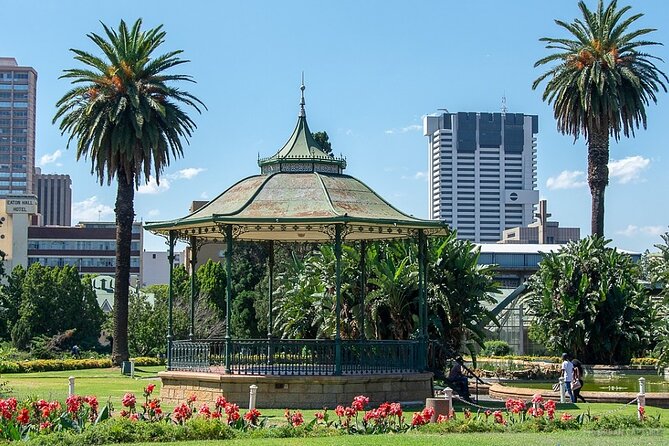
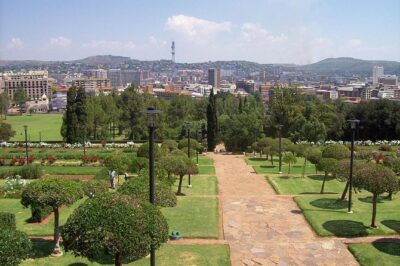
Next comes one of the most important Pretoria landmarks: the Union Buildings. They sit atop Meintjieskop at the northern end of Arcadia, which gives you that signature “you can see the city from here” effect.
These are South African national heritage buildings and the official seat of government, housing the offices of the President of South Africa. They were designed by Sir Herbert Baker, and the design note also points out Baker’s collaboration with Sir Edwin Lutyens, including influence tied to New Delhi’s major government buildings under the British Raj. Even if you only skim that architectural thread, you get the message: Pretoria’s leadership space was meant to look permanent and authoritative.
The buildings are made from light sandstone, and that material matters in the way the site looks in daylight. It can feel warmer and brighter than the heavy, dark-stone style you might expect.
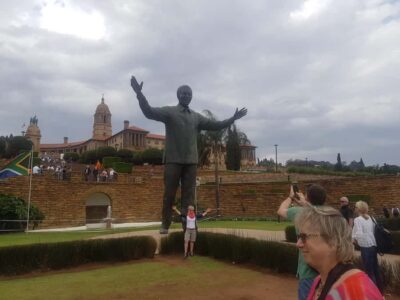
One extra emotional note from the day: many visitors feel something during the Mandela statue stop. If you’re the type who appreciates seeing public memorials in context, this is where your tour gets quietly powerful.
Union Buildings is listed as free to visit, which is a nice bonus. You get a major national site without paying an extra admission fee.
Freedom Park: a memorial you can feel, and a storyline that keeps going
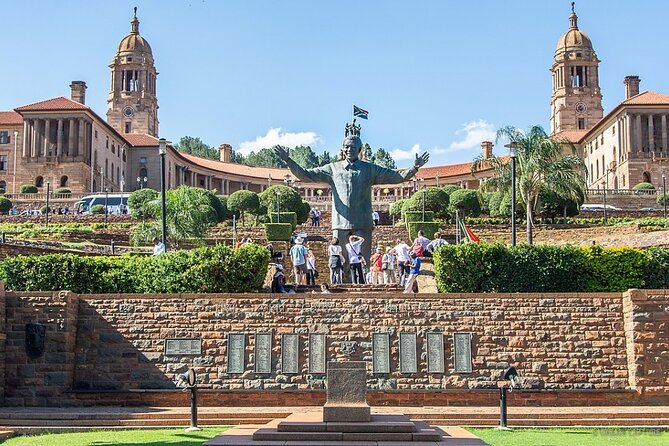
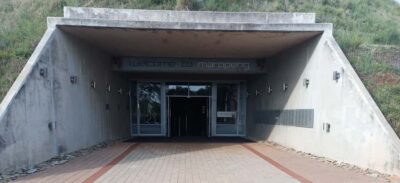
You end at Freedom Park, and it’s a different tone than earlier stops. Freedom Park is described as a heritage site and museum, with memorial sites linked by the themes of freedom and human rights. It sits on Salvokop Hill and is dedicated to remembering those who fought for freedom and human rights in South Africa.
The park includes a memorial listing names of those killed across the South African Wars, World War I, World War II, and during the apartheid era. That span matters. It turns history into a longer, fuller timeline rather than a single event you can file away.
Admission for Freedom Park is not included, so factor that into your planning. This is also a stop where pacing matters. If your guide moves you through too fast, you lose what makes the site meaningful. In a private group, you’re more likely to get a pace that matches your comfort level.
If you want a tour that teaches you the political story and the human cost at the same time, Freedom Park is the best capstone on this route.
How the guides shape the whole day: Martin, Lesiba, Lebisa, and personalized focus
This is one of those rare tours where the guide quality is a core part of the value. People highlight guides named Martin and Lesiba as particularly strong, with praise for how the guide turns facts into stories without making it feel like a lecture.
A few themes show up in guide behavior that you should look for in any “history and landmarks” day:
- the guide takes time and doesn’t rush your questions
- the guide can balance Afrikaans history and broader South African context
- the guide can tailor the tour toward what you care about most
That tailoring comes through in comments about focusing on Boers and the development of Afrikaans. It’s a good reminder that Pretoria’s story can be told from multiple angles. If you have a personal interest in Afrikaner history, language development, or how different eras connect, this tour seems set up to handle that respectfully.
Also, there are mentions of good communication before pickup and even extra help near the airport at the end of a trip. You should still plan your own navigation and timing, but it’s a positive sign that the guide is paying attention to practical needs.
Price and value: what $108.52 gets you for 4-5 hours
At $108.52 per person for 4 to 5 hours, the price is less about “seeing a few photos” and more about paying for a guided, structured route with transport.
Here’s what you get that makes the value more real:
- air-conditioned vehicle and private transportation
- pickup offered
- bottled water included
- guided interpretation at major sites
- the private-group format, which reduces waiting and increases flexibility
- mobile ticket support
What you do not get is also important:
- admission is not included for some key stops (notably Voortrekker Monument and Freedom Park)
- lunch is not included
So your best move is simple: treat this as a history and landmark tour that runs on guidance and transport, not as a fully all-in “no extra spending” bundle. If you’re the type who hates the stress of negotiating tickets and timing between scattered sites, paying for this structure can be worth it.
A small booking tip: the tour is described as being commonly booked about 38 days in advance. If your travel dates are fixed, booking earlier tends to give you more control over timing and guide availability.
Who should book this Pretoria City Tour, and who might not
This tour is a good fit if you:
- want a straightforward Pretoria introduction without a full-day commitment
- care about connecting South African history to visible places
- like guided explanations, especially for pioneer history and human rights remembrance
- prefer private pacing with pickup and a vehicle waiting for you
It may not be the best fit if you:
- only want casual sightseeing with no history context
- dislike memorial and remembrance sites at the end of a day
- want everything fully included with no on-site admissions
Also, Pretoria is an administrative and university-centered city. If you’re expecting a beach-town vibe or a nightlife-heavy feel, you might find the atmosphere quieter than some cities. That isn’t a flaw. It’s just the type of place you’re touring.
Should you book? My call based on what you’ll experience
Yes, I’d book it if your goal is to understand Pretoria quickly and thoughtfully. The biggest strengths are the way the day moves from the Voortrekker Monument’s pioneer story to Union Buildings’ national role, then to Freedom Park’s human rights memorial. That arc is clear, and it’s exactly what you want from a short, guided tour.
I’d also book it if you appreciate guides who can tailor the day, since Pretoria’s history has different lenses, and a good guide helps you choose which lens you want most.
If you’re okay paying a couple of on-site admissions and you want a calm, guided structure rather than independent wandering, this tour is a strong value.
FAQ
How long is the Pretoria City Tour?
The tour lasts about 4 to 5 hours.
What is the price per person?
The price is $108.52 per person.
Is pickup included?
Pickup is offered, and the tour includes private transportation.
Is this a private tour or group tour?
This is a private tour/activity, meaning only your group will participate.
What is included in the tour price?
Included items are an air-conditioned vehicle, private transportation, and bottled water.
Are admission tickets included?
Some admissions are not included. The Voortrekker Monument and Freedom Park are listed as admission tickets not included, while Church Square and Union Buildings are listed as free.
Is lunch included?
Lunch is not included. A lunch or single drink option can be added to a full day tour, but lunch is not part of this experience as described.
Is there free cancellation?
Yes. You can cancel up to 24 hours in advance for a full refund.
Are service animals allowed?
Service animals are allowed.
Another Day in Johannesburg, Planned Out
Pretoria: More on the Itinerary
Keep going: the rest of our Johannesburg write-ups
- Soweto Private half day tour
★ 4.5 · 3 reviews - Johannesburg’s Migration History with a local lunch
★ 5.0 · 3 reviews - Johannesburg: Soweto, Apartheid Museum, and Cradle tours
★ 4.7 · 3 reviews - Soweto Apartheid Museum and Lunch
★ 5.0 · 3 reviews - Bathongo Rhino & lion park nature reserve tour
★ 5.0 · 3 reviews - Johannesburg: Elephant and Monkey Sanctuary Half Day Tour
★ 5.0 · 3 reviews
Pretoria City Tours, compared.
 ★ 5.0Half Day Lion Park tour from Johannesburg or PretoriaFrom $100274 reviews
 ★ 4.7Johannesburg: Pretoria and Cullinan Diamond Mine TourFrom $122165 reviews
 ★ 5.0Half Day Pretoria City Tour from Johannesburg or PretoriaFrom $83150 reviews
 ★ 4.5From Johannesburg: Pretoria Half Day TourFrom $9093 reviews
 ★ 5.0Private Half Day Pretoria City Tour from Johannesburg or pretoriaFrom $10866 reviews
 ★ 4.7Pretoria/Sandton: Cradle of Humankind & Sterkfontein CavesFrom $10664 reviews
 ★ 4.5Pretoria: Half-Day City TourFrom $9660 reviews
 ★ 4.5Pretoria: Cullinan Surface Diamond Mine Walking TourFrom $1258 reviews
Browse the lists this tour appears in