
REVIEW · KRUGER NATIONAL PARK SAFARIS
Kruger National Park Full Day Safari Tour
Dawn in Kruger feels like a reset button. This full-day safari is built around an early park entry, an open safari vehicle, and a guide who helps you read the bush so wildlife spotting feels like smart work, not luck.
I especially like the morning timing and the way the day is paced with real stops for breakfast and lunch. You also get practical add-ons that matter in the field, like complimentary binoculars, bottled water, coffee or tea, and rain ponchos plus blankets when the weather flips fast.
The main thing to plan for is that park access fees are not included, and most meals are on your own tab once you reach the camps. Also, the Big Five hunt is exciting, but sightings are never guaranteed, so expect a day that can swing from quiet to wild without warning.
In This Review
- Key points before you go
- Entering Kruger right after opening: why the morning matters
- Open safari vehicle comfort: blankets, ponchos, and photo-friendly views
- The guide who turns sightings into understanding
- Breakfast stop timing: fueling up before the real hunt
- The Big Five search strategy: scanning, stopping, and reading signs
- Lunch at Skukuza: a camp break that still keeps the story going
- Timing and duration: how the day usually feels
- What to pack for Kruger heat, sun, and surprise storms
- Price and value: what $215.52 really covers
- Who this safari is best for
- Small tips that make a big difference on the day
- Should you book this Kruger full-day safari?
- FAQ
- How long is the Kruger National Park full-day safari?
- What time does the tour start?
- Are the park entrance and conservation fees included?
- What’s included in the tour price?
- Are breakfast and lunch included?
- What should I wear for Kruger?
- Is the safari private and does it require a minimum group size?
- Can children join?
Key points before you go
- Early entry: you roll into the gates shortly after opening, timed for better wildlife activity
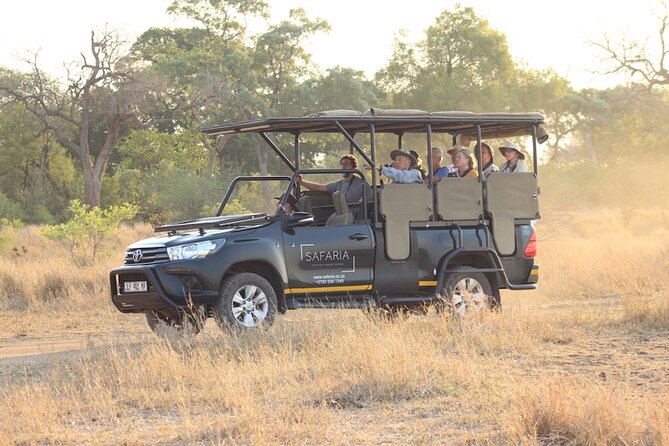
- Open safari vehicle: great for photos, and you get blankets and waterproof ponchos for comfort
- Big Five focus: the hunt drives the route, not a check-the-box schedule
- Binoculars included: they hand you gear so you can scan without scrambling for your own
- Andrew-style guiding energy: in the guide profiles shared, Andrew is praised for answering lots of questions and linking animals to birds, flora, history, and geology
- Family-friendly minimum age: children 3 and up are welcome, as long as an adult comes along
Other Kruger trips, from half days to full weeks
- Hazyview: Private Full-Day Guided Kruger Safari★ 4.9 · 69 reviews
- Full-Day Shared Kruger National Park Safari from Hoedspruit★ 5.0 · 46 reviews
- 3 Night & 4 Day Private Kruger Park Safari★ 5.0 · 23 reviews
- Kruger Park – Full day – Private safari vehicle★ 5.0 · 23 reviews
Entering Kruger right after opening: why the morning matters
If you want more than a photo safari, you want the hours when animals are moving and temperatures are kinder. This trip starts early, with the park gates opened shortly after, and you are set up to enter almost right away. In summer months, you’re greeted at about 05h30, and in winter months it shifts to 06h15, with entry shortly after gate opening (around 05h45 in summer and 06h15 in winter).
That timing matters because Kruger’s wildlife rhythm is tied to heat and light. Early morning tends to bring more active behavior, especially for herbivores, which in turn draws predators. Even if you do not see every highlight species, you are far more likely to catch the kind of behaviors that turn a drive into a story: feeding, resting in shade near water, or moving along clear trails where a guide can predict where to scan next.
This is also a good choice if your South Africa trip is tight on days. You pack a full Kruger experience into one outing, without needing to manage the drive planning yourself.
Open safari vehicle comfort: blankets, ponchos, and photo-friendly views
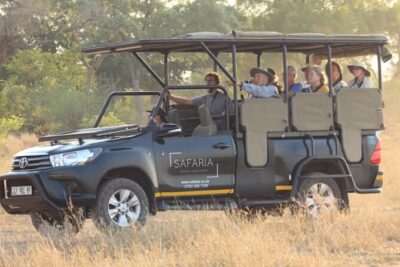
The vehicle setup is a big deal here. You ride in an open safari vehicle, which means less barrier between you and the action. For wildlife spotting, that translates into easier sight lines. For photography, it means more natural angles and less glare compared to sealed windows.
Now for the part people forget: open vehicles also expose you to weather. Kruger can change quickly, and this tour covers you with blankets and rain ponchos on board. They also supply bottled water, plus coffee or tea, so you can stay alert without constantly buying snacks.
Practical tip: even with blankets and ponchos, wear layers you can adjust fast. Early morning can feel cool, then you get heat, then you might get a thunder shower later. You’ll be happiest if you dress like you’re going on a long hike with a weather twist.
The guide who turns sightings into understanding
A safari can feel magical and random, or it can feel like you’re learning the system. The difference is the bush guide. This tour runs with a professional guide who explains what you’re seeing, how the area works, and how wildlife relates to food, water, and cover.
In the guide profiles you’ll see associated with this experience, Andrew comes up again and again for wide-ranging commentary. People highlight his ability to connect fauna and flora, and also talk about birds, history, and geology. That mix matters because Kruger is not just about animals. The “why” behind animal behavior often comes from understanding the ground they stand on, the plants they use, and the water patterns that shape movement.
You also get real interaction time. The day isn’t only a one-way lecture. Expect frequent scanning, short explanations, and plenty of questions. If you like to know what you’re looking at before you take the shot, this kind of guiding style fits well.
Breakfast stop timing: fueling up before the real hunt
After the early park entry window, there’s a planned breakfast stop between about 08h30 and 09h15. You’ll head toward one of the camps for the meal. The key detail is that breakfast is not included in the tour price, so you will pay for it at the time.
Why it still works: this break helps you reset without losing too much prime morning drive time. Also, getting into camp briefly can give you a clearer sense of the area, and it’s a chance to cool off, stretch, and regroup. If you’re with kids, breakfast is a practical “battery recharge” before the second half.
Small planning note: bring some cash or card for meals since they are on your own account. And if you pack snacks from outside the park, check your rules first, but having a plan for small bites can keep the day smoother.
Other parks and reserves on the map
The Big Five search strategy: scanning, stopping, and reading signs
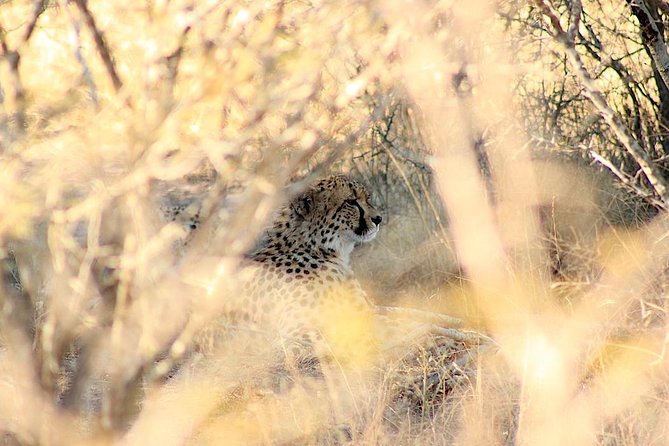
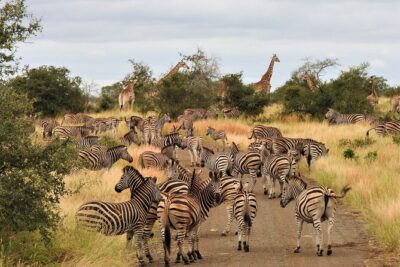
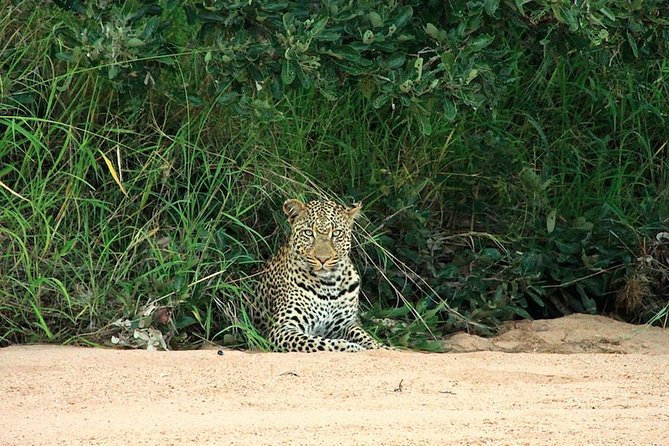
The heart of the day is the game drive in pursuit of the Big Five. The big idea is that the guide is guiding your attention. Instead of just driving, you’ll pause for sightings, interpret tracks or calls when appropriate, and follow the cues that wildlife gives off.
You’ll also have complimentary binoculars, so you can actually use those pauses. Binoculars change everything. Without them, you might spot motion but not be sure what you are seeing. With them, you can confirm species, notice body positions, and spot smaller clues like birds foraging or insects drawing attention from predators.
Expect a rhythm that alternates between scanning and waiting. That’s normal. Wildlife does not hold a schedule, and the best sightings often come when you slow down enough to see what’s already there. The tour gives you an ideal environment for that patience: early entry, a guide who knows where to look, and open vehicle sight lines.
Lunch at Skukuza: a camp break that still keeps the story going
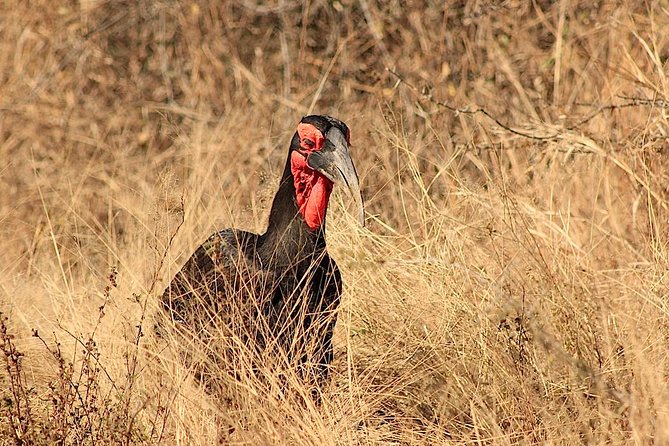
By 12h00, you stop again for lunch. It’s usually at Skukuza, one of Kruger’s well-known rest camps. Like breakfast, lunch is typically on your own account.
This camp break is more than a meal stop. Camps are where the safari experience becomes grounded. You can see a different pace of life, plus there’s usually time to stretch and regroup. If your guide has been talking about the area throughout the morning, lunch is a natural point to take those connections and apply them to what you’ve seen so far.
If you want the day to feel smoother, plan your lunch order quickly. You’ll have more energy for the afternoon search if you don’t spend the whole break ordering and waiting.
Timing and duration: how the day usually feels
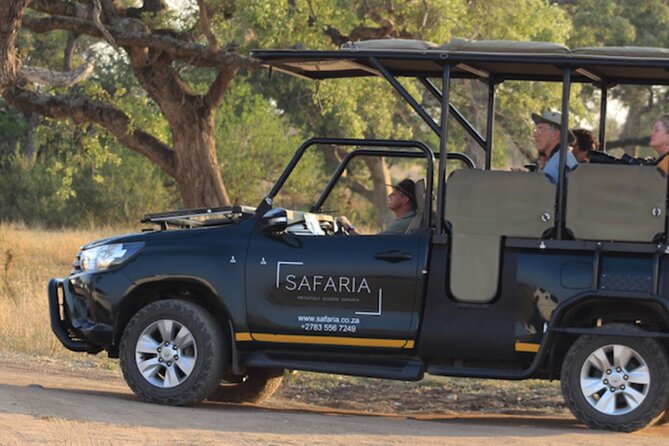
The trip runs about 8 to 10 hours. With an early start, that means you likely feel like you’ve had a full adventure, not just a long drive. You enter shortly after opening, you get breakfast around late morning, lunch around midday, and then you keep going until you’re back at the meeting point.
The best way to think about it: you are getting the safari day arc, not an endless loop. You’ll start in that prime light, then move into warmer hours, then finish back through the park with another chance for wildlife activity later in the day.
What to pack for Kruger heat, sun, and surprise storms
Kruger is not gentle on clothing choices. This tour specifically suggests dull darker shades so you blend with the vehicle and do not visually pop when watching for animals. It also recommends a hat and sunscreen, because midday temperatures can reach upward of 40 degrees Celsius in summer. In winter months, conditions tend to be milder, with average temperatures around 20 to 25 degrees Celsius, but mornings and late afternoons can feel colder on an open vehicle.
Your packing list, based on what’s most practical here:
- Hat and sunscreen for sun protection
- Comfortable shoes you can wear for long sitting and occasional walking in camps
- Sunglasses
- Summer: light layers with sun protection, plus a breathable shirt
- Winter: long pants, a jacket, and a beanie for the open-vehicle chill
You do not need to pack everything yourself for weather. The vehicles carry blankets and waterproof ponchos, but clothing still makes the day easier. If you wait until you feel cold or overheated to react, it costs you time and comfort.
Also, bring your camera. Open safari vehicles are built for photos, and you’ll want something ready for fast, unplanned moments.
Price and value: what $215.52 really covers
At $215.52 per person, this is positioned as a full-day safari experience with guided driving, gear, and comfort items included. The guide, the open safari vehicle, bottled water, coffee or tea, binoculars, rain ponchos and blankets, and even a sightings journal are part of what you are paying for.
But the fine print can hit your budget if you miss it: the Kruger National Park Conservation and Entrance fee is not included. The KNP international fee is R400 per person. On top of that, meals like breakfast and lunch are for your own account.
So what is the real value? You are buying time and expertise. For a lot of visitors, that’s the point. Instead of spending your day figuring out routes and guessing where to stop, you have a guide managing the wildlife hunt, and you have the gear to make scanning efficient. The open vehicle plus binoculars are not a small bonus either, because they directly impact your chance to spot and identify animals.
If you compare options, do not just compare the advertised price. Compare what you still have to pay for at the park gate and during camp stops.
Who this safari is best for
This tour is a strong fit if:
- You have limited time and want a full-day Kruger experience
- You care about learning, not only spotting
- You want the best chance for sightings by starting early
- You like photography and want an open vehicle view
It may be less ideal if:
- You hate early starts and want a late-morning start
- You are sensitive to long hours in the vehicle during warm weather
- You prefer that meals be fully included, since breakfast and lunch are on your own account
Family note: children 3 years and older can join, but they must be accompanied by an adult. This can work well for families who keep expectations realistic and understand that wildlife timing is not controllable.
This is also a private tour/activity, meaning only your group participates. That can be great for families or friends who want a more personal pace, as long as your group meets the minimum of two people per booking.
Small tips that make a big difference on the day
1) Dress for temperature swings, not for one weather forecast. Kruger changes fast. Layers win.
2) Use the binoculars often. Early sightings can become clearer with a quick scan.
3) Ask your guide questions while you’re stopped. That is when you’ll get the most useful answers.
4) Pace your meal break. A fast lunch helps you rejoin the hunt with energy.
5) Plan for the entrance fee. Put it in your money math so there are no surprises at the gate.
Should you book this Kruger full-day safari?
I’d book it if you want a structured Kruger day with an early start, strong guiding, and the practical field comfort that makes open-vehicle safari tolerable. The price feels reasonable for what’s included, especially the professional bush guide, open vehicle, binoculars, and weather gear.
I would hesitate if you are counting on meals being included or if you do not want to budget separately for the park entrance fee. Also, keep in mind this experience is non-refundable and cannot be changed, so book it only when your dates are solid.
FAQ
How long is the Kruger National Park full-day safari?
It runs about 8 to 10 hours.
What time does the tour start?
The start time is listed as 6:00 am, and the park is entered shortly after opening (timing differs between summer and winter).
Are the park entrance and conservation fees included?
No. The Kruger National Park conservation and entrance fee is excluded, and the KNP international fee is R400 per person.
What’s included in the tour price?
You get a professional bush guide with an open safari vehicle, blankets and rain ponchos on the vehicle, bottled water, coffee and/or tea, complimentary binoculars, and a safari sightings journal.
Are breakfast and lunch included?
No. Breakfast and lunch stops are part of the day, but meals are for your own account.
What should I wear for Kruger?
Wear cool functional attire in dull darker shades. Bring a hat and sunscreen. Summer can reach around 40 degrees Celsius, and winter is cooler early and late in the day, so layers are recommended.
Is the safari private and does it require a minimum group size?
Yes, it is private, and the minimum is two people per booking.
Can children join?
Yes, children age 3 and older are welcome, and they must be accompanied by an adult.
Safari Options Across Kruger National Park
Parks and Reserves in Kruger National Park
Kruger: More Ways Into the Park
Keep going: the rest of our Kruger National Park write-ups
- Sunset Game Drive in Big5 Reserve
★ 5.0 · 3 reviews - 4 Day Greater Kruger Kapama Game Lodge Safari with Panorama Route Journey
★ 5.0 · 3 reviews - From Johannesburg: Kruger National Park 5-Day Luxury Safari
★ 4.3 · 3 reviews - Kruger National Park: Wildlife-Watching Safari
★ 5.0 · 3 reviews - Johannesburg: 6-Day Luxury Kruger National Park Safari
★ 4.8 · 5 reviews - Sunrise Game Drive in Big5 Reserve
★ 5.0 · 6 reviews
Kruger National Park Safaris, compared.
 ★ 5.0Kruger National Park Full Day Private safariFrom $158799 reviews
 ★ 5.0Kruger National Park – Private full day Safari trip.From $166347 reviews
 ★ 4.8From Hazyview: Kruger National Park Full-Day SafariFrom $105205 reviews
 ★ 4.5From Johannesburg: 3-Day Budget Tent Kruger Park SafariFrom $653163 reviews
 ★ 4.6Kruger National Park: Full-Day Game Drive with PickupFrom $109136 reviews
 ★ 4.9Kruger National Park: Full-Day Private Safari With PickupFrom $280122 reviews
 ★ 4.7Marloth Park: Kruger National Park Safari Game DrivesFrom $61115 reviews
 ★ 5.0Kruger National Park – Private Sunrise Half day Safari trip.From $16397 reviews
Browse the lists this tour appears in