
REVIEW · STELLENBOSCH WINE TOURS
Jonkershoek Nature Reserve: Guided Panorama Trail Hike
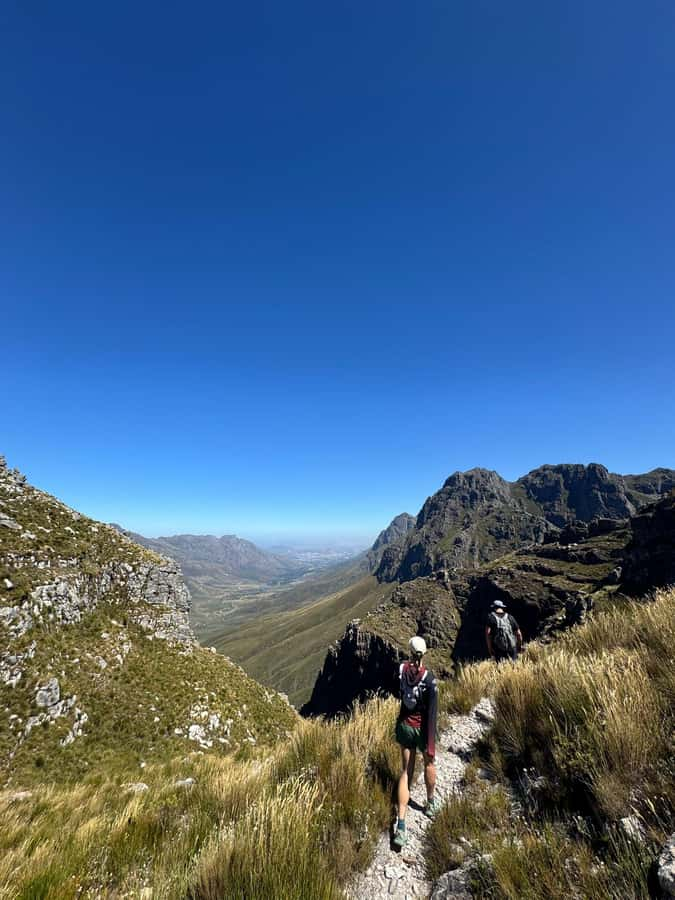
Jonkershoek’s Panorama Trail is a serious day hike. I especially love the steep 1,000 m climb and the big views over the Jonkershoek valley and Berg River Saddle. The tradeoff is simple: this is rugged, rocky, and demanding, so you need good fitness, proper boots, and enough water.
You’ll keep things manageable with a small group (max 6) and an expert mountain guide. You meet at the gate, then you drive a short gravel stretch before the climb starts, with a safety briefing and a pace that can be adjusted in real time.
Key points
- 1,000 m of elevation gain in a single day, with rewarding sightlines once you’re on the ridge
- 14 km circular route that keeps the scenery changing instead of repeating itself
- Protea slopes, grassy ridges, and craggy cliffs that make photos and quiet moments both easy to find
- Berg River Saddle and Assegaibos Kloof Valley viewpoints that are the payoff sections
- Small group pace with a guide (English or German), including route guidance and safety stops
- Bring at least 2.5 L of water, because you will earn every viewpoint
In This Review
- Jonkershoek Panorama Trail, the real deal for active hikers
- Meeting at the gate, then driving in for the right start
- The climb: steep gully up to the ridge (where you feel it)
- Panorama time: sweeping views once the ridge opens up
- Berg River Saddle and Assegaibos Kloof Valley, the best payoff
- Waterfalls and clear streams, but plan your stops smart
- Duration, pace, and what timing means for you
- What to bring, so you don’t spend the hike managing problems
- Price and value at about $112 per person
- Who should book this Panorama Trail hike, and who shouldn’t
- Should you book this Jonkershoek guided hike?
- FAQ
- How long is the Jonkershoek Panorama Trail hike?
- What is the difficulty level?
- What distance do we hike?
- What should I bring?
- Where do we meet, and how do we get to the trail start?
- What language is the guide?
- Can I cancel, and is payment flexible?
Jonkershoek Panorama Trail, the real deal for active hikers
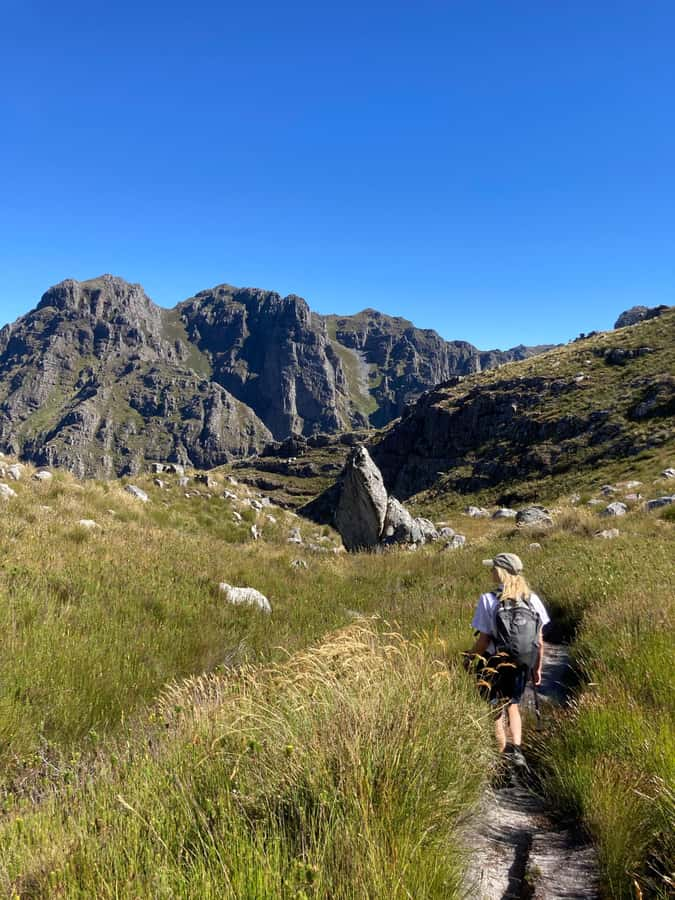
Jonkershoek Nature Reserve near Stellenbosch gives you what most people mean by a mountain day: sustained effort, rocky footing, and wide-open views that make the work feel worth it. The Panorama Trail is a guided 14 km circular hike with a climb of over 1,000 m, which is why it’s consistently rated as one of the top day hikes in South Africa.
What I like most is the way the terrain shifts as you go. You start in the valley, then you move from lower slopes into steeper, rockier climbing. Once you reach the high ground, you get broad panoramas across the Jonkershoek valley, the surrounding peaks, and the Berg River region. If you’re the type who enjoys reading a hike by the changing ground under your feet, this one delivers.
The guidance matters here. You’re not just walking a flat path with a pretty view at the end. You’re tackling gully-style climbs, steep sections, and exposed drop-offs in places, so a good guide helps you stay in control, keep a sustainable rhythm, and get the timing right for the best overlooks.
More Stellenbosch cellars, tasted and written up
- Stellenbosch: Guided Historical Walking Tour★ 4.7 · 283 reviews
- Stellenbosch: Historical Bike Tour & Wine Tasting★ 4.9 · 248 reviews
- Full Day Afrivista Wine Tours from Stellenbosch★ 5.0 · 238 reviews
- From Stellenbosch: Hop-On Hop-Off Wine Tour Southern Route★ 4.7 · 105 reviews
Meeting at the gate, then driving in for the right start
The tour starts at the gate of Jonkershoek Nature Reserve. From there, you drive about 5 km on a gravel road to the trail start. Depending on the setup, you might go in your own vehicle or in the guide’s vehicle, but either way, you get to the real trail without losing half the morning to transfers.
Before you start climbing, you’ll get a route and safety briefing. That’s not just admin. On a steep hike, a few practical details can save you from turning your first hour into a slip-and-slide warmup. The guide also sets expectations about pacing and rest stops, which is helpful if you’re hiking for views rather than for suffering.
Small group size also changes the feel. With a group limited to 6 participants, you’re less likely to get bunched up on narrow rocky sections, and it’s easier for the guide to check in if someone needs a slower rhythm. If you hike best when you’re not constantly weaving around strangers, this format tends to fit.
The climb: steep gully up to the ridge (where you feel it)
The hike begins with a steady climb that quickly turns into a steep, rugged ascent up a rocky gully. This is the heart of the Panorama Trail. The elevation gain of over 1,000 m happens in a relatively short stretch, so you’ll feel the effort quickly.
Here’s the practical takeaway: you’re not going to power up this like a gym treadmill. You’ll do better by letting the guide set a safe, sustainable pace. Expect regular rest stops, and treat them as part of the climb, not a break from it. On a route like this, pacing is the difference between enjoying the scenery and simply grinding through it.
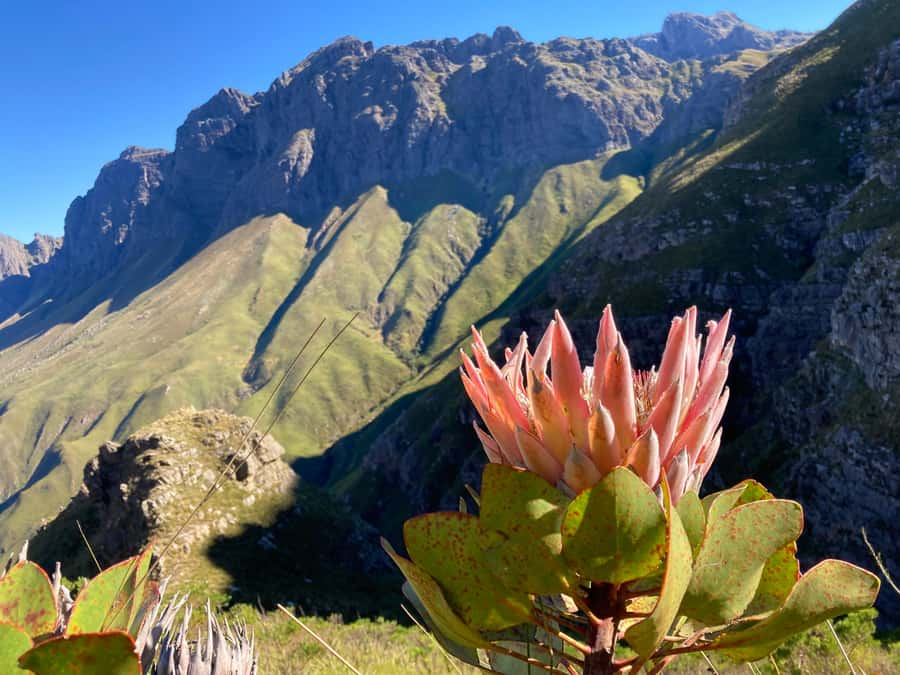
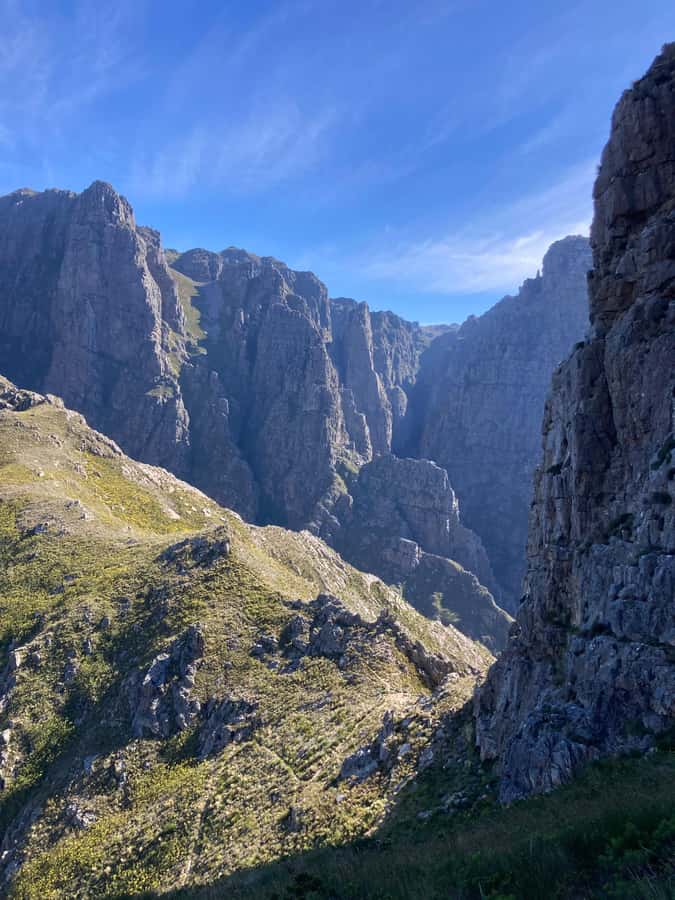
As you move higher, the vegetation and the feeling of the hike shift. You’ll see protea-covered slopes, grassy ridges, and craggy cliffy sections. That mix is one reason people love this trail so much: you can look up and see peaks and down and notice the plant textures changing, from fynbos-type growth to more rugged alpine-style habitat in the higher areas.
If you’re worried about heights, this is also where you should be honest with yourself. Some parts are steep enough to trigger that stomach-float feeling. The guide will help you move safely, but fear of heights is still a real factor for this hike.
Panorama time: sweeping views once the ridge opens up
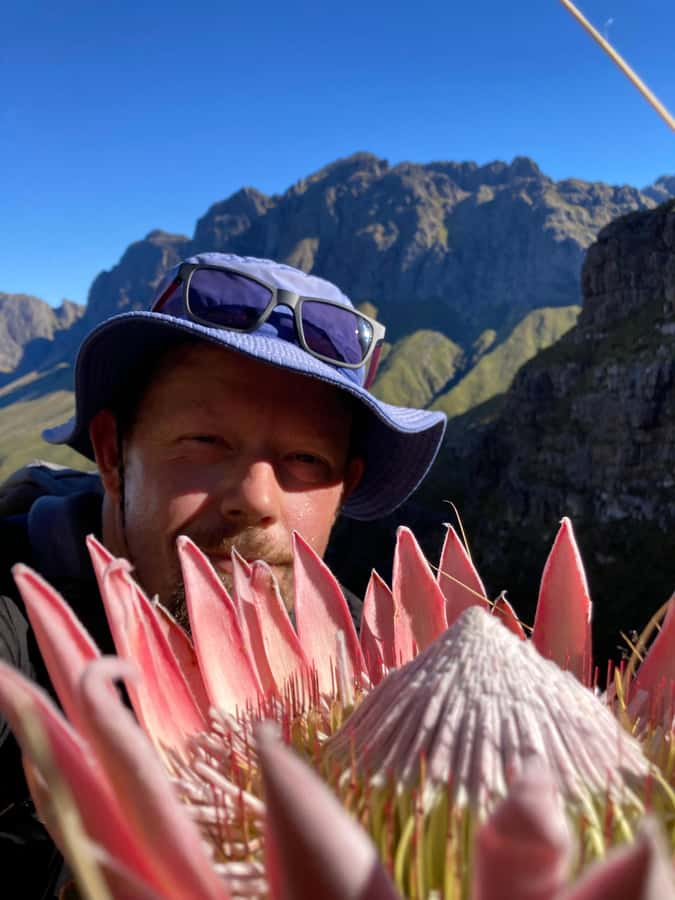
Once you’re on the high ridge, the hike changes gear. The climb continues, but the scenery becomes the main event. This is where the Panorama Trail earns its name. You get sweeping views across the Stellenbosch mountains, deep gorges, and broad fynbos-covered slopes.
I like this phase because it’s not just one view. It’s a sequence. You look out, you pause, you scan, and the horizon keeps giving you new angles. If you like photographing a place, this section gives you enough breathing room between viewpoints to capture wide shots and smaller details of the rugged terrain.
Some guides in this region, including Dominic in past bookings, are especially praised for guiding confidently and keeping people on track. The benefit for you is simple: with a capable guide, you spend less mental energy on navigation and more on enjoying what you came for.
And yes, the trail can be hiked clockwise or counter-clockwise. That means if you’re particularly sensitive to steep sections, you might ask your operator which direction is being used for your start time, so you can choose what feels best for your body.
Berg River Saddle and Assegaibos Kloof Valley, the best payoff
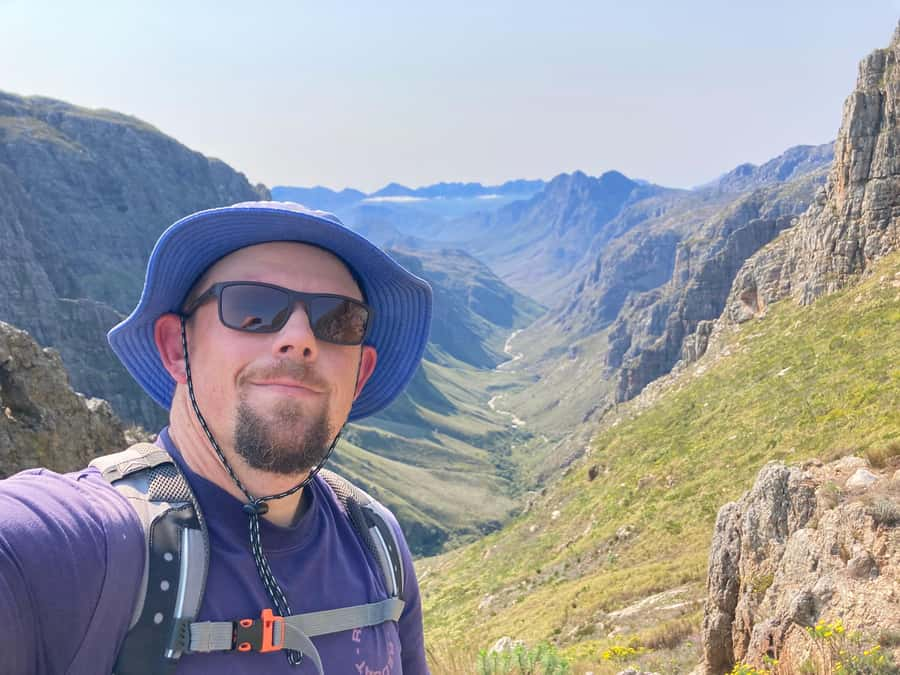
The descent is not just a way back down. It’s another highlight-focused stretch. As you approach the Berg River Saddle, the views open into something more specific and dramatic: the Assegaibos Kloof Valley, where the Berg River flows.
This is the payoff many hikers remember. It’s one thing to see mountains. It’s another to look into a cut valley and realize a river is threading through it, carving the scenery you’re standing above. For photographers, it’s great because you can play with depth and scale, especially when the light is clear.
The route then curves back into the valley, completing the circular loop. By the time you’re heading back, your brain is tired in the best way, because you’ve already collected the big scenery moments. It’s a good feeling when your last section feels like a return to the start rather than a continuation of the punishment.
Waterfalls and clear streams, but plan your stops smart
The hike includes the chance to see waterfalls and crystal clear streams along the way. You should treat these as bonus moments, not a guaranteed waterpark experience. In mountain hikes, water features depend on conditions, timing, and how the trail currently looks.
The good news is that you won’t be rushing through the whole route without breaks. The guide provides rest stops, and there are photo opportunities built into the pace of a guided day hike. If you pack food, you’ll also want a sensible plan for when to eat, so you’re not digging into your snack after a steep push when your stomach is not interested.
Practical tip: carry your snacks and water where you can access them easily. You’ll be doing enough bending and climbing without adding extra fumbling. And because the route is strenuous with rocky terrain, you want to keep your body moving steadily, not repeatedly stopping in unsafe spots.
If you bring swimwear, you might find opportunities to cool off in water that is described as drinkable-quality in past experiences. Don’t assume every day will allow swimming, but having swim gear gives you flexibility if conditions feel safe and suitable.
Duration, pace, and what timing means for you
This guided hike runs about 6 hours. Real life is usually 5 to 6 hours depending on fitness and pace, and you can stretch toward 7 hours when weather or conditions slow things down. That variation matters because it affects your day plan back in Stellenbosch.
If you like early starts, this fits nicely as your main active block of the day. You’ll be done before evening plans get complicated, assuming you organized transport back from the reserve. Also, you’ll want daylight. A steep hike plus rocky terrain is not the place to test whether you can still safely navigate in fading light.
The guide’s pace adjustments are part of the value. You’re not going to be left behind or forced to sprint. But you do need to meet the baseline fitness requirement. This is not a casual nature walk. Think “climbing day,” not “stroll with views.”
What to bring, so you don’t spend the hike managing problems
Bring the essentials and then bring a little more for comfort. The list is straightforward, but the steepness makes it matter:
- Hiking shoes with grip
- Water, minimum 2.5 L
- Sunscreen and a sun hat
- A jacket, even if the day looks mild at the start
- Food and snacks
- Comfortable clothes you can move in
- Swimwear if you want that option
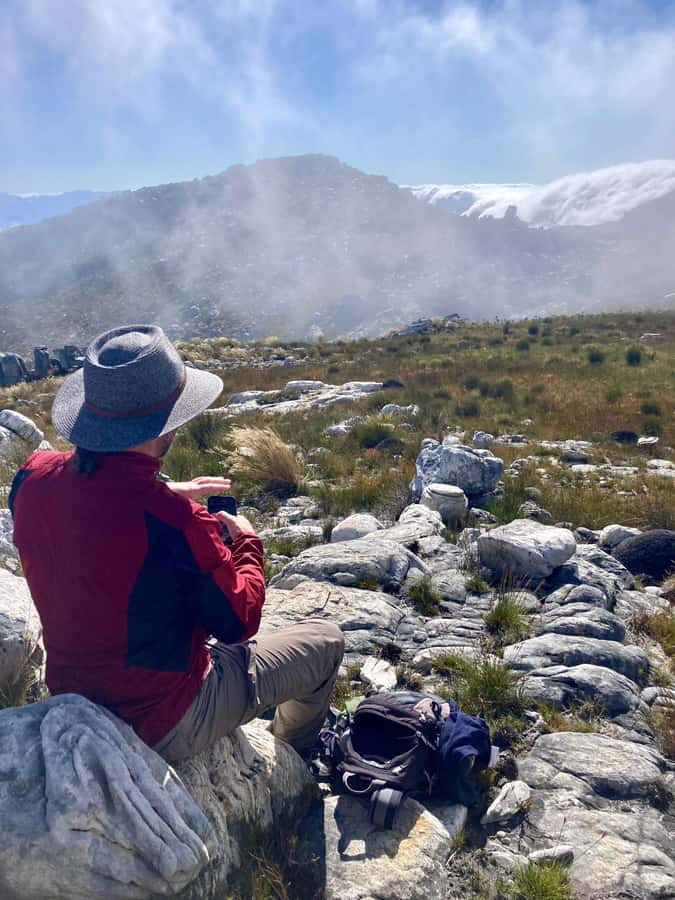
A few notes from how this kind of trail plays out. First, 2.5 L is not just a suggestion. Climbing and sun exposure can dry you out faster than you expect. Second, your jacket is useful because mountain weather can change quickly, and wind up high can feel colder than the valley.
Also, plan your camera battery. Past hikers have specifically advised bringing plenty of battery because the photo opportunities are constant. And if you like photographing wide panoramas, you’ll find yourself stopping more than you think, so extra battery is a smart move.
Not allowed rules are simple and standard: no smoking, no littering, and no fires.
Price and value at about $112 per person
At around $112 per person, this hike isn’t the cheapest way to get outside. But you’re paying for three things that matter on a day hike like this.
First, you’re buying a steep mountain plan with route guidance. The trail is challenging, and you benefit from expert navigation and pacing, especially when conditions are rocky and steep.
Second, you’re paying for the experience of seeing the reserve with context. A good guide helps you move safely and keeps the hike structured, so you spend more time on the viewpoints rather than wandering or second-guessing.
Third, you’re getting a capped group size of 6. That’s a hidden value factor because it reduces crowding on narrow sections and makes it easier for the guide to manage the day.
Transport isn’t included, so your total cost depends on how you get to Jonkershoek Nature Reserve. If you already have a car in the area, you’ll likely feel the price is fair. If you don’t, budget separately for getting there, because you’ll need to handle that logistics piece yourself.
Who should book this Panorama Trail hike, and who shouldn’t
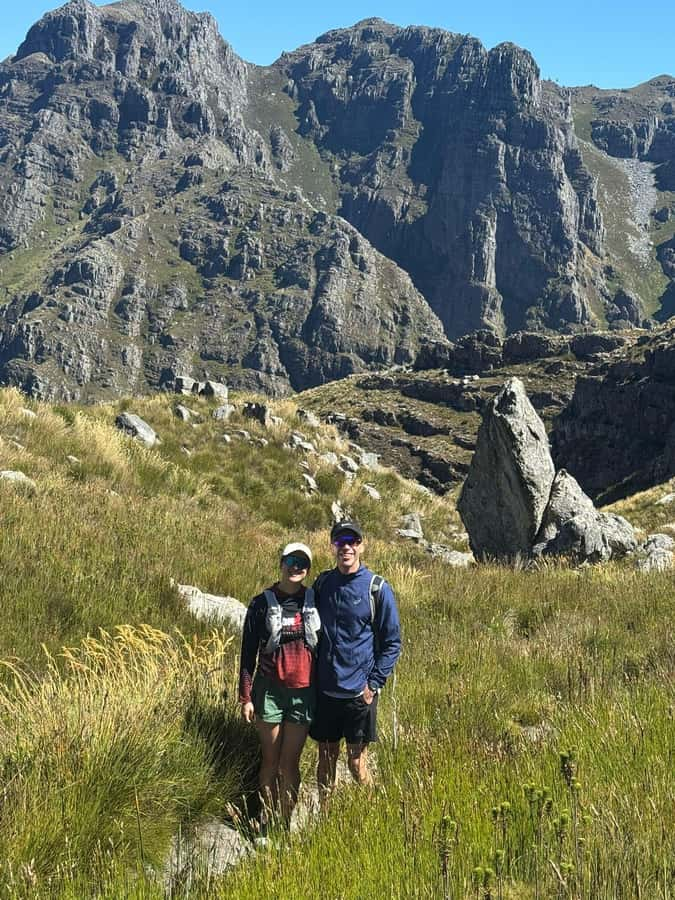
This is ideal for active hikers with good stamina and confidence on uneven, rocky ground. If you’re comfortable hiking uphill for hours and you don’t mind a steep climb, you’ll likely love it from start to finish.
It’s a poor fit if any of these apply:
- children under 12
- mobility impairments
- low level of fitness
- fear of heights
The fear-of-heights note is especially important. Even with a guide, you’re still walking mountain terrain with steep viewpoints and rugged sections. You can’t always “technique” your way out of nerves.
If you’re a first-time mountain hiker, consider going only if you have the fitness to handle 1,000 m of elevation gain and you’re wearing proper boots. If you’re the type who likes getting a workout while still collecting views, you’re the target audience.
Language options are English or German, so you can choose what feels easiest for instructions and safety details. If Dominic is guiding your group, that’s already a good sign based on past experiences.
Should you book this Jonkershoek guided hike?
Book it if you want one of the best-value ways to experience Jonkershoek Nature Reserve in a single day without doing the heavy lifting of planning. The combination of steep climbing, changing vegetation, and the Berg River Saddle payoff gives you a full mountain story, not just a single viewpoint.
Skip it if you want an easy hike, if your fitness level is low, or if you’re uneasy on exposed, steep terrain. This trail asks more than “walk and look.” It’s a real hike with a real climb.
If you’re deciding between this and a gentler option, here’s my rule: if you can comfortably climb steep hills for hours and you have the boots and water to match, you’ll likely come home satisfied. If not, you’ll be better served by a lower-elevation trail.
FAQ
How long is the Jonkershoek Panorama Trail hike?
The hike takes about 6 hours, and you should expect roughly 5 to 7 hours depending on fitness, pace, and weather conditions.
What is the difficulty level?
It’s a strenuous hike with steep sections, rugged rocky terrain, and more than 1,000 meters of total elevation gain. A good to strong fitness level is recommended.
What distance do we hike?
The route is a 14-kilometer circular trail.
What should I bring?
Bring hiking shoes, at least 2.5 liters of water, food and snacks, sunscreen, a sun hat, a jacket, and comfortable clothes. Swimwear can be useful if conditions allow.
Where do we meet, and how do we get to the trail start?
You meet at the gate of Jonkershoek Nature Reserve. Then you drive 5 km on gravel road to the start of the hike, either in your own vehicle or in the guide’s vehicle.
What language is the guide?
Guides are available in English or German.
Can I cancel, and is payment flexible?
You can cancel up to 24 hours in advance for a full refund. You can also reserve now and pay later to keep your plans flexible.
Trails Worth Walking in Stellenbosch
Stellenbosch, Cellar by Cellar
Keep going: the rest of our Stellenbosch write-ups
- Stellenbosch: Half-Day Guided Nature Hike and Wine Tasting
★ 5.0 · 3 reviews - The most fun you can have on an E-Bike. Wine tastings, corporate events.
★ 4.5 · 3 reviews - Quad Bike Fun Ride in Paarl Battle Bunker
★ 4.0 · 3 reviews - Fly Fishing in Cape Town for Five Hours
★ 4.5 · 3 reviews - 30 Minute Jet Ski Rental
★ 5.0 · 3 reviews - Jonkershoek Nature Reserve: Guided Panorama Trail Hike
★ 5.0 · 3 reviews
Stellenbosch Wine Tours, compared.
 ★ 5.0Wine Tour: Paarl, Franschhoek & Stellenbosch incl 3 wineriesFrom $433,940 reviews
 ★ 5.0Wine Tour to Stellenbosch & Franschhoek with Tastings & LunchFrom $101828 reviews
 ★ 4.7Stellenbosch: Half-Day Wine TourFrom $55601 reviews
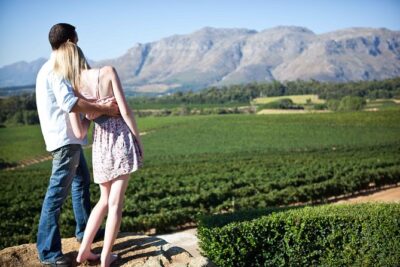 ★ 5.0Private Full Day Stellenbosch Wine Tour with Pick Up and Drop OffFrom $166425 reviews
 ★ 4.5Stellenbosch & Franschhoek 20 Wine Tasting + Lunch Shared TourFrom $88290 reviews
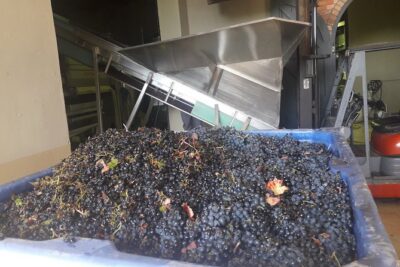 ★ 4.5From CapeTown: Stellenbosch Half Day Wine TourFrom $53287 reviews
 ★ 4.5From Cape Town: Stellenbosch & Franschhoek Wine Tasting TourFrom $277287 reviews
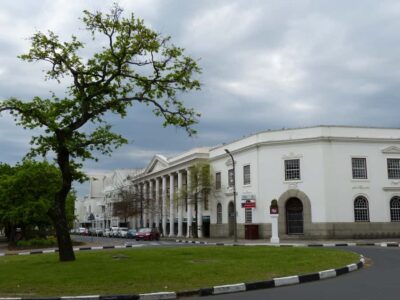 ★ 4.7Stellenbosch: Guided Historical Walking TourFrom $18283 reviews
Browse the lists this tour appears in