
REVIEW · JOHANNESBURG CITY TOURS
Johannesburg’s Downtown Walking Tour with lunch
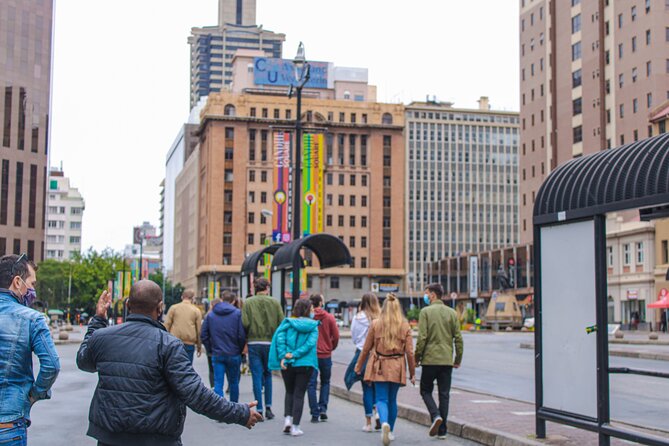
Johannesburg at street level tells its story fast. This downtown walk is built around real places and real context, from the Constitutional Court precinct to Newtown’s arts revival. I like that the emphasis is on history with an explanation, not fear stories.
Two things I especially like: you get guided walking time with named stops that you can picture later, and lunch plus bottled water keeps the day practical. I also like how the guides, including people like Nkosi, Sean, Romeo, B.K., Frank, Tigh, and Angela (as mentioned in past experiences), are praised for answering questions and keeping pace human.
One thing to consider: it runs in central areas where you may feel a bit uneasy without a guide, so go with the group and wear shoes you can walk in for a few hours. Also, it depends on good weather, since it is a walking experience.
In This Review
- Key highlights to look for
- Getting Oriented in Braamfontein, Where Jobs Moved and Life Stayed
- Constitution Hill precinct: Constitutional Court and an African art stop
- Bridges West of Park Station: Rail-Era Engineering on Foot
- Newtown and the Market Theatre Area: Culture in the City’s Second Act
- Gandhi Square in the CBD: A Pacifist Name in Everyday Streets
- How the Walk Feels: Pace, Safety Focus, and What to Wear
- Lunch Included, Drinks Not: Is $77.92 Good Value?
- Should You Book This Downtown Walking Tour?
Key highlights to look for
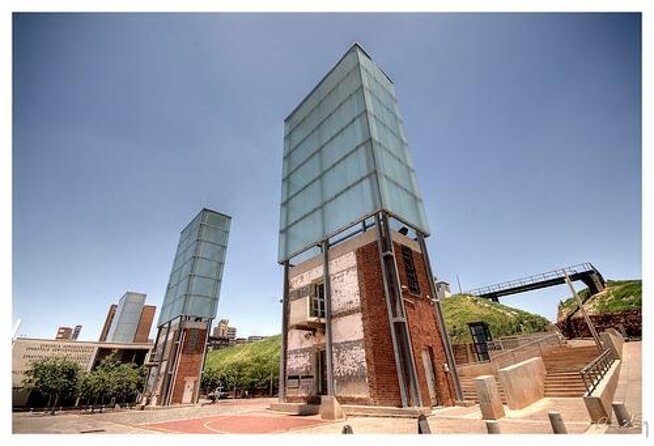
- Constitution Hill precinct near Hillbrow, with the Constitutional Court and an African art museum stop
- Braamfontein context on why the business center shifted and how the area changed
- A Newtown walk tied to culture, including the Market Theatre area
- Gandhi Square in the CBD, named for Mahatma Gandhi and easy to picture in your head later
- Lunch and bottled water included, plus an air-conditioned vehicle and pickup
More of Joburg, neighbourhood by neighbourhood
- Johannesburg and Soweto tour★ 5.0 · 231 reviews
- Ultimate Johannesburg Tour★ 5.0 · 200 reviews
- Johannesburg: Pretoria and Cullinan Diamond Mine Tour★ 4.7 · 165 reviews
- From Johannesburg: Kruger National Park 3-Day Safari★ 4.7 · 78 reviews
Getting Oriented in Braamfontein, Where Jobs Moved and Life Stayed
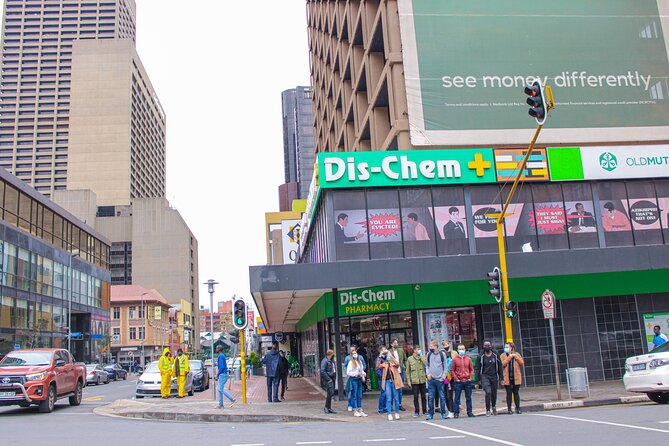
Most Johannesburg tours start with landmarks. This one starts with the idea of why the city looks the way it does today, and Braamfontein is the perfect place to begin. It sits just north of the Johannesburg CBD, and it has a story of businesses and institutions moving out as the center of gravity shifted toward Sandton and northern suburbs.
What makes Braamfontein useful for you is that it helps you read the city without needing a map app every five minutes. The neighborhood is tied into Johannesburg as far back as 1886, when it began as a farm, and over time it became part of the central business district. Today it carries a more informal economy, and that mix changes what you notice on the street, like everyday commerce and local routines rather than only tourist surfaces.
You should expect this portion to be paced as an introduction, about an hour, with walking that stays manageable. It also sets up a theme you’ll keep hearing: Johannesburg is not just one thing. It is the overlap of old planning, new growth, and the stubborn pull of people making lives where they can.
Possible drawback: if you prefer lots of time in one museum room, the first stretch may feel like more street learning than sitting. The value is in the way it trains your eyes for the rest of the route.
Constitution Hill precinct: Constitutional Court and an African art stop
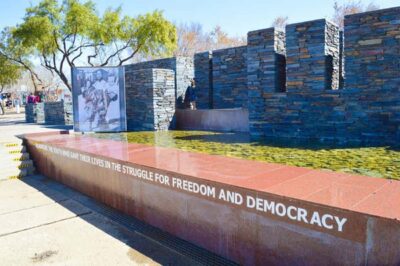
After Braamfontein, you’ll move into the Constitution Hill precinct at 11 Kotze Street. This is one of the most important civic places in South Africa, because it is home to the Constitutional Court. The setting matters. You’re not just walking near impressive architecture, you’re walking through a site that holds modern law and the memory of the past in the same space.
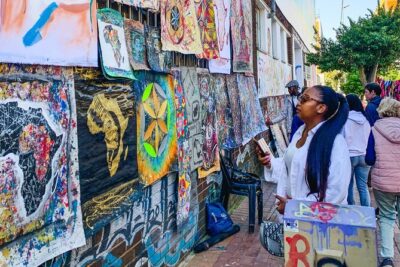
You also get a museum stop featuring thousands of pieces of African artwork, from historic to contemporary. That matters for your understanding because the tour’s theme is not only politics. It’s how culture records what happened, how people survived, and how creativity continues. Even if you don’t consider yourself an art person, it gives your brain a second way to process the story.
From past experiences, guides often make this part click by connecting what you see today to what those buildings and institutions represent. People have specifically praised guides for telling the story street by street, and this stop is where that approach usually pays off most.
What to watch for: if you’re sensitive to emotionally heavy topics, know that the Constitution Hill setting is built for that kind of learning. The tour is framed as a way to understand Johannesburg’s complexity, including why the city got a reputation for danger in the first place, and what really caused it.
Bridges West of Park Station: Rail-Era Engineering on Foot
One of the most practical and interesting surprises on this route is the bridge segment. You’ll reach the railway area west of Johannesburg Park Station, and the tour points out a specific bridge detail: it is the fourth of five bridges crossing the railway lines and sidings just west of Park Station. It also gives you a sense of scale, because the first bridge in this set, the Johan Rissik Bridge, sits adjacent to the station.
Why this is more than trivia is simple. Bridges show you how a city moves people, goods, and power. When you stand near major rail infrastructure, you can better picture how neighborhoods rise, how they lose access, and why certain places became important to travel and commerce.
The bridge described here is completed in 2003, and the tour notes a cost of R38 million for the build. That kind of detail helps you see Johannesburg as a place still actively reshaped, not frozen in history. It also gives your guide room to explain change over time, including the difference between physical infrastructure and the social outcomes around it.
If you’re worried about walking comfort: bridges and rail edges can feel exposed if it’s windy or hot. Wear breathable layers and keep water handy. You will have bottled water included, which helps.
Newtown and the Market Theatre Area: Culture in the City’s Second Act
Newtown is where the tour shifts from explaining movement and civic change into showing a place reinventing itself. It sits in Johannesburg’s inner city, shaped by the rail lines to the north, the M2 highway to the south, and bounded by West Street and Quinn Street on either side.
The route highlights the Nelson Mandela Bridge as the gateway linking Braamfontein to Newtown. That bridge can carry about 3,000 cars an hour, so even if you’re walking, you’re constantly aware of how the city funnels traffic and how people funnel back into certain zones.
What you’ll feel in Newtown is that it’s a mixed-use district with a distinct character, especially when you pay attention to cultural facilities. One named highlight is the Market Theatre. This venue is tied to South African theatre and is described as playing an important role during apartheid. That is the kind of detail that makes Newtown worth more than a quick photo stop.
On this portion, admission is listed as included for the Newtown segment. That matters because it keeps the tour from turning into a scavenger hunt where you pay extra at every step.
Possible drawback: Newtown can be a lot to absorb if you’re tired. The route is still a walking tour, so give yourself permission to slow down, ask questions, and let the places settle in.
More routes best done on foot

Gandhi Square in the CBD: A Pacifist Name in Everyday Streets
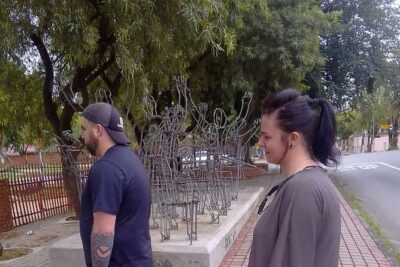
The final named stop is Gandhi Square, a plaza in the CBD named after Mahatma Gandhi. On paper, that can sound like a simple “see a statue or sign” moment. In practice, it works because it ties the tour’s story to a global figure known for pacifism and political influence.
This is also a good endpoint style for your day. Gandhi Square sits in the central rhythm of Johannesburg, which means you can start imagining where you’ll go next without needing the tour guide to hold your hand. You’ve walked through civic history, art, city change, and cultural institutions. Finishing in a plaza named for Gandhi helps the tour feel anchored and legible.
From the way guides are praised in past experiences, you can also expect the discussion to keep pointing out causes and consequences, not just dates. That approach is a big deal in Johannesburg, because the city’s reputation can be loud and oversimplified. By the time you reach Gandhi Square, you usually have enough context to interpret what you see around it.
How the Walk Feels: Pace, Safety Focus, and What to Wear
The tour is designed for a group of up to 30 people, and it runs about 3 to 5 hours. In the real world, that range usually means you’ll get frequent stops to talk, and you won’t be doing nonstop trudging. Past experiences highlight an easy pace, and that kind of pacing matters when you’re learning. If you’re constantly trying to keep up, you lose the plot.
Safety is a central message from the operator: your safety is said to be the number one priority, and the tour explicitly challenges the idea that Johannesburg is dangerous without explanation. That doesn’t mean you should ignore your instincts. It means you benefit from walking with someone who understands the city’s realities and can talk through what you’re seeing as you go.
A useful detail from past experiences: some people felt a little uncomfortable in certain areas, but being with the guide gave a sense of security. That’s exactly what you want from a guided city walk. Not just facts, but the calm confidence of someone who knows how to keep the group together and moving.
What to wear:
- Comfortable walking shoes (you are walking, not touring from a bus seat)
- A light layer for changing temps
- Sunscreen or a hat if it’s clear
- A crossbody or day bag you can keep close
You’ll also have access to an air-conditioned vehicle with pickup offered. That helps if your morning or afternoon is warm, or if you need a smoother start before you hit the sidewalk.
Lunch Included, Drinks Not: Is $77.92 Good Value?
Let’s talk money plainly. The price is $77.92 per person for a 3 to 5 hour guided walking experience. For many people, that looks expensive until you count what’s included.
Included:
- A guide
- Air-conditioned vehicle
- Lunch
- Bottled water
Not included:
- Alcoholic beverages
So you’re paying for more than narration. You’re paying for a guided day with food and transport support. That’s often a better deal than piecing together separate ticketed attractions plus a taxi plus lunch on your own.
Also, the tour is small enough to feel personal, but large enough that solo travelers often still get a proper group format. Past experiences include accounts of people joining even when the group wasn’t huge, and guides adjusted to keep the walk engaging.
Is $77.92 worth it for you? It usually makes sense if:
- You’re in Johannesburg for a short time and want context fast
- You want history explained in a way that connects to streets and neighborhoods
- You prefer a guided approach for central walking, especially in areas that can feel unfamiliar
If you’re very budget focused: you could tour some of these spots on your own, but you’ll likely miss the thread that links Braamfontein’s shifts, the civic meaning at Constitution Hill, Newtown’s cultural reinvention, and the CBD’s daily life around Gandhi Square.
Should You Book This Downtown Walking Tour?
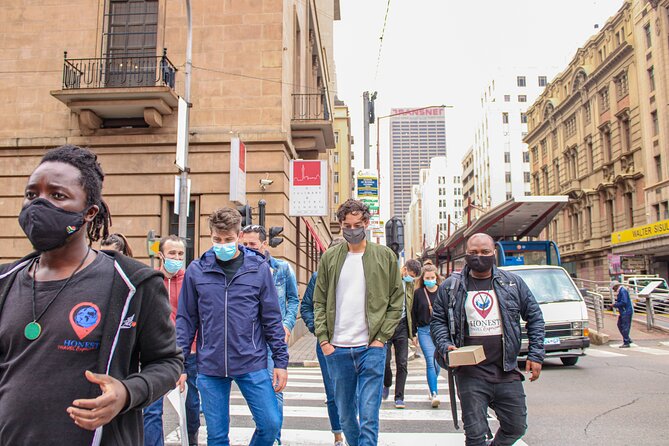
I’d book it if you want more than sights. This tour is built for people who care about the why behind Johannesburg’s look, and who appreciate walking with a guide who can connect the dots as you go.
Book it if:
- You want a safety-first guided walk through central Johannesburg
- You like learning that connects street scenes to political and cultural change
- You value getting lunch handled while you’re sightseeing
Skip it if:
- You dislike walking in central city areas for a few hours
- You want a stop-and-sit museum day with minimal street time
- Your schedule depends on perfect weather and you can’t be flexible if it’s canceled for poor conditions
If you fit the first group, this is a solid way to get your bearings and start understanding Johannesburg’s complexity in a way that feels practical, not abstract.
Walk It: More of Pretoria
Johannesburg, Block by Block
Keep going: the rest of our Pretoria write-ups
- Pretoria City Tour and Cullinan Mine Tour from Johannesburg
★ 5.0 · 3 reviews - Full Day Soweto, Johannesburg and Apartheid Museum Guided Tour
★ 5.0 · 3 reviews - Cradle of Humankind Full Day Tour from Pretoria and Johannesburg
★ 4.5 · 3 reviews - 3-Day Private Tour Johannesburg – See everything
★ 5.0 · 3 reviews - From Johannesburg: Pretoria Guided City Tour
★ 4.5 · 3 reviews - Pretoria Tour-Voortrekker Monument, Town, Union Buildings
★ 5.0 · 3 reviews
Johannesburg City Tours, compared.
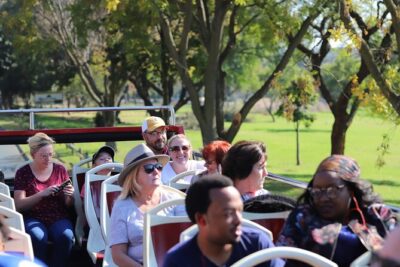 ★ 4.5Johannesburg Hop-On Hop-Off City Tour with Soweto OptionFrom $16768 reviews
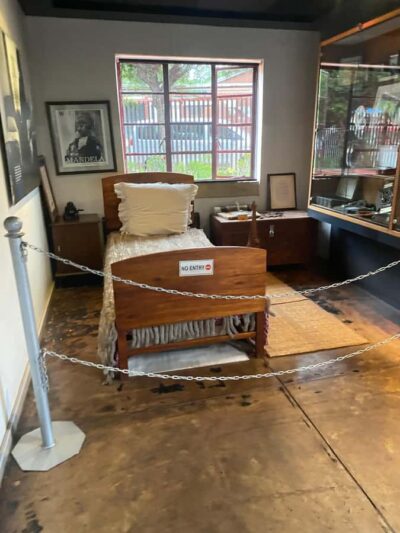 ★ 4.8Johannesburg: Full-Day Tour with Soweto and Apartheid MuseumFrom $104478 reviews
 ★ 4.8Johannesburg and Soweto: Half-Day TourFrom $71439 reviews
 ★ 4.6From Johannesburg: Lion & Safari Park Half-Day TourFrom $167384 reviews
 ★ 5.0Ultimate Johannesburg Soweto Experience with Apartheid MuseumFrom $108313 reviews
 ★ 5.0Half Day Lion Park tour from Johannesburg or PretoriaFrom $100274 reviews
 ★ 4.9Johannesburg: Maboneng Street Art & Culture TourFrom $37257 reviews
 ★ 5.0Johannesburg and Soweto tourFrom $77231 reviews
Browse the lists this tour appears in