
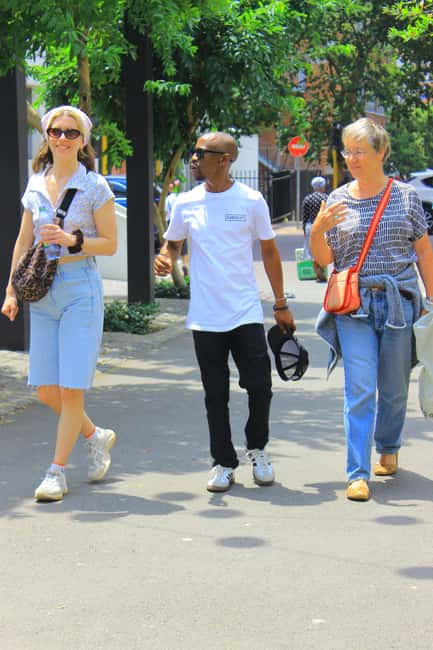
REVIEW · JOHANNESBURG CITY TOURS
Johannesburg: The Evolution of Maboneng (Place of Light)
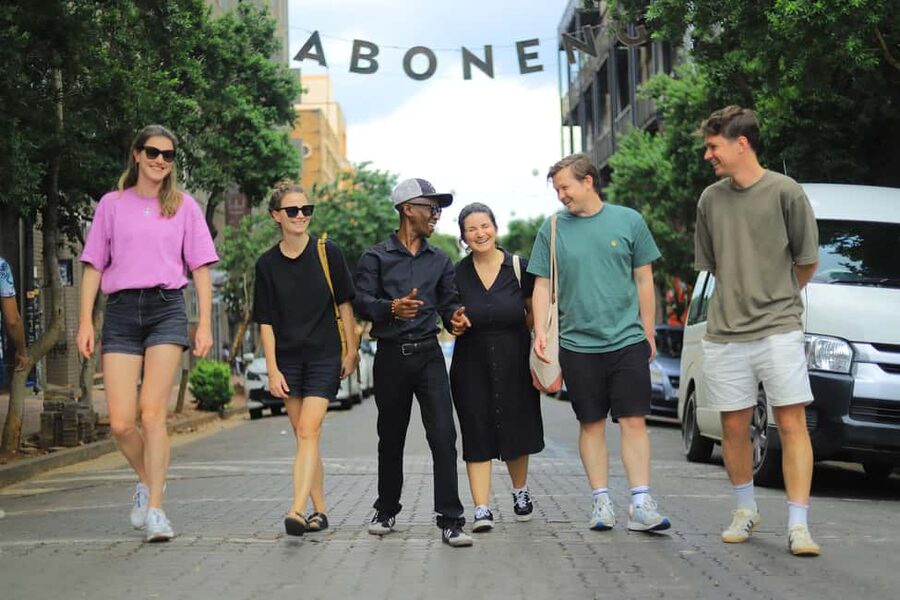
Maboneng turns sidewalks into history lessons. In this 2-hour walking tour in Johannesburg, you’ll see how the neighborhood earned its name, Place of Light, through street art, new buildings, and people working to rebuild a city block by block. It’s a focused, on-foot way to understand what urban change looks like when it’s driven by artists and entrepreneurs.
I really like the way the route mixes big-name landmarks with up-close mural moments, especially around the Cosmopolitan building and the Mandela mural. You also get practical context from guides, and if you’re lucky enough to be with someone like Tsepho or Eko, you’ll hear clear stories about how this part of Joburg developed and why the art matters.
One thing to weigh: it’s a lot of walking for the price, and a couple of experiences have felt more like a long stroll than a fully packed “tour.” Also, on any given day, you might find the market stop doesn’t get as much time as you hoped.
In This Review
- Key highlights you’ll care about
- Maboneng, Place of Light, and what the neighborhood is actually doing
- Starting at Curiocity Backpackers, and how the walk stays readable
- From first suburbs to street-level stories, why the guide’s framing matters
- The Cosmopolitan heritage stop, built for business and drama
- Murals that break barriers, from Mandela to Nelson Makamo’s open-air feeling
- Drive-lines Development and affordable housing built from upcycled shipping containers
- Arts On Main and William Kentridge’s space for the Les Good Idea
- Kwa Mai-Mai Traditional Healers Market, Sangomas, medicines, and what to expect
- The Collectors Treasure bookstore, a budget-friendly win for book lovers
- Rooftop timing and a sun-downer view over the skyline
- Price and value: $42 for 2 hours, is it worth it
- Who this Maboneng walk suits best, and who should skip it
- My decision guide: should you book?
- FAQ
- How long is the Maboneng walking tour?
- How much does the tour cost?
- Where do I meet the guide, and where does the tour end?
- What is included in the tour?
- What language is the tour offered in?
- Is this tour suitable for people with limited mobility or pregnant women?
Key highlights you’ll care about
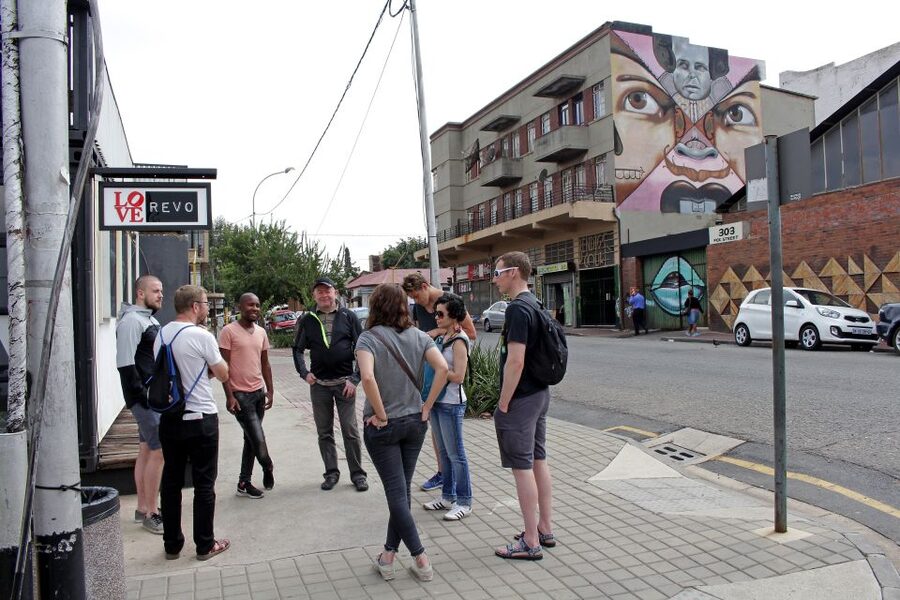
- Street art that acts like a map, with murals across key walls and landmarks
- Heritage architecture, including the Cosmopolitan, built in 1899 and used as a hotel and bar starting in 1902
- Upcycled housing in action, walking by Drive-lines Development’s shipping-container homes
- Arts On Main and the William Kentridge foundation space, a big cultural stop without long travel
- Kwa Mai-Mai Traditional Healers Market, with Sangomas, medicines, and traditional clothing
- The Collectors Treasure, a major second-hand bookstore stop if you like browsing
More of Joburg, neighbourhood by neighbourhood
- From Johannesburg: Pilanesberg Nature Reserve Game Safari★ 4.8 · 1,327 reviews
- Johannesburg: Hop-On Hop-Off Bus with Optional Soweto Tour★ 4.6 · 985 reviews
- Soweto /Johannesburg and Apartheid Museum Guided Full Day Tour★ 5.0 · 932 reviews
- Johannesburg Hop-On Hop-Off City Tour with Soweto Option★ 4.5 · 768 reviews
Maboneng, Place of Light, and what the neighborhood is actually doing
Maboneng is not a museum neighborhood. It’s a working district where you can see change happening in real time, and that’s the point. The name itself, Place of Light, feels literal once you start walking, because the streets are treated like a canvas and the community keeps building.
What I like most about this tour is that it doesn’t just point at art. It connects the art to the neighborhood’s transformation over the last couple decades, plus it points you toward the people and ideas behind the regeneration. You get a sense of entrepreneurial energy, but you also get grounding in how Johannesburg’s inner city formed in the first place.
If you want a “see murals, take photos, move on” day, this might feel a bit more serious than that. But if you want context, you’ll appreciate how the guide ties buildings, walls, and public art to the story of the area.
Starting at Curiocity Backpackers, and how the walk stays readable
The tour meets at Curiocity Backpackers on Fox Street in Jeppestown. That matters because it keeps things simple: you start in one place and the tour ends back there, so you don’t have to figure out public transit afterward.
It’s a 2-hour guided walking tour, so plan to stay on your feet. You’ll move through the eastern side of downtown, and the pace is steady enough that you’ll see the main hits without it turning into an all-day marathon. If you’re traveling with limited mobility, this isn’t recommended, and even if you can walk short distances, you’ll want to think carefully.
A small practical tip: wear comfortable shoes you can trust. The area has sidewalks and streets you’ll cover on foot, and you’ll want grip and cushioning more than anything else. Weather can change fast in Gauteng, so bring clothing suited to that.
From first suburbs to street-level stories, why the guide’s framing matters
One of the most useful parts of this tour is the way it starts with history and heritage, then uses that framing while you walk. You’ll learn about the first suburbs of Johannesburg, and that background helps you decode what you’re seeing now.
That may sound abstract, but it changes the whole experience. When you understand how the city’s early growth shaped this area, the murals and new developments make more sense as responses to the past, not random decoration. You also start noticing patterns: where walls channel movement, where older buildings still hold cultural weight, and where new projects try to change the neighborhood’s future.
If your guide spends time keeping the story tight and the group together, the whole walk clicks. A couple of experiences have noted that timing or engagement can vary, so treat the guide as an important part of your value check.
The Cosmopolitan heritage stop, built for business and drama
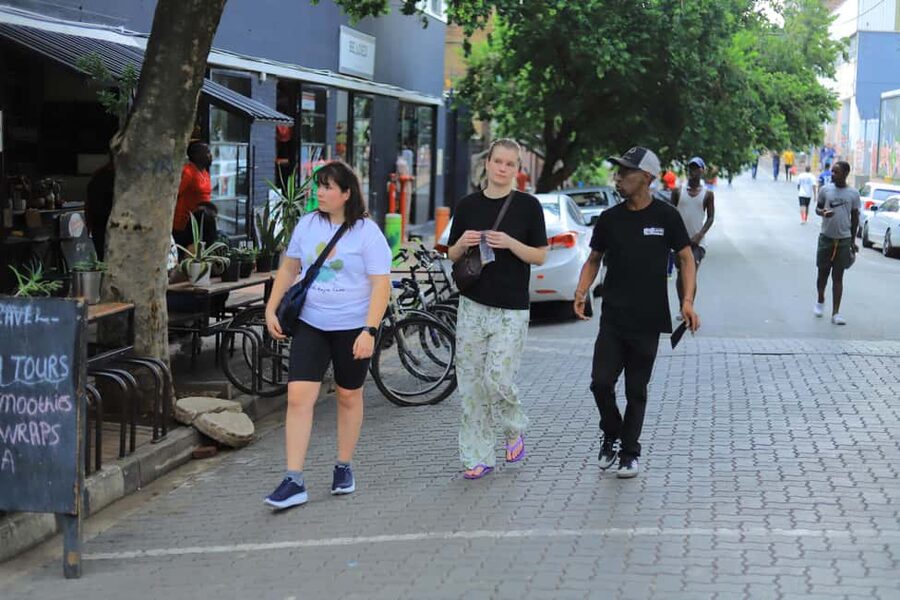
A major landmark on the route is The Cosmopolitan. This is one of the more elegant heritage buildings in downtown Johannesburg, and the tour gives you the kind of facts that help you picture the place in its working days. It was built in 1899, and it opened as a hotel and bar in 1902.
Why this stop is worth it: older buildings like this often sit in a neighborhood while new development happens around them. When you pause here, you can feel the contrast between what the building was designed to do and what the neighborhood is trying to do now, which is to attract people back into the area.
For your photos, aim to look at more than the front. Heritage buildings reward attention to details like façades, edges, and how the space fits into the street grid. Even if you’re not an architecture nerd, you’ll walk away with a stronger sense of the neighborhood’s layers.


Murals that break barriers, from Mandela to Nelson Makamo’s open-air feeling
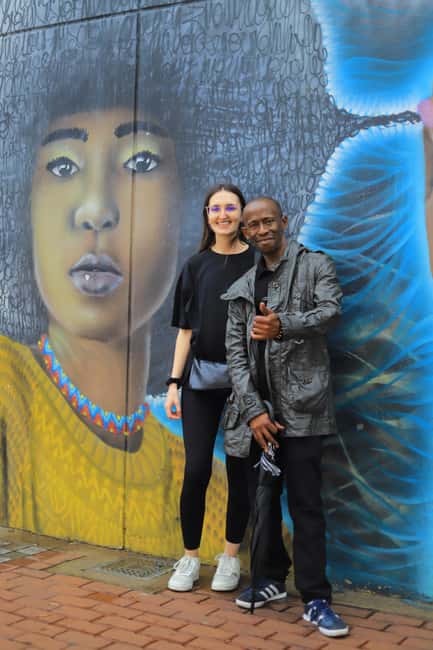
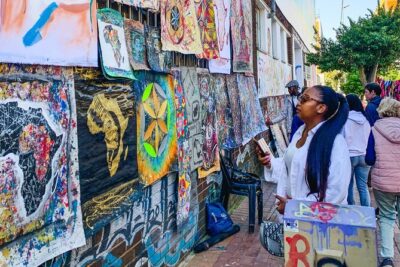
The tour’s mural section is the heart of why many people book this. You’ll learn about street art murals painted by both local and international artists, and you’ll walk with that context so you’re not just snapping pictures.
You’ll also visit key mural landmarks, including the Mandela mural (the leader-boxer reference helps you find it fast). After that, you’ll get to see how public art can act like a visual pass through a place that otherwise feels segmented by walls.
Another big moment is Nelson Makamo’s murals in an open-air museum setting. This is the kind of stop where you can take your time without feeling guilty, because the art is literally outdoors. If you like street art, you’ll find yourself looking closer than you planned, and if you’re new to murals, the guide’s explanations help you see symbols and themes instead of treating everything as just color.
Drive-lines Development and affordable housing built from upcycled shipping containers
One of the most practical, real-world stops is Drive-lines Development, a newer urban development that uses upcycled shipping containers as affordable housing. You’re not just hearing about regeneration in theory. You see a physical example of it.
This is valuable because it connects the tour’s “creative neighborhood” theme to a serious question: who benefits from change? New murals and cultural projects are important, but housing and basic life needs are what decide whether a neighborhood’s future is stable.
As you walk through this area, keep your eyes open for contrasts. The shipping-container housing sits in the broader downtown space, and you can see how design choices try to solve constraints like cost and speed of building. It’s not a fantasy. It’s a working experiment you can look at directly.
Arts On Main and William Kentridge’s space for the Les Good Idea
Next up is Arts On Main, associated with William Kentridge and his foundation space, the Center For The Les Good Idea. Even if you’re not familiar with his work, the tour makes it easier to understand why this kind of cultural hub matters in a transforming neighborhood.
For you, the value is time efficiency. You’re not traveling across town to reach a major cultural site. You’re staying in the same part of the city where the murals and regeneration story are unfolding, so the connections feel real.
What to watch for: the energy around the building. Places like this usually draw people who want more than a photo stop. If you have even a little interest in contemporary art and South African creativity, this stop adds meaning to the earlier street art you’ve seen.
Kwa Mai-Mai Traditional Healers Market, Sangomas, medicines, and what to expect
The tour includes a visit to the Kwa Mai-Mai Traditional Healers Market, described as one of the oldest traditional healers markets in the city. This is where the experience becomes more than visual art and architecture.
You’ll encounter Sangomas, traditional healers, plus traditional medicines and clothing. This can be fascinating, especially if you want to see a different side of how people practice culture and health in everyday life. It’s also a reminder that a neighborhood can be “regenerated” while still protecting older local traditions.
A practical note for your expectations: market time can vary depending on the day’s flow and how the group moves. Since a couple of experiences have described disappointment about market access, I’d treat the market stop as a key goal, but don’t assume it will feel like a long browsing spree.
If you go in with curiosity and respect, you’ll enjoy it more. Dress comfortably, keep your questions polite, and remember this is a functioning marketplace, not a staged set.
The Collectors Treasure bookstore, a budget-friendly win for book lovers
For a different kind of souvenir, the tour stops at The Collectors Treasure, described as the largest second-hand bookstore in the southern hemisphere. Even if you don’t end up buying anything, browsing can be a satisfying way to slow down after the walking.
This is also where the tour’s price starts to feel more justified for the right traveler. A bookstore purchase can stretch your memory of the day in a way that photos cannot. If you like second-hand books, you’ll likely find local authors or interesting South African topics that are hard to track down elsewhere.
If you’re not a reader, you might still find value in the browsing itself. It’s a social space, and it fits the tour theme of creative entrepreneurship, because the business model is turning used items into something new again.
Rooftop timing and a sun-downer view over the skyline
If time allows, the tour may end with a sun-downer overlooking the Joburg skyline. This is a classic way to close a walking route because it lets you reset your legs and your brain.
You also get perspective. From above, you can see how the streets and buildings connect, and you’ll better understand what you walked through. If you love city views, this final moment can turn an already interesting day into a memory that feels complete.
Price and value: $42 for 2 hours, is it worth it
The price is $42 per person, and here’s how I’d judge value for you.
For $42, you’re buying three things:
1) a guided narrative that connects murals, landmarks, and neighborhood history
2) access to specific stops you might not find alone
3) a structured 2-hour walk that keeps you oriented in an inner-city area
Where the value can feel weaker is when you expect more of an active experience. Some experiences have suggested it can feel like a long stroll rather than a tightly choreographed tour, and in those moments, the price can sting.
So my practical advice is simple: if you want a story-led walk and you’re interested in street art plus neighborhood context, this can feel fair. If you’re mainly chasing photo spots and you hate guidance that feels light, you might want to compare against other options.
Who this Maboneng walk suits best, and who should skip it
This tour fits best if you:
- like street art with explanations, not just visuals
- want an inner-city look at how change is happening, including affordable housing examples
- enjoy cultural stops like Arts On Main and a traditional market
- want a half-day plan without needing complex logistics
It’s not the best choice if you have mobility impairments, since it is not recommended for limited mobility. It’s also not suitable for pregnant women, based on the tour’s stated limitations.
If you’re the type who gets impatient with walking, this tour might feel long for 2 hours, especially in warmer weather. Bring water, take small breaks when your guide suggests them, and focus on one stop at a time instead of trying to “win” the whole route with energy.
My decision guide: should you book?
Yes, book this tour if you want a guided walk that helps you understand what Maboneng is doing, not just what it looks like. The strongest reasons are the murals with context, the heritage stop at The Cosmopolitan, and the mix of art, culture, and everyday Johannesburg moments like Kwa Mai-Mai.
Skip it, or at least temper expectations, if you’re very price-sensitive or you expect a tour to feel like more than walking and brief stops. Since market time and guide engagement can vary, you’ll be happiest if you treat this as a neighborhood walk with a story, not an activity-packed checklist.
If you’re looking for a meaningful way to see eastern downtown Joburg in a short window, this is a solid pick.
FAQ
How long is the Maboneng walking tour?
It is a 2-hour guided walking tour.
How much does the tour cost?
The price is listed as $42 per person.
Where do I meet the guide, and where does the tour end?
You meet at Curiocity Backpackers, 302 Fox St, Jeppestown, Johannesburg. The tour ends back at the meeting point.
What is included in the tour?
The included part is the 2-hour guided walking tour.
What language is the tour offered in?
The tour is offered in English.
Is this tour suitable for people with limited mobility or pregnant women?
The tour is not recommended for people with limited mobility. It is also not suitable for pregnant women.
Johannesburg, Block by Block
- From Johannesburg: Pilanesberg Nature Reserve Game Safari
- Johannesburg: Hop-On Hop-Off Bus with Optional Soweto Tour
- Soweto /Johannesburg and Apartheid Museum Guided Full Day Tour
- Johannesburg Hop-On Hop-Off City Tour with Soweto Option
- Full Day Ultimate Pilanesberg National Park Safari from Johannesburg or Pretoria
Keep going: the rest of our Johannesburg write-ups
- Soweto Private half day tour
★ 4.5 · 3 reviews - Johannesburg’s Migration History with a local lunch
★ 5.0 · 3 reviews - Johannesburg: Soweto, Apartheid Museum, and Cradle tours
★ 4.7 · 3 reviews - Soweto Apartheid Museum and Lunch
★ 5.0 · 3 reviews - Bathongo Rhino & lion park nature reserve tour
★ 5.0 · 3 reviews - Johannesburg: Elephant and Monkey Sanctuary Half Day Tour
★ 5.0 · 3 reviews
Johannesburg City Tours, compared.
 ★ 4.5Johannesburg Hop-On Hop-Off City Tour with Soweto OptionFrom $16768 reviews
 ★ 4.8Johannesburg: Full-Day Tour with Soweto and Apartheid MuseumFrom $104478 reviews
 ★ 4.8Johannesburg and Soweto: Half-Day TourFrom $71439 reviews
 ★ 4.6From Johannesburg: Lion & Safari Park Half-Day TourFrom $167384 reviews
 ★ 5.0Ultimate Johannesburg Soweto Experience with Apartheid MuseumFrom $108313 reviews
 ★ 5.0Half Day Lion Park tour from Johannesburg or PretoriaFrom $100274 reviews
 ★ 4.9Johannesburg: Maboneng Street Art & Culture TourFrom $37257 reviews
 ★ 5.0Johannesburg and Soweto tourFrom $77231 reviews
Browse the lists this tour appears in