
REVIEW · JOHANNESBURG CITY TOURS
Johannesburg: Street Art and Culture in Maboneng!
Street art tells Joburg’s story fast. In Maboneng, you get murals with real meaning, plus the neighborhood history behind the paint. I love the way the guide connects artists like ESPO Powers and DBongz to what you see on the walls. I also like the history thread, especially the stop linked to the anti-apartheid movement.
The neighborhood itself is part of the show, from repurposed industrial space to today’s mix of galleries, curio shops, and places to eat. You’ll walk through streets that explain how Maboneng has changed from 2009 to now, without making it feel like a lecture.
One consideration: this is an inner-city walk with lots of street activity. You should bring some cash or card if you want to buy from traders, and wear shoes for uneven sidewalks.
In This Review
- Key points you should know before you go
- Meeting Under the Bridge at Home of the Bean
- Street Art in Maboneng, With Meaning You Can Actually Use
- Maboneng’s 2009 to Today Story, From Industry to City Future
- Maboneng Arts Village: Where Creatives Show and Sell
- Curiocity Backpackers and the Hide-Out Bar Story
- A Viewpoint Stop for Photos and Perspective
- Guides Like Ayanda, Bonny, Kaiser, or Michael Make the Difference
- Price and Value for $40 in 2 Hours
- What to Bring, What to Wear, and How to Stay Comfortable
- Should You Book This Maboneng Street Art and Culture Tour?
- FAQ
- Where is the meeting point?
- Is food included?
- How long is the tour?
- What is the price?
- What language is the tour in?
- What is included in the ticket price?
- Is the tour suitable for wheelchair users?
- Should I bring cash?
- Do I need to worry about safety at night?
- What if I need to cancel?
Key points you should know before you go
- Home of the Bean under the bridge is the meeting spot, with coffee to start you off right
- Street art with context, including well-known local and international artists like ESPO and DBongz
- Maboneng Arts Village gives you a direct look at how creatives sell and show work
- Hide-Out Bar stop at Curiocity Backpackers adds an anti-apartheid layer to the visuals
- A short scenic viewpoint pause breaks up the walk and helps photos make sense
- Guide-led safety and Q and A, with local perspectives from guides like Ayanda, Bonny, Kaiser, and Michael
More of Joburg, neighbourhood by neighbourhood
- From Johannesburg: Pilanesberg Nature Reserve Game Safari★ 4.8 · 1,327 reviews
- Johannesburg: Hop-On Hop-Off Bus with Optional Soweto Tour★ 4.6 · 985 reviews
- Soweto /Johannesburg and Apartheid Museum Guided Full Day Tour★ 5.0 · 932 reviews
- Johannesburg Hop-On Hop-Off City Tour with Soweto Option★ 4.5 · 768 reviews
Meeting Under the Bridge at Home of the Bean
The tour starts at Home of the Bean, right at the corner of Fox and Berea Street under the bridge. It looks like an old industrial building from the outside, but the key is simple: wait inside the coffee shop so you and the guide don’t miss each other.
If you arrive early, you can grab a cup of coffee before you head out. It’s a good moment to calm down, get your bearings, and mentally switch from tourist mode to walk-with-a-local mode.
You also get a short safety briefing at the start, then you roll out into Maboneng. If you’re worried about timing, the organizer contacts you by WhatsApp or message around 30 minutes before departure, and there’s an emergency line if anything changes.
Street Art in Maboneng, With Meaning You Can Actually Use
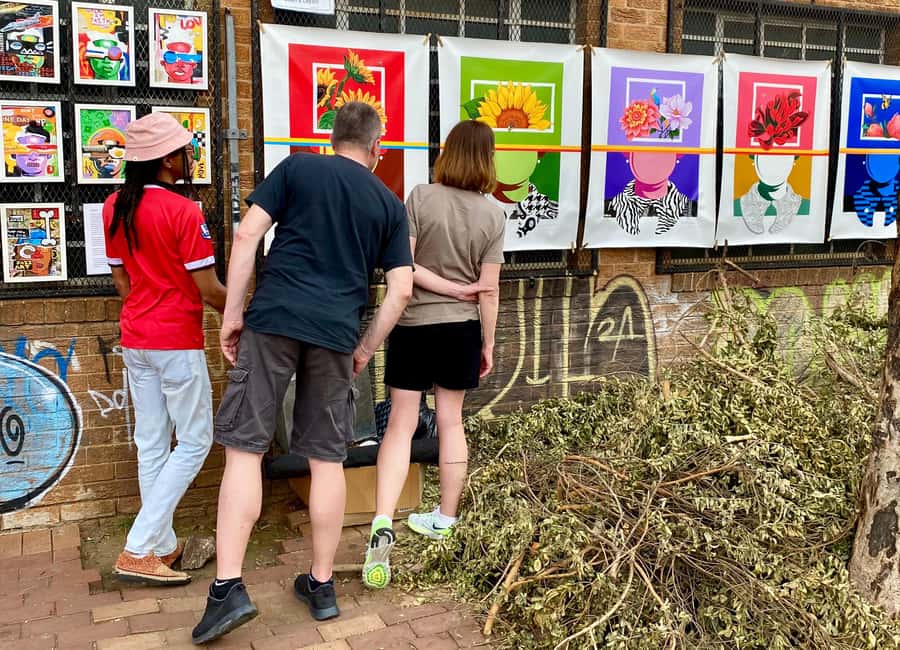
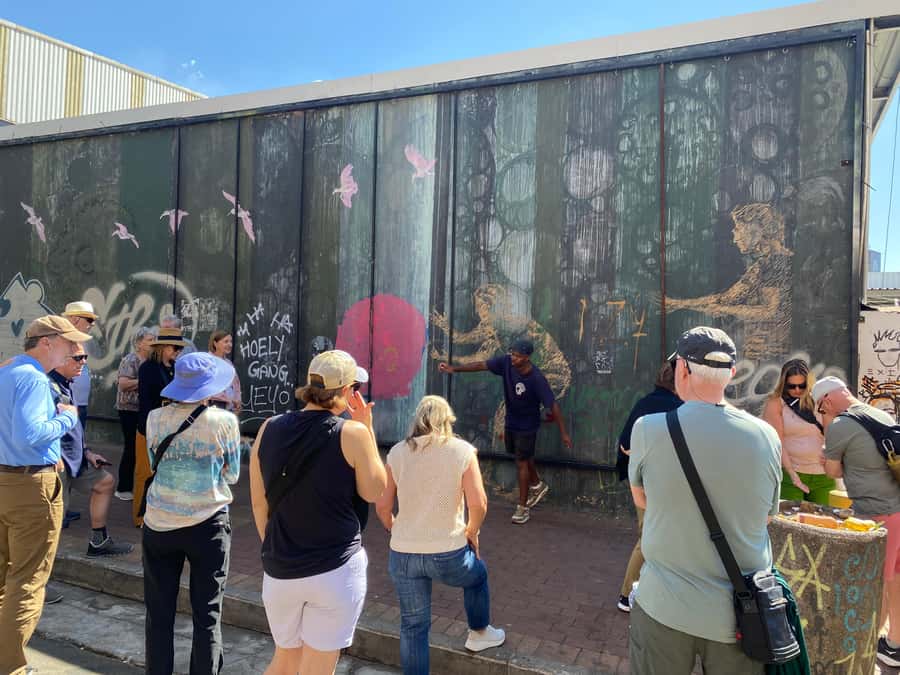
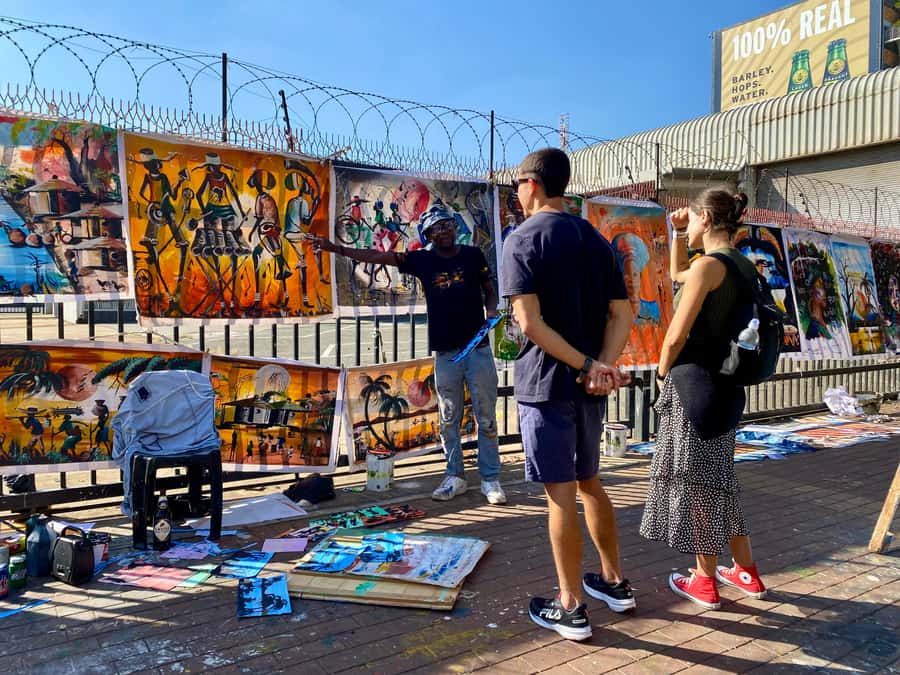
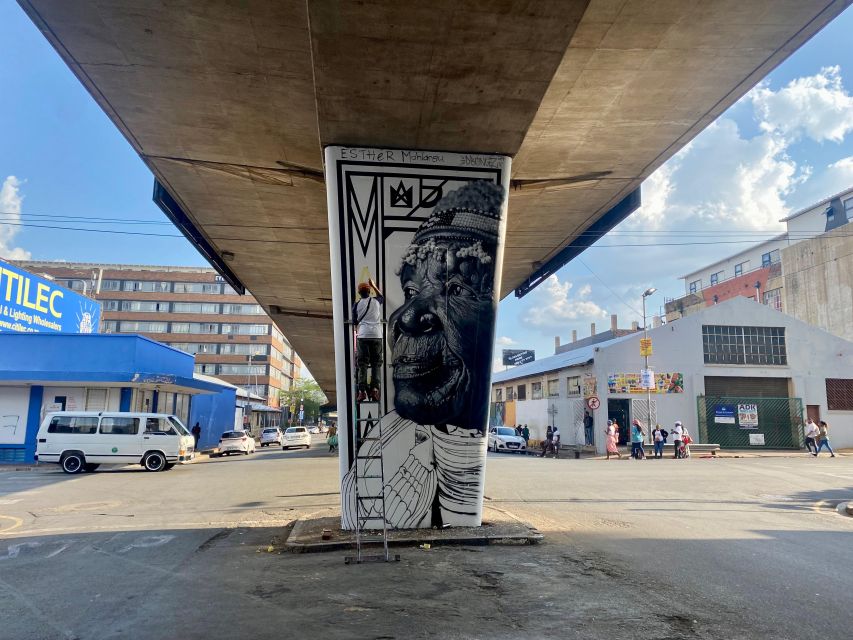
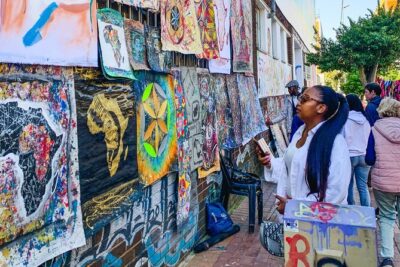
This is not just a look-and-go photo tour. The value is how the guide explains what you’re seeing and why it matters, street by street. Expect murals and wall work credited to artists such as ESPO Powers and DBongz, plus other local and international names.
You’ll walk through the precinct and talk about the stories behind iconic pieces, including the symbols and social messages that show up in South African street art. One smart part of this approach is that you learn how to read murals, so you’re not just relying on captions. After this, you’ll spot themes on your own as you keep exploring Joburg.
The tour also keeps an eye on the lived-in side of the neighborhood. You’ll pass art galleries, curio and gift stores, and restaurants, so the street art feels connected to everyday life, not staged for visitors.
Do be ready for street sellers along the route. If buying something matters to you, bring cash or a card so you can say yes fast when something catches your eye.
Maboneng’s 2009 to Today Story, From Industry to City Future
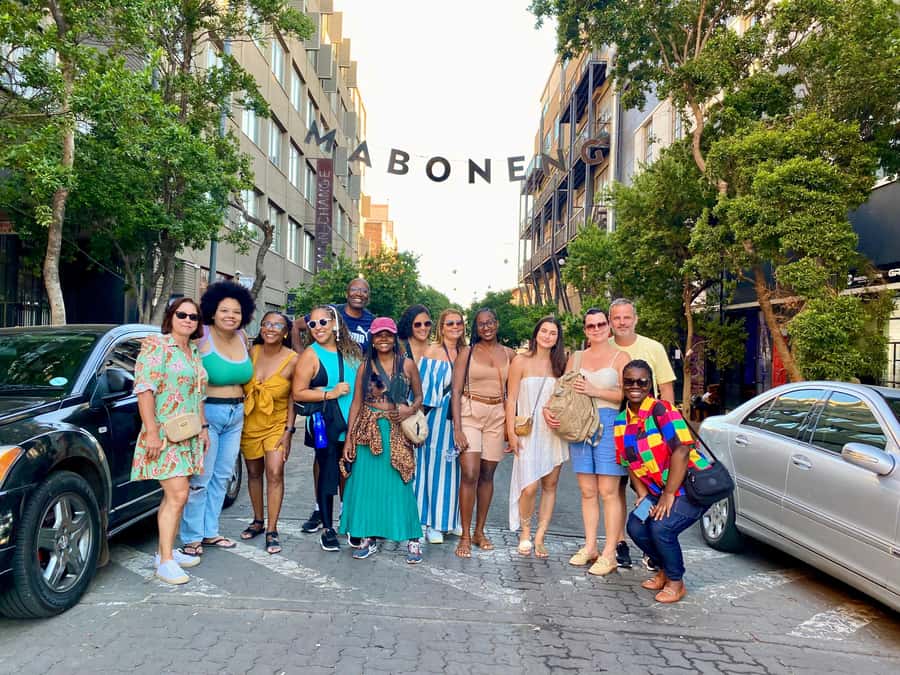
Maboneng has become one of Joburg’s best examples of urban transformation, and this tour gives you the timeline in a way that makes sense on your feet. You’ll hear how the area moved from an old industrial zone into a newer, creative neighborhood over time, starting around 2009.
The tour’s framing is practical: you get the “how” and “why,” not just the “look how cool it is.” That includes the big question of redevelopment and how art gets used as a public language for identity and change.
You also get a reminder that this isn’t only about aesthetics. The neighborhood is home to a real community, including people connected to the city’s mining past and people building what life can look like now. That balance helps the story feel grounded, not like a glossy makeover.
Maboneng Arts Village: Where Creatives Show and Sell
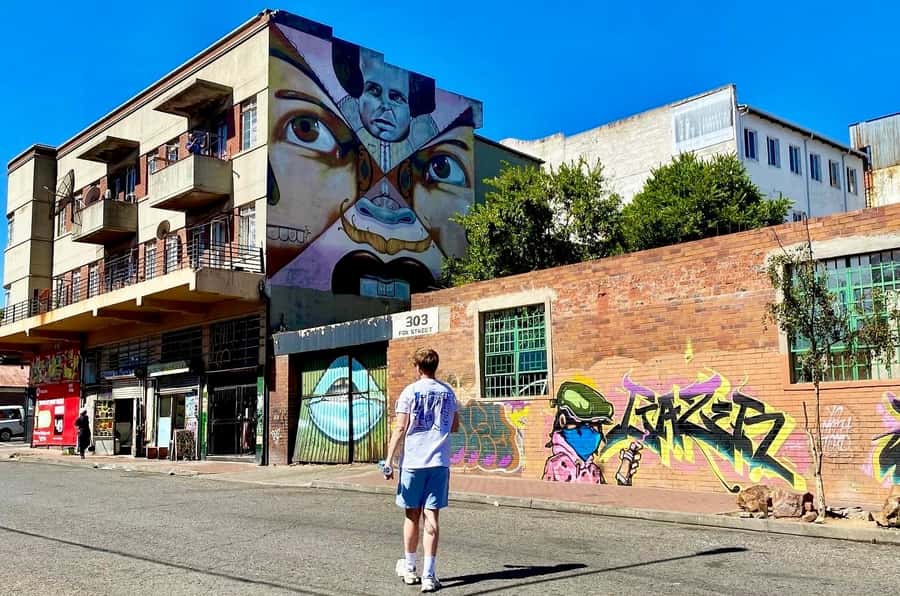
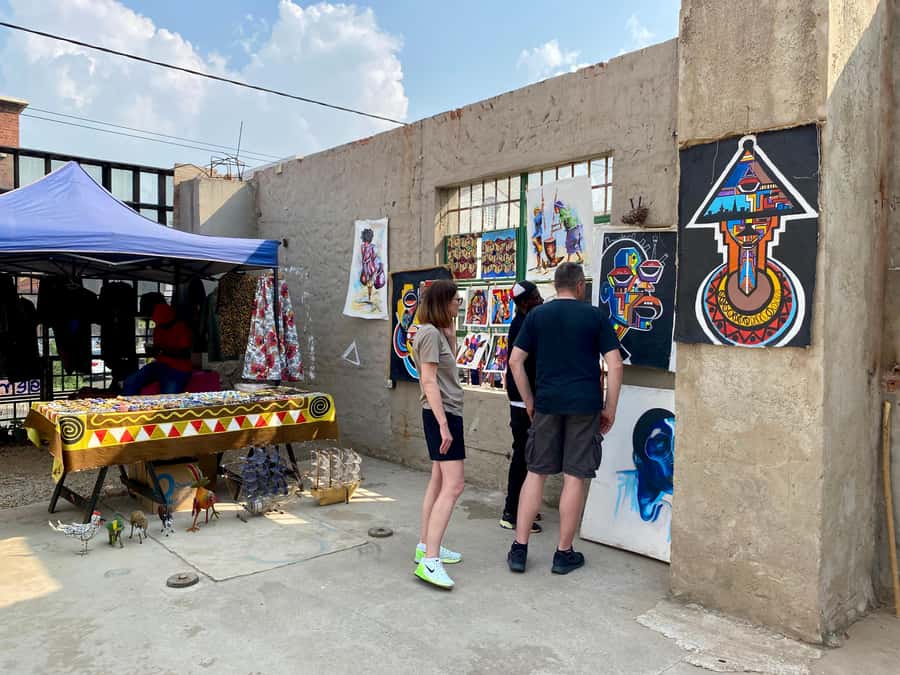
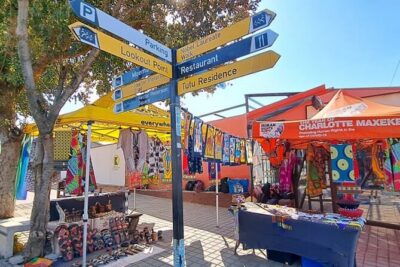
At some point during the walk, you’ll pop into a creative cluster where artists sell their work. Maboneng Arts Village is the stop designed for that moment when street art shifts into objects you can take home.
This is where the tour becomes more than murals. You’ll see creatives working in a space that exists for art and culture, and you get a chance to browse without rushing. It’s also a good place to slow down and ask questions, because you’re no longer scanning street walls every ten steps.
If you’re the type who likes to buy directly from makers, this is the practical payoff of the street art lessons. And if you’re not buying, you can still use the stop to understand the ecosystem behind the walls.


Curiocity Backpackers and the Hide-Out Bar Story
One of the most memorable stops is Hide-Out Bar at Curiocity Backpackers. The tour presents it as an alleged hideout connected to anti-apartheid activists, including Mandela, during apartheid.
Even if you treat the claim as a local legend rather than a museum-certified fact, it still works as a meaningful context clue. It shows how Johannesburg layers history into everyday places, including spaces that serve drinks and host visitors today.
The practical angle here is respectful curiosity. You’re not just hearing about politics. You’re seeing how memory and storytelling live in the city’s corners, and how that affects what you notice in the surrounding street art.
A Viewpoint Stop for Photos and Perspective
With any neighborhood walk, you need a short pause to reset your eyes. This tour includes a viewpoint moment on the route, with scenic views on the way and time to look around.
In at least one case, people have noted a rooftop-style view experience, which makes sense because Maboneng’s streets and creative spaces often reveal themselves best from above. Even if the exact angle varies, the purpose is the same: give your camera and your brain a break.
Use this stop to compare what you saw at street level to what you can now understand about the area’s layout. It’s one of those tiny timing choices that makes the entire tour feel longer in a good way.
Guides Like Ayanda, Bonny, Kaiser, or Michael Make the Difference
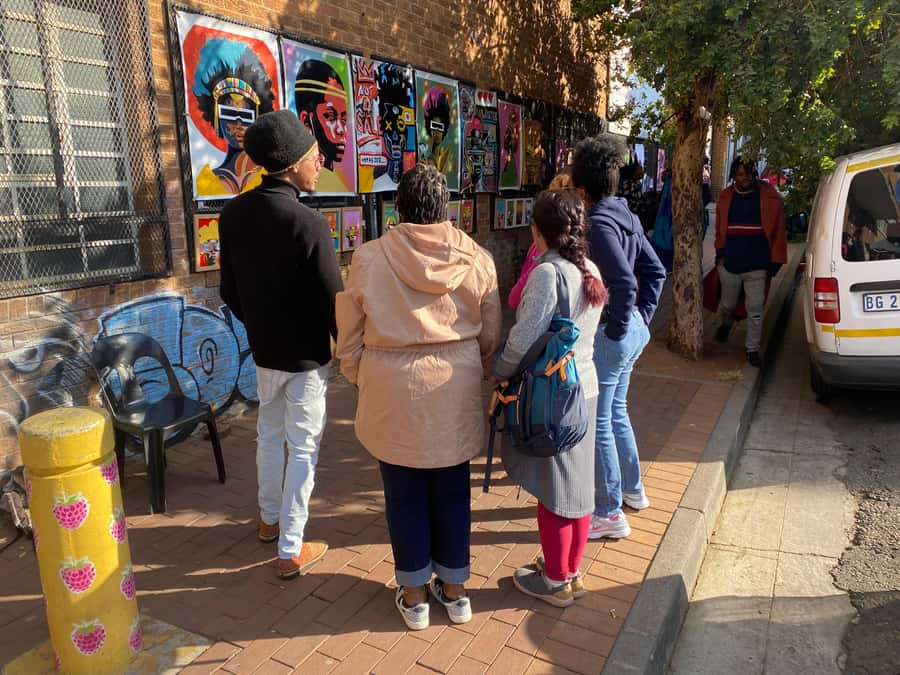
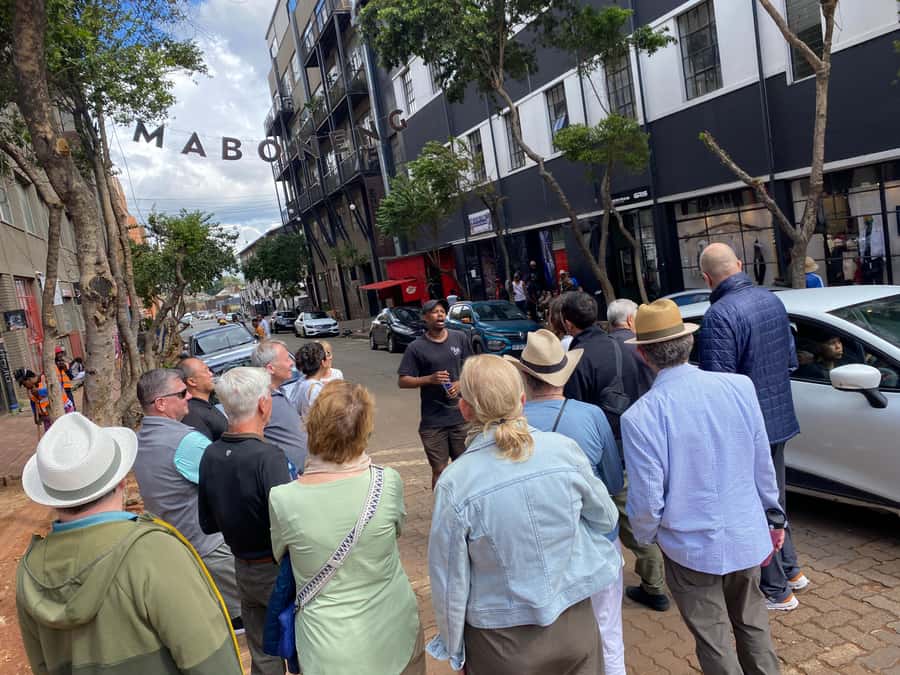
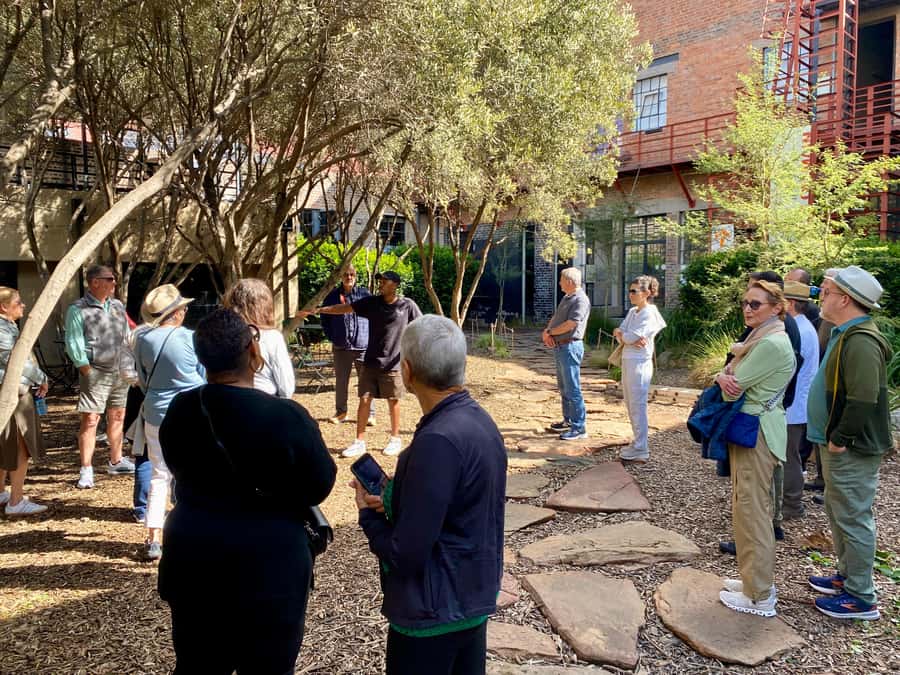
The strongest repeat theme is the guides. Many tours feature local guides, including Ayanda, and also mention guides such as Bonny, Kaiser, Michael, and others.
What gets praised is not just friendliness, it’s the way they explain cause and effect, connect street art to neighborhood change, and answer questions without brushing them off. A few people also describe the guide speaking from personal experience of living in the area, which is exactly what you want for a place like Maboneng.
You might also get extra practical help. One example from lived experience in the area includes help arranging an ATM, and another includes finding a parking spot near the meeting point. That kind of small local support matters when you’re trying to move through a city calmly.
If you want a tour where you can ask why a mural looks a certain way, or how redevelopment shaped what you see today, this guide style fits well.
Price and Value for $40 in 2 Hours
At $40 per person for a 2-hour guided walk, you’re paying for two things: time plus access. Entry to the sites you visit is included, which is not nothing when a tour includes multiple stops inside creative spaces.
You also get a lot of “learning per minute.” The route is structured for walking and seeing, but it’s also built to connect street art to culture and neighborhood history. That makes the experience feel more than a street-level stroll.
Food and drinks are on you. That’s fair, because the tour includes an optional coffee start at Home of the Bean, and then you’re free to choose what fits your taste. If you’re budgeting, plan for water and a snack separately.
One more value point: the group size is often small. One past participant described groups of about 2 to 4, which usually means more chances to talk with your guide and less time waiting behind other people.
What to Bring, What to Wear, and How to Stay Comfortable
This is a walking tour, so dress like you’ll be on your feet. Wear comfortable shoes because downtown sidewalks can be uneven, and you’ll spend a lot of time looking up at walls.
Language is English only, so if you’re more comfortable in another language, you’ll need to adjust your expectations. The good news is the content is designed to be clear and conversational, with room for questions.
Because there are street artists and informal traders, bring a little cash or have a card ready. It’s also a practical way to avoid awkward moments when you decide you want a print or small item.
Wheelchair accessibility is listed, so the tour is designed to be navigable. That said, any city walk has its own real-world conditions, so if you use a mobility aid, it’s smart to confirm details with the operator ahead of time.
Finally, listen during the safety briefing and stick close to the group. This is the kind of tour where “common sense” is the main safety tool, and having a local guide helps you choose where to focus your attention.
Should You Book This Maboneng Street Art and Culture Tour?
I’d book it if you’re in Johannesburg for the first time and want a short way to understand the city through art and neighborhood change. The combination is the strength: murals with meaning, plus the story of Maboneng evolving from an industrial area into a creative hub.
It’s also a smart pick if you enjoy asking questions and getting straight answers. The guide style, especially with names like Ayanda, Bonny, Kaiser, and Michael mentioned for their personal energy and local perspective, is a big part of why this tour works.
Skip it or adjust your expectations if you only want surface-level street photos and nothing else. There’s cultural context built into the walk, including the anti-apartheid-linked stop at Hide-Out Bar, and some people prefer tours that stay focused purely on art technique.
If your goal is to see Maboneng like an informed visitor, not a lucky passerby, this tour is a strong way to start. In two hours, you come away with more than images, you get a set of ideas you can use as you explore the rest of Joburg.
FAQ
Where is the meeting point?
The tour meets at Home of the Bean, on the corner of Fox and Berea Street under the bridge. It looks like an old industrial building from the outside, so wait inside the coffee shop.
Is food included?
No. All food and drink during the tour are at the guest’s own expense.
How long is the tour?
The duration is 2 hours.
What is the price?
The price is $40 per person.
What language is the tour in?
The tour guide speaks English only.
What is included in the ticket price?
Entry to all sites visited is included.
Is the tour suitable for wheelchair users?
The activity is listed as wheelchair accessible.
Should I bring cash?
Yes, it’s a good idea. There are street artists and informal traders on the streets, and if you want to buy anything you should have cash or a card.
Do I need to worry about safety at night?
You start with a safety briefing, and the tour is designed for walking around Maboneng with the guide. Use common sense and stay with the group.
What if I need to cancel?
Free cancellation is available up to 24 hours in advance for a full refund.
Johannesburg, Block by Block
- From Johannesburg: Pilanesberg Nature Reserve Game Safari
- Johannesburg: Hop-On Hop-Off Bus with Optional Soweto Tour
- Soweto /Johannesburg and Apartheid Museum Guided Full Day Tour
- Johannesburg Hop-On Hop-Off City Tour with Soweto Option
- Full Day Ultimate Pilanesberg National Park Safari from Johannesburg or Pretoria
Keep going: the rest of our Johannesburg write-ups
- Soweto Private half day tour
★ 4.5 · 3 reviews - Johannesburg’s Migration History with a local lunch
★ 5.0 · 3 reviews - Johannesburg: Soweto, Apartheid Museum, and Cradle tours
★ 4.7 · 3 reviews - Soweto Apartheid Museum and Lunch
★ 5.0 · 3 reviews - Bathongo Rhino & lion park nature reserve tour
★ 5.0 · 3 reviews - Johannesburg: Elephant and Monkey Sanctuary Half Day Tour
★ 5.0 · 3 reviews
Johannesburg City Tours, compared.
 ★ 4.5Johannesburg Hop-On Hop-Off City Tour with Soweto OptionFrom $16768 reviews
 ★ 4.8Johannesburg: Full-Day Tour with Soweto and Apartheid MuseumFrom $104478 reviews
 ★ 4.8Johannesburg and Soweto: Half-Day TourFrom $71439 reviews
 ★ 4.6From Johannesburg: Lion & Safari Park Half-Day TourFrom $167384 reviews
 ★ 5.0Ultimate Johannesburg Soweto Experience with Apartheid MuseumFrom $108313 reviews
 ★ 5.0Half Day Lion Park tour from Johannesburg or PretoriaFrom $100274 reviews
 ★ 4.9Johannesburg: Maboneng Street Art & Culture TourFrom $37257 reviews
 ★ 5.0Johannesburg and Soweto tourFrom $77231 reviews
Browse the lists this tour appears in