
REVIEW · JOHANNESBURG CITY TOURS
Johannesburg & Soweto (Half-day Tour)
A half day can still hit hard. This Johannesburg and Soweto tour packs major landmarks tied to South Africa’s struggle and follows the story from Soweto into downtown areas, with stops that help you connect names, events, and places. I especially like the way you visit Freedom Square and then move on to the memorial sites that explain what happened during the 1976 student protests.
The second reason I like it is practical: you get hotel pickup and drop-off plus a live guide, so you can focus on the lessons instead of figuring out transport between sites. One possible drawback to plan around is that the schedule includes a fair amount of driving, so parts of the experience can feel like you are watching the city go by as much as you are walking through it.
In This Review
- Key things to watch for
- Why This Soweto and Joburg Combo Works in a Half-Day
- Chris Hani Baragwanath Hospital: Seeing Scale and Daily Reality
- Freedom Square and the Freedom Charter: Politics in Plain Words
- Regina Mundi Church, The People’s Parliament: Where Community Organized
- Hector Peterson Museum and the 1976 Student Protests
- Vilakazi Street and Nobel Laureate Addresses: Culture Meets Memory
- Getting Around: Expect Car Time, Then Use It Smartly
- Price and Value for $112: What You’re Paying For
- Food, Weather, and Small Choices That Matter
- Guide Quality, Language Options, and Private-Group Comfort
- Who This Tour Fits Best, and Who Might Want Something Different
- Should You Book This Johannesburg and Soweto Half-Day Tour?
- FAQ
- How long is the Johannesburg and Soweto half-day tour?
- What stops are included during the tour?
- Is food or lunch included?
- What languages will the guide speak?
- Is the tour wheelchair accessible?
- Can I cancel, and do I get a refund?
Key things to watch for
- Big-name struggle sites in a tight route, from Freedom Square to Hector Peterson Museum
- Regina Mundi Church, often described as The People’s Parliament for the role it played during the struggle
- Vilakazi Street area time, where you can experience local culture and atmosphere
- Mandela and Desmond Tutu Nobel laureate addresses on the same street you are already visiting
- A car-heavy flow, meaning you should expect some window time between stops
Other Soweto routes we have reviewed, each with a local guide
- Johannesburg: Hop-On Hop-Off Bus with Optional Soweto Tour★ 4.6 · 985 reviews
- Soweto /Johannesburg and Apartheid Museum Guided Full Day Tour★ 5.0 · 932 reviews
- Johannesburg Hop-On Hop-Off City Tour with Soweto Option★ 4.5 · 768 reviews
- Half-Day Tour of Soweto Tour★ 4.5 · 712 reviews
Why This Soweto and Joburg Combo Works in a Half-Day

Johannesburg can feel overwhelming. The best way to get your bearings is to follow a storyline, not a random list of attractions. This route starts in Soweto and then moves toward key Johannesburg sights, so your brain starts connecting the dots quickly.
You also get a guide who can put events into context while you are standing where they happened or where the memory is preserved. That matters, because places like Freedom Square and Hector Peterson Museum are not just “things to see,” they are signposts in how modern South Africa formed.
Chris Hani Baragwanath Hospital: Seeing Scale and Daily Reality
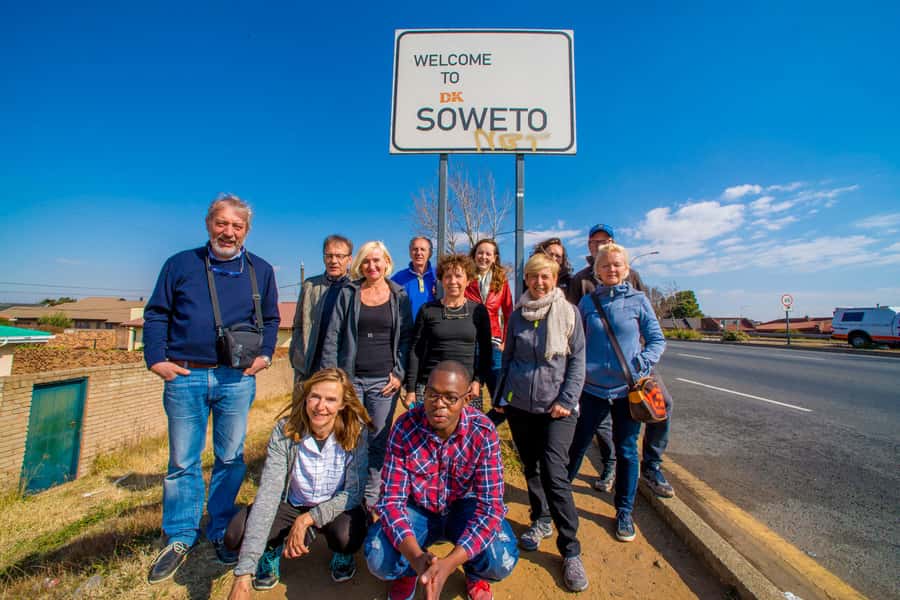
The tour begins at Chris Hani Baragwanath Hospital, known as the biggest hospital in the Southern Hemisphere. Even if you are not going for a medical visit, it’s an important place to understand what life looks like for many people in Soweto and the wider region.
The value here is perspective. When you step from political history into a site that reflects the realities of health care, it helps you understand that the struggle was not only about speeches and posters. It was also about basic systems and the everyday pressure of survival.
If you are expecting a formal museum-style stop, this one can feel more like a reality check. The experience will depend on what your guide emphasizes and how the visit is structured on your day.
Freedom Square and the Freedom Charter: Politics in Plain Words
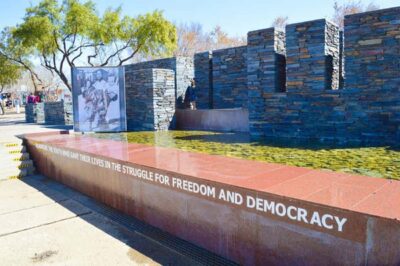
Next comes Freedom Square, the site tied to the Freedom Charter adopted in 1955. This stop gives you something many history tours miss: the chance to connect political ideas to specific locations and turning points.
The Freedom Charter is about rights, promises, and organizing. Seeing it in place helps you understand why the charter mattered to the direction of South African politics, not just as a historical document but as a statement people rallied around.
This is also a good moment to ask questions. A strong guide can translate the political language into everyday meaning so you leave with more than dates. If your guide is like Emmanuel, who has been praised for speaking from experience and answering questions well, you will likely get extra clarity.
Regina Mundi Church, The People’s Parliament: Where Community Organized
Then you visit Regina Mundi Church, also known as The People’s Parliament. That nickname is telling. It points to how community spaces were used when public life was controlled and people needed places to plan, communicate, and keep hope alive.
This is one of the stops where your guide’s storytelling makes the biggest difference. The church is more than architecture or a photo stop. It’s a place where the political struggle intersected with community endurance.
One thing I’d keep in mind: this stop can feel emotionally heavy. If you prefer lighter sightseeing, you might find the tone intense. But if you want to understand South Africa’s transformation, this is exactly the kind of place that grounds the story.
More of Joburg, neighbourhood by neighbourhood


Hector Peterson Museum and the 1976 Student Protests
After Regina Mundi, you head to Hector Peterson Museum, focused on the 1976 student protests. This stop is often the hinge point in the tour, because it’s where the history becomes personal and visible.
The museum ties a wider political struggle to the specific student uprising that changed the course of South African politics. It helps you understand why young people became central voices in the fight for change, and why the events of 1976 still echo today.
Because museum time can vary by pace, bring the mindset of “learn what you can, move with purpose.” If you rush, you might miss what the exhibits are trying to explain. If you slow down, you usually come away with a stronger grasp of the era.
Vilakazi Street and Nobel Laureate Addresses: Culture Meets Memory
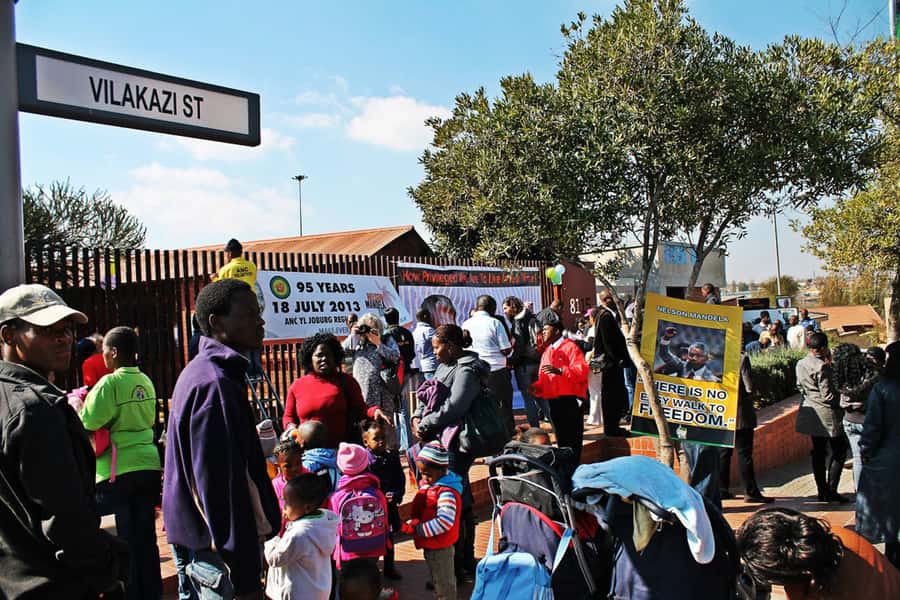
The tour also includes time on Vilakazi Street and focuses on the cultural embrace of the area. This is a very different feel from the memorial stops, and that contrast is part of what makes the route work.
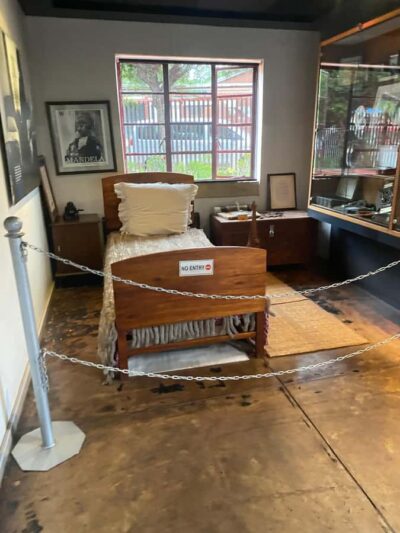
You’ll then visit the homes of Nelson Mandela and Desmond Tutu, Nobel Peace Laureates located on the same street. Standing there after you have learned about earlier struggle milestones can shift how you see the final chapters of the story, moving from protest and repression toward leadership and rebuilding.
This part can be the most “street-level” portion of the day. It’s also where I’d encourage you to slow down, look up at the surroundings, and let your guide point out what to notice. It’s not only about the names on the street. It’s about how place and people continue to shape each other.
Getting Around: Expect Car Time, Then Use It Smartly
Because this is a half-day route across Soweto and Johannesburg, the schedule includes driving between stops. One review pointed out that a lot of the time can be spent in the car, with sightseeing happening partly from the window. That’s a fair expectation to set before you go.
So how do you make the most of it? Use the ride time to get answers. Ask your guide to explain connections between stops, like how the 1955 Freedom Charter connects to later protests and to the eventual leadership symbolized by Mandela and Tutu.
Also, plan your expectations about walking. You are doing multiple major points, but you are not doing a long foot tour. If you want hours of deep wandering, this format might feel short in the wrong places.
Price and Value for $112: What You’re Paying For
At $112 per person for 5 hours, you’re paying for three big things: guided history, convenient transport, and access to multiple key sites without organizing it yourself.
Your inclusions are meaningful. You get hotel pickup and drop-off, a live guide (English plus Zulu, Sesotho, and Xhosa), and visits to Freedom Square, Regina Mundi Church, and Hector Peterson Museum. You also get skip the ticket line, which matters in a schedule where every minute counts.
Food is not included, so budget for that. But you do have a built-in chance to eat, and the guide can recommend local cuisine so you are not stuck guessing what to order.
If you are traveling with limited time, the value is in efficiency. This is the kind of tour where the “cost” is less about price and more about saving your energy and decision fatigue.
Food, Weather, and Small Choices That Matter
The tour runs rain or shine, so bring something that works. Even if it’s warm, South African weather can change fast. If you plan to wear uncomfortable shoes, you’ll feel it later, especially after museum time and street stops.
No food or drinks are included. The good news is that you can ask your guide for a local cuisine recommendation and stop for a bite during the tour. That’s often where you get the best flavor of everyday Johannesburg, not just the headline sites.
Also, alcohol and drugs are not allowed. Keep it straightforward, and you’ll keep the day focused.
Guide Quality, Language Options, and Private-Group Comfort

This is a private group tour, which usually means you get more flexibility in questions and pacing. It also means your guide can tailor explanations if you are curious, or speed up if you are focused on seeing the key stops.
Language support is a big plus. Your guide can work in English, Zulu, Sesotho, and Xhosa, so you have options depending on your comfort level.
Pickup matters. One past booking complained about the guide being hard to reach and the group waiting about an hour. To reduce the chance of a frustrating start, I’d make sure you are ready in the hotel lobby ahead of time. Your pickup guidance is to wait in the lobby 15 minutes before your scheduled pickup time.
Who This Tour Fits Best, and Who Might Want Something Different
This is a strong match if you want a guided historical route that covers major Soweto landmarks and then connects toward Johannesburg with a story in mind. It’s also a good choice if you want a manageable time commitment, 5 hours, instead of a full-day schedule.
It may not be ideal if you want a long, walking-heavy experience with lots of free time at each site. The format includes driving, so if your dream day is slow, deep exploration, you might prefer a longer itinerary or a different tour style.
If you do go, go with the right attitude. Plan to learn. Take photos, yes, but prioritize understanding why each place matters. That’s when the half-day format really pays off.
Should You Book This Johannesburg and Soweto Half-Day Tour?
I’d book it if you have limited time and you want a single route that connects Soweto’s struggle landmarks to Johannesburg’s broader story, with a guide who can answer questions. The inclusion of pickup and drop-off, plus skip-the-ticket-line access, makes it feel like a “real plan,” not a scramble.
I’d think twice if you are extremely sensitive to car time, or if you prefer long museum immersion without moving on quickly. In that case, you might feel rushed.
Bottom line: if you want a guided, story-based overview with important stops like Freedom Square, Regina Mundi Church, and Hector Peterson Museum, this is good value and a sensible way to spend a half-day in the region.
FAQ
How long is the Johannesburg and Soweto half-day tour?
The tour lasts 5 hours.
What stops are included during the tour?
The tour includes Chris Hani Baragwanath Hospital, Freedom Square, Regina Mundi Church, Hector Peterson Museum, and sightseeing on Vilakazi Street including the homes of Nelson Mandela and Desmond Tutu on the same street.
Is food or lunch included?
No. Food and drinks are not included, but you can ask your guide for a local cuisine recommendation during the tour.
What languages will the guide speak?
The live guide can speak English, Zulu, Sesotho, and Xhosa.
Is the tour wheelchair accessible?
Yes. The tour is wheelchair accessible.
Can I cancel, and do I get a refund?
Yes. You can cancel up to 24 hours in advance for a full refund.
Johannesburg, Block by Block
- From Johannesburg: Pilanesberg Nature Reserve Game Safari
- Johannesburg: Hop-On Hop-Off Bus with Optional Soweto Tour
- Soweto /Johannesburg and Apartheid Museum Guided Full Day Tour
- Johannesburg Hop-On Hop-Off City Tour with Soweto Option
- Full Day Ultimate Pilanesberg National Park Safari from Johannesburg or Pretoria
Soweto: Other Guided Routes
Keep going: the rest of our Johannesburg write-ups
- Soweto Private half day tour
★ 4.5 · 3 reviews - Johannesburg’s Migration History with a local lunch
★ 5.0 · 3 reviews - Johannesburg: Soweto, Apartheid Museum, and Cradle tours
★ 4.7 · 3 reviews - Soweto Apartheid Museum and Lunch
★ 5.0 · 3 reviews - Bathongo Rhino & lion park nature reserve tour
★ 5.0 · 3 reviews - Johannesburg: Elephant and Monkey Sanctuary Half Day Tour
★ 5.0 · 3 reviews
Johannesburg City Tours, compared.
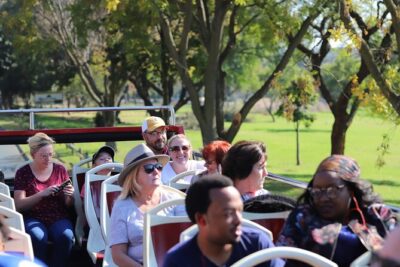 ★ 4.5Johannesburg Hop-On Hop-Off City Tour with Soweto OptionFrom $16768 reviews
 ★ 4.8Johannesburg: Full-Day Tour with Soweto and Apartheid MuseumFrom $104478 reviews
 ★ 4.8Johannesburg and Soweto: Half-Day TourFrom $71439 reviews
 ★ 4.6From Johannesburg: Lion & Safari Park Half-Day TourFrom $167384 reviews
 ★ 5.0Ultimate Johannesburg Soweto Experience with Apartheid MuseumFrom $108313 reviews
 ★ 5.0Half Day Lion Park tour from Johannesburg or PretoriaFrom $100274 reviews
 ★ 4.9Johannesburg: Maboneng Street Art & Culture TourFrom $37257 reviews
 ★ 5.0Johannesburg and Soweto tourFrom $77231 reviews
Browse the lists this tour appears in