
REVIEW · JOHANNESBURG CITY TOURS
Johannesburg and Soweto Tour in French
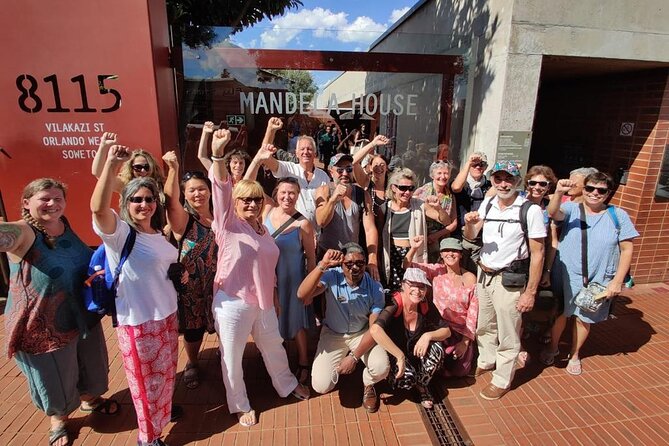
Soweto tells its story in real places. This private French-speaking guide tour strings together the places that shaped modern South Africa, with clear commentary you can actually follow, plus private transport so you are not burning time on logistics. Two things I especially like: the way the guide connects each stop to the 1976 uprising and the broader anti-apartheid struggle, and how the itinerary mixes famous names with everyday life in Soweto. One possible drawback to weigh is a rare reliability complaint, including a case where the operator did not show up, so keep your confirmation details handy.
You are looking at a full 7 to 8 hour outing built around short, meaningful stops, from the Hector Pieterson Memorial to Nelson Mandela’s former home, through Regina Mundi and the FNB Stadium, then onward to Constitution Hill and the Apartheid Museum. It runs daily between 9:00 AM and 5:00 PM, and you’ll get a mobile ticket plus pickup.
The best part here is that you can keep your questions in real time. The short time blocks mean you will want to show up ready to listen, and bring sunscreen and water, since the experience requires good weather.
In This Review
- Key highlights worth planning around
- Johannesburg and Soweto with a French-speaking guide: the value of not guessing
- Private transport and smart time blocks, so you keep your energy
- Stop 1: Hector Pieterson Memorial, where the 1976 uprising gets real
- Stop 2: Mandela House on Vilakazi Street, history through family life
- Stop 3: Regina Mundi, faith and refuge during 1976
- Stop 4: Walter Sisulu Square in Kliptown and the Freedom Charter
- Stop 5: FNB Stadium, Soccer City, and a quick modern contrast
- Cooling towers in Soweto, electricity history and a daredevil angle
- Stop 6: Constitution Hill, a human-rights precinct you cannot skim
- Stop 7: Apartheid Museum, rise and fall explained in a designed space
- Price and value: $92.35 per person, what makes it feel fair
- Who this Soweto and Johannesburg tour suits best
- How to get the most out of the day without feeling rushed
- Should you book this Johannesburg and Soweto tour?
- FAQ
- Is this tour offered in French?
- How long is the Johannesburg and Soweto tour?
- Does the price include transportation?
- Are museum and monument tickets included?
- Is lunch included?
- Is this a private tour or shared?
- Are there any weather or minimum-trip requirements?
Key highlights worth planning around

- French-speaking, private guidance: You get a live narrative, not a script in your phone.
- Mandela House and Apartheid Museum included: Two major admissions are already covered.
- Constitution Hill with real names: The human-rights story is tied to specific people and places.
- Soweto’s 1976 context, in the right order: Start at Hector Pieterson, then move through the uprising sites.
- FNB Stadium and fast photo stops: Quick hits that add modern Johannesburg texture.
- Flexible pacing inside a set route: In at least one case, the guide adjusted the flow for traffic and crowding.
Other Soweto routes we have reviewed, each with a local guide
- Johannesburg: Hop-On Hop-Off Bus with Optional Soweto Tour★ 4.6 · 985 reviews
- Soweto /Johannesburg and Apartheid Museum Guided Full Day Tour★ 5.0 · 932 reviews
- Johannesburg Hop-On Hop-Off City Tour with Soweto Option★ 4.5 · 768 reviews
- Half-Day Tour of Soweto Tour★ 4.5 · 712 reviews
Johannesburg and Soweto with a French-speaking guide: the value of not guessing
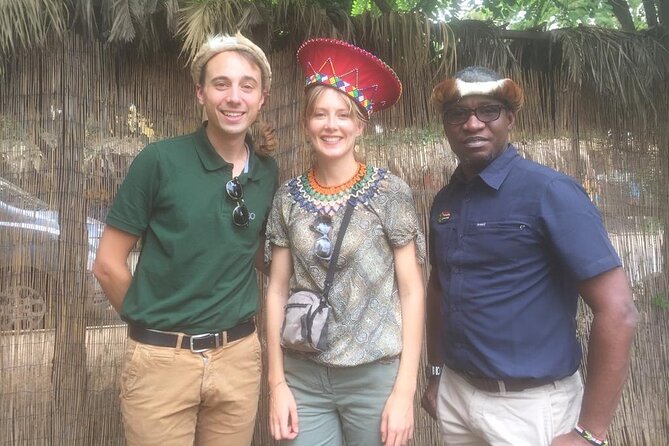
If you only have one day in the Johannesburg area, this kind of tour saves you from the classic trap: spending hours trying to figure out where to go, what matters, and what you are actually looking at. Here, the route is built to hit the key “why” behind Soweto and the anti-apartheid story, with a guide who can explain it in French.
I also like that this is private. That sounds like a marketing line, but it changes the whole experience: your pace fits your group, you can ask follow-ups, and you are not stuck listening over a crowd. In French-language reviews tied to this tour style, guides like Ibrahim and another guide identified as U were praised for being patient, friendly, and funny, with lots of answers.
The day is long enough to matter, but not so long that you feel dragged. Between the pickup, the driving, and the stops lasting from about 10 minutes to around 2 hours, you get a structured overview without pretending you can absorb everything in one sitting.
Private transport and smart time blocks, so you keep your energy
This is not a walking tour with constant steep hills and long distances. The experience includes private transportation, which matters in Johannesburg because traffic and timing can make a self-guided day feel chaotic.
The itinerary is a sequence of focused stops:
- Some are quick photo-and-story moments.
- Some are longer museum-style visits.
- Others are culturally important sites where you get context before you step inside.
That time structure is a double-edged sword. It keeps the day moving, but you should know that you will not have hours at every stop. If you really love museums, you’ll likely want extra time where admission is included, especially the Apartheid Museum.
A practical tip: keep your phone battery up and bring a small water bottle. Even with driving, you will be outside for parts of the day, and the experience requires good weather.
Stop 1: Hector Pieterson Memorial, where the 1976 uprising gets real
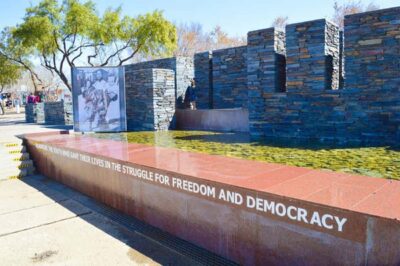
The day begins at the Hector Pieterson Memorial, the site associated with the start of the student uprising in 1976. This is one of those locations where the facts matter, but so does the emotion. The memorial and museum setting helps you understand why Soweto became a focal point far beyond its neighborhood boundaries.
Expect about 30 minutes at this stop. Admission is not included, so plan on paying separately if you want full museum access. Even if you focus mostly on the memorial itself, having your guide explain what happened and how events spread makes your photos and observations feel more anchored.
One thing I think is smart about starting here: it sets the framework for everything you see next. Without this first stop, Mandela House, Regina Mundi, and Constitution Hill can feel like separate landmarks. With it, they connect to the same chain of events.
Stop 2: Mandela House on Vilakazi Street, history through family life
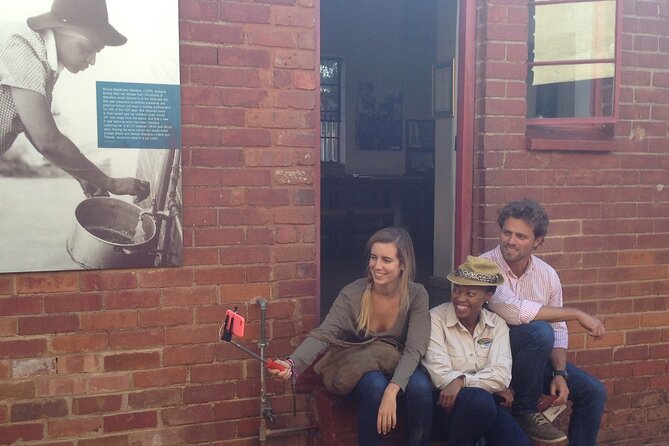
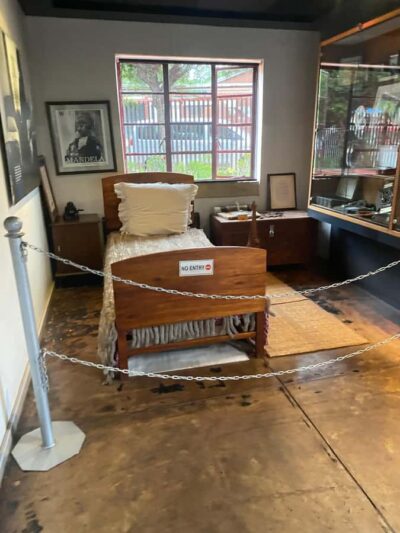
Next comes Mandela House on Vilakazi Street, where Nelson Mandela lived with his first wife Evelyn and later with his second wife Winnie Mandela. This stop stands out because it’s not just about political headlines. You get the sense of home and family, along with pictures from Mandela’s family life.
This is a 45 minute visit, and importantly, admission is included here. That saves you both money and time, which is a win when you are juggling multiple sites in one day.
If you are curious about how private life intersects with public struggle, this is where the tour helps most. Your guide’s commentary can bridge the emotional weight from Hector Pieterson into the personal story of Mandela’s household.
More of Joburg, neighbourhood by neighbourhood


Stop 3: Regina Mundi, faith and refuge during 1976
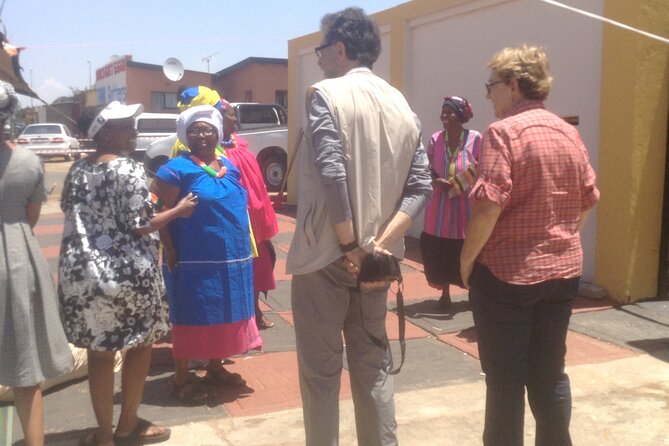
Regina Mundi is often described as the parliament of Soweto, and the name is not just poetic. It is the biggest Catholic church in the country, and it became a refuge during the 1976 uprising when students came to hide from the police.
You’ll spend about 30 minutes here. Admission is not included, but the site itself has meaning even if you are just taking in the space and the way your guide explains what took place.
This stop can be especially powerful if you like context with your landmarks. It shows that the uprising was not only about protests and politics, it was also about fear, safety, and the search for protection inside community institutions.
Stop 4: Walter Sisulu Square in Kliptown and the Freedom Charter
Then you head to Walter Sisulu Square, in Kliptown. This is framed as one of the oldest multicultural areas in Johannesburg, and it is tied to a key moment in 1955 when the Freedom Charter was voted on.
Plan for 30 minutes. Admission is not included, so this is more about the place plus the story than a ticketed experience.
I like this stop because it shifts the lens. After Regina Mundi, you get something different: a place where political ideas were articulated in a broader, community-based way. It helps you see that anti-apartheid history was not only one dramatic year. It was a long process of organizing, writing, and negotiating.
Stop 5: FNB Stadium, Soccer City, and a quick modern contrast

From there, the tour moves to the FNB Stadium, also known as Soccer City. It is home to the FIFA World Cup 2010, and your stop here is short, about 10 minutes. Admission is listed as free.
This quick hit might seem unrelated if you expect only memorials and museums. But I think it works, because it gives you a sense of present-day Johannesburg. You see the city’s global-facing side, right after the sites tied to national struggle.
Treat this as a photo stop and a short reset. If you want deep stadium history, you’ll need a dedicated sports visit. In this tour, its job is contrast.
Cooling towers in Soweto, electricity history and a daredevil angle
There is also a set of cooling towers that show up as a prominent landmark in Soweto. They were built in 1951 to supply electricity to Johannesburg, and today they are known for being used for bungee jumping from a platform between the top of the two towers.
This is more of an observational stop than a formal museum moment, but it’s a great example of how the area mixes industrial-era infrastructure with modern thrill-seeking. If you like architecture and big structures, take a few extra minutes to look at them from different angles while your guide is explaining their role.
No bungee details are included in the tour info, so don’t count on doing it during your visit. Think photos and perspective.
Stop 6: Constitution Hill, a human-rights precinct you cannot skim
The biggest emotional weight in the route often lands at Constitution Hill Human Rights Precinct. This is where incarceration is central to the story, including the Old Fort, Women’s Jail, and Number Four. The precinct names well-known political figures and also emphasizes how many ordinary people were confined there over a 100-year period.
Nelson Mandela, Mahatma Gandhi, Joe Slovo, Albertina Sisulu, Winnie Madikizela-Mandela, Fatima Meer, and others are specifically connected to the site. Your guide’s job here is huge: they help you understand why these walls matter without turning the visit into a simple list of names.
Plan around 30 minutes. Admission is not included, so you might spend less time here than you would in a museum with included tickets, unless you choose to prioritize it.
In my mind, this stop is the best place to ask your most serious questions. With the names and the framing your guide provides, you can connect what you just saw in Soweto to the national legal and political system that followed.
Stop 7: Apartheid Museum, rise and fall explained in a designed space
The tour ends with the Apartheid Museum, described as the first of its kind. It illustrates the rise and fall of apartheid, and the building itself is a designed experience, planned by an architectural consortium across multiple leading firms on a seven-hectare stand.
This part is the longest visit, about 2 hours, and admission is included. If you want one stop where you slow down and really absorb, this is it.
A practical thought: set your energy strategy. After Constitution Hill, it’s easy to feel emotionally “full.” Then the museum asks for attention again. Take a moment before you enter, and pick one or two themes to focus on, like how systems worked or how resistance evolved.
If you’re traveling with kids or anyone who gets tired quickly, this is where your guide’s pacing can make the difference. In French-language feedback tied to this tour, guides were praised for being patient and able to answer lots of questions, which helps when museum time stretches.
Price and value: $92.35 per person, what makes it feel fair
At $92.35 per person, you are not paying for a generic sightseeing loop. You are paying for private guiding, private transport, and coverage of admissions at Mandela House and Apartheid Museum.
Let’s break down the value logic:
- You get transportation, which matters for time and comfort in Johannesburg.
- You get a French-speaking guide with commentary that ties the stops into a coherent story.
- Two major tickets are included, which reduces your add-on costs later.
- Lunch is not included, so you should budget for food on your own during the day.
The stops where admission is not included are still worth it, but you will want to bring a bit of extra money or payment method. If you are the kind of traveler who hates surprise fees, this is the part to double-check before you go.
Also consider timing. The tour is about 7 to 8 hours, and it is privately guided, so the price reflects that time investment and the guide time. For many visitors, that beats the hassle of trying to stitch together multiple taxi trips and ticketed sites alone.
Who this Soweto and Johannesburg tour suits best
This tour is a strong fit if you want a first serious look at Soweto and the anti-apartheid story, without building your own route from scratch. It works especially well for:
- French speakers who want context explained clearly
- First-time visitors who want the major sites in one day
- People who value a guide who can answer questions, not just point at plaques
- Travelers who prefer comfort, thanks to private transport
It might be less ideal if you want a slow, deep museum day with no time pressure. The stops vary in length, and some key sites are only allocated about 30 minutes.
How to get the most out of the day without feeling rushed
A little prep makes a big difference. Before you arrive, decide what you want most:
- A stronger understanding of 1976 and Soweto’s role
- A personal story through Mandela House
- A broader national legal story through Constitution Hill
- A museum-based explanation through the Apartheid Museum
Then use that choice to guide your questions. This kind of guided day gets better when you treat your guide like a living reference, especially since guides identified in feedback, like Ibrahim and U, were praised for being attentive and for having a good sense of humor.
Also, dress for sun and dust. Even with driving, you will spend time outside. Bring sunglasses, a hat, and water, and leave room for a few photo stops you will not control.
Should you book this Johannesburg and Soweto tour?
If you want a one-day, French-language introduction that covers the biggest emotionally and historically important stops, this is a solid booking. The biggest reasons: you get private transport, a French-speaking guide who can explain connections across sites, and included admissions for two major locations.
I would book with two cautions in mind. First, you will likely need to plan for additional tickets where admissions are not included. Second, read the fine print on reliability, since there is one complaint about a no-show. To reduce stress, confirm your details and have a way to reach the operator on the day.
If you match the style, you will probably leave with a much clearer mental map of Soweto, Constitution Hill, and the Apartheid Museum’s storyline, all in one organized day.
FAQ
Is this tour offered in French?
Yes, it is described as a private guided tour with a French-speaking guide.
How long is the Johannesburg and Soweto tour?
It runs about 7 to 8 hours.
Does the price include transportation?
Yes. Private transportation is included, and pickup is offered.
Are museum and monument tickets included?
Mandela House has admission included, and the Apartheid Museum also has admission included. Admission for the Hector Pieterson Memorial, Regina Mundi, Walter Sisulu Square, and Constitution Hill is listed as not included. The FNB Stadium stop is free.
Is lunch included?
No, lunch is not included.
Is this a private tour or shared?
This is a private tour/activity, with only your group participating.
Are there any weather or minimum-trip requirements?
The experience requires good weather, and it can be rescheduled or refunded if canceled due to poor weather. It may also be canceled if a minimum number of travelers is not met.
Johannesburg, Block by Block
- From Johannesburg: Pilanesberg Nature Reserve Game Safari
- Johannesburg: Hop-On Hop-Off Bus with Optional Soweto Tour
- Soweto /Johannesburg and Apartheid Museum Guided Full Day Tour
- Johannesburg Hop-On Hop-Off City Tour with Soweto Option
- Full Day Ultimate Pilanesberg National Park Safari from Johannesburg or Pretoria
Soweto: Other Guided Routes
Keep going: the rest of our Johannesburg write-ups
- Soweto Private half day tour
★ 4.5 · 3 reviews - Johannesburg’s Migration History with a local lunch
★ 5.0 · 3 reviews - Johannesburg: Soweto, Apartheid Museum, and Cradle tours
★ 4.7 · 3 reviews - Soweto Apartheid Museum and Lunch
★ 5.0 · 3 reviews - Bathongo Rhino & lion park nature reserve tour
★ 5.0 · 3 reviews - Johannesburg: Elephant and Monkey Sanctuary Half Day Tour
★ 5.0 · 3 reviews
Johannesburg City Tours, compared.
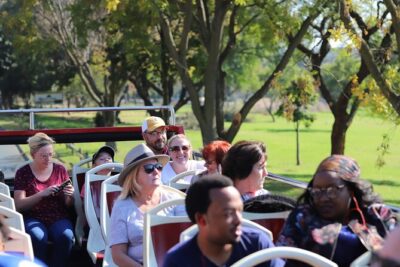 ★ 4.5Johannesburg Hop-On Hop-Off City Tour with Soweto OptionFrom $16768 reviews
 ★ 4.8Johannesburg: Full-Day Tour with Soweto and Apartheid MuseumFrom $104478 reviews
 ★ 4.8Johannesburg and Soweto: Half-Day TourFrom $71439 reviews
 ★ 4.6From Johannesburg: Lion & Safari Park Half-Day TourFrom $167384 reviews
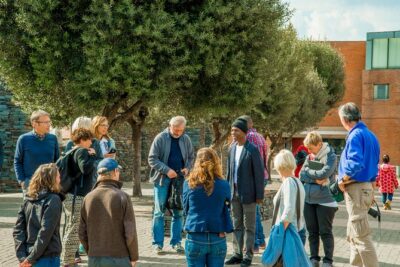 ★ 5.0Ultimate Johannesburg Soweto Experience with Apartheid MuseumFrom $108313 reviews
 ★ 5.0Half Day Lion Park tour from Johannesburg or PretoriaFrom $100274 reviews
 ★ 4.9Johannesburg: Maboneng Street Art & Culture TourFrom $37257 reviews
 ★ 5.0Johannesburg and Soweto tourFrom $77231 reviews
Browse the lists this tour appears in