
REVIEW · JOHANNESBURG CITY TOURS
Johannesburg and Apartheid Museum and Soweto Guided Full-Day Tour
History gets real in Soweto. This guided day trip threads Constitution Hill and the Apartheid Museum into Soweto street-level stops, so you understand the why, not just the where.
I especially like the max seven group size, which keeps the day personal, and the comfort upgrade of an air-conditioned vehicle with Wi-Fi and bottled water.
One thing to plan for: the subject matter is serious, and museum opening days can shift your route, since the Apartheid Museum does not open Monday and Tuesday.
In This Review
- Key things I’d plan around
- Entering The Day: Johannesburg to Soweto in One 8-Hour Loop
- Constitution Hill Human Rights Precinct: From Prison Walls to Courtroom Power
- Braamfontein and the Nelson Mandela Bridge: Getting Oriented to Jozi
- FNB Stadium and the Shape of Ambition
- Soweto Starter Pack: Diepkloof, the Welcome Sign, and Contrasts You Can Feel
- Baragwanath Hospital and the Real World Beyond Views
- Informal Settlements Detour: Seeing the Good, Bad, and Ugly Without Soft Focus
- Orlando Towers: Art, Speed, and a Photo Stop That Packs Energy
- Vilakazi Street: The Only Street Tied to Two Nobel Peace Laureates
- Mandela House: Standing Where Mandela Lived
- Sakhumzi Restaurant Stop: Budget for African Cuisine
- Hector Pieterson Museum and Memorial: June 16, 1976 Up Close
- Street Markets and Curio Time After the Museum
- Price and Value: Is $180 Worth It?
- Who This Tour Suits Best, and Who Might Prefer a Different Day
- Should You Book This Johannesburg and Soweto Full-Day Tour?
- FAQ
- What time does the Johannesburg and Soweto tour start?
- How long is the tour?
- Is pickup included?
- How many people are in the group?
- What is included in the price?
- Which admissions are included?
- What is not included?
- Are there days when museums are closed?
- Does the tour require good weather?
Key things I’d plan around
- Max seven people means you get time to ask questions, especially at the museums.
- AC van with Wi-Fi and water makes the day easier when you are covering a lot of stops.
- Included admission at key sites helps you avoid ticket stress for Constitution Hill, Mandela House, and the Apartheid Museum.
- Soweto photo moments built in like the Welcome to Soweto sign area and Orlando Towers.
- Vilakazi Street context because it is tied to both Nelson Mandela and Bishop Desmond Tutu.
- A guide can make the difference, and one guide name that came up clearly is Emma, praised for mixing warmth with strong explanations.
Other Soweto routes we have reviewed, each with a local guide
- Johannesburg: Hop-On Hop-Off Bus with Optional Soweto Tour★ 4.6 · 985 reviews
- Soweto /Johannesburg and Apartheid Museum Guided Full Day Tour★ 5.0 · 932 reviews
- Johannesburg Hop-On Hop-Off City Tour with Soweto Option★ 4.5 · 768 reviews
- Half-Day Tour of Soweto Tour★ 4.5 · 712 reviews
Entering The Day: Johannesburg to Soweto in One 8-Hour Loop

This is a full-day, guided route that starts in central Johannesburg and slowly shifts you toward Soweto, instead of dumping you there all at once. The timing works well if you want a big picture of the city and apartheid legacy without getting stuck planning transport between areas.
You will be traveling in a private, air-conditioned vehicle with Wi-Fi, and that matters more than it sounds. Johannesburg can be a long day on foot, so having a comfortable ride keeps your energy for the parts that actually need your attention. You also get bottled water, which helps when the weather turns sunny.
The tour caps at seven people, so it feels like a conversation with structure, not a bus tour with one-way information. And because the day includes multiple sites with included tickets, it is a fairly efficient way to spend your time.
Constitution Hill Human Rights Precinct: From Prison Walls to Courtroom Power
Constitution Hill is one of those places where the architecture does a lot of talking. You start at the Human Rights Precinct, a National Heritage Site that links the old apartheid prison system with the democratic South Africa that replaced it.
What I like about this stop is the way it frames change. The old prison area has been demolished to make way for the Constitution Court, which protects democracy and human rights. That simple fact turns the visit into more than a museum stop. You are seeing a physical transition from repression to rights.
You get about 1 hour 30 minutes here, plus an admission ticket included. That time window is enough to read and reflect without feeling rushed, especially if your guide is stopping to explain how apartheid worked and how South Africa tried to rebuild afterward.
If you are the kind of traveler who likes to understand a place through both events and symbols, Constitution Hill will grab you.
Braamfontein and the Nelson Mandela Bridge: Getting Oriented to Jozi
After Constitution Hill, the tour heads through Braamfontein. This is not a long sit-down museum segment. It is more of a moving orientation, as you pass through the Nelson Mandela Bridge and enter the inner city.
You will also see parts of Johannesburg tied to the mining district. That matters because Johannesburg is not only about politics and monuments. It is also about how the city grew, how jobs pulled people in, and how wealth and inequality were built into the urban system.
This stop is about 1 hour, and admission is free for this part. It is a good breather between heavy history and the shift toward Soweto, and it helps you understand why Johannesburg is called the city of gold in many stories. You are learning the city’s logic while you still have time to process it.
FNB Stadium and the Shape of Ambition
Next comes a quick pause at FNB Stadium. It is described as being built in the shape of an African calabash, and even if you are not a stadium person, that kind of design detail gives you a sense of local identity in modern Johannesburg.
You only get around 30 minutes here, and admission is free, so think of it as a visual waypoint. The useful part is what your guide can connect it to: how Johannesburg builds big and visible symbols, and how those symbols sit beside the deeper inequality apartheid created.
This is a practical stop too. You are still on schedule, and you are not spending your entire day stuck in traffic without a reason.
More sites and museums that record the apartheid years
Soweto Starter Pack: Diepkloof, the Welcome Sign, and Contrasts You Can Feel
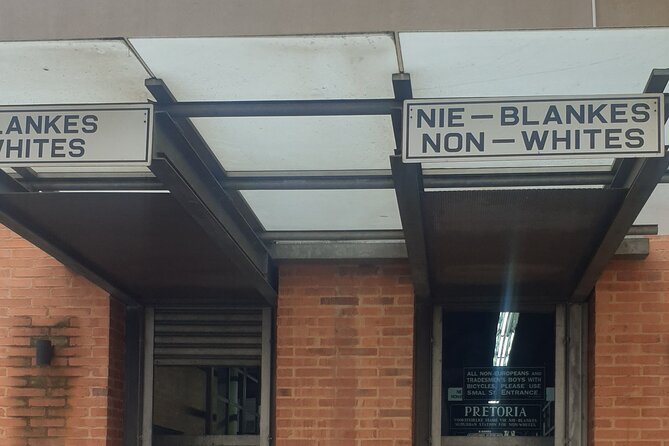
Then the tour moves into Soweto, and the first impression is contrast. You see differences in housing right away, including areas in Diepkloof where the homes are described as fancier, with a local nickname of the Beverly Hills of Soweto.
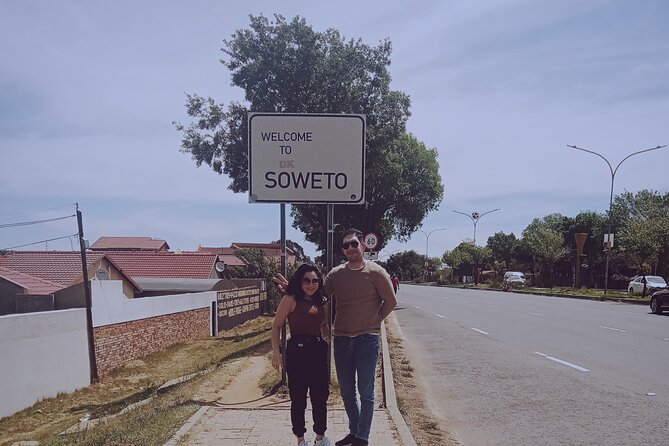
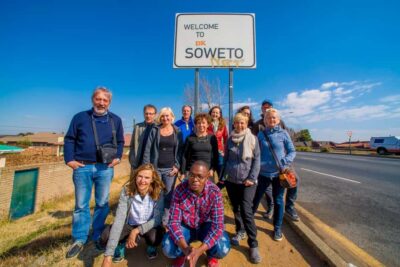
There is also a short photo stop around the Welcome to Soweto sign. It is only about 15 minutes, but I understand why it is included. A sign photo is not the point by itself. The point is the moment you can say, yes, I made it, and now you are going to learn what that place actually means.
As the vehicle rolls through neighborhoods, you will also get a quick explanation that life in Soweto varies widely, depending on family income and other factors. That is important because Soweto is often shown as one thing in textbooks or TV clips. This tour pushes back against that oversimplification.
Baragwanath Hospital and the Real World Beyond Views
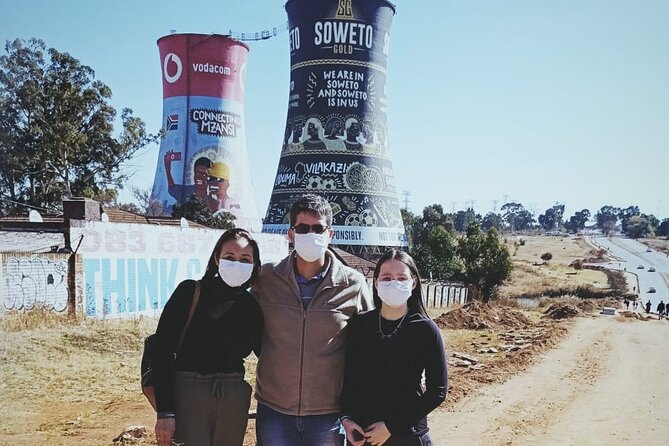
As you go deeper into Soweto, the route passes Baragwanath Hospital, described as the biggest hospital in Africa. It started as a military hospital, and today it functions as a public hospital funded by the South African government.
This stop is not about sightseeing. It is about scale and social structure. Hospitals show you what a community needs, how services work day to day, and how public support translates into real life. It also helps you understand Soweto as a living place, not just an historic backdrop.
Again, you are not meant to spend long here. The value comes from the context your guide gives while you are passing by.
Informal Settlements Detour: Seeing the Good, Bad, and Ugly Without Soft Focus
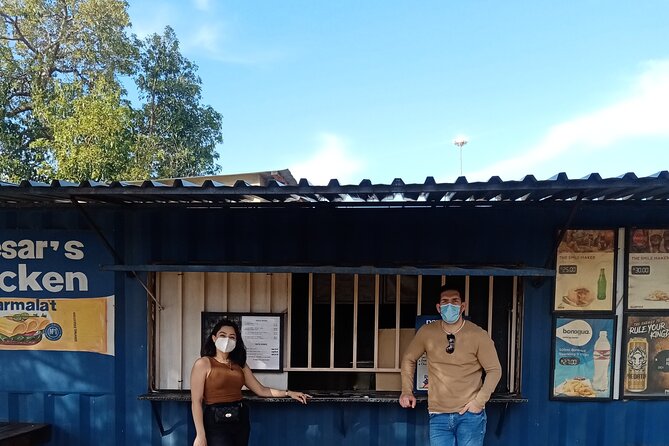
One of the most emotionally complex parts of the day is a quick detour to informal settlements. The tour frames the goal clearly: show you the good, the bad, and the ugly of the township.
The living conditions are described as among the worst, and that is not minimized. At the same time, the tour notes the love and the best smiles it has seen from children in those areas. That balance is what you should expect: honest reality, plus human warmth.
I would mentally prepare for this segment. It is not designed to be comfortable, and it is not designed to be performative. If you come in with respect, you will get more out of it, even if you cannot unsee what you are shown.
Orlando Towers: Art, Speed, and a Photo Stop That Packs Energy
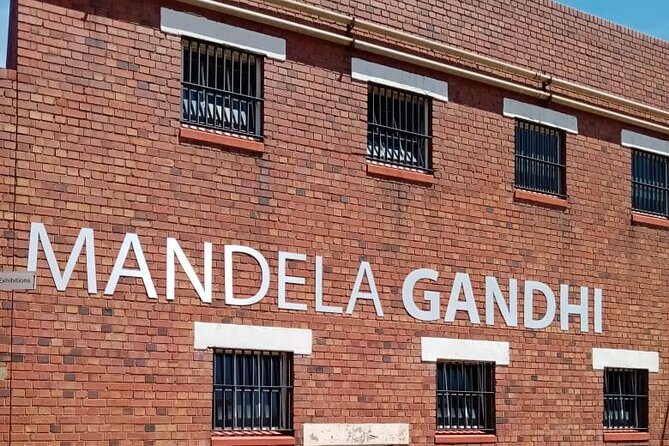
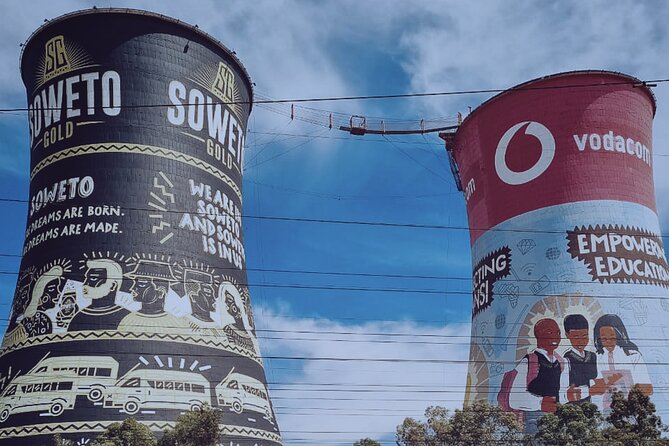
Orlando Towers is one of the strongest, most memorable stops in Soweto. The two painted towers are a visual landmark, and you get about 30 minutes there.
This is a free-admission stop and very much a break from museum walls. You can take photos, look closely at the artwork, and get a sense of how identity and creativity show up in public spaces.
There is also bungee jumping offered at the towers, so if you want adrenaline, this is the place mentioned for it. Even if you do not jump, the setting feels alive and modern in a way that complements the heavier history you have been learning.
Vilakazi Street: The Only Street Tied to Two Nobel Peace Laureates
Vilakazi Street gets short but powerful attention. It is presented as the only street in the world where both Nelson Mandela and Bishop Desmond Tutu lived, and both were Nobel Peace Prize Peace winners.
This is the kind of fact that changes how you see a street. It stops being just a road with shops and houses and becomes a symbol of moral leadership, resistance, and reconciliation moving through everyday geography.
Expect this to be less about time and more about meaning, as you move along and get guided framing. You are also building toward the next major stop, Mandela House.
Mandela House: Standing Where Mandela Lived
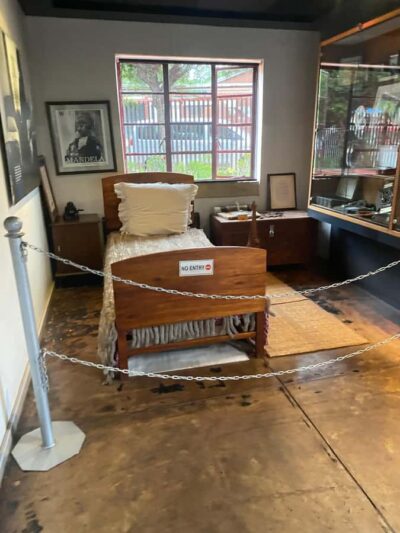
Mandela House is a highlight that lasts about 45 minutes, with admission included. The former home of Nelson Mandela is the anchor here, and it gives the history a face you can connect with the larger story.
This is where the trip shifts from explanation to personal scale. You are learning the political events around apartheid, but at Mandela House you are also dealing with what it means when a leader’s life becomes part of national memory.
I like this stop because it is not only about tragedy. It is also about the transition from oppression to governance, and how ordinary spaces become important when the world attaches meaning to them.
If your time in Johannesburg is short, this site is worth planning around because it is both iconic and grounded.
Sakhumzi Restaurant Stop: Budget for African Cuisine
By this point, you will likely be hungry. The tour includes a 1-hour stop at Sakhumzi Restaurant, positioned as the place to enjoy African cuisine at its best.
Important practical note: the tour data says lunch is not included in the price. So plan to pay for your own meal there. Bring cash or a card if that is what you use on the trip, and consider going with something that is easy to share, since group schedules can be tight.
I find this food stop value-adding because it keeps you in the local rhythm of the day rather than sending you back to a hotel for lunch and losing time.
Hector Pieterson Museum and Memorial: June 16, 1976 Up Close
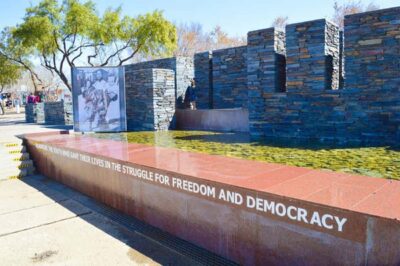
The tour then moves to the Hector Pieterson Museum and Memorial. This is another admission-included museum stop, and it takes about 45 minutes.
This place focuses on the horrors of the apartheid regime through the lens of school children and the June 16, 1976 uprising. It is sad, and it is meant to be taken seriously, but it is also built around the idea that these events shaped the future, so you cannot treat it as just another exhibit.
I appreciate the way this stop connects to the earlier apartheid lessons without repeating them. Constitution Hill explained structural change. Hector Pieterson Museum centers the human cost, especially for students.
When the museum ends, the tour does not send you away immediately.
Street Markets and Curio Time After the Museum
After the museum tour, you get about 30 minutes to explore street markets and curio shops. Admission is listed as free for this segment, and it is basically your chance to pick up souvenirs while the day is still fresh in your mind.
This is also a useful decompression window. Museums can be heavy back to back, so having a time block for browsing and simple local shopping can help reset your brain.
If you shop, keep it practical. Compare prices quickly, and do not rush. The curio shops here are mentioned as a place with amazing souvenirs, so plan for time to look.
Price and Value: Is $180 Worth It?
At $180 per person for about 8 hours, this is not a budget-only tour. But it is not just a van ride either.
Here is where the value comes from:
- Small-group experience (max seven), which is usually where you feel differences most at the museums.
- Pickup is included, and transportation includes an air-conditioned vehicle with Wi-Fi and bottled water.
- Entrance fees are included for major stops like Mandela House and the Apartheid Museum, plus admission included at Constitution Hill and Hector Pieterson Museum segments.
- All fees and taxes are bundled, so you are less likely to get hit with add-ons mid-day.
Where you might feel the cost is in what is not included: breakfast and lunch are not included, and alcoholic beverages and soda/pop are also listed as not included. So you should budget for a meal and any drinks you want at the Sakhumzi Restaurant stop.
Booked an average of 17 days in advance on this route suggests it is a popular, sensible way to structure your time. If you are traveling with limited days in Johannesburg, this “big sites in one go” approach can be the efficient choice.
Who This Tour Suits Best, and Who Might Prefer a Different Day
This is best for you if:
- You want a guided, structured day with clear stops and included tickets.
- You care about understanding apartheid beyond headlines, with context you can ask questions about.
- You prefer a small group rather than crowds.
- You want both Soweto landmarks and major museums in one plan.
It may be less ideal if you are looking for a purely upbeat sightseeing day. The Apartheid Museum and Hector Pieterson Museum are serious and emotional. You will need space to process.
On the plus side, the guide format seems to work well for people who want explanation, and one standout from the experience is Emma being specifically praised for making the whole day click, with friendly, informed conversation that helped visitors connect the dots between sites.
Should You Book This Johannesburg and Soweto Full-Day Tour?
I think this is a strong booking if you have a limited amount of time and you want a guided mix of Johannesburg highlights, Soweto landmarks, and two of South Africa’s most important anti-apartheid memorial spaces.
Book it if you like learning with a human guide, not just reading plaques. The small group helps, and the included admissions mean you can focus on what you are seeing and not on ticket logistics.
Skip or choose another option if you feel you need a lighter day, or if you are sensitive to heavy content. Also double-check museum opening days before you lock in your schedule, since the Apartheid Museum does not open on Monday and Tuesday, and the Hector Pieterson Museum does not open on a Monday.
If you do book, come ready for contrasts, respectful curiosity, and the kind of day that changes how you understand the city.
FAQ
What time does the Johannesburg and Soweto tour start?
The tour starts at 9:00 am.
How long is the tour?
It runs for about 8 hours.
Is pickup included?
Yes, pickup is offered from Johannesburg.
How many people are in the group?
The tour has a maximum of 7 travelers.
What is included in the price?
The price includes an air-conditioned vehicle, Wi-Fi on board, bottled water, and all fees and taxes.
Which admissions are included?
Admission tickets are included for Constitution Hill, Mandela House, and the Apartheid Museum, and admission is included for the Hector Pieterson Museum and Memorial.
What is not included?
Lunch, breakfast, alcoholic beverages, and soda/pop are not included.
Are there days when museums are closed?
Yes. The Apartheid Museum doesn’t open on Monday and Tuesday, and the Hector Petersen Museum doesn’t open on a Monday.
Does the tour require good weather?
Yes, the tour requires good weather. If it is canceled due to poor weather, you will be offered a different date or a full refund.
Johannesburg, Block by Block
- From Johannesburg: Pilanesberg Nature Reserve Game Safari
- Johannesburg: Hop-On Hop-Off Bus with Optional Soweto Tour
- Soweto /Johannesburg and Apartheid Museum Guided Full Day Tour
- Johannesburg Hop-On Hop-Off City Tour with Soweto Option
- Full Day Ultimate Pilanesberg National Park Safari from Johannesburg or Pretoria
Apartheid History: Other Sites We Have Documented
Soweto: Other Guided Routes
Keep going: the rest of our Johannesburg write-ups
- Soweto Private half day tour
★ 4.5 · 3 reviews - Johannesburg’s Migration History with a local lunch
★ 5.0 · 3 reviews - Johannesburg: Soweto, Apartheid Museum, and Cradle tours
★ 4.7 · 3 reviews - Soweto Apartheid Museum and Lunch
★ 5.0 · 3 reviews - Bathongo Rhino & lion park nature reserve tour
★ 5.0 · 3 reviews - Johannesburg: Elephant and Monkey Sanctuary Half Day Tour
★ 5.0 · 3 reviews
Johannesburg City Tours, compared.
 ★ 4.5Johannesburg Hop-On Hop-Off City Tour with Soweto OptionFrom $16768 reviews
 ★ 4.8Johannesburg: Full-Day Tour with Soweto and Apartheid MuseumFrom $104478 reviews
 ★ 4.8Johannesburg and Soweto: Half-Day TourFrom $71439 reviews
 ★ 4.6From Johannesburg: Lion & Safari Park Half-Day TourFrom $167384 reviews
 ★ 5.0Ultimate Johannesburg Soweto Experience with Apartheid MuseumFrom $108313 reviews
 ★ 5.0Half Day Lion Park tour from Johannesburg or PretoriaFrom $100274 reviews
 ★ 4.9Johannesburg: Maboneng Street Art & Culture TourFrom $37257 reviews
 ★ 5.0Johannesburg and Soweto tourFrom $77231 reviews
Browse the lists this tour appears in