

REVIEW · SOWETO TOURS
Soweto half day Tour
Soweto hits hard, then makes you think. This half day outing connects Johannesburg’s landmark sports stage to the people and places at the center of South Africa’s struggle and its post-apartheid story, with Vilakazi Street as the main emotional marker and a qualified guide keeping the day grounded.
I like the practical pacing for a first visit: you get short orientation stops en route, then longer time where it matters most for understanding, reflection, and context. I also like that the tour is built for comfort, with pickup and drop off around Johannesburg and Pretoria plus an air-conditioned vehicle and bottled water.
One thing to consider, especially if you want a laid-back day: four hours moves at a steady tempo, so you’ll need comfortable shoes and a mindset for absorbing a lot of weighty stories in a short window.
In This Review
- Key things that make this Soweto half-day work
- A first-time Soweto plan that doesn’t waste your time
- FNB Stadium and the 2010 World Cup stage
- Diepkloof Park and the logic of township life
- Orlando Towers: a neighborhood landmark with meaning
- Vilakazi Street: walking where Mandela and Tutu lived
- Mandela House: the lived-in side of a global icon
- Hector Pieterson Museum and Memorial: where the story becomes personal
- Regina Mundi: the people’s church and resistance
- Kliptown Youth Program: optional squatter camp visit for extra context
- Price, value, and what you really get for $59.81
- What to expect on the ground: timing, walking, and your best mindset
- Who should book this Soweto half-day tour?
- Final call: should you book this tour?
- FAQ
- How long is the Soweto half day tour?
- What is the price per person?
- Do I get hotel pickup and drop off?
- Are admission tickets included for the stops?
- Is the Kliptown Youth Program stop optional?
- What is included in the tour price?
- Can I cancel for a full refund?
Key things that make this Soweto half-day work
- Short, well-spaced stops that keep the day moving without feeling rushed at the main sites
- Vilakazi Street home visits tied to Nelson Mandela and Archbishop Desmond Tutu
- Hector Pieterson Museum and Memorial as the emotional center of the trip
- Regina Mundi Church and its role in township resistance
- Optional Kliptown Youth Program stop if you want extra on the area’s living history
- Real local perspective from guides like Mo, Banela, Tsholo, and Banele
Other Soweto routes we have reviewed, each with a local guide
- Johannesburg: Hop-On Hop-Off Bus with Optional Soweto Tour★ 4.6 · 985 reviews
- Soweto /Johannesburg and Apartheid Museum Guided Full Day Tour★ 5.0 · 932 reviews
- Johannesburg Hop-On Hop-Off City Tour with Soweto Option★ 4.5 · 768 reviews
- Half-Day Tour of Soweto Tour★ 4.5 · 712 reviews
A first-time Soweto plan that doesn’t waste your time

If it’s your first time in Soweto, the big challenge is not “what to see.” It’s how to connect the dots fast: where people lived, why whole neighborhoods mattered politically, and how the present grew from the past. This tour is designed for that. It uses a tight route with multiple stops, then layers history through the people who know it, not just through facts on a sign.
The format is also friendly for practical travelers. You get pickup and drop off around Johannesburg and Pretoria, so you are not stitching together rides on your own. The group setup means you can ask questions as you go, and someone else handles the route and timing.
FNB Stadium and the 2010 World Cup stage
Your day starts with a drive past FNB Stadium, often associated with the 2010 FIFA World Cup. You’ll hear how Soccer City became part of major global attention, and how the stadium’s design is respected internationally. That matters because it sets up a contrast you’ll feel all day: the scale of Johannesburg’s public face versus the real lives shaped nearby.
This stop is quick, about 15 minutes, which is a good trade-off. You get the “big landmark” orientation without burning time that you’ll later want for the memorial spaces.
What to watch for: the area is busy in general. Keep your eyes on your guide and your group, especially for quick photos from the roadside.
Diepkloof Park and the logic of township life
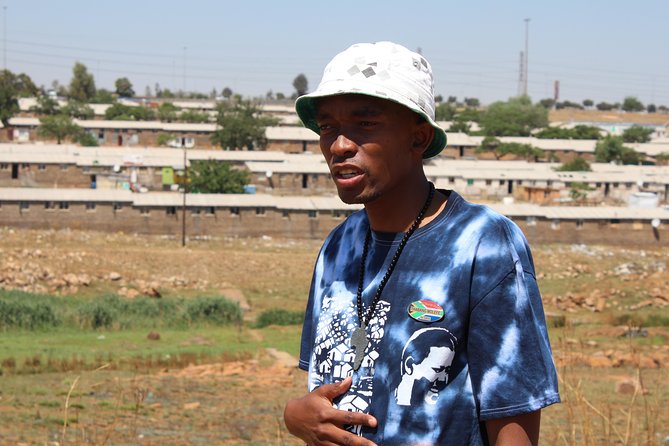
Diepkloof Park is where the tour turns from landmark viewing into learning about origins and everyday township life, often called kasi life. This is one of those stops that sounds abstract until you understand what your guide is linking it to. In practice, you’ll get explanations that connect housing patterns and political policies to why the township formed the way it did and how life continued after those systems changed.
This is also where you start learning that Soweto is not a museum piece. It is a working community, with people living real schedules, earning real livelihoods, and carrying stories forward.
The time here is also around 15 minutes, so expect this as an “anchor” stop, not a full lesson. If you love asking questions, this is a great place to do it, because your guide can tailor what comes next based on what you want to understand better.
Orlando Towers: a neighborhood landmark with meaning
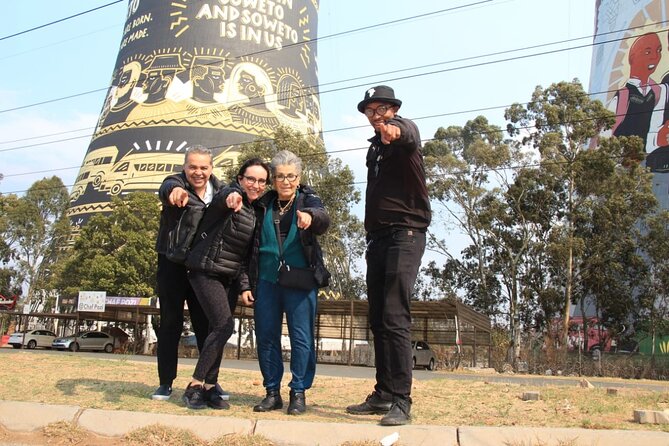
Orlando Towers are one of Soweto’s recognizable skyline features. On this stop, you’re not just taking a picture. The idea is to use the landmark as a shortcut into understanding the way township architecture and communities evolved over time.
It’s a short stop, about 20 minutes, which works well. It’s long enough to get the explanation and a few photos, not long enough to drag you away from the emotionally heavier parts ahead.
Practical tip: if you tend to read every plaque, don’t worry. Use the explanation first, then pause for the details your guide points out.

Vilakazi Street: walking where Mandela and Tutu lived
Then you reach Vilakazi Street, the famous address where Nelson Mandela and Archbishop Desmond Tutu lived. The tour gives you about 45 minutes here, which is just right. It’s enough time to slow down, take in the street life, and really focus on what the houses represent, without feeling like you are on a factory tour.
This is one of the best segments of the day because it’s human-scale. You’re not viewing history from behind glass. You’re walking the place where history became personal and where visitors can understand the symbolism behind leadership after apartheid.
Two things I especially value here:
- The street time is long enough to absorb explanations, not just to pass through.
- The guide’s ability to connect locations to stories makes the names feel real, not distant.
If you get a guide like Mo, Banela, Tsholo, or Banele, you’re likely to hear very specific local framing that helps you understand what it meant to live through the changes. (Even if you are not catching every detail, the overall story lands.)
Mandela House: the lived-in side of a global icon

Next comes Mandela House, with about 30 minutes on site. This is the house where former South African president Nelson Mandela lived, now set up as one of the country’s major heritage sites. You’ll see interpretive materials, sound and film elements, and guided tour moments that help turn a household into a timeline.
Why this stop works: it takes a figure most people know from headlines and connects that fame to daily life. The house becomes a way to understand how leadership, family life, and the broader freedom story overlapped.
What to consider: this segment can feel emotionally intense. If you’re the kind of person who wants to process slowly, ask your guide to point out the key sections first, then take a second pass with your own pace.
Hector Pieterson Museum and Memorial: where the story becomes personal
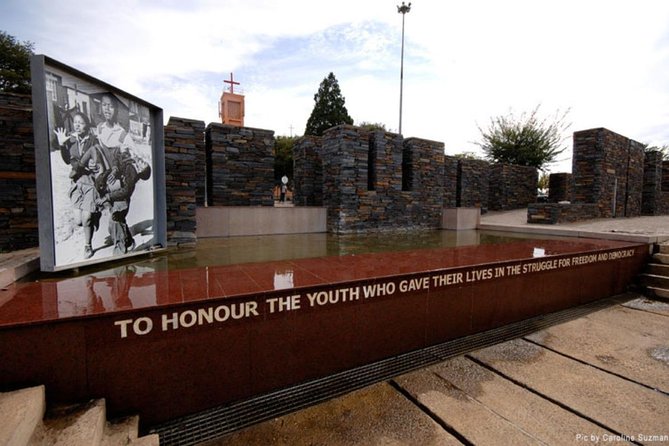
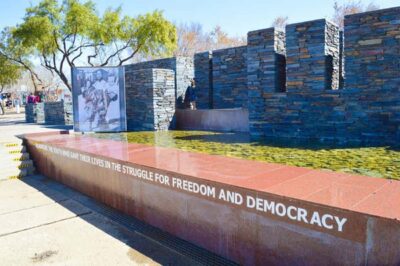
The Hector Pieterson Museum and Memorial is a national heritage site tied to the Soweto Uprising. Hector was a 13-year-old who was shot on 16 June 1976, and his story has become a symbol of resistance to apartheid brutality.
You’ll have about 30 minutes here. It’s enough time to understand the event, its context, and its lasting impact, especially when your guide is able to connect what you’re seeing to the larger timeline.
If you only had time for one stop that carries the emotional weight of the entire tour, this is the one. It is where history stops being abstract and starts feeling like a human life and a turning point.
A practical note: memorial spaces can prompt strong reactions. Give yourself permission to step back, breathe, and ask questions instead of rushing through.
Regina Mundi: the people’s church and resistance
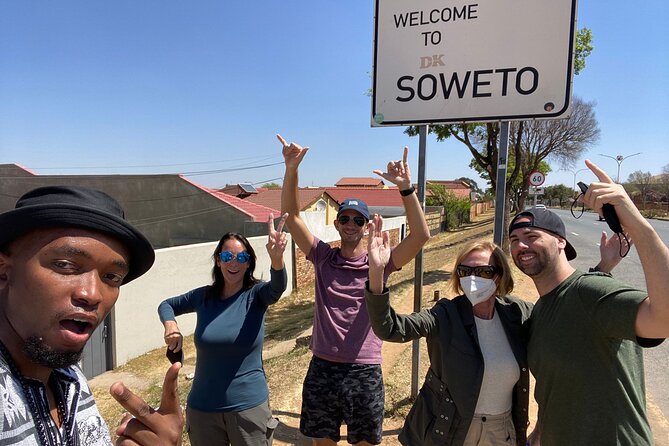
The tour then includes Regina Mundi, often described as the people’s church. This stop takes on a different angle. Instead of focusing only on a single person or a single event, it highlights how community spaces supported resistance against apartheid.
Expect about 15 minutes here, which makes it a focused stop. You’ll likely get a clear explanation of how the church functioned as more than a building, and why places like this matter when we talk about organizing, protection, and shared courage.
If religion and activism are not topics you usually link together, this is where you’ll see the connection. You may still have a lot of questions by the end, and that’s a good sign.
Kliptown Youth Program: optional squatter camp visit for extra context
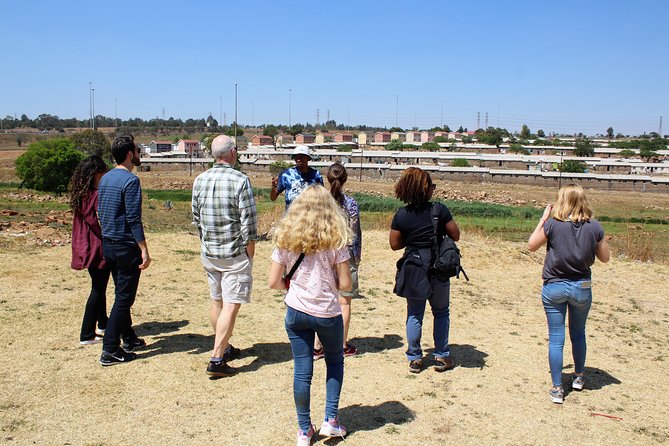
The last stop is Kliptown Youth Program, with an optional squatter camp tour. This adds about 15 minutes if you choose it.
Why this can be worth it: it helps you understand the everyday housing reality tied to the wider apartheid-era system and how communities lived through those conditions. The word optional matters for a reason. Some people want to end on the memorial and church sites. Others want the housing and lived-in context to finish the story.
A tip based on what tends to make this part meaningful: if you do the optional walk, listen closely to how your guide explains the relationship between housing arrangements and policy. It’s usually in those details that the bigger history becomes real.
Also, bring cash in your pocket if you like to tip people who contribute directly to your understanding. One common suggestion from firsthand experiences is that you may be asked to tip locals at certain stops. If that’s your style, you’ll want to be ready.
Price, value, and what you really get for $59.81
At $59.81 per person for about 4 hours, this tour is priced in a way that feels reasonable for what it includes, especially in South Africa where logistics can be the hidden cost. Your money goes into:
- Pickup and drop off around Johannesburg and Pretoria
- An air-conditioned vehicle
- Bottled water
- A qualified guide escort throughout
- A mobile ticket
- A group setup that includes group discounts
- And, importantly, admission tickets listed as free at each major stop
So yes, it’s a paid tour, but you are not paying extra entrance fees at the sites listed. That makes a noticeable difference if you are comparing options and want a “one price, one plan” day.
One practical trade-off: food is not included. You’ll want to plan around this by grabbing coffee or snacks before or after, since coffee and tea and sodas are not part of the deal. Lunch is also not included.
What to expect on the ground: timing, walking, and your best mindset
This is a half day tour, so the biggest success factor is your expectations. You’re seeing a lot of meaningful locations in a short time, so you’ll want to stay mentally flexible.
Walking is part of the day, especially on Vilakazi Street. It’s not described as a long hike, but it does mean you should wear comfortable shoes and keep an eye on meeting points quickly.
If you like learning through conversation, you’ll likely enjoy this more than a silent, self-guided day. The tour is designed around your guide’s ability to explain connections between stops, and many people rate it highly specifically for that guided storytelling.
Who should book this Soweto half-day tour?
This one is a good fit if:
- You want a structured first look at Soweto without wrestling with transport
- You value guidance that links stops into one coherent story
- You like historical and cultural context, but you are on a time budget
- You prefer a group tour with a knowledgeable human guide rather than an audio app
It may be less ideal if:
- You want a slow pace with lots of independent exploring time
- You don’t handle heavy memorial themes well in a short day
- You need food included, since coffee, lunch, and drinks are not included
Final call: should you book this tour?
If you want a focused, affordable way to see the most important emotional and historical sites in Soweto, I’d recommend booking this half day tour. The value is strong because it bundles transport, guided escort, and free admissions at the listed stops, and it gives enough time for Vilakazi Street, Mandela House, and the Hector Pieterson Memorial.
Just go in prepared for intensity and compression. If you want a memory you can explain later, this is the kind of tour that helps you do exactly that.
FAQ
How long is the Soweto half day tour?
The tour lasts about 4 hours.
What is the price per person?
The price is $59.81 per person.
Do I get hotel pickup and drop off?
Yes. The tour includes pickup and drop offs from any hotel around Johannesburg and Pretoria.
Are admission tickets included for the stops?
Admission tickets at the listed stops are shown as free.
Is the Kliptown Youth Program stop optional?
Yes. The Kliptown Youth Program squatter camp tour is listed as optional.
What is included in the tour price?
Included items are bottled water, an air-conditioned vehicle, pickup and drop offs, and an escorted qualified guide throughout the trip.
Can I cancel for a full refund?
Yes. You can cancel up to 24 hours in advance for a full refund. If you cancel less than 24 hours before the start time, you will not be refunded.
Soweto: Other Guided Routes
Keep going: the rest of our Johannesburg write-ups
- Soweto Private half day tour
★ 4.5 · 3 reviews - Johannesburg’s Migration History with a local lunch
★ 5.0 · 3 reviews - Johannesburg: Soweto, Apartheid Museum, and Cradle tours
★ 4.7 · 3 reviews - Soweto Apartheid Museum and Lunch
★ 5.0 · 3 reviews - Bathongo Rhino & lion park nature reserve tour
★ 5.0 · 3 reviews - Johannesburg: Elephant and Monkey Sanctuary Half Day Tour
★ 5.0 · 3 reviews
Soweto Tours, compared.
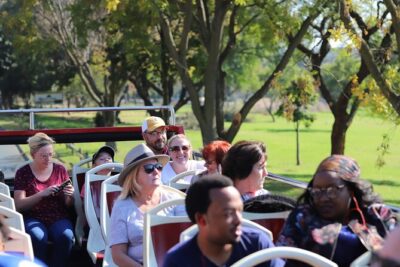 ★ 4.5Johannesburg Hop-On Hop-Off City Tour with Soweto OptionFrom $16768 reviews
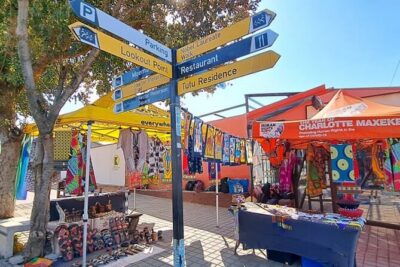 ★ 4.5Half-Day Tour of Soweto TourFrom $63712 reviews
 ★ 4.9Soweto: Walking Tour with a Local Guide and LunchFrom $43648 reviews
 ★ 4.8Jo’berg in 1 Day: Soweto, Apartheid Museum & City TourFrom $142524 reviews
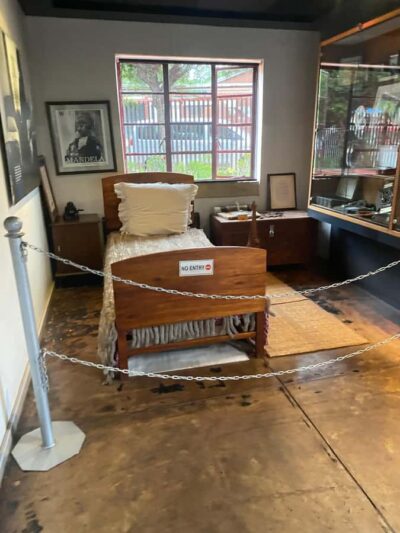 ★ 4.8Johannesburg: Full-Day Tour with Soweto and Apartheid MuseumFrom $104478 reviews
 ★ 4.8Johannesburg and Soweto: Half-Day TourFrom $71439 reviews
 ★ 5.0Full-Day Soweto, Apartheid Museum and Lunch TourFrom $108410 reviews
 ★ 5.0Half Guided Day Tour of Soweto And Apartheid MuseumFrom $69356 reviews
Browse the lists this tour appears in