
REVIEW · SOWETO TOURS
Soweto Half Day Private Tour 4 hours R 1250,00
Soweto hits fast. In just four hours you get a clear, guided look at apartheid-era oppression and what everyday life looks like now, focused on the sites people still visit to understand the country’s turning points. I especially like Vilakazi Street for seeing history attached to real homes, and the Hector Pieterson Museum for making the 1976 Youth Uprising feel personal, not abstract. The one thing to weigh is that this is short and serious, so there’s not much time for a long, wide-ranging sweep.
You’ll ride in comfort from Sandton toward Soweto, passing the modern Johannesburg skyline before the scenery and mood change. With a private guide, you can ask questions as you go, and the pace stays matched to your group. Still, do expect the format to be more education than entertainment, and don’t assume lunch is part of the deal.
If you want an honest half-day that helps you make sense of Johannesburg’s biggest story, this private Soweto tour is a strong choice. The guide role matters here, too, and one guide named Jazz has been singled out for answering questions clearly and thoroughly.
In This Review
- Key highlights you should know before you go
- Why Soweto still matters in a half-day
- From Sandton to Soweto: what the drive teaches you
- Hector Pieterson Museum and Memorial: the 1976 Youth Uprising
- Vilakazi Street and the Mandela House Museum
- What the private guide really changes
- Price and value: R 1250 for 4 hours in Soweto
- Timing, energy, and how to prep
- Who should book this Soweto half-day private tour
- Should you book it?
- FAQ
- How long is the Soweto Half Day Private Tour?
- Is pickup included?
- Are entrance fees included?
- How many stops are included in the itinerary?
- Is this tour private?
- What if the weather is bad?
- What should I know about cancellation?
Key highlights you should know before you go
- Hector Pieterson Museum and Memorial: centered on the 1976 Youth Uprising
- Nelson Mandela House Museum: Mandela’s pre-arrest home and the story around his years imprisoned
- Vilakazi Street as a two-Nobel-Prize street: Mandela and Desmond Tutu’s homes share the same stretch
- Entrance fees included: you can focus on the visits, not the ticket math
- Private guide, your pace: you’re not stuck waiting for strangers to catch up
- Half-day timing: great if you want depth without losing a whole day
Other Soweto routes we have reviewed, each with a local guide
- Johannesburg and Soweto tour★ 5.0 · 231 reviews
- Soweto Half Day Tour★ 5.0 · 231 reviews
- Soweto walking tour with a taxi ride★ 4.5 · 42 reviews
- Soweto, Kliptown, Eldorado Park Tour★ 5.0 · 41 reviews
Why Soweto still matters in a half-day
Soweto (South Western Townships) is one of those places where you can’t separate history from daily life. Even on a short schedule, the tour structure helps you connect the dots. You start with a museum that explains how youth activism in 1976 collided with brutal apartheid policies. Then you move to a street where you can literally point at where Nelson Mandela lived before his arrest, and where Archbishop Emeritus Desmond Tutu also lived on the same famous road.
What I like about this approach is that it avoids turning Soweto into a checklist of photos. You come away with names and dates you can actually use later. You also get a sense of scale, because the drive into Soweto passes through neighborhoods with a population of just over 2 million black residents. That number matters. It’s not a small side street you visit for an hour, it is a major part of Johannesburg.
The other thing you should expect is contrast. You’ll roll from Johannesburg’s polished highways and office towers into a township with a very different feel. The tour does that on purpose. That shift gives you an immediate “why” behind the apartheid story, instead of only hearing it secondhand.
From Sandton to Soweto: what the drive teaches you
Pickup is offered, and the route typically begins from your hotel in Sandton. From there, you head through Johannesburg’s southern suburbs on designated routes, with views that set the stage before you arrive.
Along the way, the tour passes the Johannesburg city center with tall buildings that were built during the apartheid era. Whether or not you’re an architecture nerd, this is useful because it puts physical reminders into your line of sight. It’s harder to dismiss apartheid as something that only existed in documents when you see its footprint in the city’s skyline.
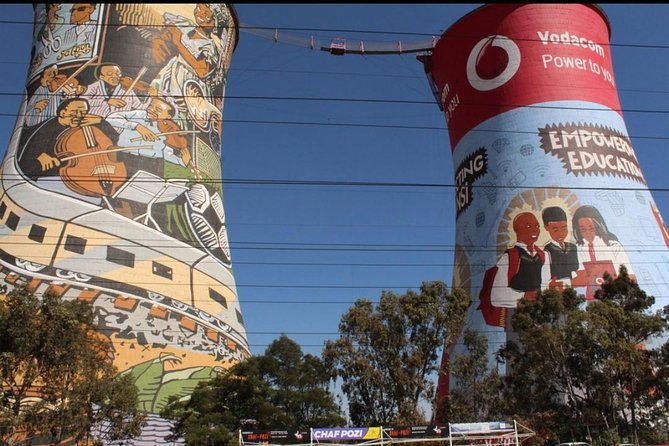
Then the mood changes. The tour moves you from sleek cars and wide freeways toward Soweto, where the streets and atmosphere feel more grounded and local. You’ll also see two iconic landmarks that used to house power generation and are also associated with bungee jumping. The important takeaway is not the thrill connection. It’s that these structures are part of the landscape people actually live around, repurposed and reinterpreted across time.
Practical tip: wear comfortable shoes. You won’t walk for hours, but you’ll stand and move through museum spaces and along street areas where you’ll want to keep your feet steady and your camera ready.
Hector Pieterson Museum and Memorial: the 1976 Youth Uprising
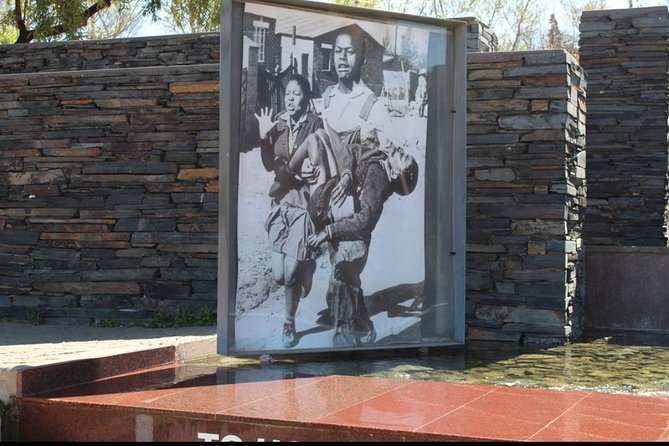
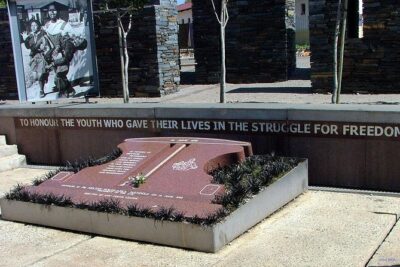
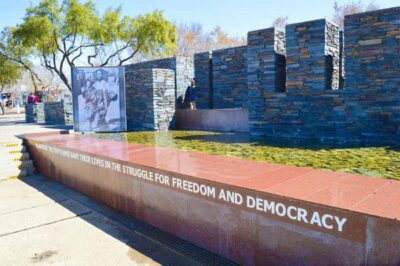
This is the emotional center of the half-day. The tour takes you to the Hector Pieterson Museum and Memorial, with about 1 hour at the site. Admission is included, so you don’t need to juggle ticket payment while you’re trying to take in what you’re seeing.
The museum focuses on the 1976 Youth Uprising, when students and young people protested against apartheid laws and the system that controlled their lives. You get context for why the uprising matters beyond the moment itself. It became a turning point, and the museum experience is built around helping you understand the human cost, not just the headline summary.
What makes this stop work, even with limited time, is that it’s structured around place. The memorial element helps you slow down. Even if you think you know the broad story, you’ll likely pick up details about how youth activism shaped what happened next.
Potential drawback: this stop can feel heavy. If you’re bringing kids, or if your group prefers lighter history, talk to your guide about pacing and what to emphasize. The private format is your advantage here.
Vilakazi Street and the Mandela House Museum
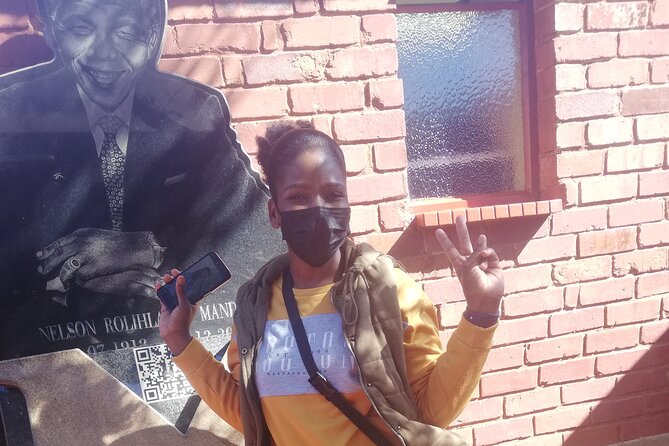
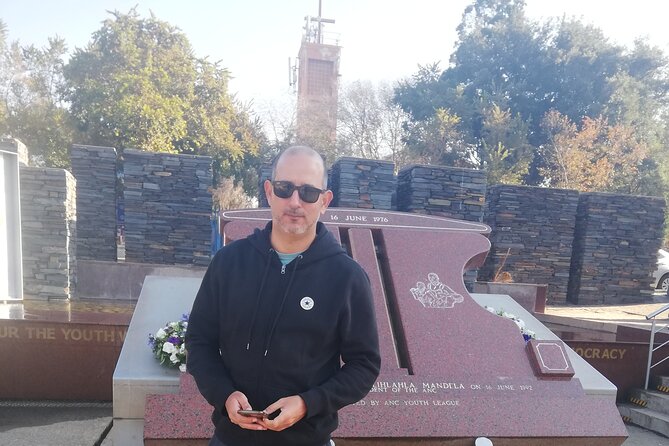
Next comes one of the most powerful street walks you can do in Johannesburg. You head to Vilakazi Street, stopping at the Nelson Mandela House Museum. This part lasts about 30 minutes, and admission is included.
Mandela House is significant because it’s tied to a specific period of Mandela’s life, when he lived there before his arrest in 1963. The tour also covers what came after: 27 years in jail, and the detail that Mandela never returned to that home once he was released. Instead, he had a new home in Johannesburg’s Houghton area. That piece of the story hits hard because it shows how imprisonment didn’t only affect him politically. It changed his entire personal life.
Then comes the Vilakazi Street magic. The tour notes that a short distance away on the same corner of Vilakazi Street is the Soweto home of Archbishop Emeritus Desmond Tutu. Tutu, like Mandela, received a Nobel Peace Prize, and the two historic figures are connected by the geography of one famous street.
I love how this stop lets you think in layers. You’re not only learning about apartheid. You’re also seeing how the post-apartheid world is physically rooted in these same places. It’s one of those moments where you can look at the street and feel how memory lives in everyday space.
Practical tip: this is a quick stop, so don’t try to take in every exhibit if you’re the type who gets overwhelmed. Ask your guide what you should prioritize, and keep your best questions for this portion. It tends to be where guides can make the biggest connections with the least time.


What the private guide really changes
The private format is the quiet superpower of this tour. Instead of sticking to a script for a mixed group, your guide can answer at the right depth for your interests. The tour information also includes bottled water and a guide, and that small comfort matters when you’re out moving in a city environment.
One guide name that stands out from feedback is Jazz, praised for being strong with questions and delivering clear explanations. That matters because apartheid history can get confusing fast if your guide only recites facts. A good guide helps you make the timeline make sense and explains why people remember certain events so strongly.
You should also expect a more flexible flow. Since it’s only your group, you can slow down at a memorial space, speed up if you want more time for the street portion, or focus on the themes that matter most to you.
Small consideration based on a real-world mismatch: the tour description emphasizes convenience items like water, but lunch and snacks were not delivered to at least one couple who expected them. So if you’re the type who needs food in your system, plan to eat before you go, or bring a small snack only if that fits your personal comfort level. The tour includes water, but it may not be exactly what you prefer, and one disappointment noted the water was sparkling.
Price and value: R 1250 for 4 hours in Soweto
The cost is R 1250.00 for a 4-hour private tour, listed at about $77.61 per person. For a private, guided half-day that includes entrance fees and water, this is not an economy bargain, but it is also not priced like a luxury day.
Here’s what you’re paying for, specifically:
- Entrance fees included for the key sites (so you avoid last-minute add-ons at the museum counters)
- A private guide for the 4-hour window, which usually costs more than group tours
- Pickup is offered, and the logistics get handled for you
Where the value can change for you: the biggest cost killer in short township tours is time pressure. If you had to pay extra for tickets, arrange transport yourself, and then still rush through the story, the same money might feel less justified. This tour tries to bundle the essentials so you can keep your head in the experience.
Also consider the emotional “return.” You’re paying to get a guided explanation at key stops tied to apartheid, the 1976 uprising, and the Mandela and Tutu connections. If you care about understanding the context, that guidance is where the value shows up.
Timing, energy, and how to prep
With a duration of about 4 hours, you’ll be on the move, but not exhausted. The visit rhythm is built around two meaningful stops, Hector Pieterson first, then Vilakazi Street and Mandela House.
Still, you should prep your expectations:
- Wear comfortable shoes and simple layers. Weather matters because this experience requires good weather. If conditions are poor, the tour may be rescheduled or refunded.
- Bring a question list. If you’re curious about apartheid, ask what your guide recommends focusing on at each stop. In sites like these, one good answer can do more than ten photos.
- Consider food. The tour includes water, not lunch or snacks in the information provided. If you need a full meal, plan it before pickup.
And yes, it’s a half-day, so it’s not a complete survey of Soweto. But it’s a focused, high-impact plan that respects how much history is already packed into these places.
Who should book this Soweto half-day private tour
This one fits best if you:
- Want apartheid and its aftermath explained through the most important, visitable sites
- Prefer a private guide who can respond to your questions instead of giving you a generic talk
- Have limited time in Johannesburg and still want meaningful cultural and historical context
- Enjoy walking tours where the guide connects names, locations, and events into one understandable story
It’s also a good option for travelers who like a set plan. You get pickup, included entrance fees, and a clear two-stop route without you having to piece together transport and ticket logistics on your own.
Should you book it?
Yes, if your goal is a focused introduction that helps you connect apartheid history to specific places in Soweto. The combination of Hector Pieterson Museum and Mandela House on Vilakazi Street is a smart use of a half-day, and the entrance fees being included keeps the experience smooth.
Book with caution if you strongly expect lunch or snacks. The tour information lists water and entrance fees, and at least one published disappointment pointed out that the expectation of lunch was not met. If you plan your food ahead, you’ll likely feel better about the tight timing.
If you want a private guide who can handle questions well, look for the guides who are praised for strong explanations, including Jazz in the feedback. Ask your guide what to prioritize, bring a few questions, and you’ll get far more out of those 4 hours than you might expect.
FAQ
How long is the Soweto Half Day Private Tour?
It runs for about 4 hours.
Is pickup included?
Yes, pickup is offered.
Are entrance fees included?
Yes. Entrance fees are included for the stops on the tour, and bottled water is also provided.
How many stops are included in the itinerary?
The tour includes two main stops: Hector Pieterson Museum and Memorial, and Vilakazi Street with the Mandela House Museum.
Is this tour private?
Yes. It is a private tour, so only your group participates.
What if the weather is bad?
The experience requires good weather. If it is canceled due to poor weather, you’ll be offered a different date or receive a full refund.
What should I know about cancellation?
You can cancel for a full refund if you cancel at least 24 hours in advance of the start time. Confirmation is received at booking.
Soweto: Other Guided Routes
Keep going: the rest of our Pretoria write-ups
- Pretoria City Tour and Cullinan Mine Tour from Johannesburg
★ 5.0 · 3 reviews - Full Day Soweto, Johannesburg and Apartheid Museum Guided Tour
★ 5.0 · 3 reviews - Cradle of Humankind Full Day Tour from Pretoria and Johannesburg
★ 4.5 · 3 reviews - 3-Day Private Tour Johannesburg – See everything
★ 5.0 · 3 reviews - From Johannesburg: Pretoria Guided City Tour
★ 4.5 · 3 reviews - Pretoria Tour-Voortrekker Monument, Town, Union Buildings
★ 5.0 · 3 reviews
Soweto Tours, compared.
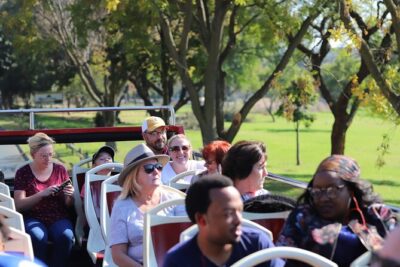 ★ 4.5Johannesburg Hop-On Hop-Off City Tour with Soweto OptionFrom $16768 reviews
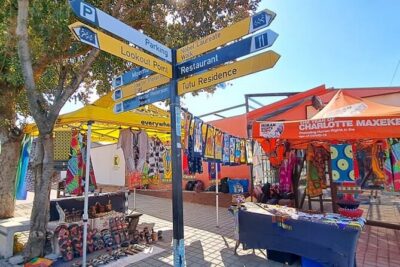 ★ 4.5Half-Day Tour of Soweto TourFrom $63712 reviews
 ★ 4.9Soweto: Walking Tour with a Local Guide and LunchFrom $43648 reviews
 ★ 4.8Jo’berg in 1 Day: Soweto, Apartheid Museum & City TourFrom $142524 reviews
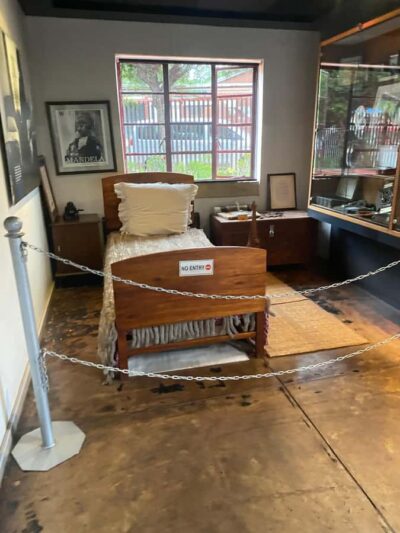 ★ 4.8Johannesburg: Full-Day Tour with Soweto and Apartheid MuseumFrom $104478 reviews
 ★ 4.8Johannesburg and Soweto: Half-Day TourFrom $71439 reviews
 ★ 5.0Full-Day Soweto, Apartheid Museum and Lunch TourFrom $108410 reviews
 ★ 5.0Half Guided Day Tour of Soweto And Apartheid MuseumFrom $69356 reviews
Browse the lists this tour appears in