

REVIEW · SOWETO TOURS
Soweto: Bike Tour with a Local Tour Guide
Soweto clicks into focus when you ride it. This 2-hour bike tour connects the big moment of 16 June 1976 to everyday life, with a stop at the Hector Peterson memorial and a ride along Vilakazi Street. I like that it is not just sightseeing, it is guided context plus real street time.
My other favorite part is how you get to see places tied to Nelson Mandela and Archbishop Desmond Tutu while still moving at a local pace, not a bus schedule. The one thing to consider is bike condition. A couple of past riders noted the bikes were not always in great shape, so it is smart to listen to your guide and double-check your bike before you roll.
In This Review
- Key points to know before you pedal Soweto
- Why a bike tour works better than a quick drive
- Meeting near Hector Peterson Museum, and what to bring
- The 16 June 1976 lesson, told at the right stop
- Cycling Vilakazi Street, the Soweto headline street
- Nelson Mandela and Desmond Tutu house sightings from the road
- Orlando Stadium area and everyday Soweto energy
- Interacting with locals and supporting small businesses
- Pace, exercise, and group size on a 2-hour ride
- What’s included, what’s not, and how that affects value
- Eco-friendly by design, but also practical
- Reviews that point to what matters most
- Should you book this Soweto bike tour?
- FAQ
- How long is the Soweto bike tour?
- What does the tour cost?
- Where do I meet the guide?
- Are bicycles and helmets provided?
- Is there an entrance fee included for museums?
- What should I bring for the ride?
- What is the age requirement?
Key points to know before you pedal Soweto
- Hector Peterson memorial + the 1976 uprising story explained in plain language
- Vilakazi Street ride along the most famous stretch in Soweto
- Mandela and Tutu house sightings from the street, not a sightseeing drive-by
- Small group (10 max) so your guide can actually answer questions
- Helmet and bicycle included, plus light exercise in a 2-hour loop
- Good chance to interact locally and support small businesses along the way
Other Soweto routes we have reviewed, each with a local guide
- Johannesburg: Hop-On Hop-Off Bus with Optional Soweto Tour★ 4.6 · 985 reviews
- Soweto /Johannesburg and Apartheid Museum Guided Full Day Tour★ 5.0 · 932 reviews
- Johannesburg Hop-On Hop-Off City Tour with Soweto Option★ 4.5 · 768 reviews
- Half-Day Tour of Soweto Tour★ 4.5 · 712 reviews
Why a bike tour works better than a quick drive
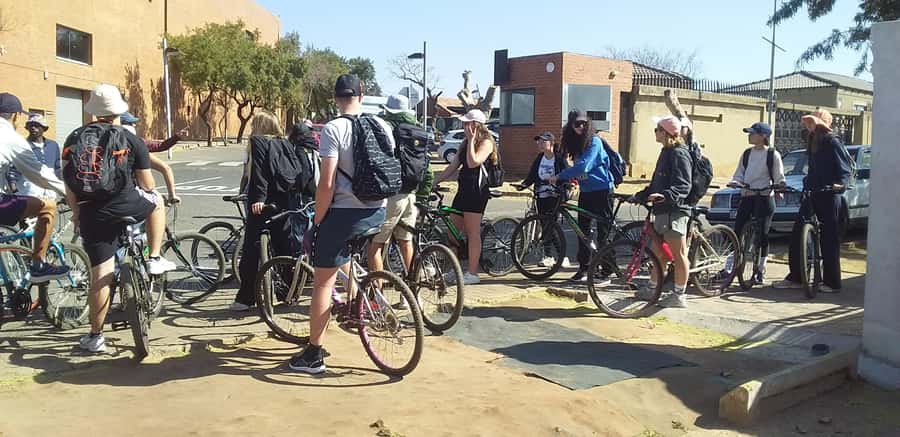
Soweto is the kind of place where speed kills understanding. On a bike, you naturally slow down. You notice the rhythm of the streets, the small shops, the comings and goings, and how daily life keeps going right beside major historical sites.
This tour is built around exactly that idea. You get a local guide who ties the landscape to the stories, so you are not just collecting place names. And because you are pedaling, the time feels physical in a good way. It is short enough to stay fun, but you earn it, even if you are not a fitness person.
I also like the practical angle. You are not asked to do anything complicated. You show up, wear comfortable clothes, and ride with the group. Your guide handles the route and the talking, while you focus on staying balanced and present.
Meeting near Hector Peterson Museum, and what to bring
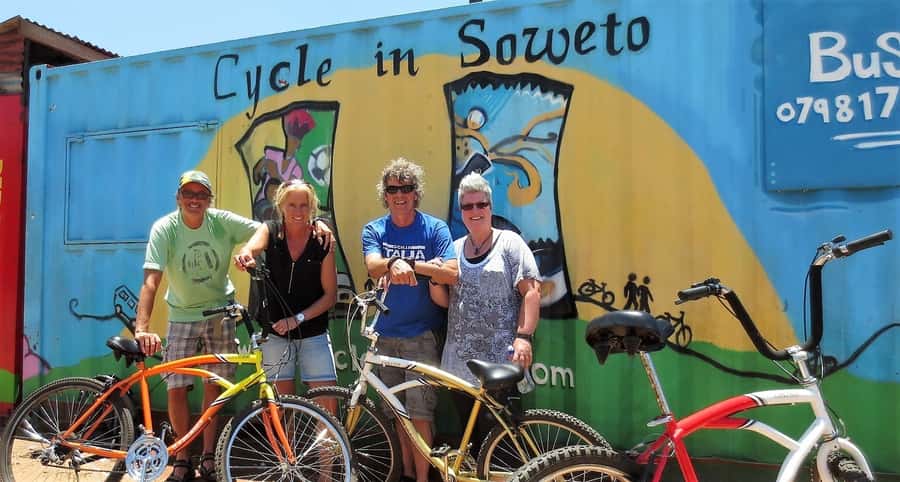
You meet in the Cycle in Soweto shop, based behind the Hector Peterson Museum, next to the bus parking area. It is an easy spot to find once you are there, and starting near the museum makes the first moments feel purposeful.
For what to bring, keep it simple:
- Comfortable clothes you can move in
- Sunscreen and a hat (this is South Africa, so sun matters)
- The ability to ride a bicycle (this is required)
- A minimum age of 8 years old, since this is an active tour
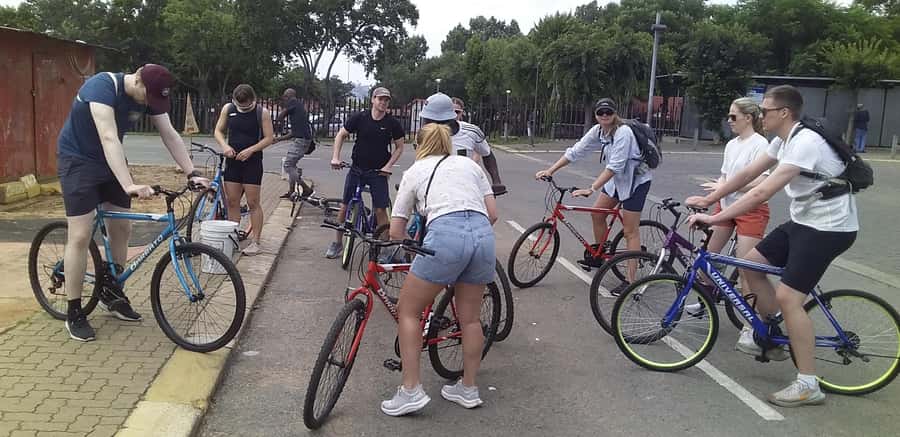
Helmets and bicycles are included, and the guide speaks English. If you are sensitive to heat or you get tired fast, bring water in your own bag if you like, even though food or drink is not included. Small prep makes the ride smoother for everyone.
One more practical note: the tour lists starting location options and drop-off locations. So if you want to start at Orlando West instead of the shop area, ask ahead when you book.
The 16 June 1976 lesson, told at the right stop
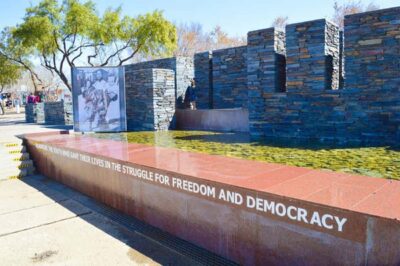
The heart of this experience is the story connected to 16 June 1976, when student protests erupted and Hector Peterson was shot and killed by police. The tour does not treat it like a dramatic story with no ground underneath. It places the day in context and then helps you understand why the name still carries weight in Soweto.
The Hector Peterson memorial is where the emotional temperature changes. You can read the story on a sign, but it hits differently when you are actually in the place connected to the event. Your guide’s job is to connect the dots so you leave knowing what happened, not only hearing the outline.
Even if you have read about Soweto before, I find this kind of on-site explanation makes the dates and names stick. You also pick up cues from the space itself, which is hard to get from a book or a video.
Cycling Vilakazi Street, the Soweto headline street
Vilakazi Street is the highlight street on this tour for a reason. It is described as the most famous street on the African continent, and when you ride it, you can feel that reputation in the way the street draws attention.
What I like here is the balance between landmark and normal life. You are moving through a neighborhood where people live, run errands, and go about their day. The guide keeps the focus from drifting into pure “photos and facts.” Instead, you learn how this area connects to key figures and to the wider story of Soweto.
On a bike, you get a better sense of scale too. Vilakazi Street is not just a line on a map, it is a lived-in corridor. That makes it easier to understand why it became such a symbol.
Other rides, flat and otherwise


Nelson Mandela and Desmond Tutu house sightings from the road
The tour includes seeing the homes of Nelson Mandela and Archbishop Desmond Tutu. The important thing to know is you are not told to expect museum-style access or inside visits. This is about what you can see from the street while your guide shares context.
That approach works well. You get a sense of place without turning it into a “stand and stare” exercise. And since you are on a bike, it feels more like learning how the neighborhood holds the legacy, not just ticking off major names.
Your guide also uses these stops to connect separate parts of the story, the 1976 uprising and what followed in the years of change. Even if you are familiar with the big headlines, this kind of route linking names to streets makes the history feel anchored.
Orlando Stadium area and everyday Soweto energy
The tour route includes Orlando Stadium and the broader Orlando West area. This matters because Soweto is more than one memorial and one famous street. Sports and community spaces help explain why township life has its own energy, pride, and routines.
What you can expect here is more street-level observation. You see how people move through their neighborhood and how public life shapes daily experience. Your guide helps connect those observations back to the larger Soweto story, so the ride does not become random wandering.
If you are hoping for a tour that focuses only on the biggest monuments, this is not that. It is a mix of major historical stops plus the surrounding neighborhoods that make Soweto feel like an actual place where people live, not a set built for visitors.
Interacting with locals and supporting small businesses
The tour offers time to interact with locals and gives you opportunities to support local small businesses along the route. That is one of the most practical parts of this tour, because it gives your visit a real, local footprint.
You can bring small change or items you would like to donate. The exact use of donations is not spelled out here, so I suggest keeping it flexible and asking your guide what is most helpful in the moment.
In my view, these moments matter for two reasons. First, they reduce the “tour bubble” feeling. Second, they put money and attention where it belongs: on local livelihoods, not just entry fees.
Pace, exercise, and group size on a 2-hour ride
This is a 2-hour bike tour with a small group limited to 10 participants. That small cap is more than a nice-to-have. It usually means the guide can slow down when people need a moment, and you are less likely to feel like you are riding in a big conga line.
The tour includes a little exercise, and that is part of the charm. You get movement, sun exposure, and the satisfaction of seeing more than you could easily on foot in a short time. Still, the tour is short enough that most people who can ride a bike comfortably can handle it.
If you are choosing this tour for family reasons, remember the minimum age is 8. If you are choosing it for photography, the bike pace gives you better angles than a standing position, but it also means you should be ready to move when the group moves.
What’s included, what’s not, and how that affects value
Included:
- Bicycle
- Helmet
- English-speaking guide
Not included:
- Entrance fees to museums
- Orlando towers bungee jumping
- Food or drink
The price is listed at $34 per person for a 2-hour guided ride. For that money, you are paying mostly for the guide, the route planning, and the bike setup. Since entrance fees are not included, you should think of the memorial experience as part of the guide-led time rather than a self-guided museum spree.
The fact that food and drink are not included is also worth factoring. Bring your own snack if you are the type who gets hungry quickly, or plan to eat after the ride.
Also, Orlando towers bungee jumping is not included, so do not expect an adrenaline add-on. This tour keeps its focus on streets, context, and history.
Eco-friendly by design, but also practical
This tour is described as eco-friendly, which mostly makes sense because you are not riding in a vehicle for the core experience. You travel by bike, stop where it makes sense, and spend your time in the places that matter.
Eco-friendly is good in theory, but what I care about is how it changes the experience. Without a vehicle, you do more time outside with your guide right next to you, and you build a shared sense of place. You also have fewer “drive past it” moments where you only catch a fragment of the neighborhood.
Reviews that point to what matters most
The overall rating is strong, with many people praising the guide and the level of detail. One name that comes up clearly is Pule, also spelled as Poulet in a French-language review.
That matters because a tour like this lives or dies on explanation. You are looking at streets and homes, and you need the guide to translate what you see into something meaningful. From the feedback, that is where this tour tends to land well.
There is also the bike condition note I mentioned earlier. If you are picky about bike reliability, do a quick check before you start and mention any concerns to the staff right away.
Should you book this Soweto bike tour?
Book it if you want Soweto history with street-level context, and you are comfortable riding a bike. The combination of Hector Peterson memorial, a Vilakazi Street ride, and sightings connected to Mandela and Desmond Tutu makes it a smart use of a short stay in Johannesburg.
Skip it or choose another format if you want heavy museum time with lots of indoor exhibits, or if you struggle with physical movement. This tour is built for people who can ride, handle sun, and enjoy learning while moving.
One last tip for getting the most out of it: go in ready with questions. Your guide is doing more than pointing. They are connecting the streets to the story of 16 June 1976 and how Soweto carries that memory.
FAQ
How long is the Soweto bike tour?
The tour lasts 2 hours.
What does the tour cost?
It is priced at $34 per person.
Where do I meet the guide?
Meet at the Cycle in Soweto shop, based behind the Hector Peterson Museum next to the bus parking area.
Are bicycles and helmets provided?
Yes. The tour includes a bicycle and a helmet.
Is there an entrance fee included for museums?
No. Entrance fees for museums are not included.
What should I bring for the ride?
Wear comfortable clothing and bring sunscreen and a hat.
What is the age requirement?
You must be at least 8 years old and able to ride a bicycle.
Pedalling Johannesburg, Route by Route
Soweto: Other Guided Routes
Keep going: the rest of our Johannesburg write-ups
- Soweto Private half day tour
★ 4.5 · 3 reviews - Johannesburg’s Migration History with a local lunch
★ 5.0 · 3 reviews - Johannesburg: Soweto, Apartheid Museum, and Cradle tours
★ 4.7 · 3 reviews - Soweto Apartheid Museum and Lunch
★ 5.0 · 3 reviews - Bathongo Rhino & lion park nature reserve tour
★ 5.0 · 3 reviews - Johannesburg: Elephant and Monkey Sanctuary Half Day Tour
★ 5.0 · 3 reviews
Soweto Tours, compared.
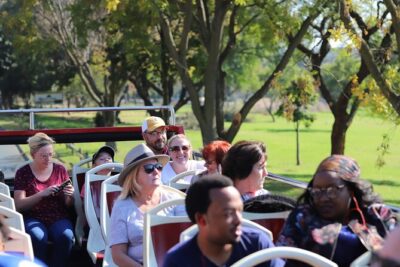 ★ 4.5Johannesburg Hop-On Hop-Off City Tour with Soweto OptionFrom $16768 reviews
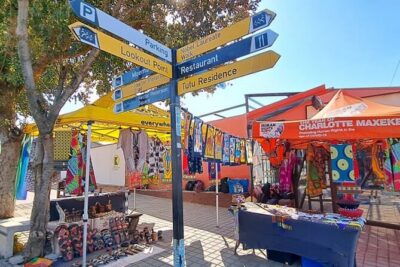 ★ 4.5Half-Day Tour of Soweto TourFrom $63712 reviews
 ★ 4.9Soweto: Walking Tour with a Local Guide and LunchFrom $43648 reviews
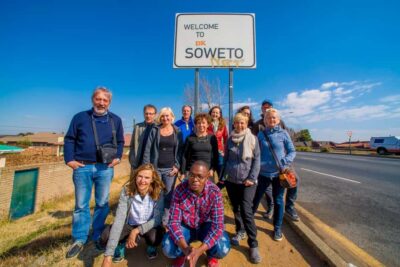 ★ 4.8Jo’berg in 1 Day: Soweto, Apartheid Museum & City TourFrom $142524 reviews
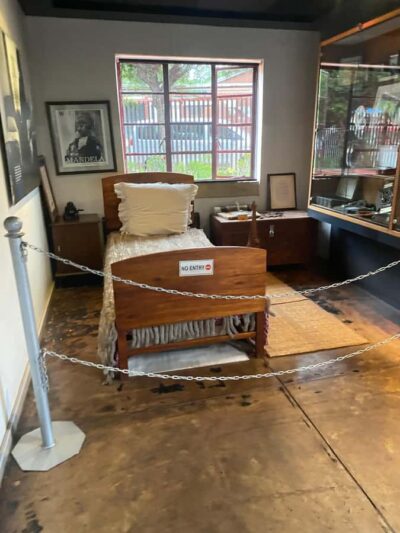 ★ 4.8Johannesburg: Full-Day Tour with Soweto and Apartheid MuseumFrom $104478 reviews
 ★ 4.8Johannesburg and Soweto: Half-Day TourFrom $71439 reviews
 ★ 5.0Full-Day Soweto, Apartheid Museum and Lunch TourFrom $108410 reviews
 ★ 5.0Half Guided Day Tour of Soweto And Apartheid MuseumFrom $69356 reviews
Browse the lists this tour appears in