
REVIEW · SOWETO TOURS
Soweto and Apartheid Museum day Tour
One day, two unforgettable layers of South Africa. This tour pairs Soweto street life with the Apartheid Museum, so you get context fast and you see how people lived, pushed back, and eventually changed the country.
Two things I really like are the live English or German guiding and the practical pace built around a few high-impact stops. You also get structured time at Mandela’s story, then a longer museum block where you can move at your own speed.
One consideration: the day moves quickly, and the tour does not include entrance fees or food and drinks, so your final budget can creep up if you did not plan for it.
In This Review
- Key highlights to pay attention to
- Why Soweto plus the Apartheid Museum is a strong one-day combo
- Pickup, timing, and guide quality that can make or break the day
- Soweto street-level sightseeing, walking time, and photo stops you will remember
- Mandela’s House Museum, the family story, and why Winnie Mandela matters here
- Hector Peterson Memorial, the 1976 uprising, and the language conflict at the center
- The Apartheid Museum (1948 to 1994) and the value of two hours self-guided
- Price and logistics: what $121 gets you, and what to budget for
- What to bring, what not to do, and how to avoid last-minute hassles
- Who should book this tour, and who might want something else
- Should you book this Soweto and Apartheid Museum day tour?
- FAQ
- Where are pickup and drop-off included?
- What languages are the live guides available in?
- What does the price of $121 per person include?
- What extra costs should I plan for?
- What should I bring, and are there rules?
- Can I cancel, and is pay later available?
Key highlights to pay attention to

- Soweto on foot plus photo stops, with time to actually look, not just drive past
- Mandela House Museum with a guided overview of life before imprisonment and after release
- Hector Peterson Memorial focused on the 1976 Soweto uprising and why Afrikaans was at the center of the conflict
- Apartheid Museum with a 1948 to 1994 timeline and a self-guided window to take your time
- Pickup and drop-off around Johannesburg and Pretoria, with extra transfer charges only for longer distances
Other Soweto routes we have reviewed, each with a local guide
- Johannesburg: Hop-On Hop-Off Bus with Optional Soweto Tour★ 4.6 · 985 reviews
- Soweto /Johannesburg and Apartheid Museum Guided Full Day Tour★ 5.0 · 932 reviews
- Johannesburg Hop-On Hop-Off City Tour with Soweto Option★ 4.5 · 768 reviews
- Half-Day Tour of Soweto Tour★ 4.5 · 712 reviews
Why Soweto plus the Apartheid Museum is a strong one-day combo
If you want to understand Johannesburg beyond the skyline, this is the kind of day that helps you get your bearings fast. You spend time in Soweto, then you ground it all at the Apartheid Museum, where the big picture is laid out in a timeline from 1948 to 1994.
Soweto is not a single viewpoint. It is neighborhoods, institutions, and everyday landmarks. Pairing that with a museum visit is smart because it turns what you see into something you can actually explain afterward, even if you only have one day.
Yes, it is a lot for one day. But it is also efficient, and the core stops are the ones most people genuinely need: Mandela’s story, the 1976 uprising memorial, and the museum that lays out apartheid’s system.
Pickup, timing, and guide quality that can make or break the day
This tour includes pick-up and drop-off around Johannesburg and Pretoria. You can meet at your hotel reception, and if you are the WhatsApp type, you can message the coordinator about your meeting area. That matters because one wrong detail can translate into wasted time once you are in a big city.
The live guide is available in English and German. In practice, a guide with strong language skills is not a luxury on a day like this, it is the difference between hearing facts and understanding why they matter. One of the best outcomes is a guide who can answer questions on the spot and adjust photo stops so you see what you care about.
Transport is included, and the day is built around a smooth route. Still, do your part: confirm your exact pickup location before you go, especially if your address is hard to match on a map. A delayed start can squeeze the time you have for walking and museum viewing, and that is not the kind of trade-off you want when history is the point.
Soweto street-level sightseeing, walking time, and photo stops you will remember
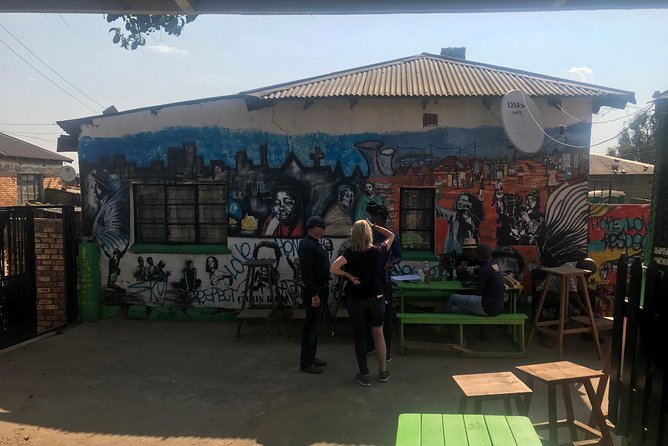
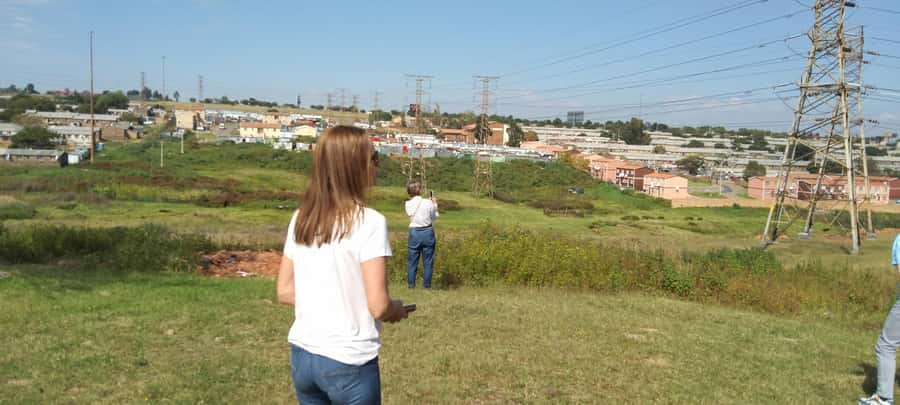
Your day begins with Soweto. You get guided touring and sightseeing, plus a walk portion of about three hours. This is where you stop being a passive observer. You are moving through the township, and you get time to take photos and look at key landmarks up close.
The stops you can expect to include are some of the most recognizable names in the area:
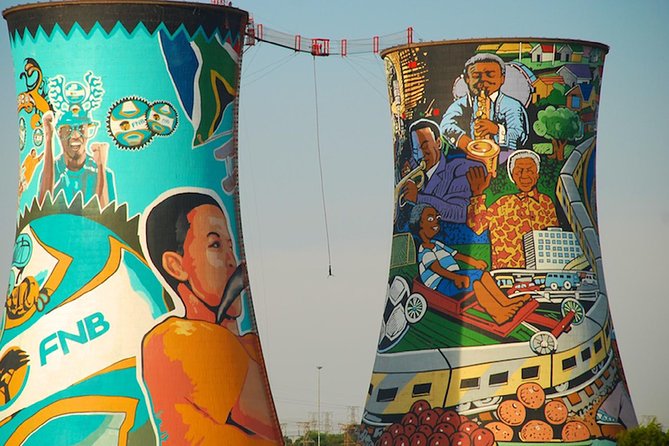
- Orlando Towers, described as an old coal power station
- Chris Hani Baragwanath Hospital, noted as the biggest hospital in South Africa
- Soccer City Stadium, listed as the biggest football stadium in South Africa
- Driving through one of the richer townships in Soweto
Those details may sound like geography, but they do more than that. They help you understand that Soweto is not just a single story of oppression. It is also healthcare infrastructure, sports culture, and a set of communities that grew and changed over time. When you see a hospital or a stadium, you get a sense of scale that makes the later museum context feel real.
Photo stops are built in, and you should use them strategically. Bring a camera, but also be ready to pause and listen. If your guide is using the stops to explain what life looked like during apartheid, you will get the most value by alternating between looking up and asking questions.
Mandela’s House Museum, the family story, and why Winnie Mandela matters here
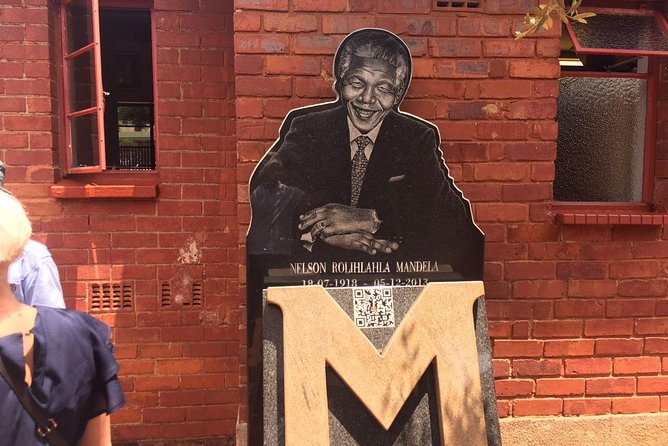
After Soweto sightseeing, the tour heads to Mandela’s House for a guided visit and a short walk. The guided portion is about 30 minutes, so this is not a long, slow read. It is a focused overview that aims to give you the shape of Mandela’s life and how apartheid policy touched his household.
One of the standout parts of this stop is that the museum does not only frame Mandela in prison. It also highlights his family and the period before his arrest and sentencing to life imprisonment. Then it shifts to what happened after he was released in 1990.
The museum specifically addresses how Winnie Mandela survived during the apartheid era while Mandela was in prison. That detail matters because it underlines that apartheid did not only target political leaders. It reached into families, daily routines, and safety. If you care about the human side of history, you will likely find this stop especially meaningful.
Quick tip for your experience: at a museum this short, your best move is to pick one theme and track it. For example, you can focus on incarceration and release, or you can focus on the family side of political resistance. The guided format makes it easy to miss details if you try to absorb everything at once.
More sites and museums that record the apartheid years
Hector Peterson Memorial, the 1976 uprising, and the language conflict at the center
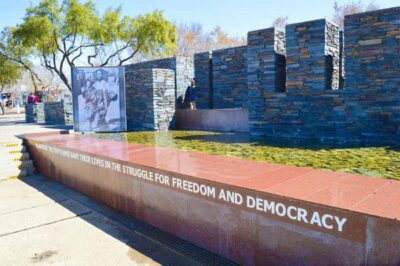
Next comes the Hector Peterson Museum and Memorial. This stop is designed to honor pupils killed by apartheid police during the 1976 Soweto uprising. The uprising is presented as a protest against using Afrikaans as the medium of instruction in South African schools.
That language piece is a big deal, and it is one reason the memorial stands out. You are not only learning about violence. You are learning about how policy can shape childhood, schooling, and identity.
Inside the museum, you can expect protest videos and a look at Soweto residents’ lifestyle during the apartheid era. Even if you feel museum-fatigued by this point, the memorial works because it grounds the story in something concrete. Names and events turn abstract oppression into something you can picture.
If you want to get the most from this stop, go in ready to listen for specifics. Ask your guide how the language issue connected to wider apartheid control. That question often leads to clearer explanations than trying to memorize dates on the fly.
The Apartheid Museum (1948 to 1994) and the value of two hours self-guided

The final major stop is the Apartheid Museum in Johannesburg, with about two hours of self-guided time. The museum covers apartheid history from 1948 to 1994, and it was built to honor Nelson Mandela for his efforts toward a non-racial and non-violent society.
Why does the self-guided portion matter? Because you can pace yourself. Some rooms will hit fast. Others need a slower look so you can connect the dots between laws, segregation, and everyday life. If you have a strong preference for reading and watching at your own speed, this format is a good match.
You will also see how citizens were racially segregated during apartheid. This is not described as a single moment. It is shown as a system, which is exactly what makes the museum useful after the Soweto walk. You can look back at the landmarks you saw earlier and understand them as part of the broader structure.
If you are coming from the outside world to South Africa for the first time, this museum can feel heavy. That is normal. Plan for it mentally, and do not rush. Two hours is enough to get the flow without treating it like a checklist.
Price and logistics: what $121 gets you, and what to budget for
The price is $121 per person, and that includes several practical items that save you time. You get pick-up and drop-off around Johannesburg and Pretoria, plus transportation and a professional guide.
The key value point is that you are not paying separately for logistics. A one-day timeline works best when someone handles routing and timing so you can focus on the stops. On days like this, a competent guide can turn a tight schedule into a thoughtful overview.
Now the reality check: entrance fees and food and drinks are not included. So the most honest way to budget is to treat the listed price as the core tour cost, then add your on-site spending for museum entry and your meals.
Also note transfer rules if you are far out. Pick-up is included around Johannesburg and Pretoria, but for long-distance transfer above 50 km, extra charges apply depending on distance. If you are staying well outside the core areas, confirm your exact location early.
What to bring, what not to do, and how to avoid last-minute hassles
Bring a few basics so the day stays smooth. The tour advises you to have:
- Camera
- Credit card
- Student card
- Cash
There are a couple of important policy notes. Smoking indoors is not allowed, and alcohol and drugs are not allowed.
If you are a student, you should bring your student card. If you are a pensioner, you should bring your passport. Those small details can matter if any site checks eligibility, so it is worth following the guidance instead of hoping.
Who should book this tour, and who might want something else
This tour fits best if you want a clear, structured introduction to Soweto and apartheid history without needing multiple days. You will likely enjoy it if you like walking through neighborhoods, taking photos at specific landmarks, and then learning the larger system at the museum.
It also makes sense for people who want a guide who can explain context in English or German. If your language matters to you, the option to tour in German is especially helpful on a day with real historical detail.
That said, if you want a deep, slow historical discussion with lots of extra events and names, you may find a one-day format a bit tight. The day is built around major stops with set timing, so you will not have hours and hours for one subject.
Also consider your own comfort with museums. Some rooms will be emotionally intense. If that is hard for you, plan breaks where you can, and do not treat every exhibit like a sprint.
Should you book this Soweto and Apartheid Museum day tour?
I would book this if you have one day and you want the strongest “first map” of South Africa’s modern history. The combination of Soweto sightseeing, Mandela’s story in a guided format, and the Apartheid Museum timeline gives you a complete arc in a single day.
Book it especially if you care about getting explanations in English or German, and if you like the idea of purposeful photo stops at recognizable places like Orlando Towers, Baragwanath Hospital, and Soccer City Stadium.
I would think twice if you dislike paying extra for entrance fees and meals, because those costs are not included. Also, if you are traveling from a far address, confirm the transfer distance early to avoid surprise add-ons.
FAQ
Where are pickup and drop-off included?
Pick-up and drop-off are included around Johannesburg and Pretoria, and you can choose the meeting place near where you are staying. For long-distance transfer above 50 km, extra charges apply depending on transfer distance.
What languages are the live guides available in?
The live tour guide is available in English and German.
What does the price of $121 per person include?
The price includes pick-ups and drop-off around Johannesburg and Pretoria, transportation, and a professional guide.
What extra costs should I plan for?
Entrance fees and food and drinks are not included. If you are bringing a student card, cash, or a credit card, you will be ready for on-the-day needs.
What should I bring, and are there rules?
Bring a camera, credit card, cash, and your student card if you are a student. Smoking indoors is not allowed, and alcohol and drugs are not allowed.
Can I cancel, and is pay later available?
You can cancel up to 24 hours in advance for a full refund. You can also reserve now and pay later, meaning you can book and pay nothing today.
Under Glass and Behind Ropes in Johannesburg
Apartheid History: Other Sites We Have Documented
Soweto: Other Guided Routes
Keep going: the rest of our Johannesburg write-ups
- Soweto Private half day tour
★ 4.5 · 3 reviews - Johannesburg’s Migration History with a local lunch
★ 5.0 · 3 reviews - Johannesburg: Soweto, Apartheid Museum, and Cradle tours
★ 4.7 · 3 reviews - Soweto Apartheid Museum and Lunch
★ 5.0 · 3 reviews - Bathongo Rhino & lion park nature reserve tour
★ 5.0 · 3 reviews - Johannesburg: Elephant and Monkey Sanctuary Half Day Tour
★ 5.0 · 3 reviews
Soweto Tours, compared.
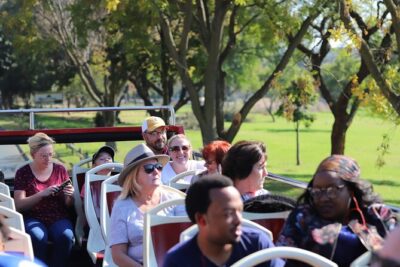 ★ 4.5Johannesburg Hop-On Hop-Off City Tour with Soweto OptionFrom $16768 reviews
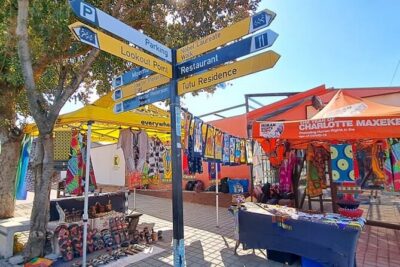 ★ 4.5Half-Day Tour of Soweto TourFrom $63712 reviews
 ★ 4.9Soweto: Walking Tour with a Local Guide and LunchFrom $43648 reviews
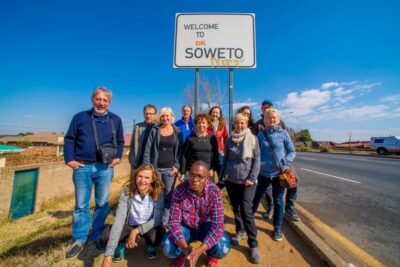 ★ 4.8Jo’berg in 1 Day: Soweto, Apartheid Museum & City TourFrom $142524 reviews
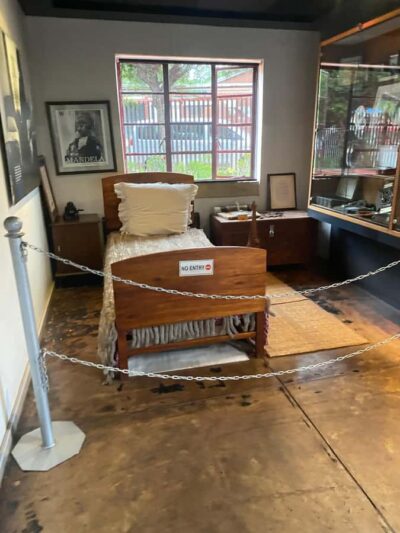 ★ 4.8Johannesburg: Full-Day Tour with Soweto and Apartheid MuseumFrom $104478 reviews
 ★ 4.8Johannesburg and Soweto: Half-Day TourFrom $71439 reviews
 ★ 5.0Full-Day Soweto, Apartheid Museum and Lunch TourFrom $108410 reviews
 ★ 5.0Half Guided Day Tour of Soweto And Apartheid MuseumFrom $69356 reviews
Browse the lists this tour appears in