
REVIEW · SOUTH AFRICA
South African Cultural Biltong-Making Experience in Cape Town
Snack-sized South Africa, taught at home. In a 1.5-hour biltong-making workshop in Sea Point, Cape Town, you learn how to pick meat, season it, cure it, and store it, with a vegan alternative option. I love the hands-on flow, and I really like the voorkamer setting with Boeremusiek and Afrikaans songs. If you want a large tour group or a strictly formal class, this small (max 6) experience may feel a bit intimate.
The vibe is warm and personal, hosted by Greg and Lindi, with strong coffee in a tin mug (moerkoffie) and a piece of Soutie’s homemade karringmelkbeskuit. You also get more than snack-making, you get the backstory of biltong, from Khoisan hunter-gatherers to the Great Trek spice influence, plus the origin of Afrikaans and a few local expressions for good conversation.
In This Review
- Key Things That Make This Biltong Workshop Special
- Biltong 101: What You Learn Before the Cure
- The Sea Point Home Setup, Voorkamer Style
- Cutting, Seasoning, Curing, Storing: The Real Skill You Take Home
- Vegan Biltong: A Smart Option for Non-Meat Eaters
- The Stories Behind the Snack: Khoisan, Great Trek, Afrikaans
- Moerkoffie, Karringmelkbeskuit, and Biltong Samples That Actually Help
- Boere Musiek and Catchy Afrikaans Songs, Without Feeling Forced
- Price, Timing, and Value in Plain Numbers
- Who Should Book This Biltong-Making Experience
- Should You Book This Biltong Workshop in Cape Town?
- FAQ
- How long is the South African biltong-making experience?
- Where does the experience start?
- Is there a vegan option?
- Will I taste biltong during the workshop?
- How many people are in a group?
- Is the ticket mobile?
- Will I get confirmation after booking?
- Is it near public transportation?
- What is the cancellation policy?
Key Things That Make This Biltong Workshop Special
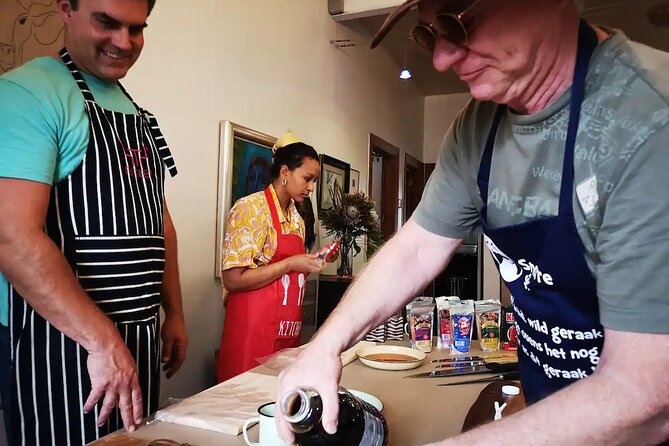
- A true hands-on demo where you learn the full process, from choosing and cutting to curing and storage basics
- Small group size (up to 6), so the hosts can slow down and explain things in a friendly way
- Vegan biltong option that keeps you in the action, not watching from the sidelines
- Culture mixed in with the food, including Afrikaans language stories and Boeremusiek
- Tastings and samples, plus an opportunity to buy more biltong and spice
Still weighing it up? These Cape Town trips are the ones our readers open next.
- Wine Tour: Paarl, Franschhoek & Stellenbosch incl 3 wineries★ 5.0 · 3,940 reviews
- Cape Town: Hop-On Hop-Off Bus Tour with Optional Cruise★ 4.8 · 3,929 reviews
- Cape Town: Cape of Good Hope & Penguins Day Tour with Pickup★ 4.7 · 3,362 reviews
- Zipline Cape Town – From Foot of Table Mountain Reserve★ 5.0 · 3,179 reviews
Biltong 101: What You Learn Before the Cure
This is not a history lecture with a snack at the end. It starts with the basics of biltong as a South African dried meat snack, and it makes one key point early, biltong is not the same thing as the American jerky you may already know.
In practical terms, you get taught the steps behind good biltong, including selecting your meat, cutting it, marinating, seasoning, curing, and storing it. The value here is simple. If you ever wanted to try making it yourself later, you need the workflow, not just a recipe page you can’t interpret.
You’ll also hear how ingredients and seasoning play a big role in flavor. That matters because biltong is very much about balance, salt, spice, and time. The workshop gives you the logic, so you’re not guessing later.
The Sea Point Home Setup, Voorkamer Style
One reason people rate this so highly is the setting. You meet at 165 High Level Rd in Sea Point, and the workshop happens in a cozy home lounge, the voorkamer. That usually means two things for your experience.
First, it feels relaxed. You’re not standing around waiting for someone to announce the next step. You can ask questions while the hosts are explaining the process. Second, it feels intimate, with a maximum of 6 travelers. That small group size is a big deal, because biltong can be fiddly if you don’t know what you’re aiming for.
There’s also a welcome rhythm to the evening, Boeremusiek (folk music) in the background, plus catchy Afrikaans songs. It’s not just entertainment. It’s part of the way the hosts share stories, language, and everyday culture alongside the food.
Cutting, Seasoning, Curing, Storing: The Real Skill You Take Home
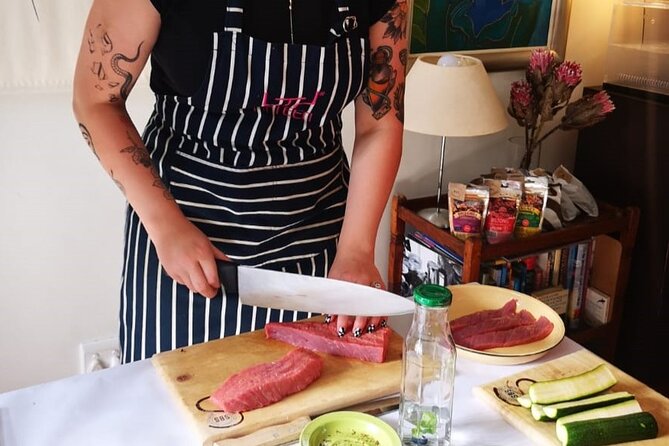
The main event is learning the process start to finish. You choose meat, learn how to cut it, then move into marinade and spice seasoning. The goal is to understand what each stage is doing.
- Selection matters, because different meats behave differently as they dry. You’ll be taught what to look for when choosing.
- Cutting matters, because thickness and shape affect how curing develops and how the end result feels when you bite.
- Seasoning matters, because biltong is known for its distinct South African spice blend, not a generic dried-meat taste.
- Curing and storage basics matter, because dried meat is all about doing it right at the later stages, not only at the start.
Even if you never plan to make biltong again, this lesson changes how you think about the snack when you buy it back in Cape Town or at home. You’ll stop treating it like a random packaged protein bar and start seeing it as a simple food craft.
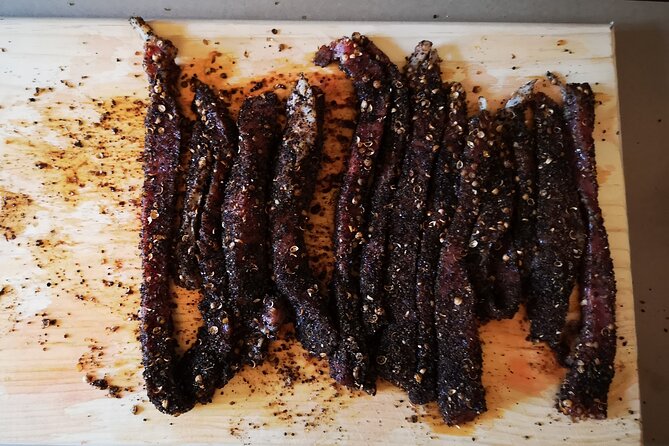
Another practical plus, you don’t just watch. You get a chance to prepare biltong sticks during the session. That’s the difference between a demo and a workshop, your hands learn what your mind hears.
Vegan Biltong: A Smart Option for Non-Meat Eaters
If you’re vegan, this is worth your time. The workshop offers a surprisingly good vegan alternative, and the way it’s presented matters. You’re not shoved into a separate corner with a token tasting.
You still learn the same core idea of seasoning and curing style, and you get to experience the biltong culture in the same friendly environment. For many people, this is the biggest relief, you can enjoy the whole format without feeling like you’re outside the main topic.
If you’re not vegan, you can still appreciate this option. It shows how the hosts think about flavor first, then adapt the ingredients.

The Stories Behind the Snack: Khoisan, Great Trek, Afrikaans
Food tours can get stuck in one lane, either all talk or all tasting. Here, you get both, and the stories are tied directly to why biltong became what it is.
You’ll hear about the Khoisan hunter-gatherers and the role they played in inventing biltong. Then the narrative shifts to the pioneers of the Great Trek, and how spice added another layer. Finally, there’s the language angle, including the origin of Afrikaans, described as a European language born in Africa, plus a personal family story that connects the English Soutie and Afrikaans Boeremeisie.
That mix may sound like a lot for 1.5 hours, but it doesn’t feel crowded. The hosts weave culture into the workshop like it belongs there because, in their telling, biltong is part food craft, part home tradition, part identity.
You also get a few Afrikaans expressions to help you join the conversation. It’s the kind of small gift that makes your next meal in Cape Town feel more alive.
Moerkoffie, Karringmelkbeskuit, and Biltong Samples That Actually Help
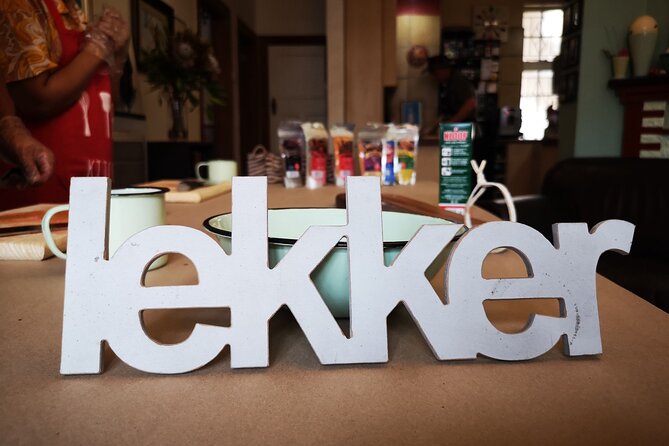
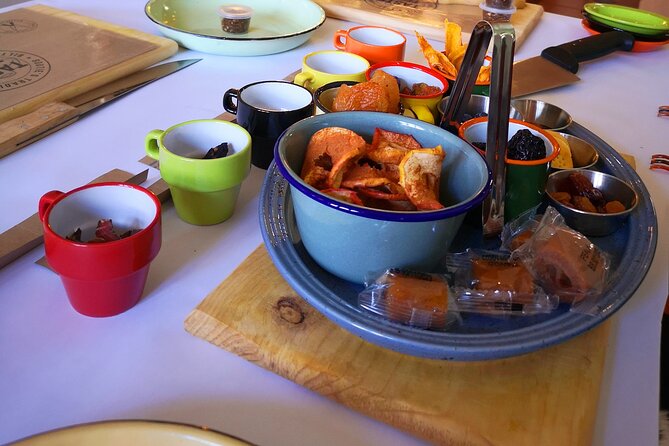
The workshop runs on more than just seasoning lessons. You’ll enjoy tastings during the session, including biltong samples and sweet snacks. Coffee is part of the ritual too, moerkoffie served in a tin mug.
The karringmelkbeskuit is another detail I like. It’s a small local sweet, and it fits the theme of homestyle South African hospitality. You get a taste of the kind of snacks that show up alongside coffee in everyday life.
You also get to eat biltong sticks during the workshop, and there’s an option to take more home. If you’re trying to decide if a class is worth it, pay attention to this. A workshop should let you taste the result of the skill you’re learning. Here, you do.
Boere Musiek and Catchy Afrikaans Songs, Without Feeling Forced
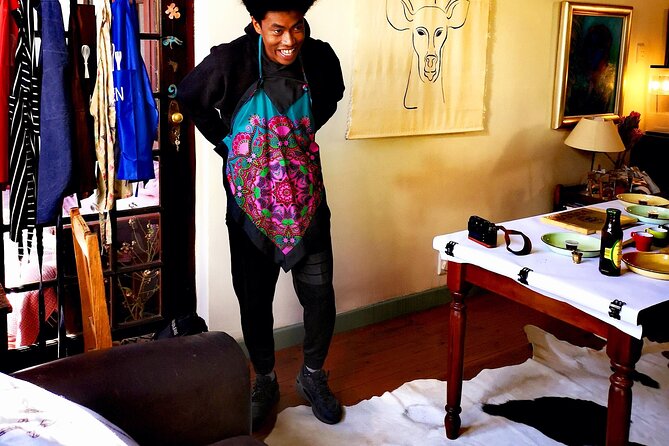
Music can make or break a cultural workshop. In this one, the Boeremusiek and Afrikaans songs add energy, but the focus stays on learning.
The hosts use music as a social glue. It keeps the pace friendly, and it supports the stories about language and everyday culture. If you’re the type who enjoys hearing how people speak, not just what they say, you’ll likely enjoy the flow.
You don’t need to know Afrikaans ahead of time. You’ll get a few expressions and a sense of how language shows up in hospitality, jokes, and tall tales.
Price, Timing, and Value in Plain Numbers
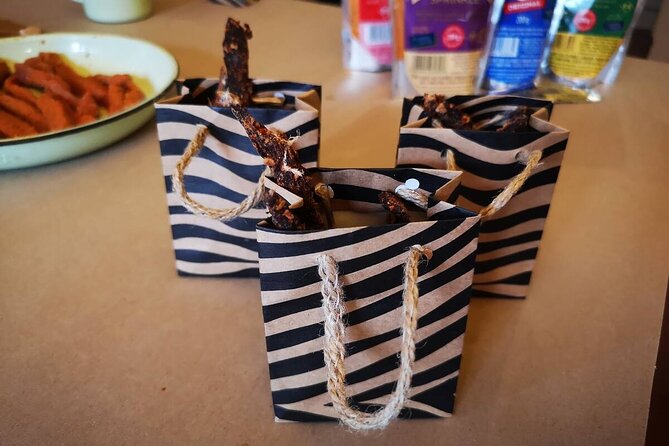
The price is $37.58 per person for about 1 hour 30 minutes, with a mobile ticket. That is a modest cost for a hands-on food workshop in Cape Town, especially one this small.
The value comes from the mix:
- You learn a real food-making process, not just a tasting.
- You get cultural context around biltong, Afrikaans, and South African stories.
- You get enough tastings to feel like you’re participating, not watching.
- You have a chance to prepare biltong sticks and eat samples.
Another small value point is timing. This experience is often booked around 25 days in advance, which hints that it’s popular and limited by that max group size of 6. If your trip dates are fixed, you’ll save yourself stress by booking sooner rather than later.
The meeting point is at 165 High Level Rd in Sea Point. The activity ends back at the meeting point, so you’re not left hunting for a ride across town at the end.
Who Should Book This Biltong-Making Experience
This is a great fit if you want an authentic Cape Town experience that doesn’t feel like a conveyor belt.
It’s especially good for:
- Food curious travelers who like learning by doing
- People who enjoy cultural stories tied to real daily life
- Anyone who wants an easy, low-commitment class at about 90 minutes
- Vegans or vegan curious travelers who want a legit alternative, not a side dish
It may be less ideal if you prefer big-group tours, lots of strangers, and a more formal presentation style. Because the group is small and the workshop happens in a home, it feels more like a visit with hosts than a big organized outing.
Should You Book This Biltong Workshop in Cape Town?
If you’re on the fence, here’s the straight answer. Book it if you want a hands-on snack-making class with real cultural context, in a cozy home setting in Sea Point.
I’d skip it if you only want a quick tasting and zero learning, or if you dislike small groups. The whole point here is interaction, questions, and getting your hands involved.
Given the 5-star rating and the consistent praise for friendliness, fun, and tastings, this is one of those experiences that works well as a single evening plan. You’ll leave knowing how biltong is made, tasting biltong in a way that connects to the process, and walking away with a few Afrikaans phrases you can use the next time you talk to locals.
FAQ
How long is the South African biltong-making experience?
It runs for about 1 hour 30 minutes.
Where does the experience start?
It starts at 165 High Level Rd, Sea Point, Cape Town, 8060, South Africa, and ends back at the meeting point.
Is there a vegan option?
Yes. The experience includes a vegan alternative.
Will I taste biltong during the workshop?
Yes. You get a sample of biltong sticks to eat, and you may also be able to take some home.
How many people are in a group?
The experience has a maximum of 6 travelers.
Is the ticket mobile?
Yes, the ticket is listed as a mobile ticket.
Will I get confirmation after booking?
Yes. Confirmation will be received at the time of booking.
Is it near public transportation?
Yes, it is near public transportation.
What is the cancellation policy?
Free cancellation is available up to 24 hours in advance for a full refund. If you cancel less than 24 hours before the start time, the amount paid is not refunded. Changes within 24 hours are not accepted, and if a minimum traveler number is not met, you will be offered a different date or a full refund.
Keep going: the rest of our Cape Town write-ups
- Cape Town to Cape Point Helicopter Flight – 48Min
★ 4.2 · 3 reviews - Full Day Private Hiking Table Mountain & City
★ 5.0 · 3 reviews - Sandboarding with jeep – drive uphill
★ 5.0 · 3 reviews - Full Day Tour for Cape of Good Hope & Boat to Seals Island
★ 5.0 · 3 reviews - 10 Day South Africa Tour Joburg to Cape Town
★ 5.0 · 3 reviews - 5 Day Garden Route Small Group Tour Fr CapeTown – Departs Mondays
★ 5.0 · 3 reviews