
REVIEW · PRETORIA CITY TOURS
Pretoria tour, Half Day experience
Pretoria history hits fast, and it feels personal. In just 4 hours, you bounce between big landmarks and the smaller human details behind them, from the Voortrekkers to Oom Paul’s home. I especially like the easy pickup and the way the route includes the Paul Kruger museum, so you’re not just looking at statues, you’re getting stories you can picture. The only catch is timing: some stops are quick, so you’ll want to be ready to move and take photos without hanging around too long.
This is a small-group experience (max 8). That matters, because you get room to ask questions instead of being herded. It also helps if you want to see Pretoria with the kind of context that turns a city into something you actually understand.
In This Review
- Key things to know before you go
- Hitting Pretoria’s big ideas in one half-day loop
- Voortrekker Monument: the 1836 story in stone and scale
- Ditsong Kruger Museum at No 60 Nkomo Street: Oom Paul, veranda details, and local place
- Pretoria’s civic landmarks: City Hall, the clock tower, and 32 bells
- Melrose House and the Vereeniging Peace: 31 May 1902
- Union Buildings on Meintlies Kop: government, design, and a long view
- Price and value: $68.97 for a guided 4-hour history sweep
- Guides like Francois and Ben Modisane: what to expect from the storytelling
- Practical tips to make your 4 hours work
- Should you book this Pretoria half-day tour?
- FAQ
- How long is the Pretoria half-day tour?
- How much does the Pretoria tour cost?
- Is pickup included?
- Is there a limit on group size?
- What ticket format do I use?
- Which admissions are included or free?
- Does the tour have a fitness requirement?
- Are service animals allowed?
- What is the cancellation policy?
Key things to know before you go
- Small group size (max 8) keeps the pace friendly and question-friendly.
- Pickup offered helps you start fast, with less logistics brainpower.
- Ditsong Kruger Museum admission included means one less ticket step.
- Free entry at Voortrekker Monument and Union Buildings keeps value high.
- Mobile ticket makes it easy to show up and go.
- Comfortable shoes and moderate fitness will make the monument stops much easier.
Other days out in Pretoria and Tshwane
- Full Day Ultimate Pilanesberg National Park Safari from Johannesburg or Pretoria★ 4.5 · 718 reviews
- Half Day Lion Park tour from Johannesburg or Pretoria★ 5.0 · 274 reviews
- Half Day Pretoria City Tour from Johannesburg or Pretoria★ 5.0 · 150 reviews
- From Johannesburg: Pretoria Half Day Tour★ 4.5 · 93 reviews
Hitting Pretoria’s big ideas in one half-day loop
If Pretoria feels like a lot to take in, this half-day route is built for your first real orientation. The stops focus on three themes that connect, even when the buildings look totally different: the story of settlement and conflict, the people who shaped politics, and the place where government still operates.
You’re not spending the day sitting in one place. Instead, you get a moving mix of monuments, museum rooms, and major civic buildings, so you come away with a sense of how the city thinks about itself. That’s the kind of value that matters, because it turns travel from photo-taking into understanding.
You’ll also notice the design choice in the itinerary: it leans on short, high-impact stops. Voortrekker Monument gives you the setup. Then the Kruger Museum adds the personal angle. Finally, Union Buildings and the peace-signing sites bring it into the realm of power, diplomacy, and lasting national decisions.
One practical note: with a tour around 4 hours, you should plan for a “see it, absorb it, keep moving” day. If you want to read every plaque slowly and linger, you may feel slightly rushed. If you’re okay with fast context and good conversation, you’ll likely love it.
Voortrekker Monument: the 1836 story in stone and scale
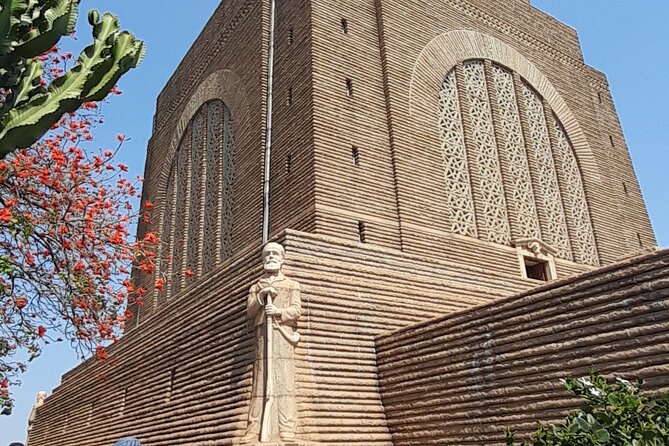
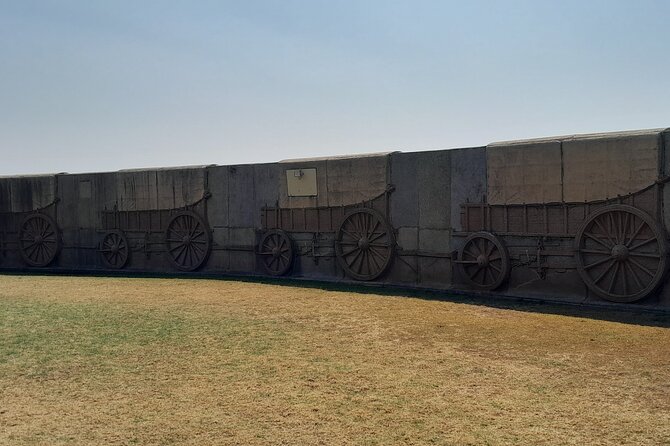
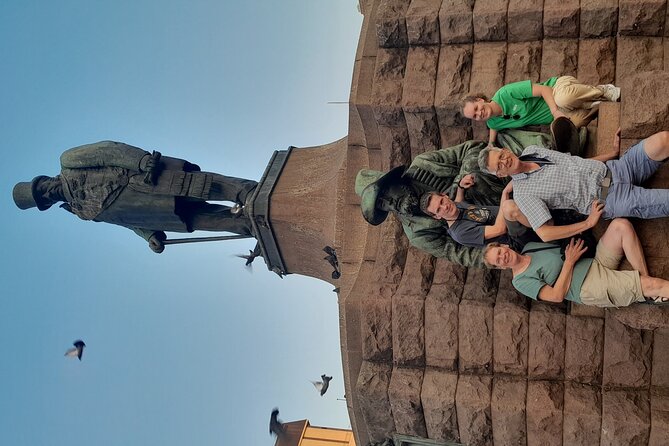
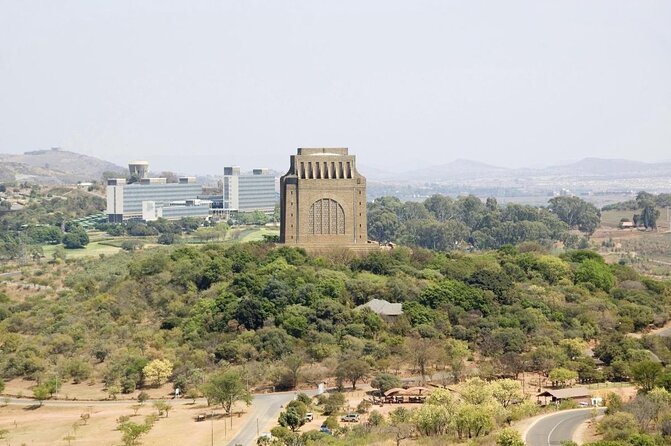
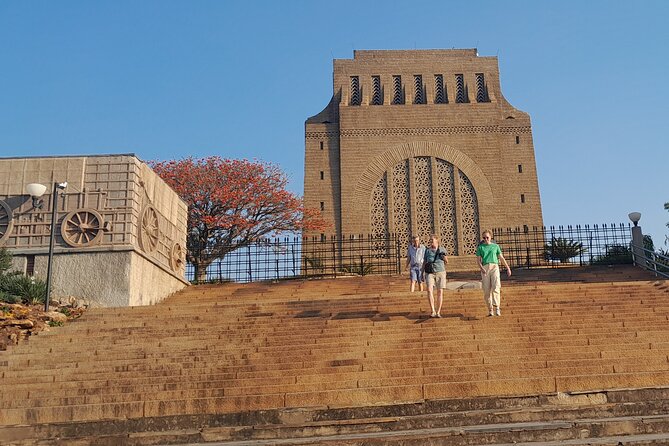
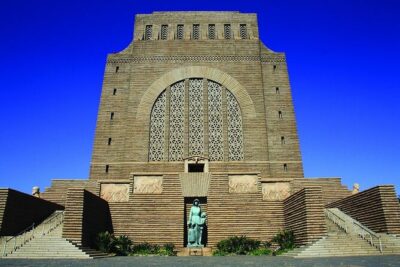
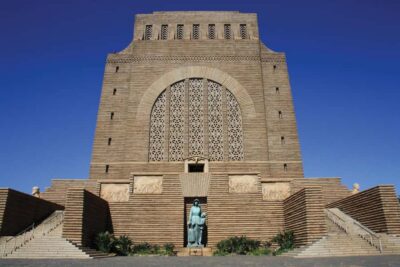
The Voortrekker Monument is your first anchor point, and it’s a big one. This monument commemorates the great trek that began in 1836, when settlers aimed to establish the Transvaal Colony. It also points straight at conflict, including the Battle of Blood River, so you’re not walking into a simple “old times” photo stop.
What I like here is how the monument frames time. Even if you arrive without much background, the site gives you a clear starting line. You also get an outdoor sense of Pretoria, with the setting helping you understand why this area became important enough to memorialize on this scale.
There’s a practical win too: admission is free. That lowers the friction. You can spend your energy on getting your bearings and learning the story instead of worrying about ticket costs.
Potential drawback is simple: monuments can involve some walking and looking upward, and the tour’s overall time is limited. So treat this stop like a strong primer, not a full textbook. If you’re the type who likes to capture details for later, take a quick mental note of what you want to look up after the tour.
Ditsong Kruger Museum at No 60 Nkomo Street: Oom Paul, veranda details, and local place
Next you go to Ditsong Kruger Museum, focused on Paul Kruger’s house at No 60 Nkomo Street, which used to be called Church Street. This stop is short, but it’s the most “human” one in the schedule.
Inside the story, it’s not just about a famous name. The museum presents the original fitting furniture used by the Kruger family, and you can also picture the house as it was, including the galvanized tin roof and the veranda.
One detail I think you’ll appreciate is the connection to the church across the road. The museum sits opposite the Gereformeerde kerk, the Church that Oom Paul and his wife used to attend on Sundays. The account here includes how he was not a preacher, but he might offer a word or two if someone needed it. That kind of little personal note makes a historical figure feel real, instead of distant.
On entry, you’re welcomed by two marble lions donated by Barney Barnato, a name that pops up in South African history. That’s the sort of touch that turns a museum visit into a “wait, that matters” moment.
This stop is also very good value in tour terms: admission is included. So you’re paying for the guide and transportation between sites, while the museum entry is handled for you.
If you want the day’s best blend of politics and daily life, this is likely the highlight. Try to stay alert during this one, because the time is brief and the details are the point.
Pretoria’s civic landmarks: City Hall, the clock tower, and 32 bells
After the Kruger Museum, you’ll also see the city hall area, known for its doomed Clock Tower. It was inaugurated in 1935, and the carillon includes 32 cylindrical bells donated by Sir George Heys, who was the first owner of Melrose House.
Even if you’re not a bell-and-clock person, there’s a useful reason this stop matters. It connects names and places. You’re learning who owned what, who donated what, and how certain landmarks link to specific individuals and moments in time.
What to do here: keep your eyes open for the architecture and the way the tower dominates its surroundings. This is how cities show their priorities. A clock tower is never just for time, it’s for identity.
Because the tour format is tight, you won’t have hours to study the building. Think of this segment as a “spot it, notice it, remember it.” If you’re the type who loves details, take a couple of photos from the best viewing angle you can find quickly, then move on.


Melrose House and the Vereeniging Peace: 31 May 1902
Melrose House is where the tour turns toward a major turning point. This is the house where the signing of the Vereeniging Peace took place on 31 May 1902, ending the war of South Africa.
That date alone is worth keeping in your head. It gives the whole day a line of progress: you start with the trek and battles, you learn about political leadership through Oom Paul’s world, and then you land on the moment where conflict ended through a formal peace process.
There’s also a second layer here that makes Melrose House feel like more than a plaque. During the war, George Heys, described here as a man of many mysteries, was connected to how the house was used by the British. The house was requisitioned as imperial headquarters in South Africa, and it was turned into the residential of Lord Roberts, the commander in chief of the British forces.
So you get a layered perspective: the same property sits in the story of peace, but also in the story of wartime power.
This part of the tour works best if you’re curious about how buildings change roles. A house can be private space, official space, wartime space, and history space, all in one lifetime. That’s why it sticks.
Union Buildings on Meintlies Kop: government, design, and a long view
Your final major landmark is Union Buildings, the government headquarters based at Meintlies Kop. This is South Africa’s government center, known as the Union Buildings, and it was designed by Sir Herbert Baker in Renaissance style with classic idioms.
Construction took shape between 1910 and completion in 1913. That’s the kind of timeline detail that helps you understand why the buildings feel so intentional, not accidental. It’s government architecture with a point of view, designed to project seriousness and permanence.
This stop is free, so you get more impact for your money. And with about 30 minutes here, you should use the time for two things: look at the overall layout and take in the setting, then listen to the guide’s connections between the architecture and what the buildings represent.
Practical tip: this is also a great place to ask questions, because people usually remember the site best when they understand why the design choices matter. If you’re with a guide who explains clearly, you’ll get extra value out of these final minutes.
Price and value: $68.97 for a guided 4-hour history sweep
At $68.97 per person for a half-day, you’re paying for three core things: guided interpretation, convenient routing, and admission handling where it applies.
You’ll get pickup offered, which can be a real cost saver in time and stress, especially if you’re new to the area. You’ll also have a mobile ticket, meaning you can keep your day simple.
The value sweet spot is admissions. Voortrekker Monument and Union Buildings are listed as free, and the Ditsong Kruger Museum admission is included. So the money you spend goes toward the guide and making the connections between stops, not stacking extra entry costs on top.
You’re also in a small group, max 8. For this type of city history tour, that matters more than it would on a big bus day. It helps the guide tailor explanations and lets you ask follow-ups without waiting forever.
The main value trade-off is that it’s half-day length. You’ll leave with strong context, but not a deep, slow museum marathon. If you want maximum time per building, you might find this format a little fast. If you want a smart orientation and great conversation, it’s a good deal.
Guides like Francois and Ben Modisane: what to expect from the storytelling
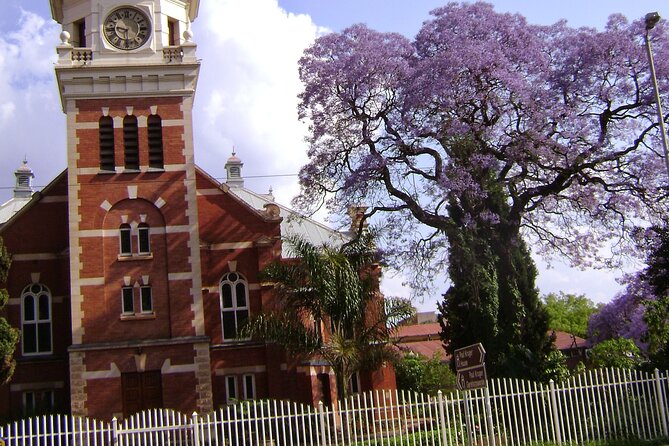
The best part of this experience is the human layer. The guides are there to connect the dots and explain what you’re actually looking at, especially around South African history and politics.
In particular, guides such as Francois are described as very knowledgeable and focused on helping you see Pretoria through local eyes. Another guide, Ben Modisane, is highlighted for clear explanations and a calm, friendly style. One standout detail: Ben even helped a guest get to their hotel and then onward to the train station after the tour.
That matters because it’s not just facts. It’s pacing, clarity, and how comfortable you feel moving from stop to stop. If you’re a first-time visitor, that kind of guidance can turn confusion into confidence.
Practical tips to make your 4 hours work
Go with the mindset that this is a context tour. You’re gathering the story, not collecting every single detail.
Wear shoes you can stand and walk in comfortably. Monument and civic-building days often involve uneven surfaces or stairs, and your moderate physical fitness level will make it more enjoyable.
Bring a phone camera with enough battery. There are multiple photo-worthy moments: the monument setting, the museum entrance details, and the civic architecture like the clock tower and carillon area.
Most importantly, come ready with one or two questions. Ask about the trek and the battles for the first stop. Ask about Oom Paul as a person for the museum stop. Save your bigger questions about peace and government symbolism for the later landmarks. With a max group size of 8, you’ll have a better shot at a real answer.
Should you book this Pretoria half-day tour?
I’d book it if you want an efficient way to understand Pretoria through landmark connections, not just sightseeing. The included museum admission, the free entry stops, and the small-group format all point to strong value for a first-time visit.
Skip it, or at least adjust your expectations, if you want slow, deep museum time. This route is built for speed and clarity over lingering and reading everything cover to cover.
If you’re the kind of traveler who likes history and politics when they’re explained in plain language, this is a smart choice. And if you end up with a guide in the Francois or Ben Modisane style, you’re likely to get exactly what you came for: a Pretoria day that feels welcoming and makes the city stick in your mind.
FAQ
How long is the Pretoria half-day tour?
The tour runs for about 4 hours.
How much does the Pretoria tour cost?
The price is $68.97 per person.
Is pickup included?
Pickup is offered.
Is there a limit on group size?
Yes. The maximum group size is 8 travelers.
What ticket format do I use?
You’ll use a mobile ticket.
Which admissions are included or free?
Voortrekker Monument and Union Buildings are listed as free. Admission for Ditsong Kruger Museum is included. Admission details for City Hall and Melrose House are not specified.
Does the tour have a fitness requirement?
Travelers should have a moderate physical fitness level.
Are service animals allowed?
Yes, service animals are allowed.
What is the cancellation policy?
Free cancellation is allowed up to 24 hours in advance for a full refund.
Pretoria: More on the Itinerary
Keep going: the rest of our Johannesburg write-ups
- Soweto Private half day tour
★ 4.5 · 3 reviews - Johannesburg’s Migration History with a local lunch
★ 5.0 · 3 reviews - Johannesburg: Soweto, Apartheid Museum, and Cradle tours
★ 4.7 · 3 reviews - Soweto Apartheid Museum and Lunch
★ 5.0 · 3 reviews - Bathongo Rhino & lion park nature reserve tour
★ 5.0 · 3 reviews - Johannesburg: Elephant and Monkey Sanctuary Half Day Tour
★ 5.0 · 3 reviews
Pretoria City Tours, compared.
 ★ 5.0Half Day Lion Park tour from Johannesburg or PretoriaFrom $100274 reviews
 ★ 4.7Johannesburg: Pretoria and Cullinan Diamond Mine TourFrom $122165 reviews
 ★ 5.0Half Day Pretoria City Tour from Johannesburg or PretoriaFrom $83150 reviews
 ★ 4.5From Johannesburg: Pretoria Half Day TourFrom $9093 reviews
 ★ 5.0Private Half Day Pretoria City Tour from Johannesburg or pretoriaFrom $10866 reviews
 ★ 4.7Pretoria/Sandton: Cradle of Humankind & Sterkfontein CavesFrom $10664 reviews
 ★ 4.5Pretoria: Half-Day City TourFrom $9660 reviews
 ★ 4.5Pretoria: Cullinan Surface Diamond Mine Walking TourFrom $1258 reviews
Browse the lists this tour appears in