
REVIEW · PRETORIA CITY TOURS
Pretoria Capital City Tour from Pretoria, every TUESDAY
Pretoria can feel confusing at first, but not here. This Tuesday city tour strings together the key sights in a tight loop, with a guide leading the way and explaining how Pretoria became the political heart of South Africa.
I really like the door-to-door pickup and drop-off, because it removes the mental math of where to park and which road to take. I also like that entrance fees are handled, so you are not constantly scanning your phone for tickets between stops.
One consideration: with about 3 hours and a small group, this is not for long museum wandering or slow photo sessions. You will want to plan for no included food and drinks, since the tour keeps moving.
In This Review
- Key things that make this Pretoria tour worth your time
- A Tuesday Pretoria loop that works as real orientation
- Door-to-door pickup, air-conditioned comfort, and a guide doing the heavy lifting
- S.J.P. Kruger’s House Museum, plus the State Railway Coach
- Austin Roberts Bird Sanctuary: a nature break inside Pretoria
- Voortrekker Monument in about 45 minutes: scale and symbolism
- Union Buildings on Meintjieskop: views, gardens, and the seat of government
- A historic 1886 house, then onto the civic center at Church Square
- Other Pretoria highlights you catch between the main stops
- Price and value: is $59.59 per person a good deal?
- What to bring, and how to make the most of 3 hours
- Should you book the Pretoria Capital City Tour on Tuesdays?
- FAQ
- What time does the Pretoria Capital City Tour start?
- How long is the tour?
- How much does the Pretoria Capital City Tour cost?
- What’s included in the tour price?
- Are food and drinks included?
- Can I get a full refund if I cancel?
Key things that make this Pretoria tour worth your time
- Small group setup with a maximum of 10 travelers, so questions do not get lost in the crowd
- Included access to major stops, meaning more time seeing and less time buying tickets
- Kruger House Museum with S.J.P. Kruger’s original home, display halls, and his State Railway Coach
- Austin Roberts Bird Sanctuary as a real nature reserve break in the middle of the city
- Voortrekker Monument with admission included and time to take in the monument and its setting
- Church Square as a historic civic core, with neo-classical buildings tied to South Africa’s political story
Other days out in Pretoria and Tshwane
- Johannesburg: Pretoria and Cullinan Diamond Mine Tour★ 4.7 · 165 reviews
- Pretoria: Half-Day City Tour★ 4.5 · 60 reviews
- Pretoria: Cullinan Surface Diamond Mine Walking Tour★ 4.5 · 58 reviews
- Pretoria: Pretoria City and Lion Park Tour★ 4.8 · 41 reviews
A Tuesday Pretoria loop that works as real orientation
This tour runs every Tuesday, and it is built for first-time visitors who want a clear “where am I, and why does it matter?” overview. You get about three hours of highlights, which is a sweet spot if Pretoria is one stop on a bigger trip and you want a fast mental map.
The route focuses on big-picture themes: leadership and government, Afrikaner pioneer memory, and the civic center where older Pretoria layers meet later political events. The guide’s narration is meant to connect the dots as you drive, rather than leaving you to read signs and guess.
Because the group is capped at 10, the pace stays friendly. That matters in a city like Pretoria, where distances can add up and the details in the architecture and monuments are easier to appreciate when someone is steering you.
Door-to-door pickup, air-conditioned comfort, and a guide doing the heavy lifting
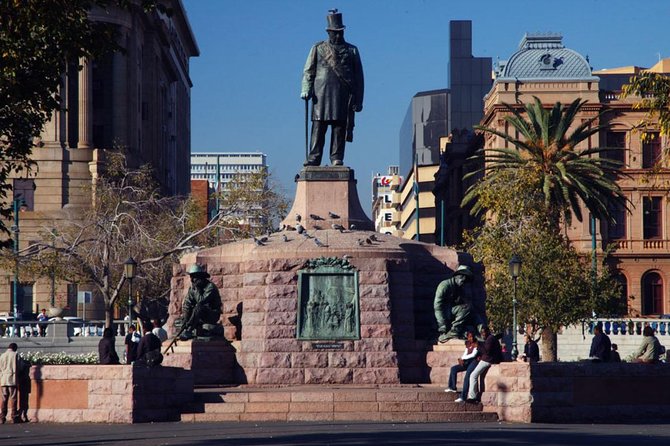
Logistics can make or break a short city tour. Here, the promise is hotel pickup and drop-off in Pretoria, plus transport in an air-conditioned minivan. That is not a small detail. When your sightseeing window is tight, convenience buys back time for photos, views, and questions.
The guide also does a practical job: you are not just being driven to landmarks, you are being oriented to what you are looking at. The tour is designed so you do not miss the main points, which is especially helpful if you arrive in Pretoria with zero background and want quick context before your other plans.
In one example, the guide Bo is described as friendly and knowledgeable, with the kind of storytelling that helps history stick. Even if your guide is different, the structure is the same: commentary is part of the product, not an afterthought.
S.J.P. Kruger’s House Museum, plus the State Railway Coach
The tour opens with a stop at the Museum that includes the original house where S.J.P. Kruger, President of the old Zuid-Afrikaansche Republiek (ZAR), lived with his family in the last years of the 19th century. That original home element is a strong starting point because it turns a name from a history book into a real setting.
Beyond the house, you also get two display halls and President Kruger’s State Railway Coach. The railway coach detail matters, because it hints at how leadership and travel worked in that era, when movement across the region carried real power and symbolism.
This is a good stop if you like history that has physical anchors. You are not just hearing dates, you are seeing how official life looked in the late 1800s. One drawback, though, is that you are unlikely to have hours to linger here. So if you are the type who reads every label, keep your expectations focused and use the guide to pick the best bits to remember.
Austin Roberts Bird Sanctuary: a nature break inside Pretoria
After the political and pioneer-focused landmarks, the tour takes you to the Austin Roberts Bird Sanctuary. This is an 11.76 ha nature reserve in the Walkerspruit Open Space System, located in the Nieuw Muckleneuk suburb of Pretoria.
The date detail is memorable: it became the first bird refuge in Pretoria when it opened on 27 October 1956, by the then mayor, Mr. W. J. Seymore. That is the kind of fact that makes a quick stop feel purposeful, not random.
This stop is also a nice “reset.” City tours can become a nonstop parade of buildings and monuments. A bird sanctuary gives you a break for the senses and makes the tour feel more like Pretoria is more than government architecture and street names.
The practical point: since it is still part of a 3-hour run, you will not get a long hike. Think of it as a short nature window, with enough time to notice the reserve concept and step back from the road noise.
Other city days, orientation to deep dive
Voortrekker Monument in about 45 minutes: scale and symbolism
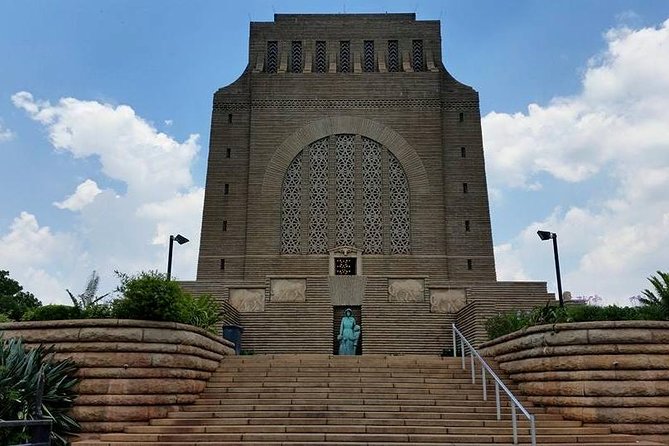
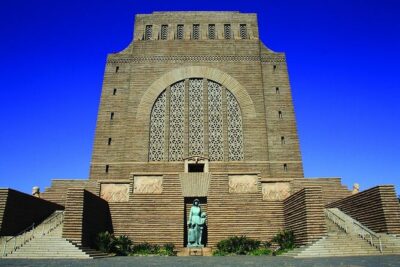
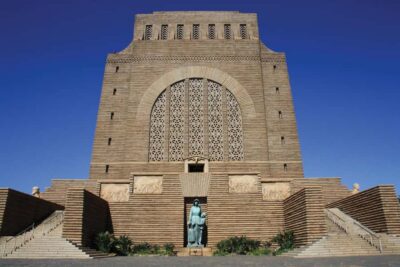
Next up is the Voortrekker Monument, set in a nature reserve and described as a unique monument commemorating Pioneer history of Southern Africa and the history of the Afrikaner. You get about 45 minutes here, and admission is included.
This is the stop that often feels the most dramatic at first glance. The monument is designed to be seen as a major statement, not a casual photo spot. If you like monuments with a “why this exists” story, this is where the guide’s narration becomes especially useful.
The setting matters too. It is not just plopped down in the middle of traffic. The nature reserve location is part of how you should read the monument, because it shapes the mood and the feel of the space around it.
One consideration: if your personal interests are more modern South Africa than pioneer commemoration, you may wish the stop had a bit more time for context. Still, the inclusion of admission and the fixed time makes it a workable balance for a half-day orientation.
Union Buildings on Meintjieskop: views, gardens, and the seat of government
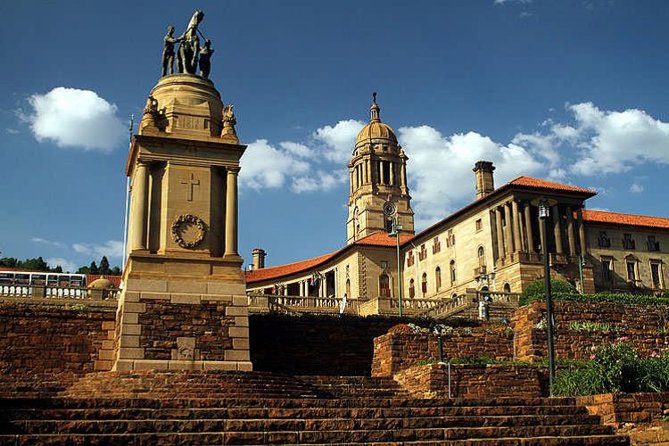
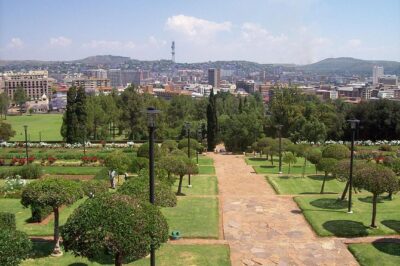
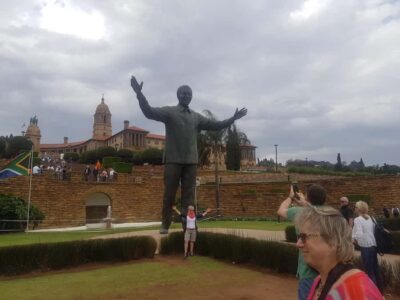
The Union Buildings are a headline stop in any Pretoria visit. They are the official seat of the national government, and they house the offices of the South African president. You visit atop Meintjieskop, and the building sits within terraced gardens with panoramic views over the city.
Admission here is free, and the tour budgets about 30 minutes. That is just enough time to get oriented to Pretoria from above, then understand why this location was chosen and how the site functions as a national symbol.
If you love architecture and civic design, this is one of the more rewarding stops. The building’s presence is formal and official, but the gardens soften it. The view helps you connect what you see on the ground to the bigger story you are hearing from your guide.
Because time is limited, prioritize: take a few minutes for the gardens and viewpoints, then be ready for the guide to point out what matters most. This is not the place to disappear into random side paths for long.
A historic 1886 house, then onto the civic center at Church Square
Part of the tour includes a historical house built in 1886. You might have it pointed out or visited, depending on how the day’s routing lines up. Either way, the point is to show Pretoria not as a single era, but as a layered city where earlier homes and later civic monuments share the same streets.
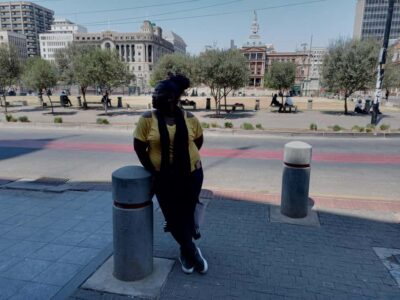
Then you head to Church Square, the central civic square tied to Pretoria’s earliest church built in 1855. In the square’s early years, it was used as a marketplace and even as a sports field. Today, it is described as the grandest civic square in the city.
Church Square also serves as a living “architecture lesson.” You will see historical buildings in different neo-classical styles around the square, including the Palace of Justice. That building is tied directly to the Rivonia Trial era, where former president Nelson Mandela and several of his comrades were tried and charged for treason.
Other notable surrounds include the Old Capitol Theatre and the Ou Raadsaal (Old Government) building. There is also mention of the Old Nederlandsche Bank building.
This is where you should lean in to the guide’s narration, because the political meaning can otherwise feel abstract. The square makes the history concrete by showing you how the civic center was built to represent authority, law, and public life.
Other Pretoria highlights you catch between the main stops
Between the big timed stops, the tour also passes through or points out a handful of major landmarks that help you build a mental map of the city.
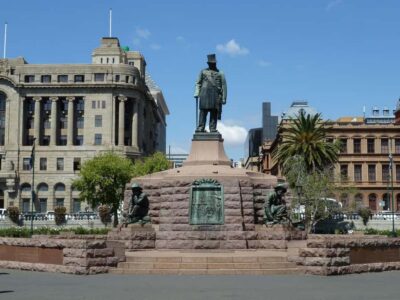
You will see the City Hall of Pretoria on Paul Kruger Street, and you will get a look at the main Train Station of Pretoria, which was designed by Sir Herbert Baker. Those details matter because they connect the city’s identity to specific designers and to the infrastructure that supported communication and movement.
The tour also mentions Pretoria’s tallest building. Even if you do not spend time inside it, seeing it on the route gives you a sense of how the modern city sits alongside older civic landmarks.
If you like urban “reading,” this section is useful. You are not only visiting sites, you are learning the rhythm of where Pretoria’s story shows up in street layout, architecture, and prominent public buildings.
Price and value: is $59.59 per person a good deal?
At about $59.59 per person for roughly three hours, this tour is priced in the category of short guided city highlights. The value comes from what is included: the driver/guide, hotel pickup and drop-off, transport by air-conditioned minivan, and all fees and taxes.
For most visitors, the biggest value is not the van ride itself. It is the fact that entrance costs and major fees are covered, so you can focus on seeing rather than budgeting one-off tickets at each stop. The itinerary also includes both paid and free-entry sights, which usually means your guide is managing the flow of stops so you do not run into unnecessary waiting.
Another value point is the group size limit of 10 travelers. In smaller groups, the guide can adjust pace and explanations. That helps especially at places like Church Square, where knowing what to look for improves the visit.
You do have two limitations to keep in mind. First, you are not eating during the tour because food and drinks are not included. Second, you do not get all-day time at each attraction. But as an orientation tour, you are paying for focus, access, and time efficiency.
What to bring, and how to make the most of 3 hours
Because the tour does not include food and drinks, I suggest planning a snack strategy. If you are sensitive to hunger, eat before pickup or plan to buy something near your next stop on your own schedule. A small amount of planning here makes the last 30 minutes much more enjoyable.
Wear comfortable shoes. You will be moving through civic squares and monument areas, and the timing includes short, structured visits. You do not want to spend your energy on aching feet when you could be using it for photos and explanations.
Also, treat the tour like a guided highlight, not a self-guided marathon. If you want to slow down at one place, do it mentally, not physically. Let the guide help you pick what matters, then you can decide where to return on your own after the tour.
If the pace feels brisk at any point, that is by design. The benefit is that you leave Pretoria with a coherent map in your head and enough context to enjoy the rest of your trip.
Should you book the Pretoria Capital City Tour on Tuesdays?
I would book this tour if you want a smart start in Pretoria with door-to-door convenience and a guide-led route through the major story sites. It is especially strong for first-time visitors who want orientation without spending a day on logistics.
You should also book it if you like history connected to real spaces, like S.J.P. Kruger’s original home and the State Railway Coach, then the political civic center at Church Square. The mix of government symbolism at the Union Buildings, pioneer commemoration at the Voortrekker Monument, and a breather at the Austin Roberts Bird Sanctuary makes the day feel balanced.
You may want to skip or pair it with extra time if you are the type who needs long, quiet museum hours. This tour keeps things moving, and it does not offer food or drinks during the ride.
FAQ
What time does the Pretoria Capital City Tour start?
The tour starts at 2:00 pm.
How long is the tour?
The duration is approximately 3 hours.
How much does the Pretoria Capital City Tour cost?
The price is $59.59 per person.
What’s included in the tour price?
Included items are the driver/guide, hotel pickup and drop-off, transport by air-conditioned minivan, and all fees and taxes.
Are food and drinks included?
No, food and drinks are not included.
Can I get a full refund if I cancel?
Yes. Free cancellation is available, and you can cancel up to 24 hours in advance of the experience start time for a full refund. If you cancel less than 24 hours before the start time, the amount paid is not refunded.
Another Day in Pretoria, Planned Out
Pretoria: More on the Itinerary
Keep going: the rest of our Pretoria write-ups
- Pretoria City Tour and Cullinan Mine Tour from Johannesburg
★ 5.0 · 3 reviews - Full Day Soweto, Johannesburg and Apartheid Museum Guided Tour
★ 5.0 · 3 reviews - Cradle of Humankind Full Day Tour from Pretoria and Johannesburg
★ 4.5 · 3 reviews - 3-Day Private Tour Johannesburg – See everything
★ 5.0 · 3 reviews - From Johannesburg: Pretoria Guided City Tour
★ 4.5 · 3 reviews - Pretoria Tour-Voortrekker Monument, Town, Union Buildings
★ 5.0 · 3 reviews
Pretoria City Tours, compared.
 ★ 5.0Half Day Lion Park tour from Johannesburg or PretoriaFrom $100274 reviews
 ★ 4.7Johannesburg: Pretoria and Cullinan Diamond Mine TourFrom $122165 reviews
 ★ 5.0Half Day Pretoria City Tour from Johannesburg or PretoriaFrom $83150 reviews
 ★ 4.5From Johannesburg: Pretoria Half Day TourFrom $9093 reviews
 ★ 5.0Private Half Day Pretoria City Tour from Johannesburg or pretoriaFrom $10866 reviews
 ★ 4.7Pretoria/Sandton: Cradle of Humankind & Sterkfontein CavesFrom $10664 reviews
 ★ 4.5Pretoria: Half-Day City TourFrom $9660 reviews
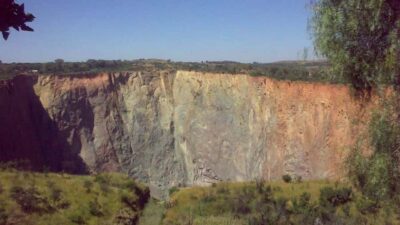 ★ 4.5Pretoria: Cullinan Surface Diamond Mine Walking TourFrom $1258 reviews
Browse the lists this tour appears in