
REVIEW · KNYSNA AND PLETTENBERG BAY TOURS
Monkeyland Guided Tour in Plettenberg Bay
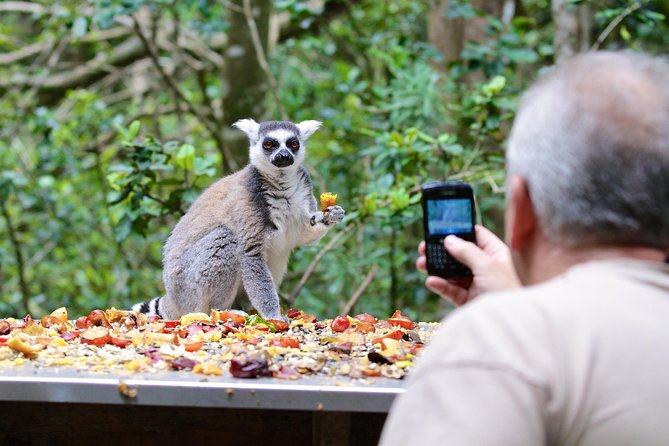
Monkeys, but with real science behind them. This Monkeyland guided tour near Plettenberg Bay is built around a real primate sanctuary, where you follow a guide through 30 acres (12 hectares) and learn how native monkeys, apes, and lemurs live and behave in a protected setting. I especially like the up-close guided commentary that connects behavior to biology, and the chance to see up to 550 animals from 11 species in one focused visit. One thing to consider is that the tour is short (about 1 hour), so you will want to arrive ready to pay attention and not treat it like a long wildlife hangout.
In practice, it is a well-run experience: you start at Monkeyland in The Crags, go through a screening station (including wrist temperature checks and a form for ages 3 and up), then head to reception for your guided walk. The group stays small, with a maximum of 16 travelers, and the format is designed to keep the pace manageable and the viewing productive. If you need a guided tour in Afrikaans, German, or French, plan ahead, because that has to be booked at least 48 hours in advance.
Also, you are paying for a guided sanctuary experience, not a show, so it helps to know there is no food or drinks included. That means you should bring water planning in mind, especially if you are combining Monkeyland with other Plettenberg Bay activities the same day.
In This Review
- Key highlights you will care about
- Monkeyland near Plettenberg Bay: a practical wildlife stop
- Entering the sanctuary: screening, tickets, and how the day starts
- The one main stop: Monkeyland Primate Sanctuary and what to expect
- 550+ primates across 11 species: how the guide turns spotting into understanding
- Why the sanctuary model matters: healthier life and public awareness
- Timing and pacing: why the tour length works
- Languages and accessibility of the experience
- Price and value: is $24.73 worth it?
- Tips to get the most from your hour
- Should you book the Monkeyland Guided Tour?
- FAQ
- How long is the Monkeyland guided tour?
- Where does the tour start and where does it end?
- What is included in the ticket?
- Are food and drinks included?
- Can I book the tour in languages other than English?
- What is the cancellation policy?
Key highlights you will care about
- A one-hour guided sanctuary walk that keeps you moving through the 12-hectare grounds without rushing
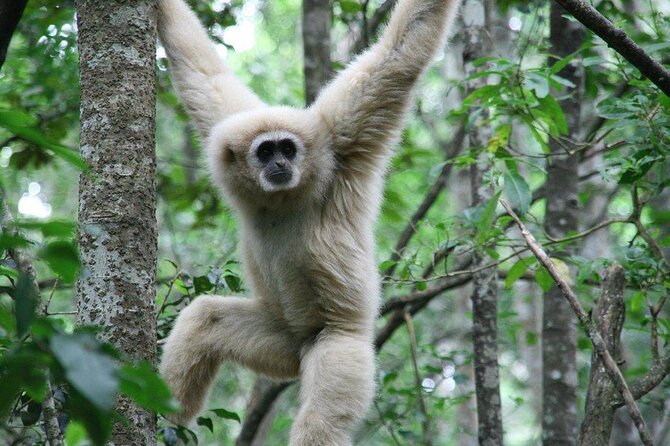
- Up to 550 primates across 11 species, so you are not stuck on just one animal group
- Professional guide-led learning focused on biology and day-to-day behavior
- Small group size (max 16), which makes it easier to hear the guide and spot animals
- Language options with notice (Afrikaans, German, French booked 48 hours ahead)
- Mobile ticket entry, plus a screening station for ages 3 and up
More around the lagoon, the forest and Plett
- Plettenberg Bay: Swim with Seals★ 4.7 · 887 reviews
- Standard Canyoning Trip in The Crags, South Africa★ 5.0 · 381 reviews
- Plettenberg Bay: Whale Watching Boat Cruise★ 4.4 · 362 reviews
- Plettenberg Bay: Canyoning Trip★ 4.9 · 353 reviews
Monkeyland near Plettenberg Bay: a practical wildlife stop
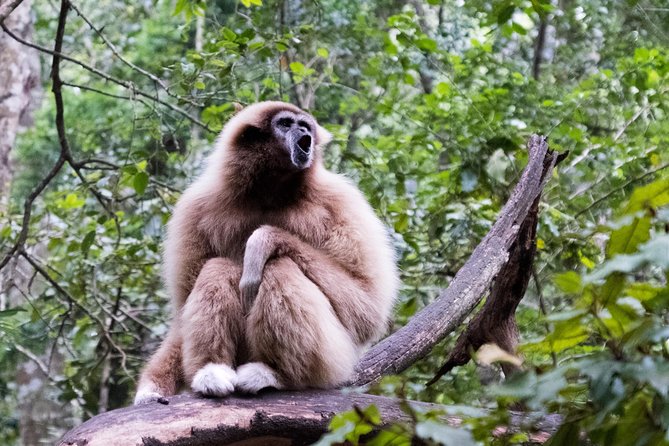
Monkeyland sits in the Western Cape, with the meeting point at Monkeyland, Portion 11 and 12 of Kirbywood Farm, The Crags (6602). If you are already doing a day around Plettenberg Bay, this is the kind of activity that fits cleanly into a tight schedule: it is about an hour long, and it starts and ends back at the same place.
The biggest value here is not just seeing monkeys and apes. It is the way the tour is structured so you actually understand what you are looking at. A sanctuary like this is meant to give primates a healthier, more natural life, and the guide’s job is to translate that into real, observable behavior. You get the biology angle, plus the practical “why does it act like that” angle. That is what turns a quick viewing into a memorable learning experience.
It also helps that the format is built for high-season demand. Advance tickets are encouraged, and the experience notes that advance admission helps guarantee entry when things are busy.
Entering the sanctuary: screening, tickets, and how the day starts
Your visit begins in the parking area, then you go through a screening station before you reach reception. For everyone aged 3 and up, you will fill in a form and have a temperature check taken from the wrist. After that, you head to reception with your ticket, where a guide escorts you into the tour.
I like this setup because it reduces chaos. You are not wandering around trying to find your group while other families are doing their own thing. You know where you need to be, and you know what happens next.
A couple of details to keep in mind:
- The tour lasts about 45 minutes to 1 hour once you start with your guide.
- The experience uses a mobile ticket approach, so have that handy on your phone.
- Confirmation is provided at the time of booking, which helps you plan without last-minute uncertainty.
If you are traveling with kids, note that children must be accompanied by an adult. That is a normal rule for a sanctuary visit, but it is worth remembering so you do not get surprised at the start.
The one main stop: Monkeyland Primate Sanctuary and what to expect
Everything on this experience flows through one main stop: the Monkeyland Primate Sanctuary. The goal is simple and important, to afford these intelligent creatures a healthier, more natural life, and to raise public awareness about primates.
What you can expect during your guided walk:
- You follow your guide through the property while learning about the animals’ biology and behavior.
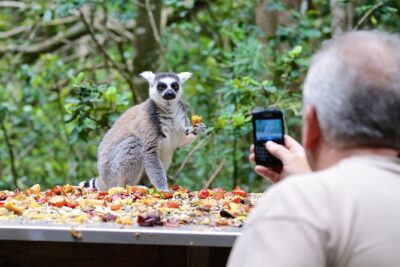
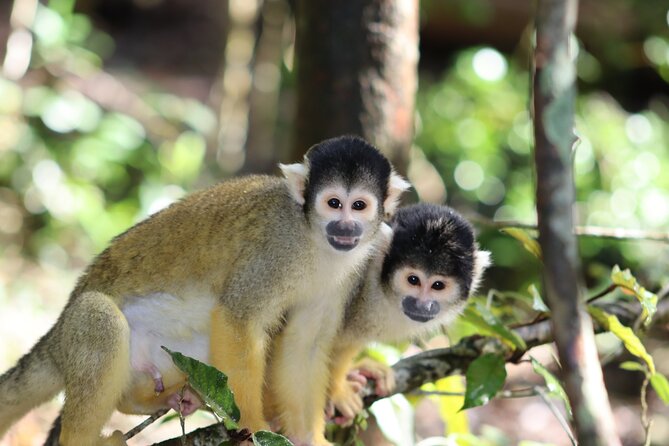
- You see a range of apes, monkeys, and lemurs living within the sanctuary.
- You learn how the sanctuary environment supports healthier routines and day-to-day living.
Because this is a guided tour, the value is in what your guide points out. Instead of you just scanning tree branches and hoping for the best, your guide helps you focus on the right behaviors and the right places to look. That is also why the tour stays to roughly an hour. It is long enough for multiple viewing moments, but short enough that the group can stay together and the guide can manage attention.
One practical consideration: as with most animal sanctuaries, sightings can vary. The animals are in a protected space, not a zoo stage with scheduled feedings. So you should come with the right mindset. If you treat it like a calm wildlife viewing experience, you will enjoy it more.
550+ primates across 11 species: how the guide turns spotting into understanding
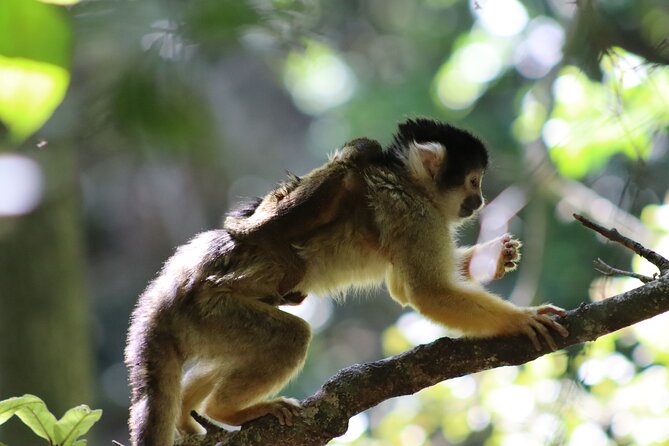
The headline is huge: Monkeyland is home to more than 550 animals across 11 species. But the real payoff is how your guide connects what you see to what it means.
Here is what that kind of commentary usually does well in a place like this:
- It helps you recognize differences between groups, not just species names.
- It explains behavior in plain language, so you understand what you are watching rather than guessing.
- It connects the sanctuary setting to natural instincts, like social behavior and movement patterns.
The sanctuary includes apes, monkeys, and lemurs, so you are not stuck with one “type” of animal. That variety matters on a short tour. You get repeated chances to spot activity, not just one brief moment.
And yes, you can get close enough to feel the animals are part of the environment, not sealed off behind distance. That is one reason the experience is so strongly recommended, with a standout theme in feedback that the grounds feel generous and the tour lasts long enough to actually enjoy what you came for.
If you end up with a guide such as Elano, feedback highlights how clearly primate information is explained, and how that learning makes the whole visit feel more inspiring. Other guides named in feedback include Itiaan and Elvis, with the same theme: keep you entertained while teaching you what matters.
Why the sanctuary model matters: healthier life and public awareness
Monkeyland is not just a place to watch primates. The sanctuary’s stated aim is to provide a healthier, more natural life and to raise public awareness about primates.
That is valuable for two reasons.
First, it changes the tone of your visit. You are not “consuming” animals for entertainment. You are learning about how an intelligent species benefits from being placed in a setting designed around their needs. The guide’s biology and behavior commentary is part of that awareness.
Second, a sanctuary model often requires ongoing care and monitoring. Even when you do not see the behind-the-scenes work, the purpose is clear in how the sanctuary is presented and how the tour is guided. It becomes easier to appreciate that the animals are living with intention, not just being housed.
If you are the type who wants to understand what you support with your ticket price, this is a good match. You leave knowing you visited a conservation and education focused facility, not only a collection of animals.
Timing and pacing: why the tour length works
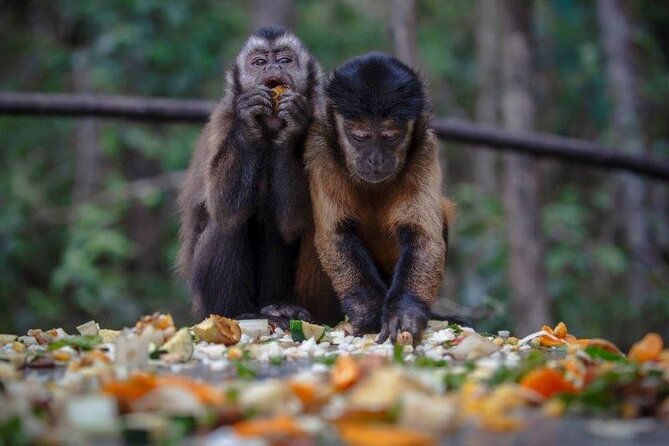
The tour is about 1 hour, typically described as 45 minutes to 1 hour once you start with your guide. That matters more than it sounds.
In one hour, you can:
- get multiple viewing moments
- listen without feeling like your guide is racing
- stay engaged without needing breaks or extra planning
Also, the group size is capped at a maximum of 16 travelers. Smaller groups help in two ways. You hear the guide more clearly, and animals are easier to spot because you are not constantly adjusting your position behind a large crowd.
If you like your tours structured but not heavy, this works. If you want a half-day of wandering, this will feel too short. But that is not a flaw. It is a style choice, and you pay for a guided, efficient visit.
Languages and accessibility of the experience
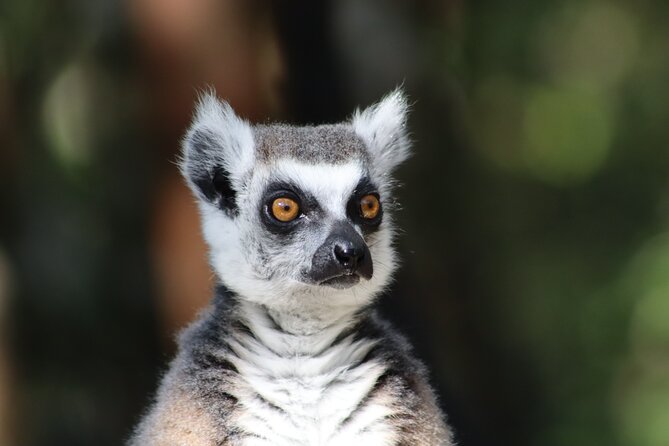
Tours are offered in English, and if you want a guided tour in Afrikaans, German, or French, you need to book at least 48 hours in advance.
This is a big practical detail. Language turns learning from “nice commentary” into “real understanding.” If English is your second language, or you want your kids to follow along, plan the language choice early so you do not end up with a default option you do not prefer.
For participation, the experience states that most travelers can participate. It also clearly notes that children must be accompanied by an adult. Beyond that, there is no extra detail listed here on specific accessibility accommodations, so if you have mobility or health questions, you might want to contact the provider ahead of time for the most accurate guidance.
Price and value: is $24.73 worth it?
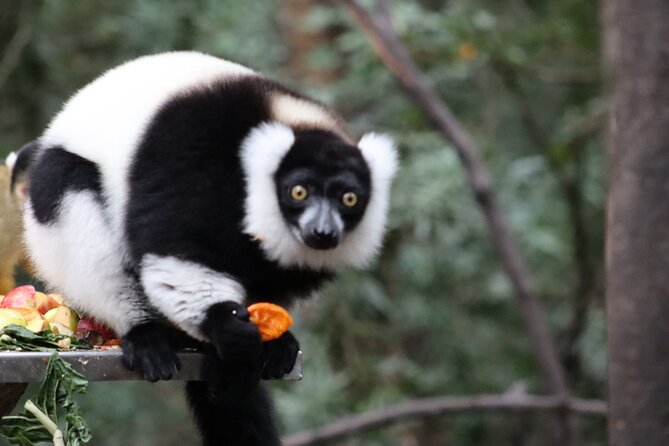
At $24.73 per person, this is not an expensive activity for the time you get. The price includes a professional guide, and the format gives you a focused sanctuary walkthrough rather than a self-guided stroll.
Here is how I think about value for this kind of ticket:
- You are paying for interpretation. Your guide is there to explain biology and behavior, not just point at animals.
- You are seeing a high number of animals across multiple species. That helps justify the cost, because you are likely to have more than one viewing moment.
- You get a manageable time commitment. About an hour means you can stack other Plettenberg Bay activities without losing the day.
Also, there is a practical “high season” angle. The experience says advance tickets help guarantee admission when it is busy. If you are traveling during peak time, that guarantee is part of the value, because it reduces the risk of arriving and finding the schedule full.
What is not included is food and drinks. Since you are paying for the guide and the sanctuary experience, you should plan your refreshments separately. If you are going at midday, having water on hand is a good move.
Tips to get the most from your hour
You have a short window, so you should use it smartly.
- Arrive a few minutes early so the screening and ticket flow does not eat into your touring time.
- Bring your phone for the mobile ticket, and keep it ready at reception.
- If language matters, book it in advance for Afrikaans, German, or French.
- Wear clothing that works for outdoor walking. You will want comfortable shoes and something for the local weather.
- Come with curiosity, not a checklist. The guide’s behavior explanations are what will keep you engaged when animals move out of the exact spot you were looking at.
If you do this right, you will leave with a better understanding of primates than you would get from a quick photo stop.
Should you book the Monkeyland Guided Tour?
Book it if you want a short, guided primate sanctuary experience that teaches as you go. The combination of 550+ animals, 11 species, and a professional guide makes it a strong choice for families with older kids, animal lovers, and anyone doing a Plettenberg Bay itinerary who wants a meaningful wildlife stop that does not take half a day.
Skip or reconsider if you are looking for a long, slow, self-paced outing, or if you dislike guided formats. Since the tour is about an hour, you may feel you are rushing if you prefer to linger.
If you want one straightforward decision rule: if you like learning what you are seeing, and you want a well-organized sanctuary visit near Plettenberg Bay, Monkeyland is a solid booking.
FAQ
How long is the Monkeyland guided tour?
The tour lasts about 1 hour (approximately), with the guided portion described as 45 minutes to 1 hour.
Where does the tour start and where does it end?
The tour starts at Monkeyland, Portion 11 and 12 of Kirbywood Farm, The Crags 6602, South Africa, and it ends back at the meeting point.
What is included in the ticket?
The ticket includes a professional guide.
Are food and drinks included?
No. Food and drinks are not included.
Can I book the tour in languages other than English?
Yes. Guided tours in Afrikaans, German, and French are available if you book at least 48 hours in advance.
What is the cancellation policy?
Free cancellation is available up to 24 hours in advance for a full refund.
If you cancel less than 24 hours before the start time, the amount paid will not be refunded.
Knysna and Plett: More on the Doorstep
Keep going: the rest of our Plettenberg Bay write-ups
- Kwano Lifestyle Day Tour – Be a local for a day
★ 5.0 · 3 reviews - Forest Walk with Picnic and Wildife Tour
★ 5.0 · 4 reviews - 1 Day Garden Route Tour: From Port Elizabeth to the Crags
★ 4.4 · 4 reviews - eBike Tours
★ 5.0 · 5 reviews - Quad Bike Fun Ride in The Crags, Plettenberg Bay
★ 5.0 · 5 reviews - 3D Archery Adventure – Plettenberg Bay
★ 5.0 · 5 reviews
Knysna and Plettenberg Bay Tours, compared.
 ★ 4.7Plettenberg Bay: Swim with SealsFrom $61887 reviews
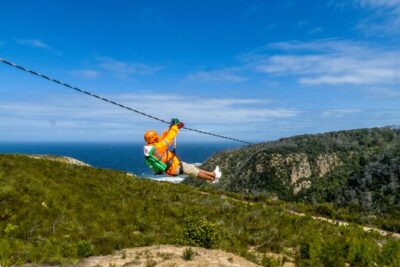 ★ 5.0Knysna Ziplines TourFrom $48688 reviews
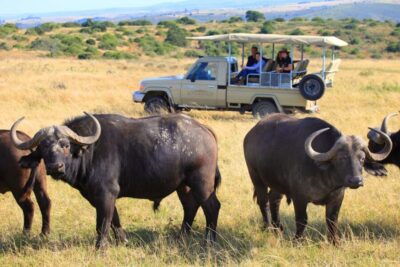 ★ 4.7Little Brak River: Botlierskop Guided Game DriveFrom $40589 reviews
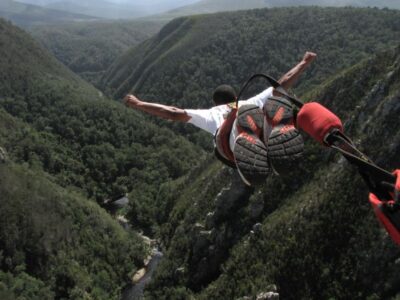 ★ 5.0Plettenberg Bay: Bungee Jumping with Zipline and Sky WalkFrom $97506 reviews
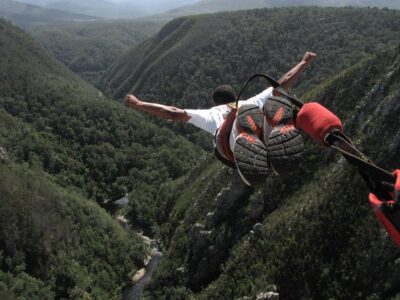 ★ 5.0Bloukrans Bungy, the worlds best bungy jump!From $97504 reviews
 ★ 4.7Storms River: Tsitsikamma National Park Zipline Canopy TourFrom $55481 reviews
 ★ 4.5Knysna: 75-Minute Lagoon Boat CruiseFrom $31445 reviews
 ★ 5.0Standard Canyoning Trip in The Crags, South AfricaFrom $60381 reviews
Browse the lists this tour appears in