

REVIEW · SOWETO TOURS
Historical Soweto & Apartheid Museum Tour
Soweto hits you in the best way. This private half-day tour pairs Soweto viewpoints with museum time at Mandela House and the Hector Pieterson Museum, then heads into the Apartheid Museum for the bigger story. I like how the route shows different sides of Soweto, including a calmer upper-class area at Diepkloof Park and the day-to-day reality at Kliptown’s corrugated iron homes. I also like that you’re not just passed around, you travel in comfort in a private air-conditioned vehicle with a guide who can connect the dots. One thing to consider is timing and added costs, since there’s a report of the trip running about 40 minutes late and the Apartheid Museum admission is not included.
For you, the biggest win is focus. In roughly four hours, you get the key sites that explain how apartheid shaped daily life and how resistance shaped South Africa’s future. Just keep in mind that the museum portion is self-guided, so you’ll get the most if you’re ready to read and ask questions when your guide is available.
In This Review
- Key takeaways before you go
- How the 4-hour Soweto and Apartheid Museum day really plays out
- Diepkloof Park: the surprising contrast inside Soweto
- Kliptown’s corrugated iron homes and real daily life
- Mandela House: letters, 27 years, and the matchbox scale
- Hector Pieterson Museum and Memorial: June 1976 and the Afrikaans issue
- The Apartheid Museum: self-guided, with your guide available
- Price and logistics: what $89.44 buys you, and what it doesn’t
- Who should book this Soweto-and-Apartheid Museum tour
- Should you book this private historical Soweto tour?
- FAQ
- How long is the Historical Soweto & Apartheid Museum tour?
- Does the tour include pickup in Johannesburg and Pretoria?
- Is this a private tour?
- Which museum tickets are included?
- Is the Apartheid Museum self-guided?
- What type of transport is used?
- Is cancellation free?
Key takeaways before you go
- Private guided format: only your group, plus pickup options from Johannesburg and Pretoria.
- Two included history stops inside Soweto: Mandela House and the Hector Pieterson Museum and Memorial.
- A route built for contrast: Diepkloof Park to Kliptown shows how apartheid divisions played out on the ground.
- Apartheid Museum ticket is extra: you’ll need to budget for admission since it is not included.
- Your guide matters: some feedback praised the guide as the difference-maker for making the sites click.
Other Soweto routes we have reviewed, each with a local guide
- Johannesburg: Hop-On Hop-Off Bus with Optional Soweto Tour★ 4.6 · 985 reviews
- Soweto /Johannesburg and Apartheid Museum Guided Full Day Tour★ 5.0 · 932 reviews
- Johannesburg Hop-On Hop-Off City Tour with Soweto Option★ 4.5 · 768 reviews
- Half-Day Tour of Soweto Tour★ 4.5 · 712 reviews
How the 4-hour Soweto and Apartheid Museum day really plays out
This is a tight, half-day structure, designed for people who want the core meaning without spending an entire day in transit and galleries. You start with Soweto stops and then work up to the larger national story at the Apartheid Museum. With a private air-conditioned vehicle, you can focus on the places, not on logistics or overheating in Johannesburg traffic.
What I like for your planning is that it’s not a vague “Soweto experience.” The schedule has specific points you’ll hit in sequence, with a guide along the way. That matters because Soweto can look like one place until somebody gives you the political and human context behind what you’re seeing. You’re also given a mobile ticket, so check-in tends to be simpler than in-your-face paperwork at the last second.
The only practical catch is that this kind of route rewards patience. One review mentioned lateness of around 40 minutes, so if you have a dinner reservation or an airport deadline later, give yourself a buffer. In a half-day format, small delays can feel big.
Diepkloof Park: the surprising contrast inside Soweto
You begin at Diepkloof Park, described as the upper class side of Soweto. That sounds like a curveball at first. Most people picture Soweto as one uniform experience, but apartheid and forced segregation created many layers, including neighborhoods that looked and functioned differently from what you might expect.
This stop is especially useful because it shifts your mindset early. Before you head to Kliptown’s corrugated iron homes, you get a sense of how uneven life could be inside the same township label. Even without a long visit, it sets up the comparison that keeps coming through during the rest of the day.
Practical angle: admission here is free, so you’re not burning your budget early. For comfort, you’ll also appreciate that the tour starts with vehicle time and short site time rather than jumping straight into a long, exhausting walking section.
Kliptown’s corrugated iron homes and real daily life
Next up is Kliptown, where you’ll spend about 45 minutes learning about township life and the corrugated iron houses people lived in. This is the stop that grounds everything. It’s one thing to hear about apartheid in a classroom. It’s another to understand what the housing conditions meant for privacy, safety, community life, and opportunity.
What I’d watch for on this part of the day is your curiosity. Ask your guide how segregation policies translated into where people could live and how resources were allocated. When you understand the connection, the physical setting stops being just scenery and starts becoming evidence.
Also, admission here is free. So you’re getting a big chunk of meaning without paying extra on the spot. It’s a good reminder that value on this tour comes from interpretation, not just ticketed attractions.
Mandela House: letters, 27 years, and the matchbox scale
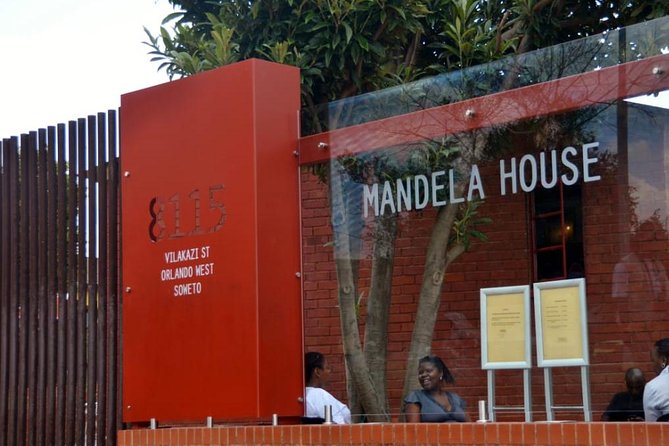
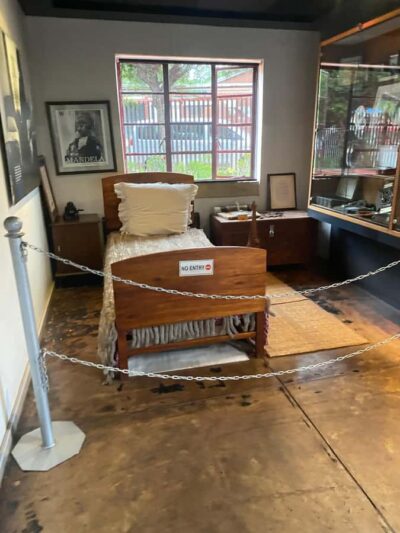
Then the tour moves to Mandela House, with a visit time of around 35 minutes. This is one of the stops that typically lands hardest, and for good reason. You’ll see the old matchbox house of Nelson Mandela, learn how he lived with his wives, and get a sense of what life looked like before and after his imprisonment.
The most memorable details here are tied to his prison years. You’ll look at letters he wrote while in prison and memorabilia presented to him after spending 27 years behind bars. That combination is powerful because it doesn’t treat imprisonment like an abstract concept. It shows him as a person maintaining purpose during years that were meant to break resolve.
Why this stop is worth prioritizing: it connects big history to specific objects and words. It’s also included in the tour, so you’re not left guessing whether the time is actually “worth it” compared to the price.
A small planning note: you only have about 35 minutes, so don’t expect to read every label slowly. If you want deeper detail, plan to skim your way through first, then go back to the most interesting items if time allows.
More sites and museums that record the apartheid years
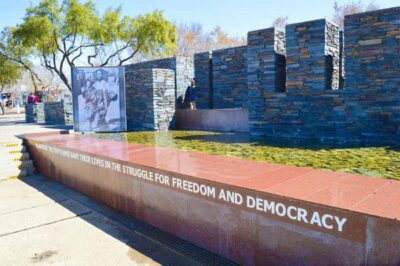
Hector Pieterson Museum and Memorial: June 1976 and the Afrikaans issue
After Mandela House, you’ll head to the Hector Pieterson Museum and Memorial for about an hour. This is built around June 1976, when students tried to march against using Afrikaans as the medium of instruction in schools.
This matters because it reframes what people sometimes think of as “language” into something political and personal. Education choices were not neutral. They shaped identity, power, and who got to be heard. The museum experience is a way to understand how protests can start from daily life and then ripple outward into national change.
You’ll also have included admission here. That helps the day feel balanced because you’re not paying again for what is arguably the emotional center of the Soweto resistance story.
What I’d do while you’re there: take a beat at the memorial sections. The emotional impact can be stronger outside the main gallery areas than inside. One review even noted that the guide focused on key points the group needed most, including content visible outside. If your guide offers that kind of route optimization, lean into it. In a time-limited tour, it often turns “missing something” into “getting the point faster.”
The Apartheid Museum: self-guided, with your guide available
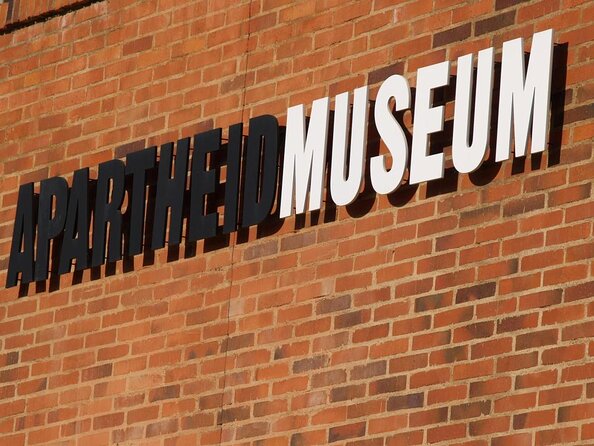
Finally, you arrive at the Apartheid Museum. You’ll have about two hours here, and it is self-guided, with your guide available if you want help going in. Admission is not included, so you’ll pay that directly for this final segment.
The museum covers the rise and fall of apartheid, and the value of this stop is that it gives you the long arc. The earlier sites focus on specific people and moments. The Apartheid Museum is where you step back and see patterns, systems, and policy. It’s the place you go when you want the timeline to snap into place.
The self-guided format is a mixed bag, and that’s why the guide availability matters. If you’re the kind of person who reads exhibits slowly, two hours can feel either perfect or too short depending on your style. If you want momentum, you can move more quickly and then ask your guide for the “why this matters” context.
One caution from feedback: the museum can feel a bit boring for some people if you treat it like a checklist. It usually works better if you use it actively. Pick one or two themes to watch for as you go, like how laws shaped where people could live and work, or how resistance evolved over time. That way, you leave with an organized mental story, not just information.
Price and logistics: what $89.44 buys you, and what it doesn’t
At $89.44 per person for a roughly four-hour private guided experience, the value comes from three things: the guide, the private air-conditioned vehicle, and the included admissions to key sites.
Here’s the math logic you can use to judge it:
- Included admissions: Mandela House and Hector Pieterson Museum and Memorial are part of the tour.
- Free stops: Diepkloof Park and Kliptown are listed with free admission.
- The paid piece you still handle: the Apartheid Museum admission is not included.
So you’re not paying full price for all attractions. You’re paying for transport, time, interpretation, and access to the included sites plus a guided structure that helps it all connect.
Two practical considerations to keep your expectations realistic:
- Timing reliability can be an issue. One review reported the trip running about 40 minutes late. If your day is tight, build in a buffer for pick-up and return.
- Extra costs can pop up depending on what’s actually included and how local guiding works that day. One review said they had to pay local guides even though it was supposed to be included.
None of this means you should avoid the tour. It means you should verify what’s included for the specific day you book, and plan for flexibility. A half-day tour is only as good as its flow.
Who should book this Soweto-and-Apartheid Museum tour
This is a strong match if you want a first-time, structured introduction to Soweto plus the national context of apartheid, without trying to manage separate tickets and driving on your own. The private format also makes it easier if you want your guide to adjust pacing, answer questions, or point out what matters most at each stop.
It also suits people who learn best through guided explanation. Feedback praised the guide, with comments that the guide was great and helped people understand more than they could on their own. Mandela House tends to be a highlight, and it’s included, which makes it a smart “core history” anchor.
It may be less ideal if you hate museum time or you want long, slow reading. One review called the museum part a bit boring. If that sounds like you, you can still do it, but go in with a plan: focus on themes, take photos of captions you care about, and ask your guide for one or two key takeaways before you start.
Should you book this private historical Soweto tour?
If you’re going to Soweto for the first time, I’d say yes, with two conditions in your head: confirm museum admission details for the Apartheid Museum, and give yourself buffer time for lateness risk. The tour’s structure is the selling point, and the included Mandela House and Hector Pieterson Museum stops do a lot of heavy lifting for meaning.
If your schedule is rigid or you can’t tolerate changes, you might look for a slower option with more cushion. But if you want a focused, guided half-day that covers the essential places in Soweto and gives you the larger framework at the Apartheid Museum, this is a solid way to do it.
FAQ
How long is the Historical Soweto & Apartheid Museum tour?
It’s about 4 hours.
Does the tour include pickup in Johannesburg and Pretoria?
Yes, pickup is offered, including pickup from Johannesburg and Pretoria.
Is this a private tour?
Yes. It’s a private tour/activity, so only your group participates.
Which museum tickets are included?
Entrance to Mandela House and the Hector Pieterson Museum and Memorial is included. Diepkloof Park and Kliptown are listed as free admission. Apartheid Museum admission is not included.
Is the Apartheid Museum self-guided?
Yes, the Apartheid Museum visit is self-guided, and the guide will be available if you need help during the museum.
What type of transport is used?
You travel in a private air-conditioned vehicle.
Is cancellation free?
Yes, there is free cancellation. You can cancel up to 24 hours in advance for a full refund.
If you want, tell me your travel dates and where you’re staying in Johannesburg or Pretoria, and I’ll help you think through how to time this with your other plans.
Under Glass and Behind Ropes in Johannesburg
Apartheid History: Other Sites We Have Documented
Soweto: Other Guided Routes
Keep going: the rest of our Johannesburg write-ups
- Soweto Private half day tour
★ 4.5 · 3 reviews - Johannesburg’s Migration History with a local lunch
★ 5.0 · 3 reviews - Johannesburg: Soweto, Apartheid Museum, and Cradle tours
★ 4.7 · 3 reviews - Soweto Apartheid Museum and Lunch
★ 5.0 · 3 reviews - Bathongo Rhino & lion park nature reserve tour
★ 5.0 · 3 reviews - Johannesburg: Elephant and Monkey Sanctuary Half Day Tour
★ 5.0 · 3 reviews
Soweto Tours, compared.
 ★ 4.5Johannesburg Hop-On Hop-Off City Tour with Soweto OptionFrom $16768 reviews
 ★ 4.5Half-Day Tour of Soweto TourFrom $63712 reviews
 ★ 4.9Soweto: Walking Tour with a Local Guide and LunchFrom $43648 reviews
 ★ 4.8Jo’berg in 1 Day: Soweto, Apartheid Museum & City TourFrom $142524 reviews
 ★ 4.8Johannesburg: Full-Day Tour with Soweto and Apartheid MuseumFrom $104478 reviews
 ★ 4.8Johannesburg and Soweto: Half-Day TourFrom $71439 reviews
 ★ 5.0Full-Day Soweto, Apartheid Museum and Lunch TourFrom $108410 reviews
 ★ 5.0Half Guided Day Tour of Soweto And Apartheid MuseumFrom $69356 reviews
Browse the lists this tour appears in