
REVIEW · HERMANUS AND WALKER BAY WHALE TOURS
Hermanus Land based Whale Tour with Dave de Beer
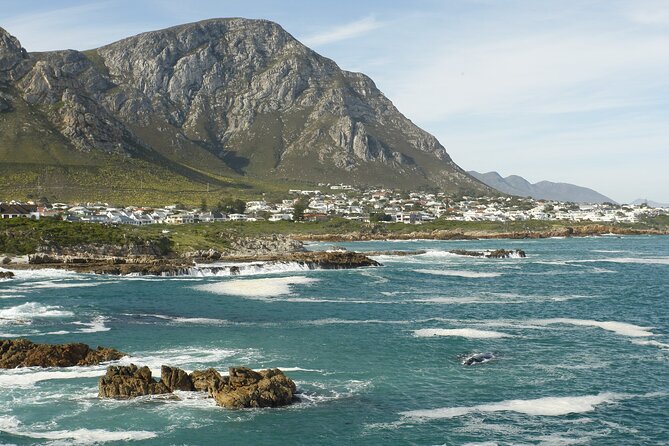
Whales meet history in Hermanus. The Whale House Museum start gives you the Southern Right whale basics, from size to whaling-era scars. Then a private cliff path walk with Dave de Beer puts the viewing at about 15 metres above Walker Bay, with no boat needed.
One watch-out: this experience depends on good weather, and it includes a two-hour cliffside walk.
In This Review
- Key things to know before you go with Dave de Beer
- Why Hermanus is so good for land whale watching
- Stop 1: Whale House Museum, where Hermanus and Southern Right whales connect
- Stop 2: Hermanus cliff path with Dave’s secret sighting locations
- What makes it a private Hermanus whale tour instead of a cattle-call
- Price and value: what you’re paying for at about $80.81
- Who this Hermanus land-based whale tour suits best
- Practical tips for a smoother cliff path whale watching day
- Should you book this tour with Dave de Beer?
- FAQ
- Where does the tour start?
- What is the duration of the Hermanus land whale tour?
- Is this tour boat-based or land-based?
- What happens at the Whale House Museum stop?
- How long is the cliff path portion?
- Is the tour private?
- What is included with the tour price?
- What should I do about weather?
- What is the cancellation policy?
Key things to know before you go with Dave de Beer
- Whale House Museum orientation that connects Southern Right whales to Hermanus, including the whaling days and their impact
- Cliff Path vantage from about 15 metres up, with whales able to approach fairly close to shore
- A private tour just for your group, so you can ask small questions and get direct answers
- Secret sighting spots and timing tips for the best chance at a breach photo
- Boat-optional whale watching, perfect if open water is not your thing
- Admission included for both the museum and the cliff path portion
More whale season mornings on Walker Bay
- Hermanus: Whale and Dolphin Watching Boat Trip★ 4.6 · 807 reviews
- Boat Based Whale Watching from Hermanus★ 4.5 · 205 reviews
- Shark Cage Diving and Viewing with transport from Hermanus★ 4.0 · 81 reviews
- Marine Big 5 Safari with transport from Hermanus★ 5.0 · 64 reviews
Why Hermanus is so good for land whale watching
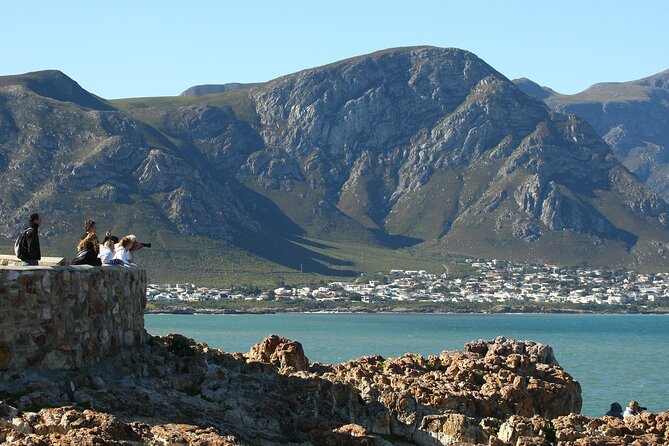
If you picture whale watching as something you do on a rocking boat, Hermanus quietly changes your mind. Here, the coastline does a lot of the work for you. The town’s cliff path runs above Walker Bay, giving a serious viewing angle without the constant motion of open water.
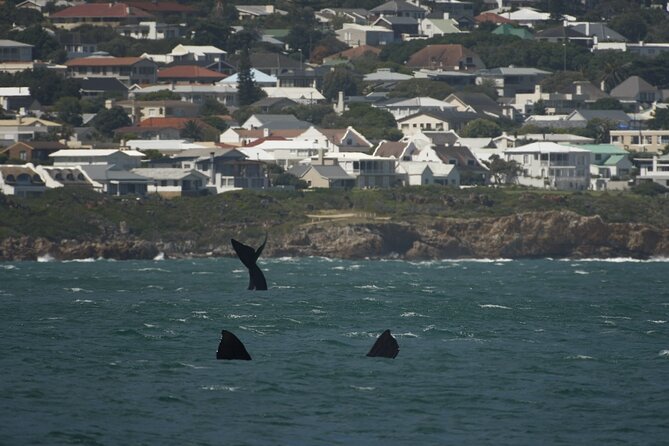
Southern Right whales are the focus, and the set-up is especially helpful because whales do not always need an offshore boat ride to feel close. From the cliffs, you’re looking down at the ocean immediately below, and that near-water depth matters. The guide explains that the water drops to about 10 metres right off the cliff area, which is part of why whales can approach in a way that makes land sightings possible.
The other reason Hermanus works is the pace. This tour is designed for listening and looking, not rushing between viewpoints. You start with context first, so when you later scan the bay, you already understand what you’re looking for. That turns a scenic walk into a real wildlife experience.
Also, you get to choose how involved you want to be. If you are into learning, Dave de Beer brings whale behaviour into the conversation, including age and how whales act at different times. If you just want the view, you still get guided help finding where to look and when to pay attention.
Stop 1: Whale House Museum, where Hermanus and Southern Right whales connect
The tour begins at the Whale Museum in Market Square, at 3 Market Square St, Hermanus. From there, you spend about 30 minutes with a guide who sets the stage before you hit the cliff path.
This first stop is not just a quick peek at exhibits. The goal is to familiarise you with Southern Right whales in a way that actually helps you later. You learn practical, basic details like size, length, and weight, which might sound like trivia until you’re staring at a moving animal far offshore and trying to estimate scale. Those facts help your brain interpret what you’re seeing instead of guessing.
You also get the local connection. Dave explains the synergy between the whales and Hermanus, which matters because this is not a generic whale talk. You’re learning why this town has a reputation and why the whales became such a big part of local identity.
Then the tour tackles the whaling era. The museum visit covers the impact of those whaling days and how that history nearly led to the whales’ demise. That part adds weight to the experience. Watching whales is exciting, but knowing what nearly happened makes the sightings feel more meaningful.
What I like about starting at the museum is that it reduces the guesswork. After this orientation, your cliff path walk is not just chasing a glimpse. You have a mental checklist of what Southern Right whales do, how to think about behaviour, and what to watch for.
Stop 2: Hermanus cliff path with Dave’s secret sighting locations
After the museum, you move to the famous cliff route in front of town. You’ll walk for around two hours along the cliff path, at roughly 15 metres above the ocean. That elevation helps because it gives you wider sightlines across Walker Bay. It also puts you in a prime position to track movement, not just stare at a single spot.
The guide’s job here is part geography, part animal behaviour, and part timing. Dave shares secret whale sighting locations, which is exactly what you want on a land tour. Land whale watching is all about choosing the right angles and scanning efficiently. If you are wandering on your own, you might stare at a beautiful view for a long time without finding the action. With a guide, the route and the focus feel intentional.
The tour also leans into understanding the whales themselves. Dave explains relevant info from whale age and behaviours, which helps you interpret what you’re seeing when the ocean changes. You’re not just watching random surf breaks. You’re learning what different actions can mean in a general way.
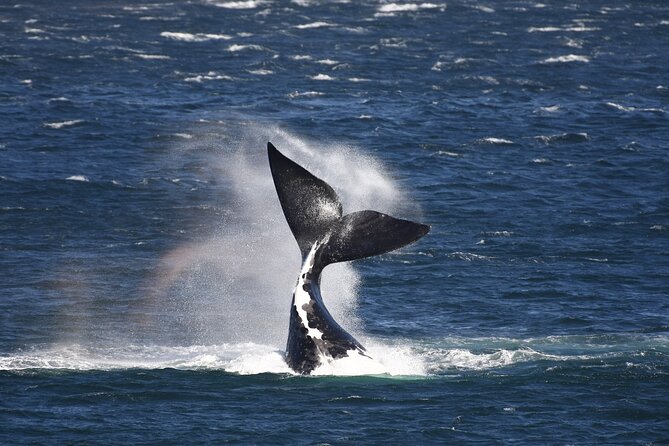
Then come the practical photo and spotting moments. Dave talks about the best possible timing of a breach for a photo opportunity. That’s useful because breaches can happen fast, and a lot of people miss them by looking at the wrong place at the wrong second. Having guidance on timing means you are more likely to catch the moment rather than only the aftermath.
One more detail that’s worth appreciating is that cliff-to-sea depth. The guide notes that the ocean immediately down from the cliffs is about 10 metres deep. That helps explain how whales can approach within viewing range from shore. It is a reminder that Hermanus is not just pretty cliffs, it’s a physical setup that can support land sightings.
Practical expectation: this is a walk. You’ll want solid shoes and clothes you don’t mind getting wind-tested. Even in good weather, the cliff can feel brisk.
What makes it a private Hermanus whale tour instead of a cattle-call
This is a private tour/activity, meaning only your group participates. That changes the feel fast. On group tours, you often end up listening in the background and watching only when there’s time. With a private guide, you can linger on what matters to you, and you can ask follow-up questions without feeling like you’re holding anyone back.
Dave de Beer also has a reputation for answering everything, including the small questions. That matters more than people think. Whale behaviour is full of details, and the difference between a good sighting and a great one can be a single piece of context, like what a certain movement might indicate or why a whale might show itself at a particular moment.
Because the experience is private, the guide can also adjust pacing. If your group is eager to scan, you can keep your eyes busy. If you want more explanation, you can slow down just enough to take it in. The tour is built around two main blocks, the museum orientation and the cliff path walk, and you get to benefit from the guide’s focus instead of splitting attention with a crowd.
There’s also an advantage for people who do not want a boat. If you feel uneasy around open water, land-based whale watching keeps the experience calm. You still get a real wildlife guide, a real route, and a real chance at sightings.
Finally, the tour time is reasonable. You’re looking at about two hours 30 minutes total, so it feels like something you can fit into a Hermanus day without turning it into a full-day production.
Other plates worth planning a day around

Price and value: what you’re paying for at about $80.81
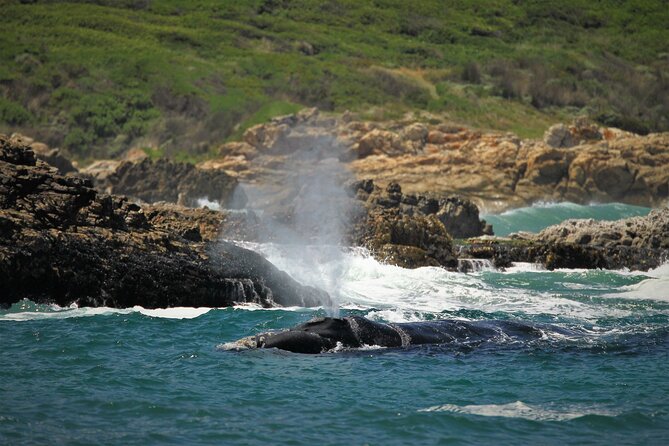
At about $80.81 per person, this is not a bargain bargain, but it is also not built like a luxury yacht whale trip. The value comes from how the experience is constructed.
First, admission is included for the Whale House Museum and for the activity portions tied to the tour. That helps you avoid the classic travel surprise of paying extra once you get there.
Second, you are paying for a private guide who focuses on both learning and spotting. Land whale watching is skilled. Someone has to know where to stand, where to look, and how to read whale behaviour in a practical way. Dave shares secret locations and gives timing tips for a breach photo, which is exactly the kind of guidance that boosts your odds.
Third, you get a boat-avoidance benefit. Even if you like boats in general, many people prefer not dealing with seasickness, wind slap, or the logistics of open water. A land-based option is often the better match for comfort.
So who is this value best for? People who want a guided experience rather than a generic walk. People who want history and whale facts, not just scenery. And people who want the attention of a private guide.
If you are the type who enjoys learning while you travel, this price starts to make sense quickly. You are not just buying access to a viewpoint. You’re buying a two-part experience that teaches you what matters, then uses that knowledge outdoors.
Who this Hermanus land-based whale tour suits best
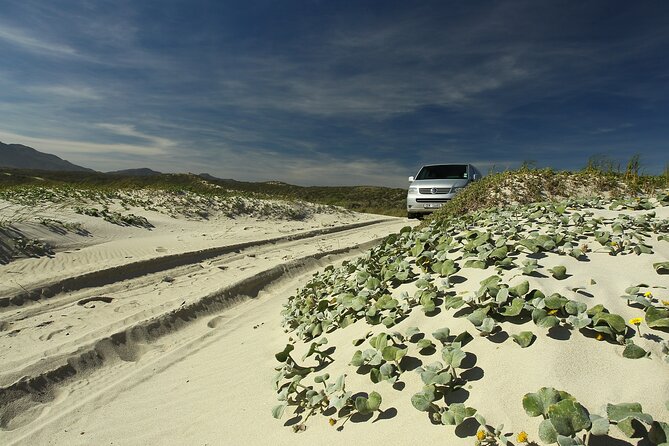
This tour is a strong fit for a few clear types of travelers.
If you are boat-shy or just uncomfortable with open water, you’ll appreciate that the experience is designed around the cliff path viewing. You still get close to the action from shore.
If you love wildlife details, you’ll get something out of the museum intro and the guide explanations. Learning size, length, weight, and what behaviours can look like helps you see with more clarity. It turns whale watching into a skill you can participate in, not a passive staring contest.
If you care about photography, the guide’s focus on timing for breach moments is a big plus. Breaches are dramatic, and the best chance to photograph them usually depends on being ready at the right time and looking in the right direction.
If your group includes people who have a lot of questions, private touring is a big advantage. Dave’s style is described as personable and responsive, with no question too small. In practice, that means you can ask what you’re noticing in the water and get an answer you can use.
If you dislike walking, you might want to think twice. The cliff path segment is about two hours. You do not need hiking gear, but you do need to be comfortable with a steady walk and being outside near the ocean.
Practical tips for a smoother cliff path whale watching day
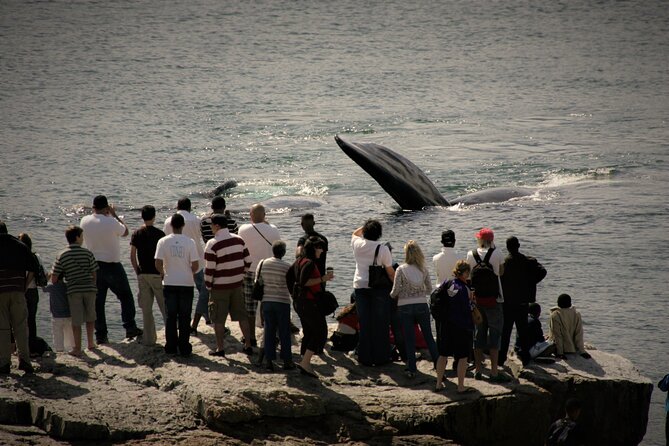
This tour is weather-dependent, and you will be outside for a while. So plan like a local: dress for wind and temperature changes, not just sunshine.
Bring:
- Layers you can adjust quickly
- Comfortable shoes with grip for the cliff path
- Sun protection if it’s clear, since you’ll have open exposure for the walk
If you’re serious about spotting and want to make the most of the guide’s secret locations, arrive ready to look. That means giving the guide your full attention early, especially at the museum start when the guide sets expectations for what to look for later.
You’ll also get more out of it if you’re okay with a gentle rhythm: scan, listen, watch, then scan again. Whale activity can be irregular. The guide helps you aim your time and attention, but you still get a nature experience, not a scheduled animal show.
One more thoughtful tip: if your group has different comfort levels, the land approach makes it easier. You’re not balancing boat safety with whale watching excitement. Everyone shares the same viewing plan from the cliffs.
Should you book this tour with Dave de Beer?
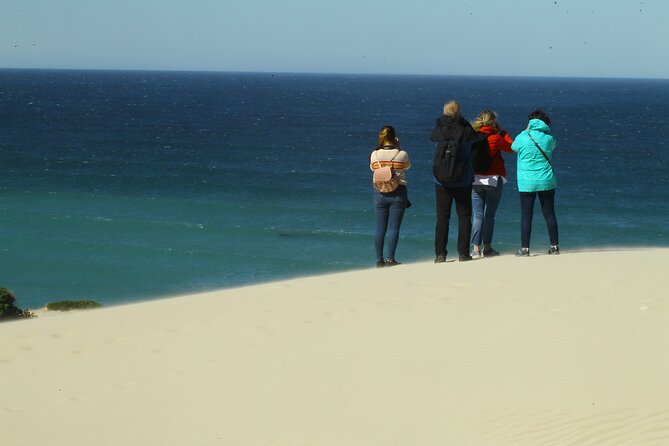
Book it if you want land-based Southern Right whale watching with real guidance, not just a self-guided walk. The museum start gives meaningful context, and the private cliff path walk is designed to help you find whales, understand what you’re seeing, and catch the dramatic moments you came for.
Skip it if weather conditions are a concern for your schedule or if a two-hour cliff path walk is not comfortable for your group. Since the experience relies on good weather, you’ll want some flexibility in your Hermanus day planning.
Overall, this is one of those tours that respects your time and comfort. You get learning, you get specific viewing help, and you get a private guide who focuses on the whales, the local connection, and the best way to see them from shore. If that sounds like your kind of travel, it’s an excellent choice in Hermanus.
FAQ
Where does the tour start?
The tour starts at the Whale Museum, 3 Market Square St, Hermanus, 7200, South Africa.
What is the duration of the Hermanus land whale tour?
It runs for approximately 2 hours 30 minutes total.
Is this tour boat-based or land-based?
It is a land-based whale watching experience along the cliff path, which is ideal if you are not comfortable on boats.
What happens at the Whale House Museum stop?
You get a guided introduction to Southern Right whales, including size, length, and weight, plus Hermanus history connected to whales and the impact of the whaling days.
How long is the cliff path portion?
The cliff path walk portion lasts about 2 hours.
Is the tour private?
Yes. It is a private tour/activity, and only your group will participate.
What is included with the tour price?
Admission tickets are included for the Whale House Museum and the cliff path portion.
What should I do about weather?
This experience requires good weather. If it is canceled due to poor weather, you will be offered a different date or a full refund.
What is the cancellation policy?
Free cancellation is available. You can cancel up to 24 hours in advance for a full refund.
Whale Season in Hermanus
Where Hermanus Sits Down to Eat
Hermanus and Walker Bay, More Whale Trips
Keep going: the rest of our Hermanus write-ups
- Hermanus & Overberg Birding
★ 5.0 · 3 reviews - Hermanus: Whale Watching and Wine Testing
★ 3.7 · 5 reviews - Cape Town: Hermanus Whale Watching Shared Boat & Penguins
★ 3.3 · 6 reviews - Vineyard Safari and Wine Tasting in Hermanus with Guide
★ 4.5 · 11 reviews - Shark & Whale Trip Combo
★ 4.8 · 12 reviews - From Cape Town: Full Day Hermanus Whale Watching Tour
★ 3.6 · 20 reviews
Hermanus and Walker Bay Whale Tours, compared.
 ★ 4.4Hermanus: Boat Based Whale Watching ExperienceFrom $931,180 reviews
 ★ 4.6Hermanus: Whale and Dolphin Watching Boat TripFrom $98807 reviews
 ★ 4.7From Hermanus or Cape Town: Shark Cage Diving ExperienceFrom $137684 reviews
 ★ 4.4From Cape Town: Hermanus Whale Watching Boat TripFrom $221378 reviews
 ★ 4.5Boat Based Whale Watching from HermanusFrom $91205 reviews
 ★ 4.4From Hermanus: Cruise with Shark Cage Dive and LunchFrom $168184 reviews
 ★ 5.0From Cape Town: Full Day Guided Hermanus and Whale TourFrom $51155 reviews
 ★ 4.1From Cape Town: Full-Day Hermanus Whale Watching TourFrom $120119 reviews
Browse the lists this tour appears in