
REVIEW · TABLE MOUNTAIN TOURS
Cape Town:Learn to surf with the best view of Table Mountain
Cape Town surfing feels like a cheat code when the waves come with a view. This 90-minute lesson in Eden on the Bay mixes clear coaching with a goal that actually matters, a winning pop-up that helps you catch your first waves. You also get practical wave reading and safety, taught in a small group, not a chaotic crowd.
One thing to know up front, this is not a private lesson. You are sharing the session with up to six participants, so you’ll do best if you’re comfortable learning in an open group setting, and if you can make it to the meeting point on time.
In This Review
- Key things I’d plan around
- Surf Lesson With Table Mountain in Your Line of Sight
- Where You Meet in Big Bay, Eden on the Bay (And How Not to Stress About Parking)
- The 90-Minute Flow, From Board Handling to Your First Wave Skills
- Step one, meet the board and learn ocean handling
- Step two, mastering the pop-up you’ll keep using
- Step three, learn to read waves and catch more
- Step four, safety and what to do when things get messy
- Step five, steer left and right once you’re up
- The Skills That Make This Class Worth It: Pop-Up, Wave Reading, and Rolls
- Pop-up coaching that targets your first success
- Wave reading so you stop guessing
- Surf safety and steering, because learning needs rules
- Eskimo or Turtle roll, to get through waves
- Your Instructor, Small Group Coaching, and Why Cornel Gets Mentioned
- Gear Included: Wetsuit, Board, and What Fit Feels Like in Cape Town
- Price and Value at About $46 for 1.5 Hours
- Weather, Sea Conditions, and the Real Reason You Need Flex Time
- Who Should Book, and Who Should Skip This Surf Class
- Getting the Most Out of Your Lesson (Small Choices That Matter)
- Should You Book Cape Town Learn to Surf With the Best View of Table Mountain?
- FAQ
- How long is the surf lesson?
- What is the meeting point for the surf class?
- What is included in the price?
- What should I bring with me?
- Is transport to the beach included?
- What should non-paying spectators do?
- What level of experience is required?
- Who can join, and what ages are allowed?
- What happens if weather or sea conditions are bad?
- What language are instructions taught in?
Key things I’d plan around
- Table Mountain scenery while you learn, because your practice sessions start with real motivation.
- A focus on a pop-up technique built to get you standing fast and catching more waves.
- Small group size (up to 6) so you get hands-on coaching, not just general tips.
- Wave reading and steering so you are not only paddling, you are making decisions.
- Turtle or Eskimo roll practice to help you get through waves with less panic.
- Weather and lightning limits mean your schedule depends on ocean conditions.
Other ways up Table Mountain, side by side
- Zipline Cape Town – From Foot of Table Mountain Reserve★ 5.0 · 3,179 reviews
- Cape Town: Table Mountain Cable Car, Hop-On Hop-Off Bus Tour★ 4.6 · 3,157 reviews
- Table Mountain, Penguins & Cape Point Small Group Tour Cape Town★ 4.5 · 1,797 reviews
- Cape Town Tour: Table Mountain, Penguins & Cape Point+Pickup★ 4.7 · 1,671 reviews
Surf Lesson With Table Mountain in Your Line of Sight
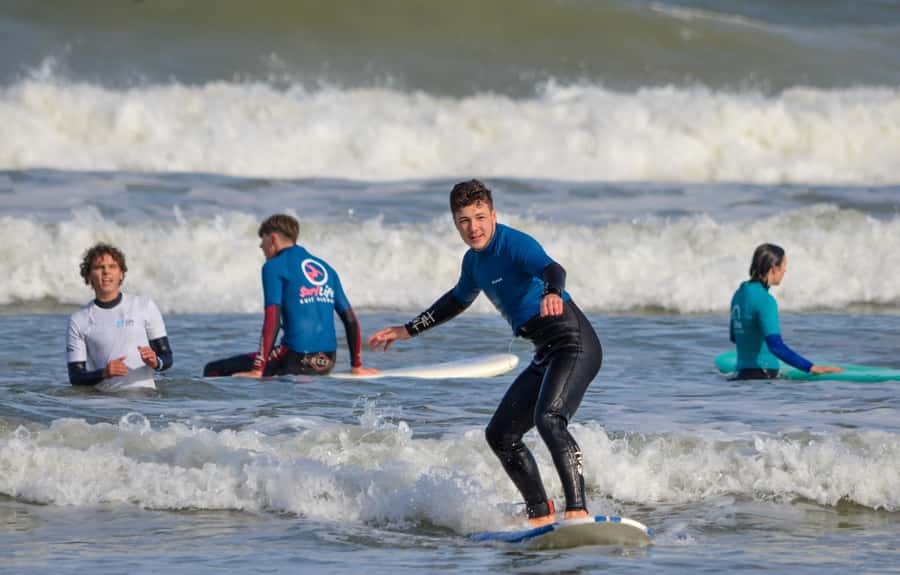
If you’ve ever thought you could learn surfing faster with the right environment, this is that kind of session. Eden on the Bay (Big Bay, Bloubergstrand) gives you a classic Cape Town coastal training ground, and Table Mountain is part of the backdrop while you practice. That matters more than it sounds. When you’re learning something tough, motivation helps you stay calm when waves knock you around.
The biggest win here is how the instruction is structured. You start with board basics, then you move to a pop-up technique designed to help you catch your first wave. That sequence is smart because it avoids the common beginner trap, trying to pop up before you understand how to handle the board and what to do in and out of the water.
I also like the way they teach you to control what you can. You’re not only practicing movements, you’re learning how and where to catch waves, plus surf safety and basic steering on a wave. It’s a full beginner toolkit in 90 minutes, not just “here’s a board, good luck.”
Where You Meet in Big Bay, Eden on the Bay (And How Not to Stress About Parking)
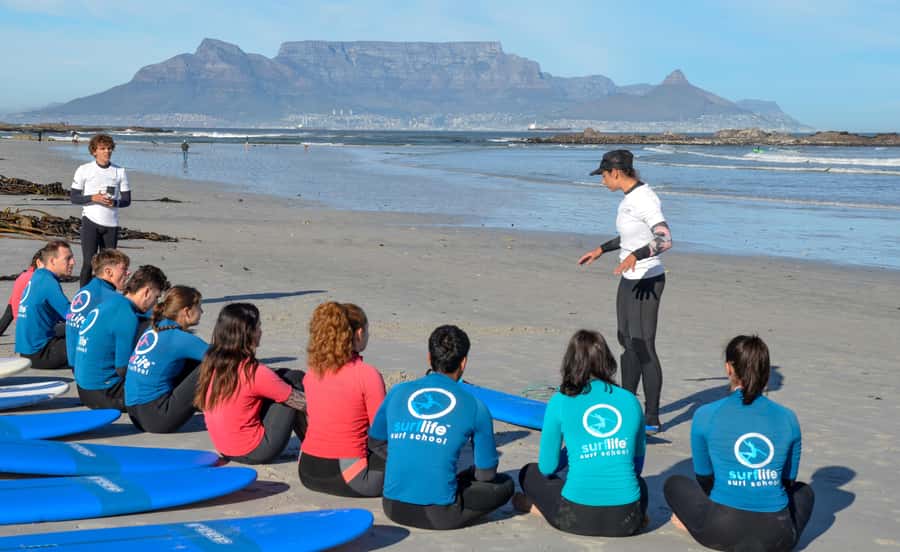
The lesson meeting point is the big parking lot at Hang Ten Drive, Eden on the Bay, Big Bay. They meet you on the grass area inside that parking lot, and you should look for the Surf Life Surf School car. Nearby you’ll find a KFC takeaway spot and a lifesaving club, which helps you confirm you’re in the right place.
Two practical notes if you’re arriving by Uber. First, plan for extra travel time, give yourself 35 to 45 minutes depending on traffic. Second, weekends can be a headache for parking. It can take 5 to 15 minutes to find a bay. If you cut it close, you’ll lose the calm start you need before you hit the water.
Also plan to arrive early. You should show up about 15 minutes before the lesson starts so you can meet the team and get sorted with the indemnity form process.
The 90-Minute Flow, From Board Handling to Your First Wave Skills
This lesson is 1 hour 30 minutes, and it’s paced like a beginner class should be: move in stages, repeat what you need, then apply it to actual wave conditions.
Step one, meet the board and learn ocean handling
You begin with an overview of the surfboard and how to manage it in and out of the ocean. This is not glamorous, but it’s how you avoid the most common beginner mistakes: losing the board right away, dragging it where you shouldn’t, or getting stuck in the wrong position when the water gets active.
For your day, this early board handling time matters because it sets your comfort level. When you’re less worried about your equipment, you can focus on the technique portion that comes next.


Step two, mastering the pop-up you’ll keep using
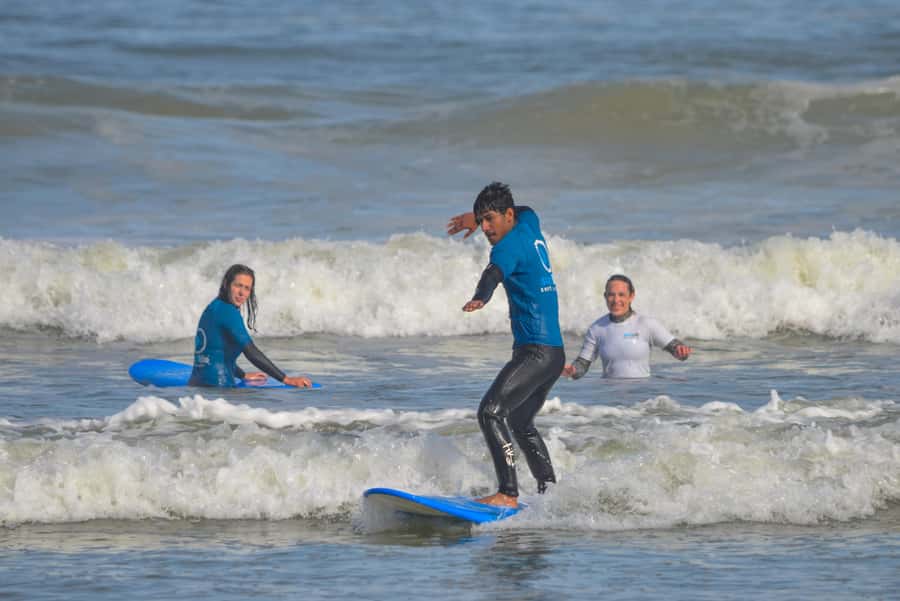
Next comes the core skill: a winning pop-up technique that has helped hundreds of students catch their first wave. If you’ve tried a pop-up before and it felt slow or awkward, this is where you get corrections and a rhythm that fits how beginners can actually execute under wave pressure.
Even if you’ve never surfed, the session is designed to get you standing at the right time. They also assess your ability if you’ve had lessons before, then coach you to progress and what to focus on. That means your class is not always the same exact drill for everyone.
Step three, learn to read waves and catch more
Then you shift into wave-reading basics. You learn where and when to catch waves, which is the difference between paddling hard and paddling with purpose. Beginners often think surfing is mostly strength. The coaching here nudges you toward timing and positioning.
Step four, safety and what to do when things get messy
Surf safety is built into the lesson, because in waves, safety is part of technique. You’ll also work on moving through water more effectively, which leads into the rolling skills below.
Step five, steer left and right once you’re up
Once you are catching waves, the class covers steering left and right. This is where a first surf session can go from surviving to actually feeling in control. Steering is also a confidence boost, because it makes you feel like the wave is something you can work with, not something that just pushes you around.
The Skills That Make This Class Worth It: Pop-Up, Wave Reading, and Rolls
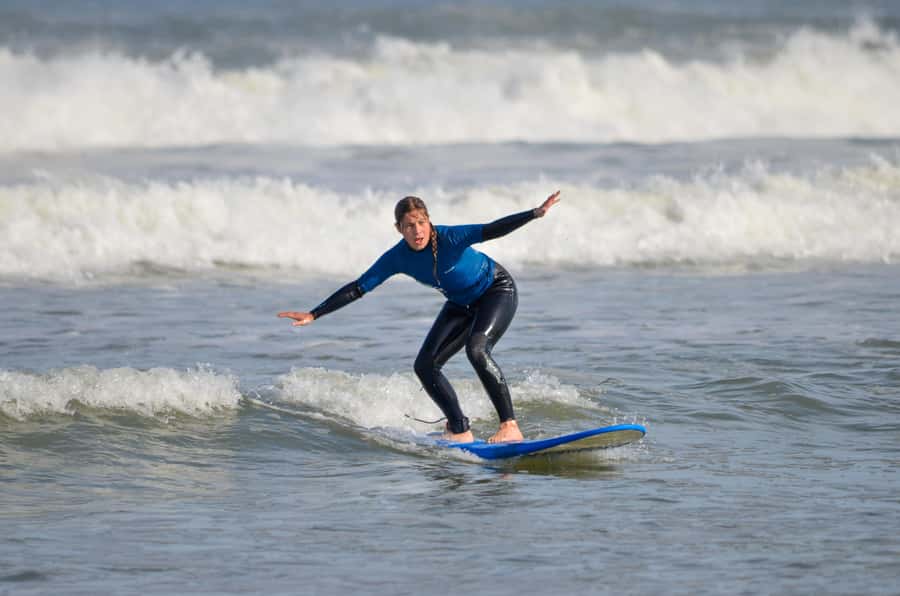
If I had to pick what people love most about this lesson, it’s the way the coaching connects theory to action fast. The teaching isn’t only about doing. It’s about understanding what to do next time.
Pop-up coaching that targets your first success
The highlight is the pop-up. Not a vague “try harder” pep talk, but a technique aimed at getting you standing and catching more waves. In practice, that means you get feedback on your timing and body positioning, so your pop-up is more consistent.
If you are new, this is huge because your brain needs repeatable steps. If you already took lessons, it helps because you can identify what’s holding you back, then drill the change that will improve your chances of getting up.
Wave reading so you stop guessing
The lesson teaches you how to read waves, including where and when to catch them. That expands your confidence because you can start recognizing the setup instead of waiting for luck.
A simple way to think about it: paddling energy is wasted if you sprint toward the wrong moment. Wave reading helps you aim that energy.
Surf safety and steering, because learning needs rules
You get surf safety guidance and steering left and right. Those two items help you feel less overwhelmed once you’re on a wave. Steering, in particular, is what turns a single successful ride into something you can repeat.
Eskimo or Turtle roll, to get through waves
You also practice an Eskimo or Turtle roll to get through waves. This is one of those skills that feels weird at first, but it can reduce the “stuck” feeling when sets roll in. It’s also practical. If you can get through waves more effectively, you spend more time practicing and less time overwhelmed.
Your Instructor, Small Group Coaching, and Why Cornel Gets Mentioned
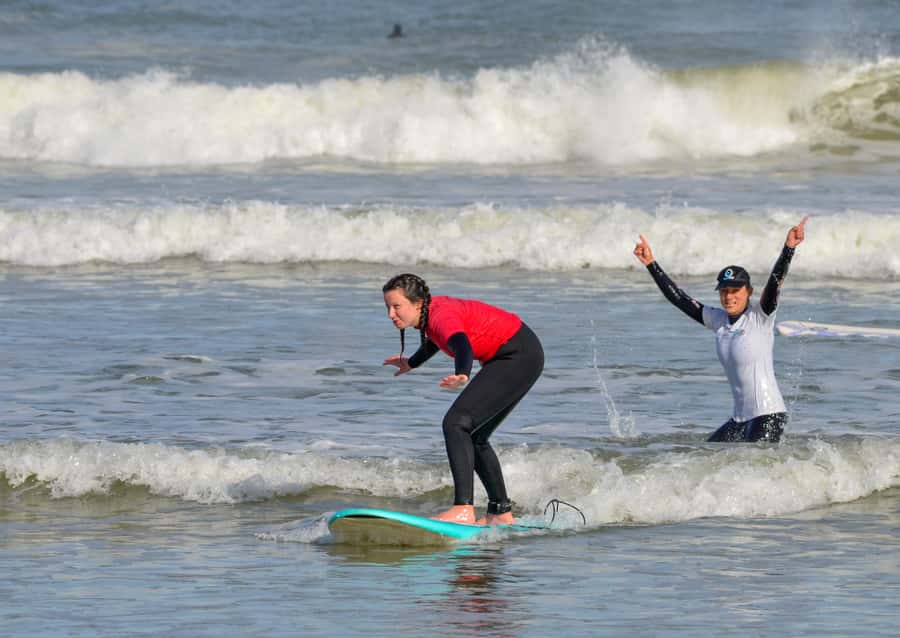
The class runs with Surf Life Surf School instructors who speak English and Afrikaans. It’s an open group with a maximum of six participants, and it’s ideal if you’re traveling solo and want to join a group without committing to a private package.
I’m especially glad they keep the group small. In surfing, the gap between “I did it” and “I didn’t” is tiny, and feedback needs to be close and timely. A smaller group helps the instructor notice what you’re doing during the moments that count.
The name Cornel shows up in the experience feedback. She’s described as patient and professional, and she keeps students motivated and encouraged. That matters in water, because confidence affects how fast you recover after wipeouts. When coaching stays calm, you can learn instead of freezing.
Gear Included: Wetsuit, Board, and What Fit Feels Like in Cape Town
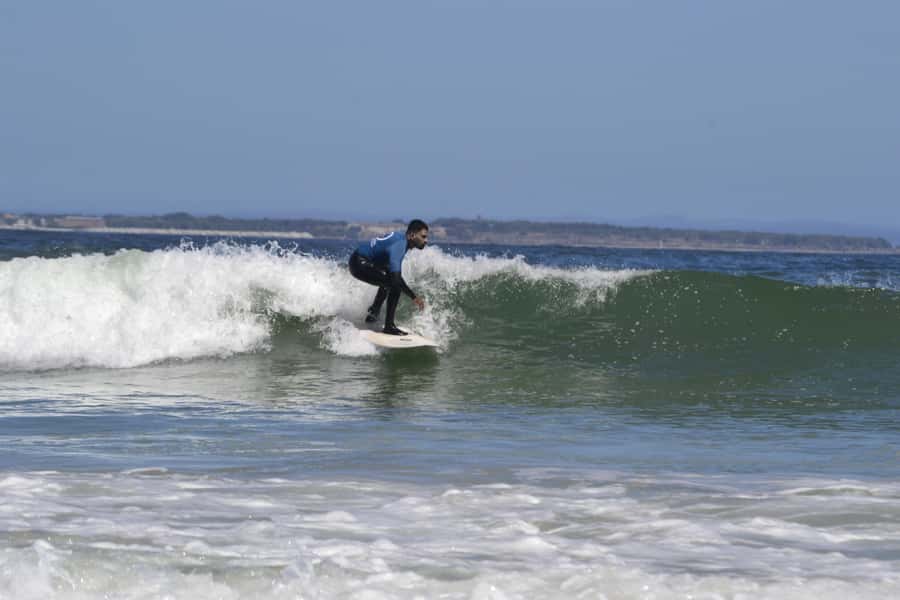
You get use of a surfboard and a 4/3mm wetsuit for the lesson. That wetsuit thickness is what you’d expect for Cape Town conditions. You’ll likely feel warmer than you would in just swimwear, but you still need to treat it as an outdoor session. When you’re done paddling and waiting for waves, you can cool down.
What to wear is simple: swimwear. Then bring a towel and a dry set of swimwear for after the lesson. You will also want sunscreen and a bottle of water. If you tend to get cold easily, bring warm clothes for after you’re finished.
One more sensible idea: consider emergency medication you might need, like an asthma pump or an EpiPen, as the lesson info requests you bring any emergency meds.
Price and Value at About $46 for 1.5 Hours
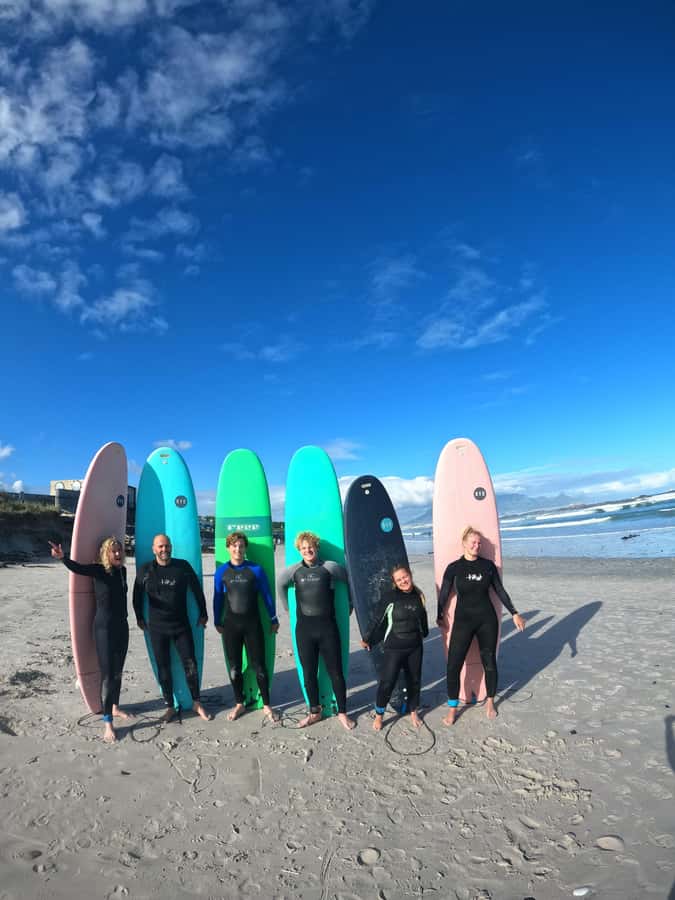
At around $46 per person for 90 minutes, this lesson is built around a common value pattern: you pay for coaching plus equipment you’d otherwise have to figure out on your own. Here, the cost includes surf instruction and use of the surfboard and wetsuit for the full session.
Not included are the usual travel-day add-ons like transport, meals, snacks, and items like sunscreen or a towel. So if you’re already doing Cape Town on a budget, you’ll want to pack these basics so you do not accidentally turn the “cheap-ish” price into a more expensive day.
The value is strongest if you are serious about technique. You’re not just paying to be near the water. You’re practicing pop-up mechanics, wave reading, safety, steering, and rolls in one structured block.
Also, the duration is long enough to learn without frying yourself. One of the most common beginner issues is doing too little. A half hour often ends before you have any momentum. Ninety minutes gives you enough tries to improve, while still being short enough to finish exhausted but excited.
Weather, Sea Conditions, and the Real Reason You Need Flex Time
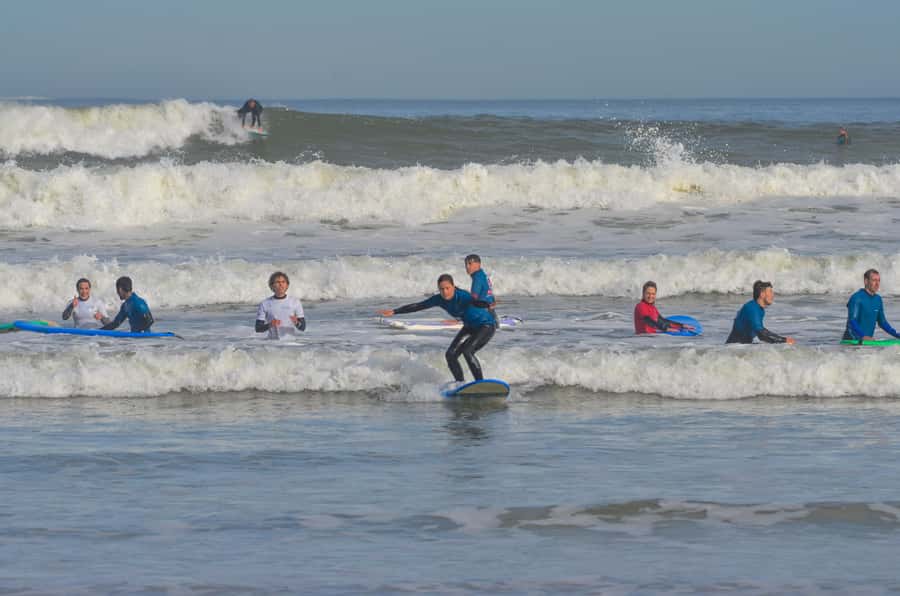
This activity is weather and sea condition dependent. Lessons only cancel if the ocean is too rough for surfing or if there is lightning. That’s practical, because it keeps the session aligned with safety.
What you should do with this information is simple: don’t schedule it like a museum ticket. Put it on a day where you can wait a bit and adjust if conditions force a change. If Cape Town’s weather is shifting, your lesson outcome depends on the day’s surf.
Even without a cancellation, the sea can be different session to session, so bring the right mindset. Your plan is to learn technique, not to demand perfect waves.
Who Should Book, and Who Should Skip This Surf Class
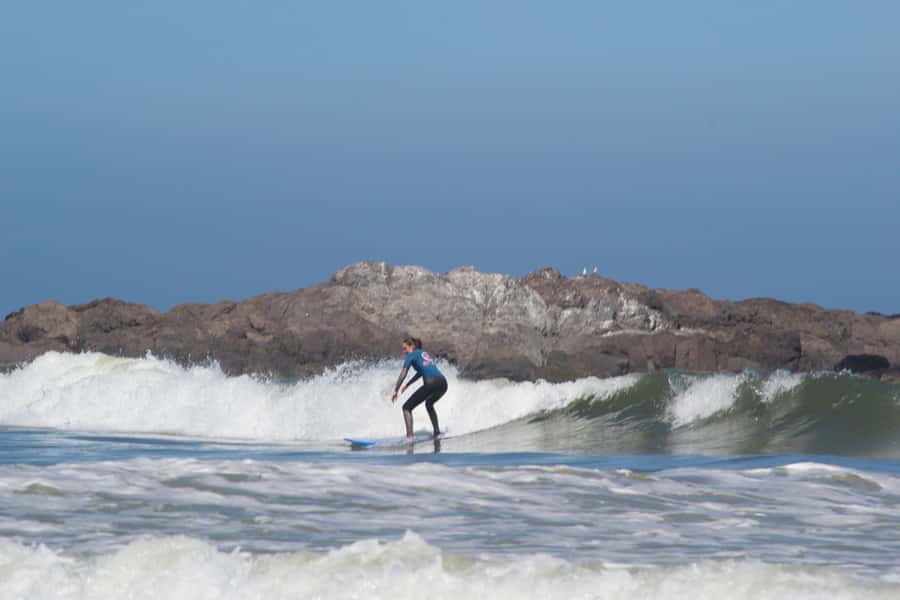
This lesson welcomes beginners and also people who’ve had a few lessons before. Minimum age is 8 years, and there’s no stated experience requirement and no fitness requirement.
But it is not for everyone. It’s not suitable for non-swimmers, pregnant women, people with back problems, mobility impairments, people with heart problems, wheelchair users, people with vertigo, people with motion sickness, people with a cold, people over 80 years, and anyone over 120 kg.
If you fit the requirements, this is a smart way to get your feet wet. If you don’t, it’s better to look for an option designed around your needs, because surf conditions and wipeouts can be unpredictable.
Getting the Most Out of Your Lesson (Small Choices That Matter)
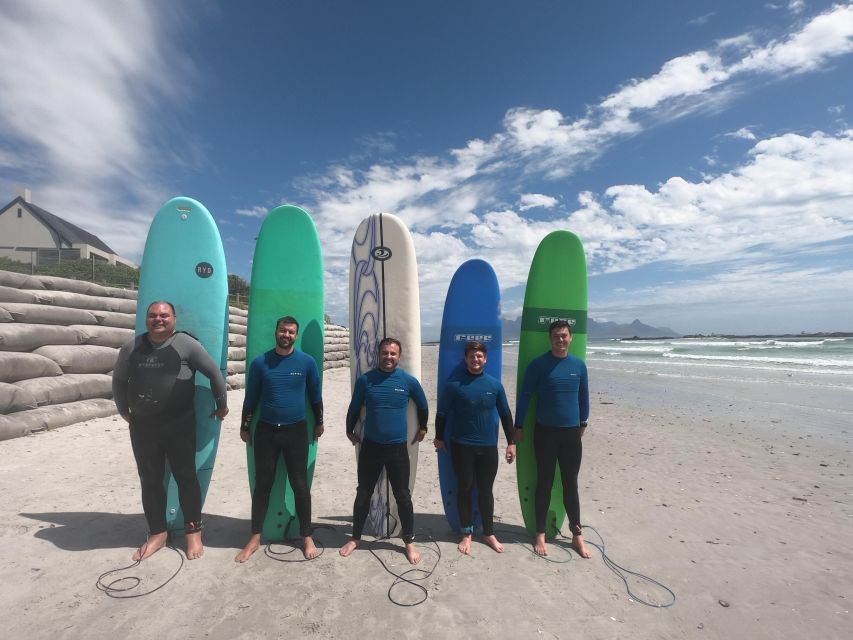
To make this lesson pay off, focus on three things before you even paddle out.
First, bring the basics so you don’t waste energy later. Swimwear, towel, dry clothes, sunscreen, and water. If you get cold easily, warm layers for after.
Second, arrive on time. The lesson starts with board handling and technique setup, and early lateness can throw off your warm-up and comfort.
Third, treat coaching as information. The class covers a lot, but your personal goal should stay simple: stand more often, catch waves more consistently, and remember what the instructor corrects.
If your pop-up feels wrong, don’t argue with it. Follow the correction and repeat. Learning surfing is partly about muscle memory, and that only forms with enough attempts.
Should You Book Cape Town Learn to Surf With the Best View of Table Mountain?
Book it if you want a structured first surf lesson that focuses on a pop-up technique, wave reading, safety, and steering, all in 90 minutes. The small group size is a big reason to choose this, and the coaching style described in the experience feedback, including patient instructors like Cornel, makes it feel more like skill-building than chaos.
Skip it or rethink it if you are outside the listed suitability requirements, especially if you’re a non-swimmer or you fall into categories like motion sickness or vertigo. Also skip it for a tightly scheduled day, because ocean conditions determine whether you ride.
If you’re in the Cape Town area and you’re willing to drive, Uber, or arrange transport to Eden on the Bay, this is a strong, practical way to learn surfing with a view that keeps you smiling between sets.
FAQ
How long is the surf lesson?
The lesson runs for 1 hour 30 minutes.
What is the meeting point for the surf class?
You meet at the big parking lot at Hang Ten Drive, Eden on the Bay, Big Bay. They meet you in the grass area, and you should look for the Surf Life Surf School car.
What is included in the price?
The price includes surf instruction, plus use of a surfboard and a 4/3mm wetsuit.
What should I bring with me?
Bring swimwear, a towel, a dry set of swimwear to change into after, sunscreen, and water. If you get cold easily, bring warm clothes. Also bring any emergency medication you may need.
Is transport to the beach included?
No. Transport to and from the beach is not included. You’ll need to arrange your own way to the meeting point.
What should non-paying spectators do?
Non-paying guests cannot participate, but they can watch from the beach.
What level of experience is required?
There is no experience requirement, and you can join as a beginner. If you have had lessons before, the instructor will assess your current ability at the start and coach you accordingly.
Who can join, and what ages are allowed?
The minimum age is 8 years. The lesson does not list a maximum height or fitness requirement, but it is not suitable for several conditions and limits, including non-swimmers and people with certain medical or mobility issues.
What happens if weather or sea conditions are bad?
Lessons only cancel if the ocean is too rough for surfing or if there is lightning. The timing of the lesson also depends on weather and sea conditions.
What language are instructions taught in?
Instructors speak English and Afrikaans.
Table Mountain, More Ways Up
Keep going: the rest of our Cape Town write-ups
- Cape Town to Cape Point Helicopter Flight – 48Min
★ 4.2 · 3 reviews - Full Day Private Hiking Table Mountain & City
★ 5.0 · 3 reviews - Sandboarding with jeep – drive uphill
★ 5.0 · 3 reviews - Full Day Tour for Cape of Good Hope & Boat to Seals Island
★ 5.0 · 3 reviews - 10 Day South Africa Tour Joburg to Cape Town
★ 5.0 · 3 reviews - 5 Day Garden Route Small Group Tour Fr CapeTown – Departs Mondays
★ 5.0 · 3 reviews
Table Mountain Tours, compared.
 ★ 5.0Zipline Cape Town – From Foot of Table Mountain ReserveFrom $493,179 reviews
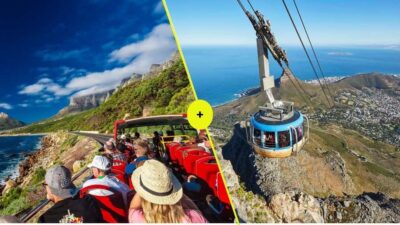 ★ 4.6Cape Town: Table Mountain Cable Car, Hop-On Hop-Off Bus TourFrom $453,157 reviews
 ★ 4.5Table Mountain, Penguins & Cape Point Small Group Tour Cape TownFrom $621,797 reviews
 ★ 4.7Cape Town Tour: Table Mountain, Penguins & Cape Point+PickupFrom $651,671 reviews
 ★ 4.9Cape Town: Table Mountain, Cape Point, & Penguins Group TourFrom $621,063 reviews
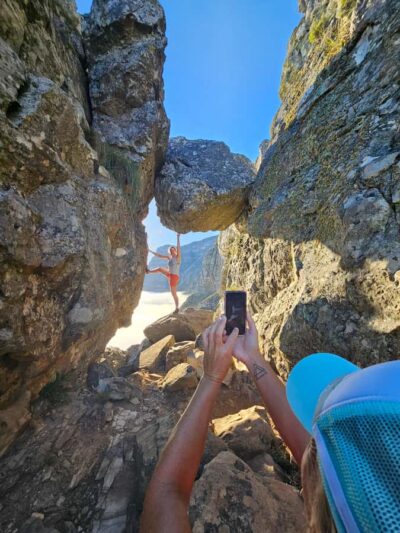 ★ 4.9Cape Town: Table Mountain Hike with an Expert GuideFrom $60666 reviews
 ★ 4.8Cape Town: Table Mountain & Cape of Good Hope Full-Day TourFrom $54526 reviews
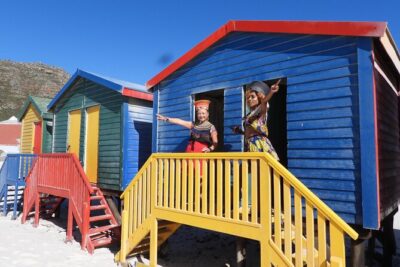 ★ 5.0From Cape Town: Table Mountain, Cape of Good Hope & Penguins including Park FeesFrom $284399 reviews
Browse the lists this tour appears in