
REVIEW · CITY TOURS
Cape Town City and Woodstock Bicycle Tour
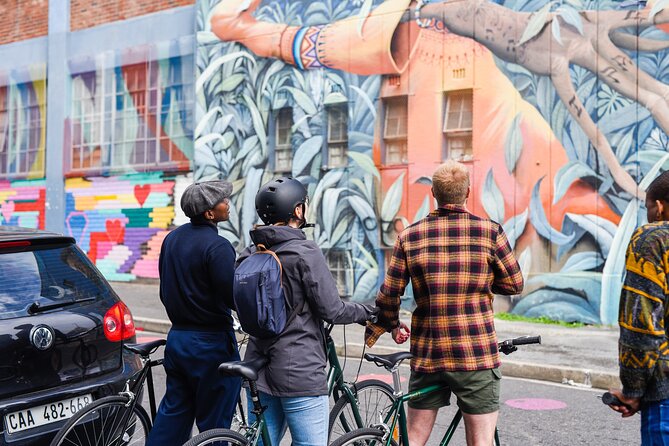
Cape Town looks different when you ride it. This guided art and history bicycle tour strings together major sights in one short 3-hour window, including District Six, Company’s Garden, and the city center. You also get the kind of street-art spotting and context that usually takes days of wandering.
What I especially like is the focus on real places with real stories, from the forced removals remembered at District Six to Mandela’s first public address from the Old Town Hall balcony area. I also like that it is a practical way to cover ground, since the tour includes bike rental, so you do not have to plan transportation for a day.
One thing to think about: this is weather-dependent. The operator notes it needs good weather, so if conditions are bad on your date, you may need to switch dates or get a refund.
In This Review
- Key things I’d mark on your mental map
- Why Cape Town looks better from a bike seat
- Meeting at Salt Circle Arcade in Woodstock (and why that starting point matters)
- Old Biscuit Mill: street art, shopping, and the fun part of Woodstock
- District Six Museum: where the art stops and the history gets heavy
- Grand Parade and the Old Town Hall balcony moment
- Bo-Kaap and Company’s Garden: culture and the city’s older pulse
- Greenmarket Square and St George’s Mall: public life on a bike route
- Long Street and the Old City Hall building you cannot ignore
- Castle of Good Hope: a 17th-century fort that ended up inland
- The guides: where the best reviews keep landing
- Price and value: why $54.83 makes sense here
- When this bike tour fits your schedule (and when it might not)
- Who should book this Cape Town City and Woodstock Bicycle Tour
- Should you book it?
- FAQ
- How much does the Cape Town City and Woodstock Bicycle Tour cost?
- How long is the tour?
- What group size should I expect?
- Where is the meeting point for the tour?
- What’s included in the price?
- What’s not included?
- Which areas does the route include?
- Does the tour run in poor weather?
- Will I receive a mobile ticket?
- What is the cancellation policy?
Key things I’d mark on your mental map
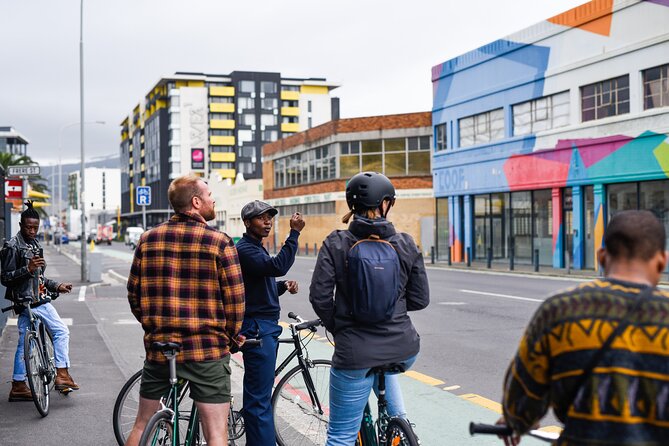
- Small group (max 15) means you get more back-and-forth with your guide
- Bike rental included, so you can travel light
- A route that links Woodstock street art with central Cape Town landmarks
- Stop at District Six Museum, founded in 1994 to honor people forcibly removed
- You roll past major public spaces like Greenmarket Square and St George’s Mall
- The ride is built for limited time in the city (about 3 hours)
Other city days, orientation to deep dive
- Cape Town Hop-On Hop-Off City Tour with Optional Cruise★ 4.5 · 1,793 reviews
- Cape Town: 12-Minute City Scenic Helicopter Tour★ 4.8 · 853 reviews
- Cape Town City Pass: Save Over 50% on 80+ Top Attractions★ 4.5 · 348 reviews
- Cape Town City Center Tour with Champagne★ 5.0 · 221 reviews
Why Cape Town looks better from a bike seat
Cape Town’s center can feel like a lot if you only have a day or half-day. Streets bunch together, hills pop up, and it is easy to miss how neighborhoods connect. A bike tour helps because you move faster than walking, but you still get the street-level view that makes art and history feel personal.
This one is also built around two themes that actually work well together: visual art you can see on walls, and history you can understand at the places where it happened. You are not just checking boxes. You’re stopping, looking, and getting the story behind each location.
And because the group is capped at 15, it tends to feel like a guided ride with conversation, not a rushed line. In the reviews, guides like Sipho and Terrence stand out for being friendly and for answering questions patiently, especially when people want more detail about street art and neighborhood context.
Meeting at Salt Circle Arcade in Woodstock (and why that starting point matters)
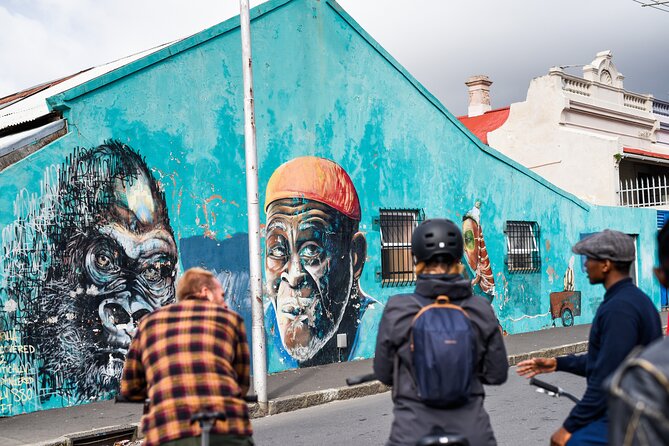
You meet at Shop 5 at the Salt Circle Arcade, 374 Albert Rd in Woodstock. That location is a smart choice because Woodstock is part of the creative Cape Town story. You’re not starting in a generic hotel zone. You’re starting in a neighborhood that already has an art-and-culture vibe, then you roll into the historical core.
The tour ends back at the same meeting point, which is helpful when you’re trying to plan dinner afterward. Since it is near public transportation, you can also make it easier on yourself if you are using taxis or local transit at other points in your day.
The tour includes the bike, so you are basically showing up and going. That is a big deal when you’re short on time or you’re not excited about figuring out rentals, locks, and where to return them.
Old Biscuit Mill: street art, shopping, and the fun part of Woodstock
One of the first stops is the Old Biscuit Mill, a converted biscuit factory in Woodstock that’s now an arts hub with shopping and dining. It’s known for street art from local and international artists, so it works as an early warm-up for the tour’s art theme.
You’ll see more than one style of mural and painted work here, and the setting helps you understand why street art matters in Cape Town, not just as decoration but as identity and voice. You also get practical time options, because the area has boutiques and stores you can browse during the stop.
A nice extra: Neighbourgoods Market runs on weekends, which can add extra energy to this part of the route if your day lines up. Even if you visit on a non-market day, the space still gives you that mix of creative walls, casual street atmosphere, and easy browsing.
District Six Museum: where the art stops and the history gets heavy

District Six Museum is the kind of stop that changes your whole perspective. It was founded in 1994 to honor people forcibly removed from the area. The story is specific and painful: in the mid-1960s, the South African government began relocating about 60,000 nonwhite residents to a slum-like township far away, and destroyed homes so the neighborhood could become whites-only.
I like that this tour does not treat history like a quick photo stop. It slows down here. The goal is understanding, and the museum provides the context so you can connect what you see in the city today to what was erased.
If you are the sort of person who prefers light and funny on every stop, you might find this segment intense. But if you want your Cape Town trip to make sense, this is one of the most important places on the route. It is also the place where guides often shine, because the best guides can explain the story with care.


Grand Parade and the Old Town Hall balcony moment
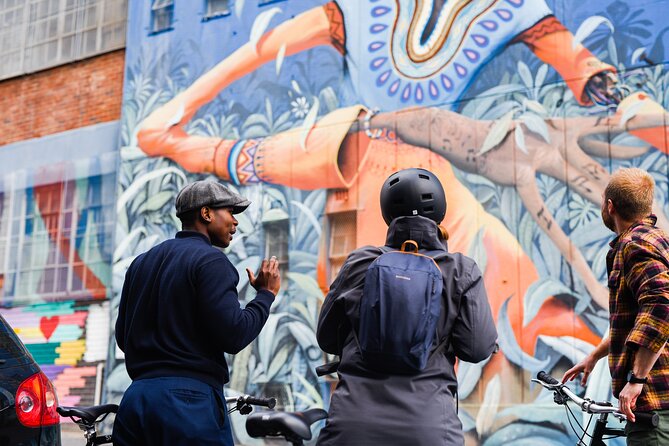
From District Six you move into the historic public spaces around the center, and the Grand Parade stop is a standout for sheer significance. This is where the Dutch built their first fort in 1652. Later, it became a site connected to the slave trade, including the sale and punishment of enslaved people. And in more modern history, it’s tied to Nelson Mandela’s first address to the nation as a free man in February 1990, delivered from the balcony area of the Old Town Hall.
What I appreciate about including Grand Parade is that it is not a single museum building where you read quietly. It’s an open square. Even if you’re only there briefly, you can look around and imagine the crowds that gathered there. It also helps you understand why Cape Town’s political and social history feels present in the city fabric, not sealed behind glass.
There is also a market set up on part of the square, and parking in other parts. That detail matters because it reminds you these are living spaces, not just monuments.
Bo-Kaap and Company’s Garden: culture and the city’s older pulse
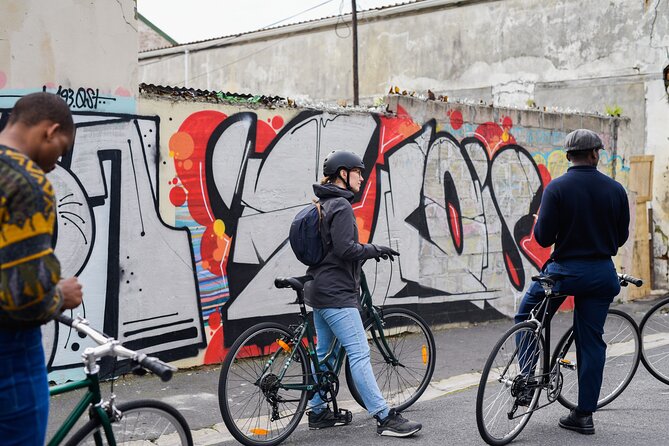
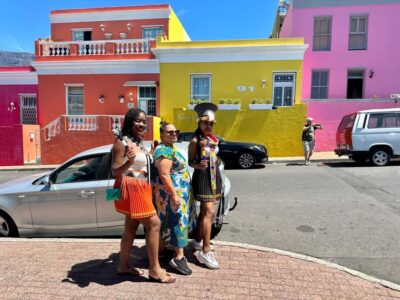
Next comes Bo-Kaap, with its brightly colored houses and lively streets. The neighborhood sits just outside central Cape Town on the flanks of Signal Hill, and it is known as a cultural meeting point shaped by Malaysian, Indian, Sri Lankan, and African influences.
Bo-Kaap is also tied to the first settlements of freed slaves and Muslim immigrants in South Africa. That combination explains why the area feels distinctive, not like a copy of somewhere else. The tour’s emphasis here is not just how it looks, but what it represents.
After that you get a breather at Company’s Garden, a public park that still exists in the city center. When the Dutch East India Company arrived in what would become known as Cape Town in 1652, one of the first things they did was plant a garden to help feed settlers. Today the garden is a green pause in the middle of the city, and it’s a favorite spot for locals and visitors.
Even if you usually skip parks, this one works because it is tied to early Cape Town history, not just greenery.
Greenmarket Square and St George’s Mall: public life on a bike route
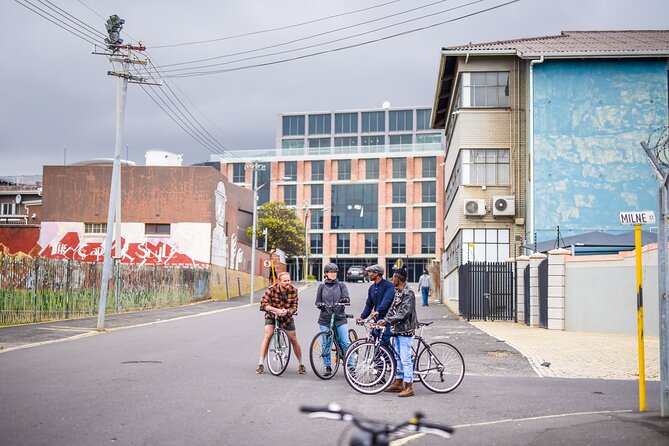
Then the tour rolls into two central spaces that help you feel what daily Cape Town looks like.
Greenmarket Square is described as one of the liveliest public spaces, with a history that’s tied to forced suffering and later everyday commerce. It was originally home to a slave market, then became a produce market. Today it’s the kind of place where vendors sell painted fabrics, handcrafted jewelry, and other trinkets, while street performers add music and dance.
The cobblestone setting also gives you a sense of texture. It’s not just a clean plaza. You’re stepping into a place that has changed roles over centuries.
After that, St George’s Mall is now a pedestrian-focused area in the city center, with a constant flow of street entertainment like buskers, dancers, drummers, and street artists. It’s also where you find sidewalk coffee shops and restaurants, and you can sit and watch the city move at human speed.
These stops are valuable because they balance the heavier history moments with a sense of the city’s present energy. It makes the whole day feel more complete.
Long Street and the Old City Hall building you cannot ignore
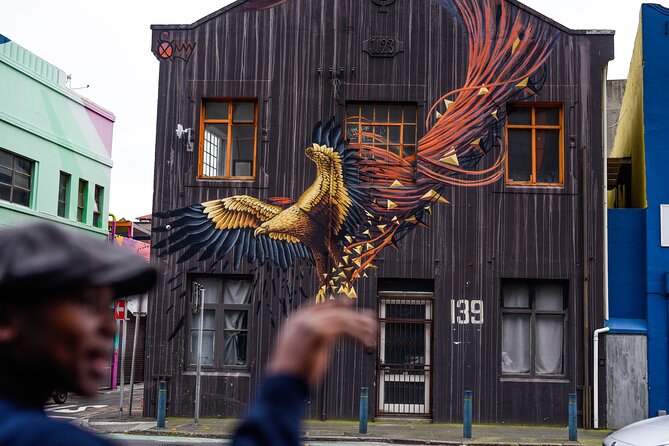
Long Street is a major thread through Cape Town’s culture. The tour includes time on Long Street, which runs from the Cape Town Convention Centre, cuts through the heart of the central business district, and ends at Kloof Street. This is the kind of road that draws visitors because it concentrates street life, shops, and atmosphere in one long spine.
The tour also points out the Old City Hall building, an Edwardian structure dating to 1905. It’s tied again to Mandela’s release in February 1990, when his first public speech from the balcony area happened there.
Since Mandela’s moment is already strongly connected to Grand Parade’s balcony reference, I see this stop as the “place the building into your memory” section. Seeing the building details helps your brain map the story, so you don’t just remember the timeline, you remember the setting.
If you like architecture and you enjoy recognizing landmarks later, this part of the route helps a lot.
Castle of Good Hope: a 17th-century fort that ended up inland
The route includes the Castle of Good Hope, also known as Kasteel die Goeie Hoop. This is a 17th-century bastion fort in Cape Town. It was originally located on the coastline of Table Bay, but after land reclamation it ended up inland.
That detail makes it interesting, because you realize how much the shoreline and city planning have changed over time. In 1936, the Castle was declared a historical monument, so it is preserved and recognized for what it represents.
Your guide may choose the exact cycling route and which stops are included, so you might see Castle of Good Hope as a clearly planned highlight or as part of a route variation. Either way, the fort is one of those landmarks that gives you context for Cape Town’s early colonial defenses.
If you prefer forts and military architecture, this is an excellent add to the day. If you do not, it still works because it connects to the earlier Dutch settlement story you hear at Grand Parade and the Company’s Garden origin.
The guides: where the best reviews keep landing
The strongest praise in the reviews isn’t for the bike. It’s for the people steering the experience.
Guides such as Sipho and Terrence come up repeatedly for a few reasons. They are described as knowledgeable and friendly, and also as patient with questions. In particular, Terrence gets called out for being passionate about street art and for weaving neighborhood stories into what you are looking at.
That matters because street art can be easy to misread if you only see the colors and ignore the message. A good guide connects the visual to the place and helps you understand why certain walls and neighborhoods matter. In a city like Cape Town, where history is layered and not always comfortable, that human interpretation is a big part of the value.
I also like the small-group feel because it makes it easier to ask follow-up questions. If you’re the kind of traveler who collects details, you’ll probably like this format.
Price and value: why $54.83 makes sense here
At $54.83 per person, this tour is positioned as an affordable half-day activity. The part that makes it feel like good value is what’s included.
You get the guided ride, the bike through equipment rental, and entrance fees. That means you’re not paying extra on the spot just to access the key stops. You’ll still pay for any additional items and costs that come up during personal shopping, meals, or optional purchases, but the tour itself covers the basics.
The duration helps too: at about 3 hours, you’re packing in multiple major areas without needing half a day to just transfer around town. For first-time visitors, or anyone who wants a structured introduction, this price can feel like a shortcut to better context.
Also, the tour notes it has a mobile ticket, which usually makes it easier to show up and start on time.
When this bike tour fits your schedule (and when it might not)
This experience is built for good-weather days. The operator explicitly notes it requires good weather, and if the tour is canceled due to poor conditions, you’ll be offered another date or a full refund. So if your Cape Town forecast looks mixed, you might want to plan this on a day with the best odds.
It’s also a solid choice when you want a single activity that covers many stops, because the route links Woodstock and central Cape Town rather than keeping you only in one neighborhood. You get street art, markets, and landmark history in one loop that returns to the meeting point.
Timing-wise, the tour is about 3 hours, so you can still do other things afterward, like a longer meal or a separate museum visit. If you are the type who likes downtime between attractions, you might want to keep your afternoon open, since the day includes a lot of mentally heavy and visually stimulating stops, like District Six and the Castle.
Who should book this Cape Town City and Woodstock Bicycle Tour
Book it if you want your Cape Town day to cover more than one type of experience. This is ideal for:
- First-time visitors who want a guided route through the city center
- Art lovers who want help noticing street art details in context
- History-minded travelers who want District Six and Mandela-linked locations
- People who like small-group tours with time for questions
It’s also a good match if you do not want to deal with bike logistics. Since the bike is included, you can show up and ride.
If you prefer totally self-paced travel with zero structure, you might find a guided stop-and-learn format less to your liking. But if you enjoy learning while you move, this tour is built for that.
Should you book it?
Yes, I’d book it if you want an efficient, story-driven introduction to Cape Town. The best part is how the day stitches together Woodstock street art, District Six’s real historical weight, and central landmarks like Grand Parade, Greenmarket Square, St George’s Mall, and the Castle of Good Hope.
I would hesitate only if weather is poor on your travel dates, or if you want a mostly relaxed sightseeing pace with minimal historical context. Also, because the route depends on your host, you might not see every stop exactly the same way each time. Still, the core landmarks and neighborhoods are the point, and the guide makes the stops connect.
If you’re planning limited time in Cape Town and you want a tour that feels both practical and emotionally honest, this one is a strong pick.
FAQ
How much does the Cape Town City and Woodstock Bicycle Tour cost?
It costs $54.83 per person.
How long is the tour?
The tour is approximately 3 hours.
What group size should I expect?
The tour has a maximum of 15 travelers.
Where is the meeting point for the tour?
You meet at Shop 5 at the Arcade in the Salt Circle Arcade area, 374 Albert Rd, Woodstock, Cape Town, 7925, South Africa.
What’s included in the price?
The tour includes the entrance fee and the use of a bicycle.
What’s not included?
All additional items and any other costs are not included.
Which areas does the route include?
The route passes through Woodstock and includes stops around places such as Old Biscuit Mill, District Six Museum, Grand Parade, Bo-Kaap, Company’s Garden, Greenmarket Square, St George’s Mall, Long Street, and the Castle of Good Hope.
Does the tour run in poor weather?
It requires good weather. If it is canceled due to poor weather, you’ll be offered a different date or a full refund.
Will I receive a mobile ticket?
Yes, it includes a mobile ticket, and confirmation is received at booking.
What is the cancellation policy?
You can cancel for free up to 24 hours in advance for a full refund. If you cancel less than 24 hours before the start time, the amount paid will not be refunded.
Another Day in Cape Town, Planned Out
Keep going: the rest of our Cape Town write-ups
- Cape Town to Cape Point Helicopter Flight – 48Min
★ 4.2 · 3 reviews - Full Day Private Hiking Table Mountain & City
★ 5.0 · 3 reviews - Sandboarding with jeep – drive uphill
★ 5.0 · 3 reviews - Full Day Tour for Cape of Good Hope & Boat to Seals Island
★ 5.0 · 3 reviews - 10 Day South Africa Tour Joburg to Cape Town
★ 5.0 · 3 reviews - 5 Day Garden Route Small Group Tour Fr CapeTown – Departs Mondays
★ 5.0 · 3 reviews
City Tours, compared.
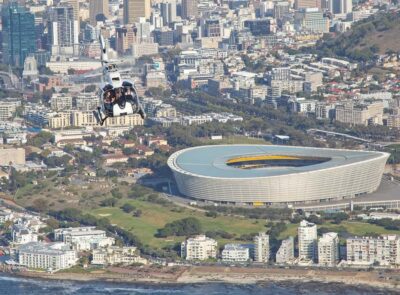 ★ 4.8Cape Town: 12-Minute City Scenic Helicopter TourFrom $165853 reviews
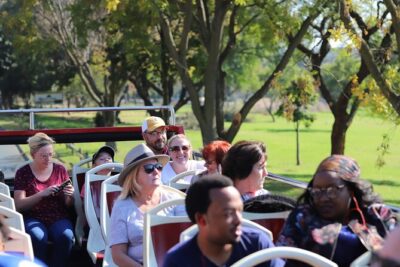 ★ 4.5Johannesburg Hop-On Hop-Off City Tour with Soweto OptionFrom $16768 reviews
 ★ 4.8Jo’berg in 1 Day: Soweto, Apartheid Museum & City TourFrom $142524 reviews
 ★ 4.5Cape Town City Pass: Save Over 50% on 80+ Top AttractionsFrom $97348 reviews
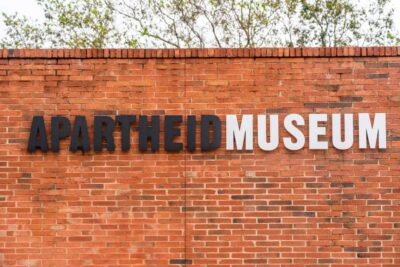 ★ 4.5Soweto: Hop-On Hop-Off Bus, City Tour and Apartheid MuseumFrom $50250 reviews
 ★ 5.0Cape Town City Center Tour with ChampagneFrom $139221 reviews
 ★ 4.5From Sun City: Pilanesberg National Park 3-Hour Game DriveFrom $49216 reviews
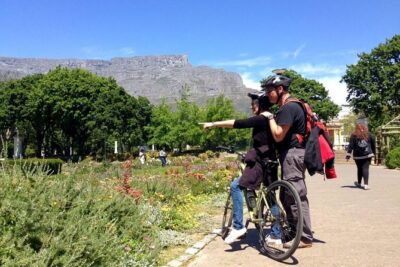 ★ 5.0Cape Town City Cycling TourFrom $77199 reviews
Browse the lists this tour appears in