
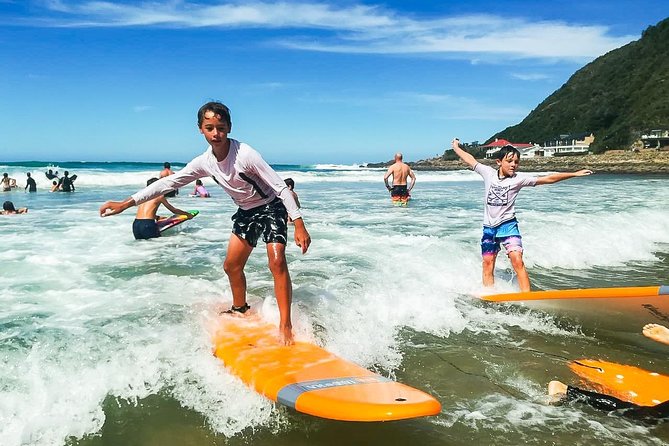
REVIEW · KNYSNA AND PLETTENBERG BAY TOURS
1h15min surfing lessons in Victoria Bay & Wilderness
A good surf lesson beats guessing. In Victoria Bay near Wilderness, this 1h15 session helps you read waves, learn basics, and get comfortable fast in the Indian Ocean.
I like this setup for water safety focus and practical coaching, not just standing on the beach watching. I also like that surfboards and wetsuits are provided, so you do not have to figure out gear before you arrive. The only real consideration is weather, since good conditions are required and plans may shift if the sea is not cooperating.
In This Review
- Key Highlights You’ll Care About
- Victoria Bay and Wilderness: A Smart Spot for First-Time Surfers
- What Happens in a 1h15 Surf Lesson (and Why That Time Works)
- Surfends Instructors: Coaching That Feels Personal
- Meeting Point at New Wave Village and Keeping Your Timing Easy
- Gear Included: Surfboard and Wetsuit (and What You Should Still Bring)
- Price and Value: How $34.69 Makes Sense for Beginners
- Weather Reality: When Conditions Matter More Than Your Plans
- Safety and Confidence: The Actual Point of the Lesson
- Who This Lesson Fits Best
- Practical Tips to Stand Up Faster (Without Overthinking It)
- Should You Book This Victoria Bay Surf Lesson?
- FAQ
- How long is the surfing lesson in Victoria Bay?
- Where do we meet for the lesson?
- What surf gear is provided?
- Is this lesson only for beginners?
- What is the group size limit?
- What happens if the weather is poor?
Key Highlights You’ll Care About
- 1h15 of structured time focused on pop-up basics and then practicing in the water
- Qualified local surf instructors covering safety, wave knowledge, and how to improve
- Small group size (max 8), which makes it easier to get feedback
- Surfboard and wetsuit included, so you can travel lighter
- Victoria Bay’s learning-friendly vibe, with consistent waves and safe-feeling beach access
Still weighing it up? These George trips are the ones our readers open next.
- Cango Caves Oudtshoorn Day Tour★ 5.0 · 5 reviews
Victoria Bay and Wilderness: A Smart Spot for First-Time Surfers
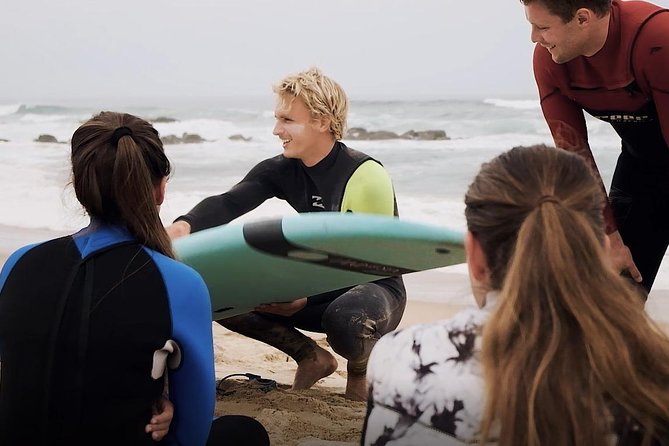
If you want to learn surfing in South Africa’s Western Cape, Victoria Bay (near Wilderness) is a strong choice because it’s built for beginners in real ways. The lesson is designed around the idea that you should feel safe first, then confident enough to catch waves on your own.
This bay comes with the ingredients that matter for learning: the Indian Ocean feels warm, the surf tends to be consistent, and the shoreline is described as safe for getting started. That combination is what turns a scary first ocean experience into a controllable one. You are not trying to conquer the unknown. You’re learning how to move with the water.
Also, the atmosphere helps. People show up sun-ready, and the whole place has that easy Garden Route energy. You can go in tense, then relax once you’re in a teaching rhythm.
One more thing I appreciate: the lesson does not treat surfing like a mystery. It treats it like a set of skills. That’s how you make progress in 1h15.
What Happens in a 1h15 Surf Lesson (and Why That Time Works)
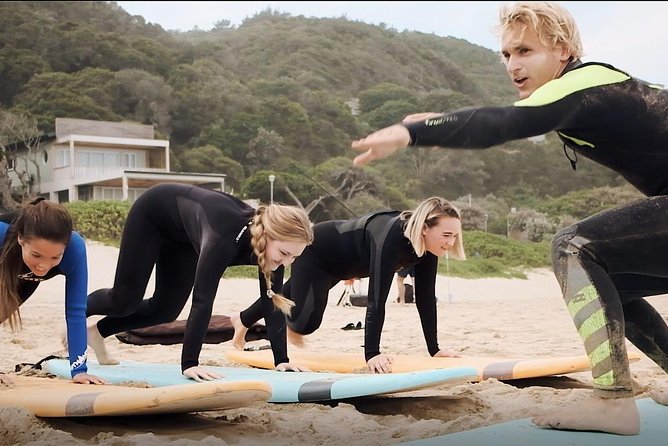
This is a short session on purpose. A 1h15 lesson is long enough to cover the basics, but not so long that you burn out before you stand up.
Here is what you should expect, in the order that usually makes sense for beginners:
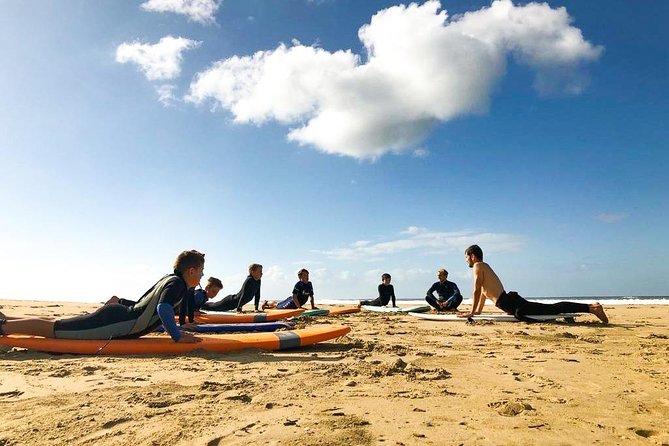
First, you get taught the fundamentals of surfing in a safe, controlled way. The focus is on pop-up mechanics and getting your body into the right position quickly. For many people, the hardest part is not paddling, it’s the timing of hands and feet once you feel a wave lifting you.
Next comes confidence building. The lesson is structured around getting comfortable in the ocean, learning what to do before and after each attempt, and understanding basic wave behavior. You’re not just throwing yourself at waves. You’re learning what the waves are likely doing so you can react instead of panic.
Then you get time to catch waves and practice. The goal is not one perfect ride. The goal is repeated attempts with coaching so you can adjust. The more reps you get, the faster your brain learns.
A nice detail in how the lesson is described: it’s not just a one-and-done demo. In practice, this kind of lesson usually means you start with instruction, then spend the rest of the time in the water. That matches the spirit of the lesson description, which repeatedly emphasizes practicing for improvement.
If you are the kind of person who loves learning by doing, you will like this format.
Surfends Instructors: Coaching That Feels Personal
Surfends runs the lesson, and the key value here is the coaching quality, especially for beginners.
The instructors cover three big areas:
- Water safety
- Wave knowledge
- Surfing improvement
That matters because safety is not a separate topic. It supports everything else. When you understand what you’re looking at and what to do in the water, you spend less energy worrying and more energy moving.
You also get the benefit of a small group. With a maximum of 8 travelers, you are less likely to be ignored for long stretches. That small size tends to improve feedback, especially when you are learning pop-ups and trying to line up with waves.
People also highlight the teaching style: patience, encouragement, and clear feedback. Names that come up include Dylan and Martyn, both described as kind, friendly, and professional with a solid approach for beginners. Even if you do not get the same instructor, the lesson’s method is clearly built around personal attention, not shouting instructions from a distance.
If you want a lesson where you feel guided but still get to actually surf, this is the kind of group setup that helps.
Meeting Point at New Wave Village and Keeping Your Timing Easy
The lesson meets at New Wave Village / Café2, Victoria Bay Road, Victoria Bay, 6529, South Africa. The activity ends back at the meeting point.
Operating hours are listed as 8:00 AM to 6:00 PM, Monday through Sunday.
For a short lesson, timing matters. You want to arrive with enough time to get suited up and settle in before you’re called into the water. If you show up late, you may lose valuable practice time.
One practical tip: keep an eye on confirmation messages after booking. If you book close to your travel date, confirmation may come within 48 hours, subject to availability. That is normal for small local operators, but it’s still worth double-checking the time so you’re not left waiting.
Gear Included: Surfboard and Wetsuit (and What You Should Still Bring)
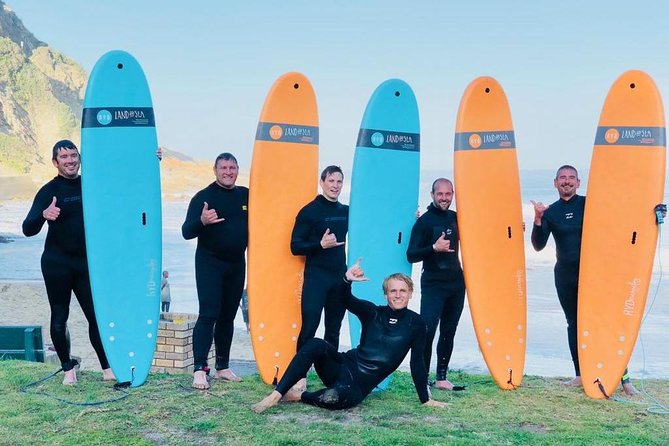
Good lessons make gear easy. This one provides the surfboard and wetsuit, which removes one of the biggest friction points for learning.
Having a wetsuit also matters for comfort. You are spending real time in the ocean, and the less you worry about feeling cold or exposed, the more you can focus on your technique. The lesson description also emphasizes getting you into the water to practice, which is a lot easier when you are comfortable.
What you should still bring is mostly about personal readiness, like swimwear under your wetsuit if you prefer it, sunscreen, and a way to keep your phone and valuables secure. The tour data does not list what storage looks like, so treat this as a bring-your-own-common-sense situation.
If you’ve never surfed before, gear inclusion is a big part of the value. You’re paying for instruction and time on the water, not for extra rentals and logistics.
Price and Value: How $34.69 Makes Sense for Beginners
The price is $34.69 per person for the 1h15 lesson.
To evaluate value, I look at three things:
1) instruction quality,
2) time in the water,
3) included gear.
Here, you get qualified local instructors, structured coaching, and surfboard plus wetsuit included. That combo is usually what turns a low-cost activity into a good one.
Also, the group size cap (max 8) can improve your experience without raising the price much. It’s not a huge crowd where everyone disappears into the background.
One more factor: this kind of lesson is often booked well in advance. The average booking lead time listed is 80 days, which suggests the best time slots get taken. If your dates are fixed, booking sooner is the safer move.
Weather Reality: When Conditions Matter More Than Your Plans
This activity requires good weather. If conditions are not right, it can be canceled and you’ll be offered a different date or a full refund.
That’s not a downside so much as how ocean lessons work. Surfing depends on the sea being suitable for learning, and instructors are not going to force it when waves and safety conditions are off.
If you are traveling with a flexible schedule, you can treat this as one of the activities you can shuffle within your window. If your itinerary is locked with no wiggle room, build in some buffer days around the lesson.
Safety and Confidence: The Actual Point of the Lesson
It’s easy to think a surfing lesson is just about catching a wave. For first-timers, the bigger win is what happens before the fun part.
This lesson emphasizes water safety and wave knowledge. That is what helps you:
- understand what you should be paying attention to,
- avoid risky choices,
- and make your attempts smarter.
Once you know the basics, you can relax and start improving quickly. The lesson also focuses on the pop-up, so you’re not stuck paddling forever without learning how to transition into riding.
And yes, it tends to be tiring in a good way. One of the most repeated post-lesson feelings is that you sleep well afterward because you actually used your body.
Who This Lesson Fits Best
This is ideal if:
- you are a true beginner or near-beginner,
- you want a guided introduction rather than trying on your own,
- you prefer small groups with feedback,
- you want gear handled for you.
If you are already intermediate, you might still enjoy the coaching, especially the safety and wave-reading pieces. But your biggest gains will usually come from working on basics and getting more reps with good instruction.
If you are traveling solo, a group lesson can be a great low-stress way to do something active without needing to find a partner. If you’re traveling with friends, the small group size also makes it easier to stay coordinated before and after the water time.
Practical Tips to Stand Up Faster (Without Overthinking It)
Because this lesson centers on pop-up and practice, you can help yourself with a few simple habits:
- Focus on the pop-up sequence when you’re taught it. Your goal is a smooth transition, not a perfect posture.
- Keep your pace calm. A lot of beginners tense up, then their timing slips.
- Listen for the instructor’s feedback during practice. Small adjustments can change your next few attempts.
- Wear your wetsuit so it fits correctly. If you keep adjusting it mid-lesson, you lose momentum.
- Give yourself a chance to fail a few times. Surf learning is iterative, and the structure of this lesson is built for repetition.
The best part is that the instruction is meant to get you from awkward to confident step by step, within a short window.
Should You Book This Victoria Bay Surf Lesson?
I’d book this if you want a beginner-friendly surfing introduction in Victoria Bay with Surfends, where the session is structured around pop-up skills, safety, and actual water time. The included board and wetsuit are a real money saver, and the small group size helps you get the kind of feedback that matters when you are learning.
I would hesitate only if your schedule is extremely tight and you cannot handle the reality of weather-related rescheduling. Ocean lessons need conditions, and this one is explicit about that.
If you can be flexible by a day, and you want to learn the right way rather than just play in the waves, this is a smart value call.
FAQ
How long is the surfing lesson in Victoria Bay?
The lesson runs for about 1 hour 15 minutes, and it returns back to the meeting point afterward.
Where do we meet for the lesson?
You meet at New Wave Village / Café2, Victoria Bay Road, Victoria Bay, 6529, South Africa.
What surf gear is provided?
Surfboards and wetsuits are provided for the lesson.
Is this lesson only for beginners?
Yes, it is designed as a beginner surfing lesson with coaching focused on pop-up technique, catching waves, and building confidence in the ocean.
What is the group size limit?
This activity has a maximum of 8 travelers.
What happens if the weather is poor?
The experience requires good weather. If it’s canceled due to poor weather, you’ll be offered a different date or a full refund.
Keep going: the rest of our George write-ups
- Cango Caves Oudtshoorn Day Tour
★ 5.0 · 5 reviews
Knysna and Plettenberg Bay Tours, compared.
 ★ 4.7Plettenberg Bay: Swim with SealsFrom $61887 reviews
 ★ 5.0Knysna Ziplines TourFrom $48688 reviews
 ★ 4.7Little Brak River: Botlierskop Guided Game DriveFrom $40589 reviews
 ★ 5.0Plettenberg Bay: Bungee Jumping with Zipline and Sky WalkFrom $97506 reviews
 ★ 5.0Bloukrans Bungy, the worlds best bungy jump!From $97504 reviews
 ★ 4.7Storms River: Tsitsikamma National Park Zipline Canopy TourFrom $55481 reviews
 ★ 4.5Knysna: 75-Minute Lagoon Boat CruiseFrom $31445 reviews
 ★ 5.0Standard Canyoning Trip in The Crags, South AfricaFrom $60381 reviews
Browse the lists this tour appears in